Rainwater Collection System Guide: How to Harvest and Store Rainwater at Home
- What a Home Rainwater Collection System Does and Why It’s Worth Considering
- Key Parts of a Rainwater Collection System and How They Work Together
- How to Plan Your System: Calculate Yield, Choose Storage, and Pick a Setup Style
- Keeping Collected Rainwater Safe for Its Intended Use
- Powering Pumps and Monitoring for a More Reliable Setup
- Frequently Asked Questions
- Start Harvesting Rainwater to Cut Waste and Build a More Self-Sufficient Home
As municipal water costs have risen and drought conditions are increasing, more homeowners are becoming interested in onsite water collection. Rainwater harvesting is a self-sufficient strategy that can reduce costs associated with irrigation, outdoor use, and, in some cases, indoor non-potable applications.
This article walks you through the components needed for a comprehensive system, the planning steps to take, safety considerations, and power needs.
What a Home Rainwater Collection System Does and Why It’s Worth Considering
Rainwater harvesting captures precipitation from roof surfaces before it reaches stormwater drains, storing it for later use on site. According to the EPA, outdoor water use accounts for about 25 to 58% of total domestic demand. This is the primary replacement target for harvested rainwater.
Some of the most common non-potable applications (that don’t require full purification) for collected rainwater include:
Landscape irrigation
Vehicle washing
Toilet flushing
Livestock watering
Adopting a sustainable living approach with rainwater collection also reduces stormwater runoff, which can ease pressure on local freshwater ecosystems and support the health of your local environment.
Key Parts of a Rainwater Collection System and How They Work Together
The U.S. Department of Energy identifies four core components of a rainwater collection system:
Catchment surface: Most residential roofs work well for this, though metal roofing is preferred over asphalt shingle for lower risk of contamination.
Conveyance (Gutters, downspouts, screening): Gutters and downspouts channel water from the roof to your storage system. Gutter screening and inlet filters remove leaves and organic debris, preventing clogging and reducing sediment accumulation in your tank.
Pre-tank filtration: A first-flush diverter discards the initial runoff from each rain event, which carries the highest concentration of debris, dust, and roof contaminants, before cleaner water enters storage.
Storage tank: Choose an opaque, dark-colored tank. Clear or translucent materials promote algae growth through sunlight exposure.
A simple gravity-fed system is ideal for beginner setups for ground-level irrigation or small solar-powered container homes, but if you plan to install a pump system, you may want to invest in an alternative backup power source, so your collection system can still run during outages.
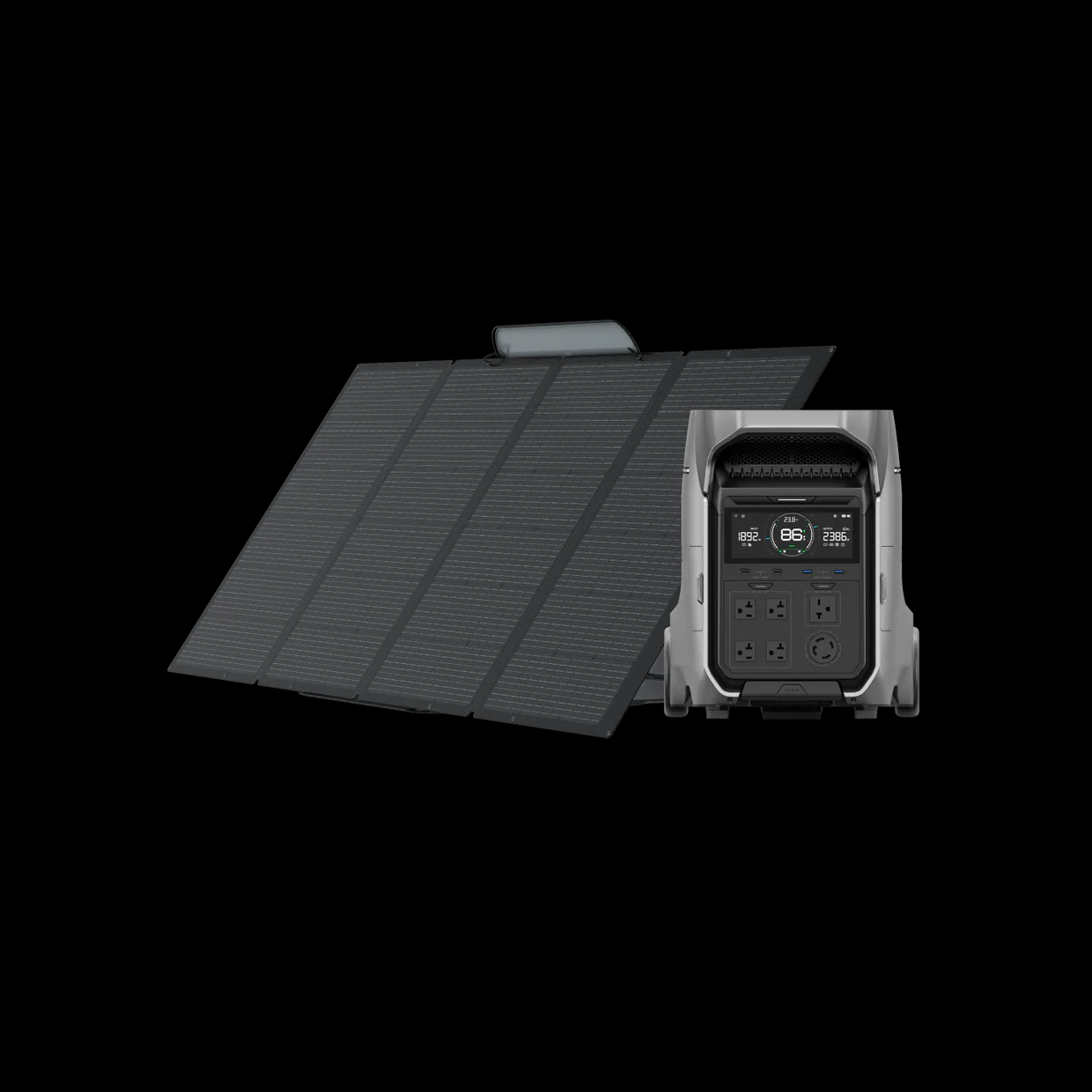
The EcoFlow DELTA Pro 3 Solar Generator is well-suited for this, as it offers solar recharge capability and up to 4,000W output to handle pump startup loads without grid dependence. A whole home generator is another option if you want broader coverage for other appliances and circuits as well.
How to Plan Your System: Calculate Yield, Choose Storage, and Pick a Setup Style
Whether you're setting up a rainwater collection system to support an off-grid lifestyle or just looking for small steps to become more sustainable, the first step is to plan your system carefully for your desired yield and goals.
Use this formula to estimate yield:
Roof Area (square feet) x rainfall depth (inches) x 0.623 x efficiency factor (typically 0.85-0.90) = gallons collected
A 1,500 sq ft roof in a 30-inch annual rainfall region yields about 23,800 gallons per year at an 85% efficiency rate.
As for tank sizing, always account for the longest dry period between rain events rather than the average annual yield, and use this as your primary sizing benchmark.
Keeping Collected Rainwater Safe for Its Intended Use
For non-potable use, a basic pre-tank screening and a covered opaque tank are enough to keep debris and mosquitoes out of your storage. For indoor non-potable use, most state plumbing codes require a backflow prevention assembly to prevent cross-contamination with your potable supply.
Inspect your tanks and lid screens after every significant rain event, and clean the gutters and downspouts every three to six months to keep the tank clean. Then, plan a full interior tank clean at least once a year.
Powering Pumps and Monitoring for a More Reliable Setup
Rainwater distribution pumps typically draw 300 to 800 W at startup. Using smart monitoring sensors like float valves or water level gauges allows you to remotely track your water volume and manage supply during dry stretches.
UV filtration systems require consistent power to function safely. If a UV system loses power mid-cycle, treat it as an unsterilized unit until power is restored.
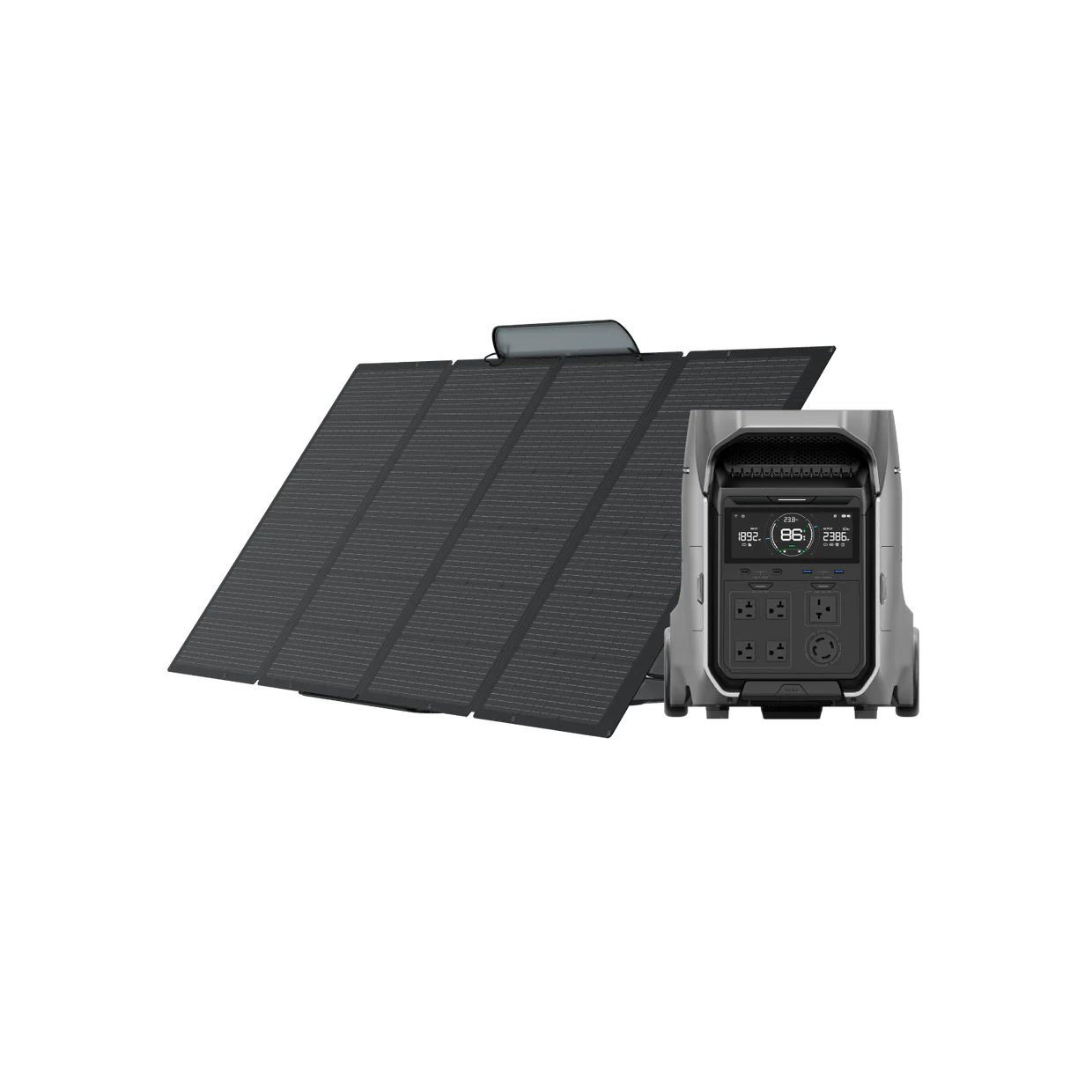
The EcoFlow DELTA Pro 3 Solar Generator can power these pumps, UV treatment systems, and monitoring electronics simultaneously. It also has solar recharge capability and offers up to 4,000W output to cover your pump startup loads without grid dependence.
Frequently Asked Questions
How Do I Size a Rainwater Tank for My Home?
The yield formula is: roof square feet × rainfall inches × 0.623 × system efficiency = gallons collectible. Size your tank to cover the longest dry period between rate events, rather than average annual rainfall.
Is Collected Rainwater Safe to Drink If I Filter It?
Proper multi-stage treatment, including a sediment filter, activated carbon, and UV at 40 mJ/cm², can turn collected rainwater into potable water. The quality varies by roof material, local air quality, and tank maintenance. Consider getting professional water testing done before switching to rainwater as your primary potable source.
Do I Need a Permit to Collect Rainwater Where I Live?
Rainwater collection is legal in all US states, with no restrictions on residential collection in 38 states. However, some states like Colorado and Utah have collection limits or require registration for systems over a certain number of gallons. Check your state and local codes before installing a system.
How Often Should I Clean and Maintain a Rainwater Collection System?
Inspect your inlet screens and first flush diverter after every significant rain event. Schedule a gutter and downspout cleaning every three to six months, and plan to fully clean the interior tank at least once a year.
Start Harvesting Rainwater to Cut Waste and Build a More Self-Sufficient Home
If you have a roof, the ability to invest in a few key components, and a clear picture of intended use, a rainwater harvesting system can be a sustainable addition to your home. Most households begin with a basic outdoor irrigation collection, but you can also expand toward indoor non-potable or potable systems.
Proper filtration and consistent maintenance are non-negotiable for any system used beyond landscape watering. If your system requires consistent power, pair it with battery storage like the EcoFlow DELTA Pro Ultra X to keep your pumps, UV treatment, and monitoring running reliably regardless of grid status.
For press requests or interview opportunities, reach out to our media team
media.na@ecoflow.com