Home Sauna and Electricity: How Much Power You Need at Home
Thinking about adding a home sauna? The first question you need to answer isn't about wood types or size—it's about electricity. Your dream sauna won't work if your home can't power it. Most home saunas pull between roughly 1.5 and 8 kilowatts, but that number changes based on what type you pick. Let's break down exactly what you're dealing with so you can make the right choice for your home.
How Much Electricity Does a Home Sauna Need?
The most essential part is to identify the power requirement initially. Otherwise, you may end up with a costly enclosure that doesn’t even turn on.
Conventional Steam Sauna for Household Energy Requirements
The real steam sauna is a standard home steam sauna, which is common in Finland. This steam sauna consists of a mechanism that heats some stones to extremely high temperatures, after which you add water to generate steam. That is a lot of power. Most steam saunas take somewhere between 5 and 9 kilowatts of energy to reach the temperatures householders are accustomed to. The standard 6x8' steam sauna consumes 6–8 kW, which is like a number of power-hungry devices being on simultaneously.
Infrared Home Sauna Power Requirements
An infrared home sauna is a completely different story. It doesn’t heat the air, but uses infrared panels that warm your body directly. This is a much more efficient process. An infrared sauna for two people would require only 1.4 to 1.8 kilowatts, but even a four-person infrared sauna is only 3.5 kilowatts or less. This is similar to what most household heaters require.
Portable At-Home Sauna Power Requirement
The portable sauna is lightweight. The tent-style unit connects to common power outlets, with a power draw of 1 to 2 kilowatts, depending on the heater. It would not provide a full sauna experience, but it sure is useful for people renting an apartment with limited power handling.
Voltage and Amperage Specification
Now comes the part where things can get a little technical, but bear with me. The average infrared sauna that uses less than 2 kW can operate on a standard 120V household outlet. Anything larger than that is best operated on 240V, which is typically the case with most larger appliances. The average amperage of a common, mid-range sauna heater on a 240V outlet is 25 to 35 amps. Why this is important: It gives you an indication of whether a wiring upgrade is required. Such a circuit can power most home saunas, but this should be on a dedicated line that doesn’t power anything else.
Can Your Home's Electrical System Handle a Sauna?
Before you buy anything, you need to check if your house can actually support saunas for home installation.
Evaluating Your Electrical Panel Capacity
Open your electrical panel and look at the main breaker. It'll say something like "100A" or "200A." That number is your total capacity. Homes built after the late 1980s often have 150–200 amp service, which provides more flexibility for added loads like saunas. Older homes commonly have 100-amp panels, where capacity can be tight.
Here's the math: if you're already using most of your panel’s safe operating capacity, adding a sauna circuit may push the system beyond recommended limits. Most electricians advise keeping continuous loads below about 80% of total panel capacity for safety.
Dedicated Circuit Installation Requirements
Every at-home sauna needs its own circuit. You can't just tap into an existing line. This means running new wire from your panel to wherever the sauna sits. The wire thickness (gauge) depends on amperage and distance. For circuits in the 30-amp range, 10-gauge wire is commonly used. For longer distances, electricians may recommend thicker wire to reduce voltage drop.
The circuit also needs proper protection, typically including ground-fault protection and a local disconnect, as required by electrical codes.
120V vs 240V Options
Small infrared units running on 120V are plug-and-play. You buy it, set it up, plug it in. Done. But they heat slower and max out at two people. For anything serious, you're looking at 240V. Yes, it costs more upfront for installation, but it's the only way to get proper heat and capacity. Think of 120V as a kiddie pool and 240V as the real swimming pool.
When You Need Panel Upgrades
If your panel is maxed out, you're looking at an upgrade. Moving from 100-amp to higher-capacity service often costs several thousand dollars, depending on local labor rates and utility requirements. This isn't optional—running a sauna on an overloaded panel is a serious safety risk.
What Does a Home Sauna Cost for Electricity?
Let's talk about real money—both upfront and monthly.
Monthly Operating Costs by Type
Residential electricity rates in the U.S. vary widely by state, with a national average typically in the mid-teens per kWh. Here's what that means in general terms:
● Infrared home sauna (around 2 kW): Low single-digit dollars per month with regular short sessions
● Traditional sauna (around 7 kW): Noticeably higher monthly cost but still modest for most households
● Portable sauna (around 1.5 kW): Among the lowest ongoing electricity costs
In high-cost electricity markets, these numbers can be significantly higher, especially with frequent use.
Electrical Modification and Installation Costs
Getting power to your sauna isn't free. Installing a new 240V circuit commonly costs from several hundred to a few thousand dollars, depending on distance, wall access, and labor rates. If service upgrades are needed, total electrical work for a traditional sauna setup can reach the low to mid four-figure range. Plug-in infrared units may require no additional electrical work at all.
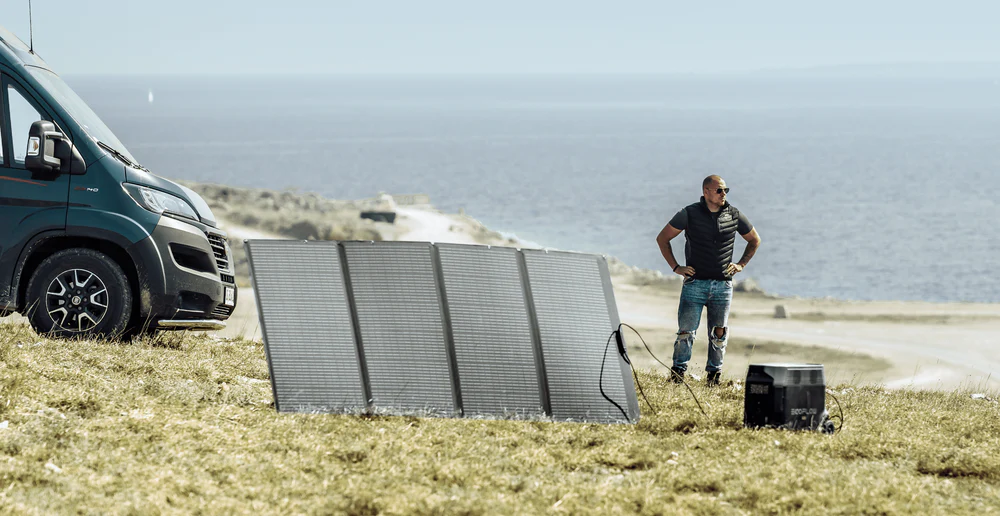
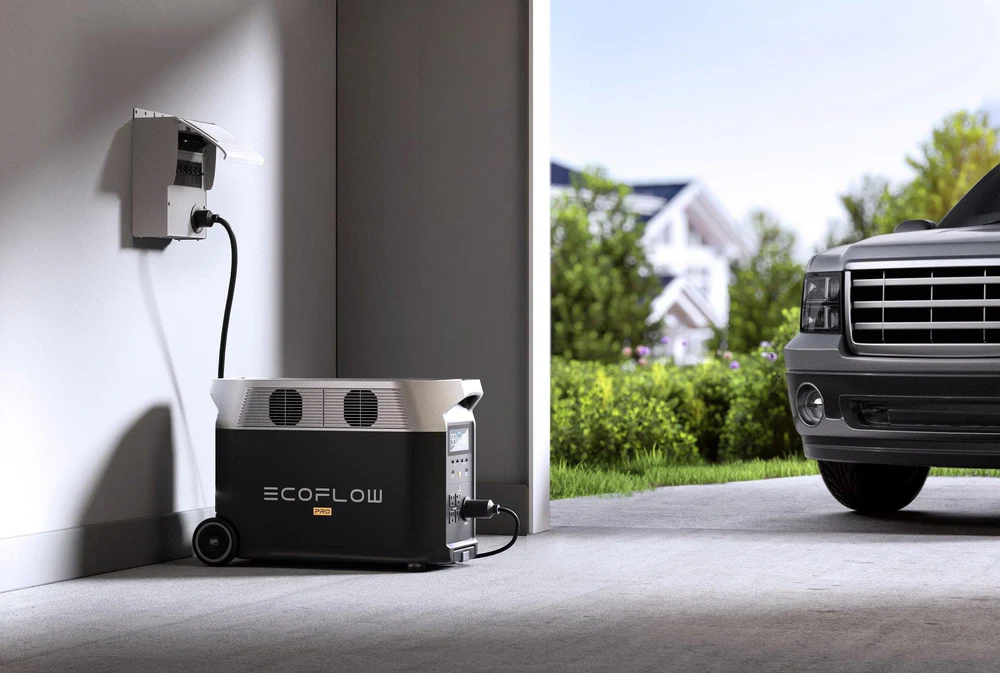
For homeowners concerned about upfront electrical modification costs, portable power solutions like the EcoFlow DELTA Pro can sometimes be used as a temporary or supplementary option—especially for testing sauna usage patterns or powering related equipment before committing to permanent upgrades.
Long-Term Energy Cost Comparison
Over multiple years of regular use, infrared saunas generally cost several hundred dollars less for electricity than traditional steam saunas. While energy cost differences alone may not be deal-breakers, they add up alongside higher installation expenses.
How Do You Choose the Right Sauna for Your Home?
Now that you have the numbers, let’s make this practical.
Match Sauna Type with your Electrical Setup
Start with what you’ve got. If what you’ve got is a 100-amp service, but you don’t feel like upgrading, go infrared or portable. If what you’ve got is a 200-amp service with a little to spare, steam is an option. Simple enough, right?
In addition, check how many slots are on your panel. If there aren’t openings on your breaker box, it becomes harder and costlier to add more circuits. Newer installations have, on average, 40 slots, while the old ones might only have 12-20 slots.
Balance Power Requirements with Your Budget
Comparing the cost of the sauna itself is only part of the equation. An infrared sauna costing $2,000 that uses existing power outlets may be a better installation than a $3,000 traditional sauna, which would cost another $3,000 to install. This is part of your overall project cost.
Now, consider how you’ll be using it too. It has implications for your usage, whether you are a weekend user who doesn’t require the need for fast heating or whether you are a daily user who wants quick heating.
Tips for Energy Efficiency in Home Saunas
For costs to remain low, consider the following factors:
Insulated walls (minimum 2 inches thick)
Tight-fitting doors with a good seal
Digital controls with timers
Lower wattage per cubic foot.
An insulated sauna remains hotter for a longer time, resulting in faster runs and reduced energy costs. Timers prevent people from keeping it on all day, which is a challenge, though.
FAQs
Q1. Do I Need a Permit to Install Electrical Wiring for a Home Sauna?
Yeah. In all but a couple of spots throughout the U.S., you’ll need electrical, plumbing, and maybe even a building permit for your 240V electrical installation. That’s what your electrician is for—get the permit and set up the inspections. The price tag is around $50 to $200, which depends on your city hall. It sounds pretty attractive to go around getting a permit, but it can really screw with your homeowner’s insurance, plus it’s a real pain when you go to sell your house.
Q2. Can Solar Panels Meet the Electricity Requirement of a Sauna for Residential Use?
Completely, but you’ll need enough capacity. The average residential solar array has a power output of 400 watts per panel. For a 7 kW sauna, you’ll need roughly 18 for the sauna alone, but you won’t power them simultaneously because you’ll get sunlight during the daytime, but probably use your sauna in the evening. The best solution is a 6-8 kW solar system that would, in effect, power your sauna use because your energy system is already powering your house’s base load. Battery storage is a plus for sauna use in the evening. Most people’s contractors can figure out exactly how many more solar panels are needed.
Q3. What’s the Safest Distance Between an Electrical Panel and an Outdoor Sauna Installation?
The codes don’t specify a maximum distance, but common sense is necessary. For every 100 feet of wire, the voltage drop increases, as well as the price. For a 240V, 30A circuit, it is safe to go a maximum of 150 feet with the appropriate gauge (10 gauge maximum 100 feet, 8 gauge maximum 150 feet). Beyond that, it can affect the performance of your heaters with a voltage drop. The switch needs to be within sight of your sauna, generally no more than 50 feet, for quick shutdown in case of an emergency. Bury conduit 18 to 24 inches deep when going underground to your outdoor sauna, per local regulations.
Powering Your Sauna Safely
Your home sauna dream needs the right electrical foundation. Check your panel capacity, get quotes from licensed electricians, and calculate both upfront and ongoing costs before buying. Ready to move forward? Contact a local electrician for a home assessment—most offer free quotes. Then you'll know exactly what's possible and what it'll cost to bring relaxation home.
If you’re looking for a flexible, future-proof way to support high-power home appliances like saunas—especially in homes with limited panel capacity or solar setups—the EcoFlow DELTA Pro offers a powerful, expandable solution.
For press requests or interview opportunities, reach out to our media team
media.na@ecoflow.com