How Much Power Does a Microwave Use? A Complete Guide for U.S. Homes
- How Many Amps Does a Microwave Use?
- Microwave Amps Explained (Typical Range in U.S. Homes)
- What Determines Microwave Amps? (Wattage, Voltage & Efficiency)
- How to Calculate Microwave Amps (Step-by-Ste
- How Much Electricity Does a Microwave Use Per Day or Month?
- Can You Run a Microwave During a Power Outage or Off-Grid?
- Safety Tips When Using a Microwave at Home
- Conclusion
- FAQs
Understanding how many amps your microwave uses is important to avoid tripping breakers and ensure your home’s electrical system stays safe. Here we’ll examine typical amperage ranges and show you how to calculate them. This will help you keep the lights on and appliances working even if lightning strikes.
How Many Amps Does a Microwave Use?
Before buying and using a new microwave, it’s good practice to check whether the electrical circuit can handle the appliance. If the appliance uses more amps than the circuit, the circuit trips for protection.
Let’s Explore This
Most standard residential microwaves in the U.S. use between 8 and 15 amps. The actual amps depends on the microwave’s wattage and whether it is a compact countertop model or a heavy-duty over-the-range unit. Learning how to calculate amps for your specific devices is the first step in managing your home’s electrical load effectively.
Typical Amperage Range by Microwave Power
Small (600–800 Watts): 5 to 8 Amps
Mid-Sized (900–1,100 Watts): 8 to 12 Amps
Large (1,200+ Watts): 13 to 15+ Amps
The Simple Formula to Calculate Amps
Use this formula to estimate how many amps for your specific model:
Amps = Watts ÷ Volts
You can find the wattage of your microwave usually on the sticker on the back, or inside the door of your microwave. Understand that your microwave might be marketed as “1,000 watts,” but this is only the advertised cooking power. The actual input power it draws from the electrical circuit is usually about 20% to 50% higher.
Microwave Amps Explained (Typical Range in U.S. Homes)
In the United States, our standard wall outlets provide 120 volts. Therefore, to estimate the number of amps, you divide the total watts by 120 volts.
A typical 1,000-watt microwave doesn’t use only 1,000 watts. The appliance uses additional power to run the cooling fan, the turntable motor, and the interior light. Thus, a microwave that has 1,000 watts of cooking power might actually use 1,500 watts. This means it uses as much as 12.5 amps of power.
What Determines Microwave Amps? (Wattage, Voltage & Efficiency)
Three main factors determine how much current, or amps, your microwave uses.
Wattage: Higher cooking power equals higher amperage.
Voltage: In the U.S., this is almost always 120V. If the voltage drops, as in a “brownout”, the amperage will fluctuate.
Efficiency: Older models that don’t have an inverter are often less efficient. They use more energy and thus more amps, to heat the same amount of food or drink.
How to Calculate Microwave Amps (Step-by-Ste
Sometimes you need to be more precise about power usage. Especially when doing a kitchen remodel or sizing a portable power station. In these cases, you need to determine what your actual amp draw will be.
1. Locate the "Input" Wattage
Don’t rely on the advertised “1000W” sticker on the front of the unit, that is the Output (Cooking) Power. To find the actual electricity being used in the circuit, look for the silver manufacturer’s label on the back or inside the door frame.
Actual total power will be shown as Rated Power, Input Power, or Power Consumption.
Note, this number is usually 40% to 50% higher than the cooking power. This is because it accounts for the magnetron’s inefficiency, and includes the cooling fan, light, and turntable motor.
2. The Physics Formula
Standard household voltage in the U.S. is 120V. To calculate amperage, or current (I), we use the basic power formula:
Amps = Watts ÷ Volts
3. Real-World Calculation Example
Let’s say you have a standard microwave with 1,100-watt of cooking power. The label on the back shows that the Input Power is actually 1,650W.
Using the formula: 1650 watts ÷ 120 volts = 13.75 amps
Your microwave requires at least a 14 amp circuit to operate.
How Much Electricity Does a Microwave Use Per Day or Month?
While the initial draw of current is high, microwaves are usually only on for a few minutes at a time. This way your monthly bill stays relatively low due to a microwave.
Usage Time vs. Energy Consumption
A high-amp microwave used for 15 minutes a day consumes much less total energy than a lower-amp refrigerator that runs 24/7. Monitoring your daily usage is a great way to optimize your home backup power strategy for long-term savings.
Example Calculation (kWh)
If you run a 1,500-watt microwave for 20 minutes a day:
(1500 W × 0.33 hrs) ÷ 1000 = 0.495 kWh per day
That means your microwave uses about 0.5 kWh of electricity per day.
Estimated Electricity Cost in the U.S.
At an average U.S. rate of $0.16 per kWh, using your microwave daily for 20 minutes would cost roughly $2.38 per month.
Can You Run a Microwave During a Power Outage or Off-Grid?
You may find yourself without power due to extreme weather or problems with the electrical power grid. At these times, having power to cook and make meals will be a priority, among other things. Since microwaves are a short term high-power appliance, you need a robust solution to run them when the power’s off.
Whole-Home Backup Power (For Extended Outages)
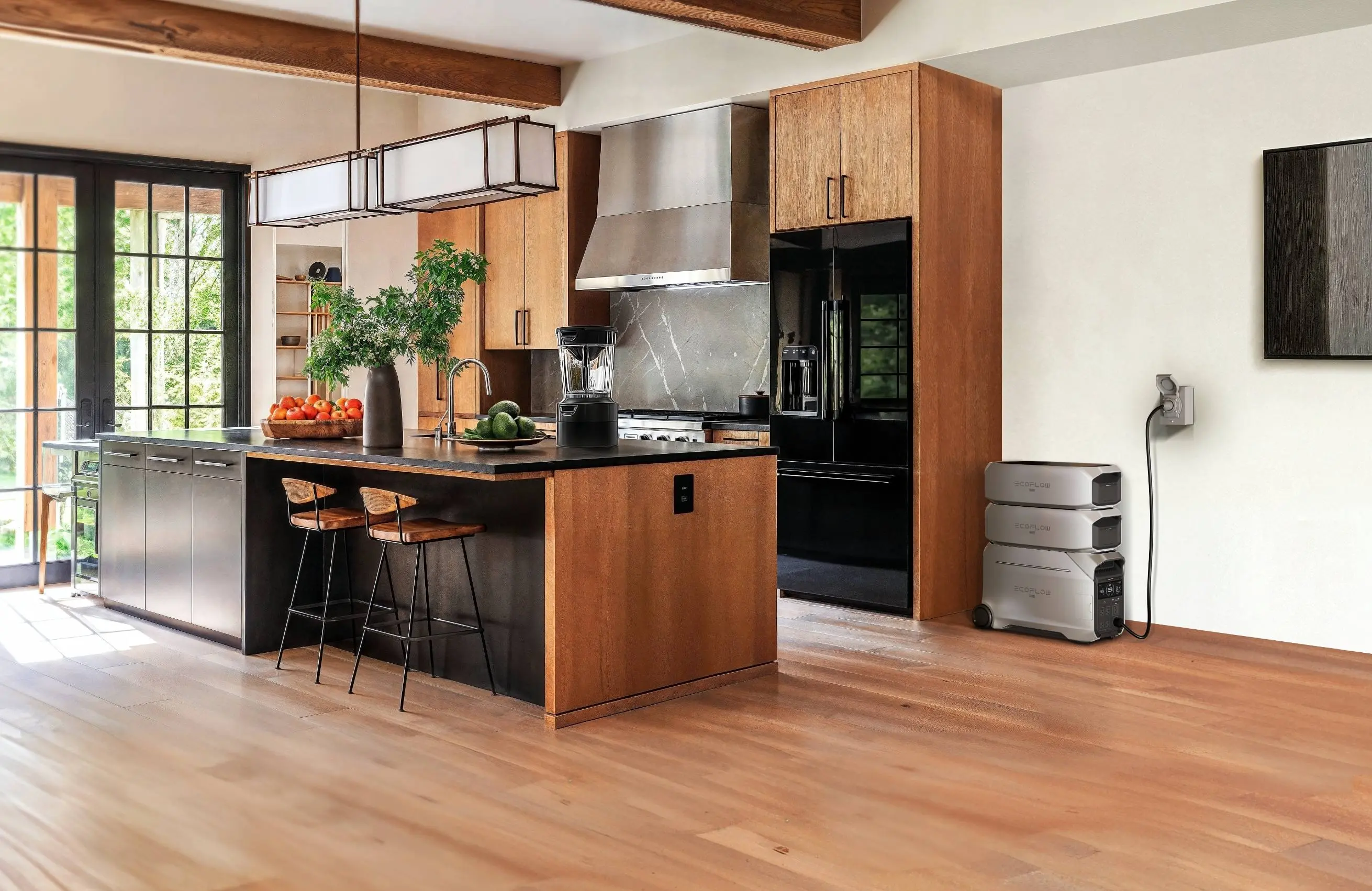
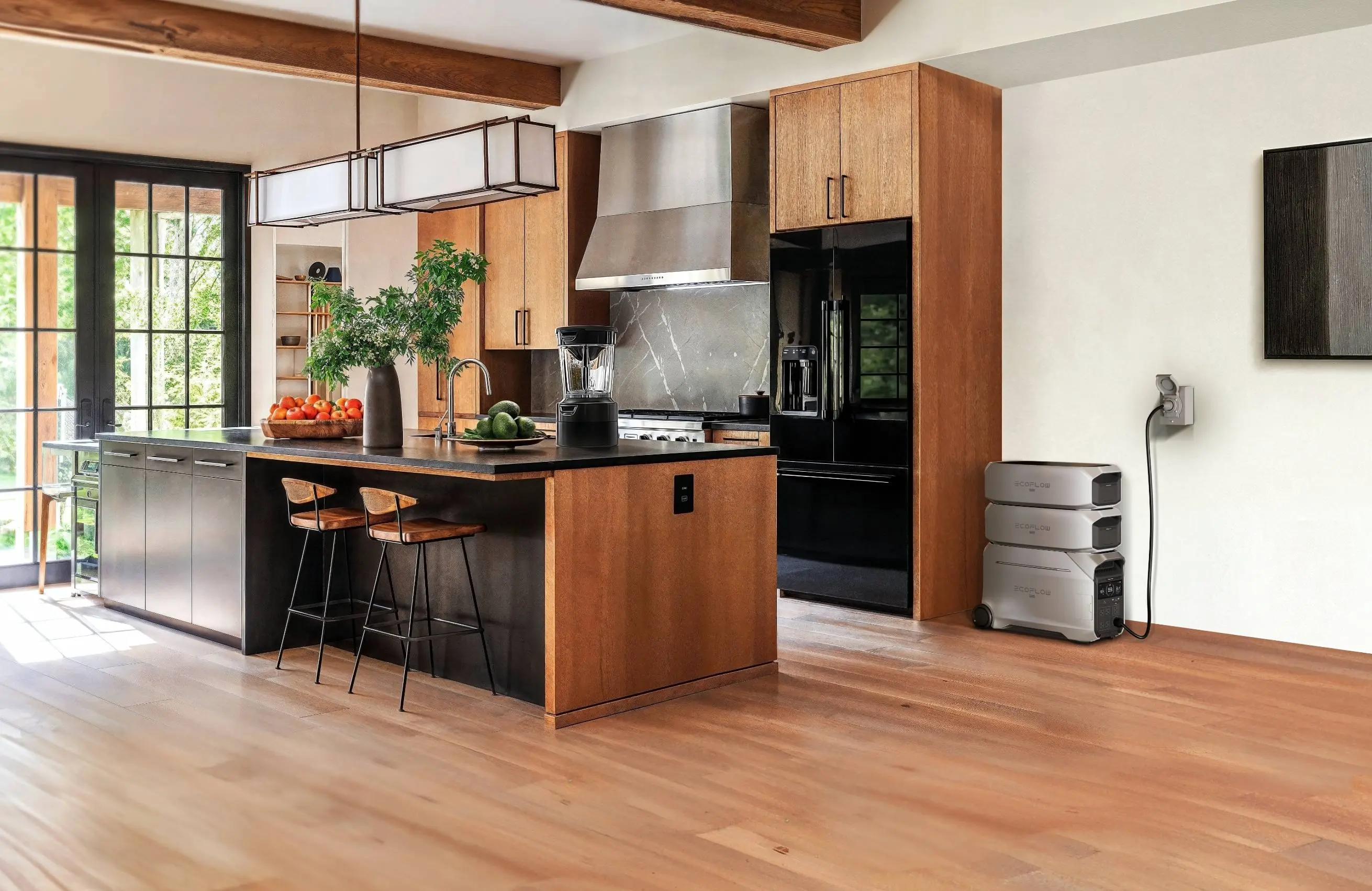
In areas that experience extreme weather and power outages, the microwave is often one appliance you miss most. Keeping high-wattage kitchen appliances running requires a system that can handle high startup power surges while simultaneously powering your fridge and Wi-Fi. This is where a system like the EcoFlow DELTA Pro Ultra Whole-Home Backup Power does really well. It’s a professional grade whole-home backup solution that supports 7200W+ output. It can easily manage high-wattage spikes, and power several 15A/20A appliances found in American kitchens. This means it can run your microwave and fridge simultaneously so you never have to choose between having a warm meal or letting your food spoil. For American homeowners with single family residences, it acts as a “home power station,” ensuring your kitchen remains fully functional even when the rest of the neighborhood is in the dark.
Portable High-Power Backup (For Daily Flexibility)
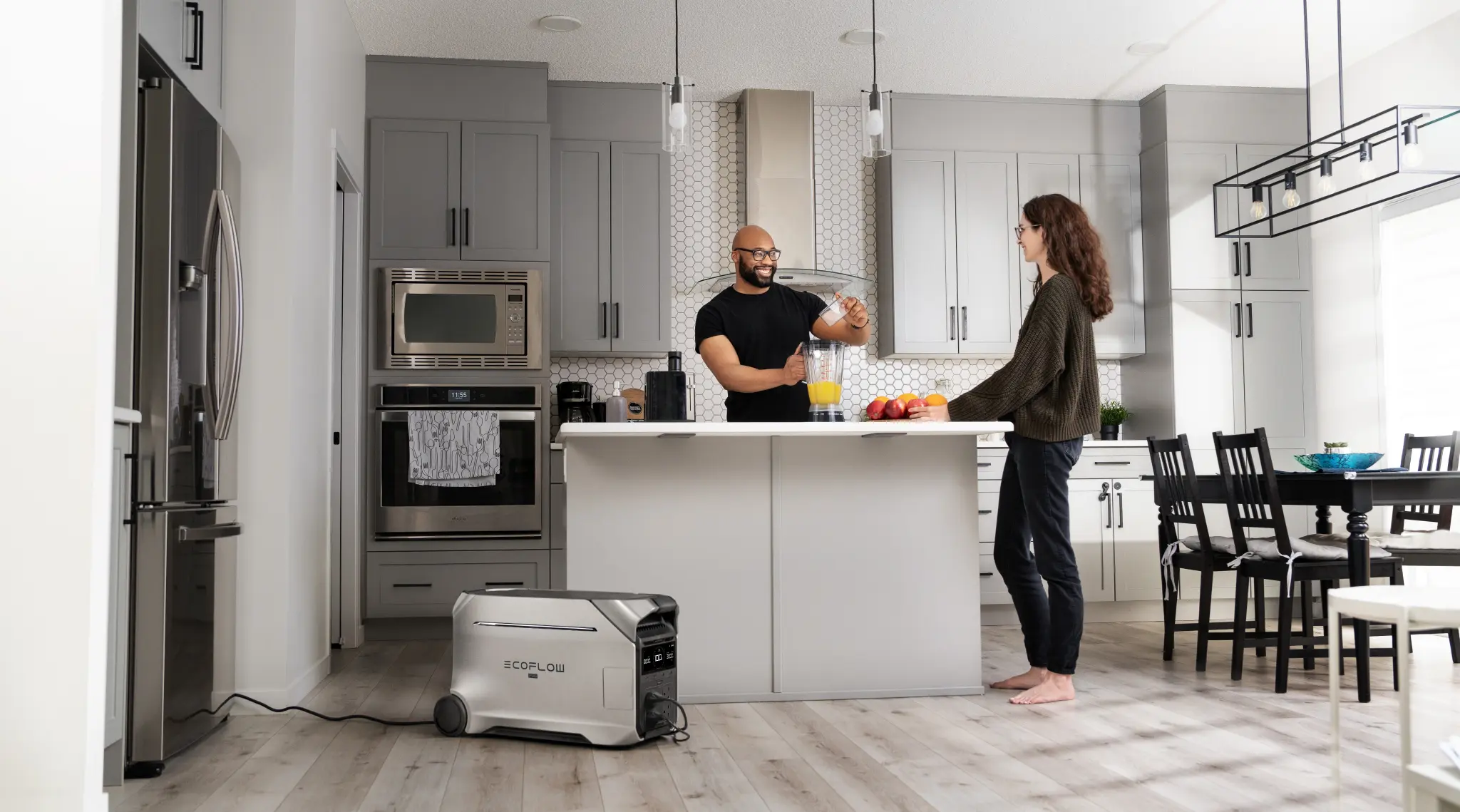
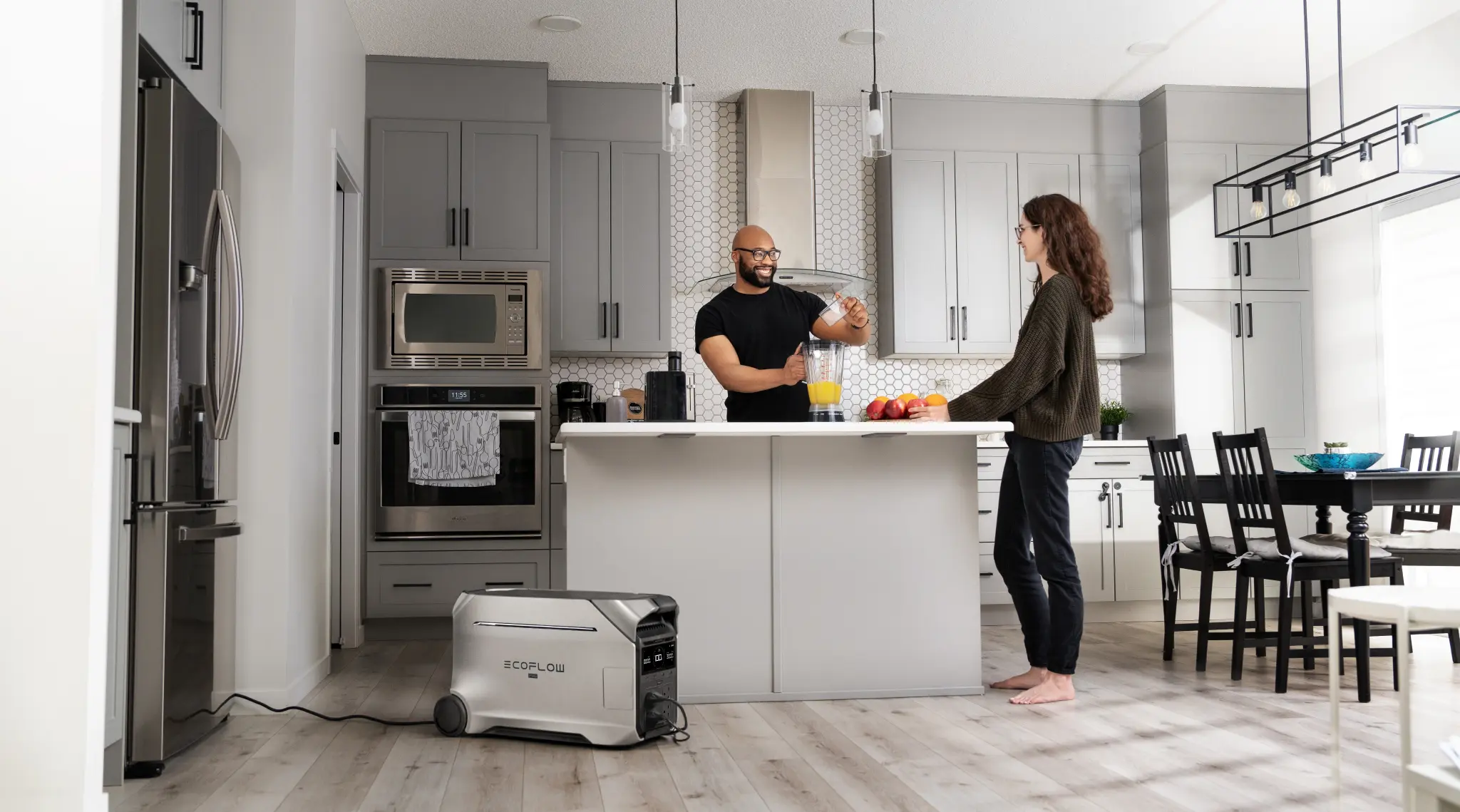
Sometimes you don’t need to power the whole house. You just need to survive a 4-hour blackout, or power a backyard cookout, or keep the microwave running in your RV. In these cases, you want something powerful enough but portable. The EcoFlow DELTA Pro 3 Portable Power Station is the go-to for this “hybrid” lifestyle. The EcoFlow DELTA Pro 3 Portable Power Station provides 4000W output that’s more than enough to start a high-amp magnetron. It handles 15A appliances just like your standard 120V wall outlet. This way it provides that essential peace of mind for short-term emergencies or adventures away from home. It doesn’t have the complexity of a full-house backup installation, and can keep your daily rhythm going.
Safety Tips When Using a Microwave at Home
Microwaves draw a lot of short term power, and using them safely is important to avoid electrical fires or tripped breakers.
Why does my microwave trip the breaker?
This usually happens when the microwave is sharing the same circuit with another high-draw appliance, like a toaster or a space heater. Together they exceed the amperage rating for the circuit. Knowing how many watts does a toaster use can help you avoid overloading the same kitchen circuit during breakfast.
Use a Dedicated Outlet Whenever Possible
Your microwave should be on its own 20-amp circuit. This ensures that when the microwave turns on, it doesn’t overload the circuit or impact other appliances.
Avoid Using Extension Cords
Most household extension cords are not rated for drawing 12–15 amps. Drawing too many amps through a thin cord can cause it to overheat. If used long enough it could potentially lead to a fire. If you must use an extension cord, make sure it is a heavy-duty “appliance” cord. Also, don’t plug in other items on the same extension cord.
Check Your Circuit Breaker Capacity
Most modern U.S. kitchens have 20-amp breakers, and safe practice is to follow the 80% rule. A 20-amp circuit should not power more than 16 amps of total continuous load. Since many microwaves draw 12–15 amps, running them on a shared circuit with other appliances can easily push you past this safe limit. The result is you may experience frequent breaker trips or potential extension cord overheating.
Follow U.S. NEC Electrical Guidelines
The National Electrical Code (NEC) generally requires a dedicated circuit for “fixed” microwaves (like over-the-range models) to ensure safety and reliability.
Conclusion
A microwave is one of the most commonly used appliances in your home, typically drawing between 8 and 15 amps. While it only runs for short periods, that high amperage requires the proper electrical setup. This can include a high-capacity backup power system like the EcoFlow DELTA Pro series. These systems can keep things running smoothly. Understand your home’s electrical system and match it with your appliance needs so you can keep your kitchen running safely.
FAQs
1. Is a 1000-watt microwave equal to 10 amps?
Not necessarily. The 1,000-watt rating is the cooking power. The actual power drawn from the wall is usually around 1,300–1,500 watts. This means power draw may be closer to 11–13 amps.
2. Can you plug a microwave into a regular outlet safely?
Yes, you can plug most microwaves into a standard 120V outlet. However, it is highly recommended that the outlet is on a circuit that isn’t shared with other high-power devices.
3. Do inverter microwaves use less electricity or amps?
Inverter microwaves are more efficient at lower power settings because they deliver a constant stream of energy rather than pulsing on and off. However, at high power, they still draw a similar amount of amps as non-inverter models.
4. What size breaker or generator do I need for a microwave?
You should generally use a dedicated 20-amp breaker. Alternatively, use a generator or power station with at least 2,000W–3,000W of continuous output to handle the microwave’s starting surge.
5. How many amps does a 1200 watt microwave use?
A microwave with 1,200-watts of cooking power typically pulls about 13 to 15 amps of actual current from the wall outlet.
6. Does a microwave need a dedicated circuit?
Yes, according to modern electrical standards and for the best performance, a microwave should be on its own dedicated circuit to prevent frequent breaker trips.
For press requests or interview opportunities, reach out to our media team
media.na@ecoflow.com