High Electricity Bills? Why AI Is (Partly) to Blame
If you’ve noticed a steady rise in your electrical bill, you’re not alone. Americans across the country are noticing higher-than-usual electrical bills this year and wondering what the cause is. But no amount of home energy audits will solve the puzzle.
In this decade, the digital world has expanded rapidly, driving a sharp increase in electricity demand. Artificial Intelligence (AI) has emerged as a major contributor to this growing digital energy footprint.
This article breaks down how AI is contributing to increased electricity demand, the impact of AI data centers on your utility bill, and what the future holds for managing the massive energy demands of data centers.
What’s Contributing to High Electrical Bills
It’s not uncommon for electrical prices to fluctuate. There has been a steady and sustained increase recently, and AI is only part of the problem. The International Energy Agency (IEA) reported that natural gas accounts for 40% of the nation's electricity generation, and natural gas prices have increased from $2.19 MMBtu to $3.56 MMBtu between 2024 and 2025. Unfortunately, the price is expected to grow further in 2026.
Electricity demand is simultaneously increasing. The digital world is taking over every aspect of daily life, with an increasing number of electronics requiring more energy. And, as energy demand grows, so does the price of electricity.
Normally, energy generation scales with energy demand, but AI is disrupting this pattern. AI is housed in data centers, which are large industrial buildings that hold thousands of computer servers and support electronics for continuous computing. These data centers require massive amounts of energy to run nonstop, increasing energy demand at a rate that the current electrical infrastructure can’t keep up with.
AI’s Role in Soaring Energy Demand
Asking AI a question requires much more energy than a traditional web search. Behind the scenes of AI inference, trained computational models are used to respond to and answer queries. Alternatively, a web search does far less computational work. It retrieves and ranks existing pages with lightweight algorithms, which requires a fraction of the electricity of an AI-driven search.
Trained AI models come from, well, training AI models. In the data centers, thousands of high-performance GPUs operate continuously for training and real-time responses. Training sessions can last from weeks to months, depending on the model. While this is happening, not only are the computers constantly running, but cooling and data storage systems also consume significant amounts of electricity.
This adds up to substantial energy demands. To meet user demand for AI tools, data centers are popping up across the country. Data centers are connected to the local electrical grid, leading to increased regional and local energy demand.
Who Pays For AI’s Electricity Needs?
Tech companies build and operate data centers. They pay the data center's electricity bill arising from operation. But the broader cost of supplying that electricity is shared across the grid.
In the U.S., utility companies often fund grid upgrades and new infrastructure by raising electricity rates for all customers connected to the grid. These costs are not distributed equally, and many consumers have no choice but to use a specific electricity provider, leaving them unable to avoid higher rates.
As a result, data centers that drive massive increases in electricity demand can trigger costly grid expansions without paying the full cost of those upgrades. The added burden is passed on to local households and businesses, resulting in higher utility bills for everyone.
Increased electricity demand from the data centers also drives higher prices during peak hours. When demand spikes, utility companies sometimes purchase electricity on the spot market at higher rates. AI data centers compete for power during peak hours, contributing to grid congestion and increasing electricity prices for all grid users.
States With The Most Data Centers
The best way to prepare for increased electrical bills is to know if you’re vulnerable. The top states wth AI data centers include Virginia with 668, Texas with 409, California with 321, Illinois with 244, and Ohio with 217.
As of 2023, Virginia had the largest concentration of data centers in the world, accounting for 13% of the total reported centers globally, and 25% of centers in America.
As a consequence, energy demand in Virginia has skyrocketed and is expected to continue increasing as the number of data centers expands. Unfortunately, grids are local, meaning strains in Virginia will reflect in bill price increases for everyone connected to their regional transmission line, the PJM Interconnection.
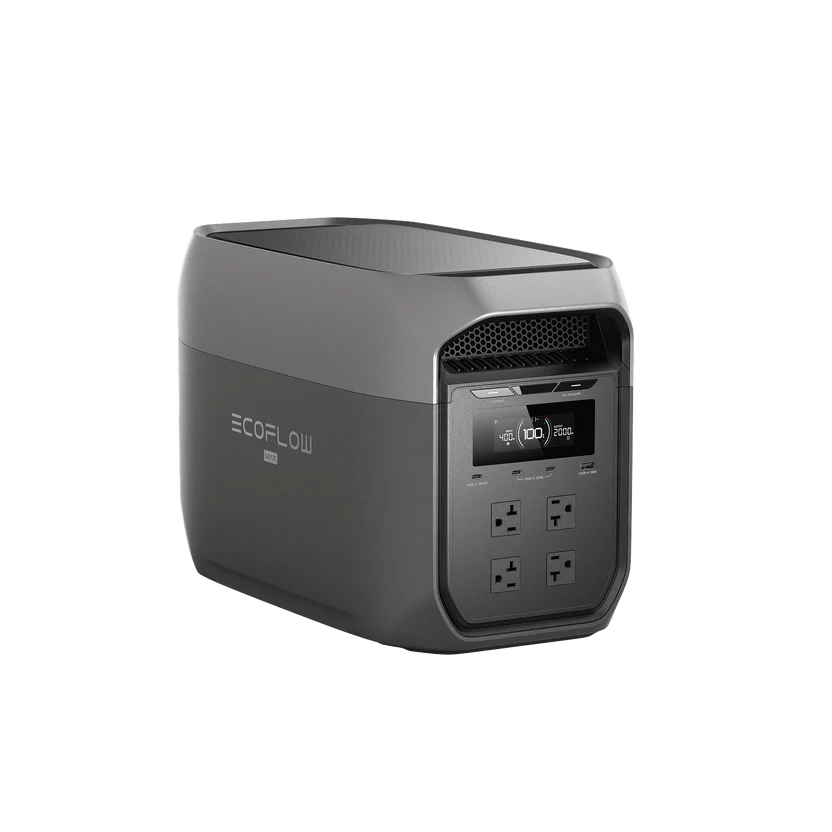
There’s not much to be done on an individual level to combat increased prices from these centers except to take control of your power generation. If you can’t shop for utility providers, then take matters into your own hands with home battery systems. The EcoFlow DELTA 3 can be charged with off-peak hour rate electricity and used during high-peak rate times, or it can be connected to solar panels for a renewable source of energy.
The Future of Data Centers
The International Energy Agency projects that energy demand from data centers will increase substantially over the coming decade, driven by rising AI workloads and expanding digital infrastructures. In 2024, the IEA reported that electricity demand from centers was 460 TWh. By 2030, it could increase to over 1,000 TWh, more than doubling energy demand.
To meet these energy demands, data centers are turning to renewable energy. Renewable energy currently supplies around 27% of the electricity consumed by data centers, and it’s also the fastest-growing electricity generation source. The IEA projects that renewables will grow by 22% annually from 2024 to 2030, with nearly half of the electricity demand from data centers expected to be met by this growth by the end of the decade.
AI Data Centers Drive Rising Electricity Costs
The future of AI’s energy consumption might seem daunting, but ongoing investments in renewable energy, grid modernization, and efficiency improvements will eventually meet rising demands more sustainably. Over time, utility bill rates are expected to stabilize as cleaner, lower-cost power sources become more prevalent.
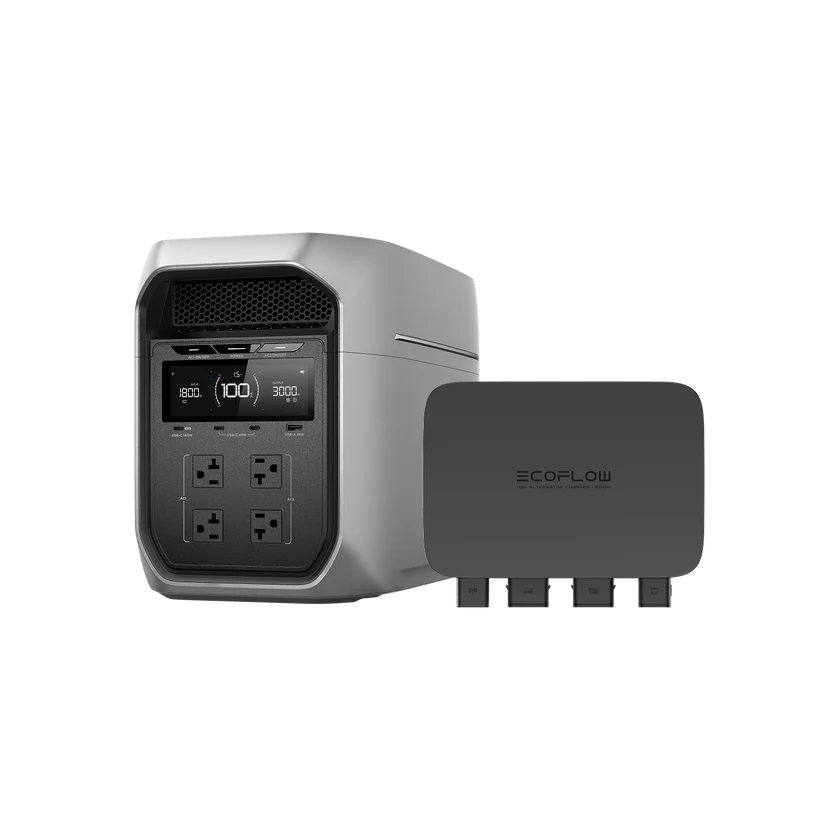
Start taking control of your energy. Build energy resilience in your home with power options that aren’t the traditional grid. Add an EcoFlow DELTA 3 Max to your home for reliable, resilient power at all times. Charge this power station with off-peak grid power or with solar energy.
For press requests or interview opportunities, reach out to our media team
media.na@ecoflow.com