[2026 Guide] How to Prepare for Group Camping
- What Is Group Camping?
- How to Choose the Best Group Camping Sites
- Popular Types of Group Camping Sites
- Essential Gear Checklist for Group Camping
- Stay Powered Outdoors with EcoFlow Portable Power Stations
- Tips to Plan a Fun and Successful Group Camping Trip
- Conclusion
- Frequently Asked Questions About Group Camping
Group camping is always booming. Families/friends and outdoor clubs are ditching solo trips for a shared one under the stars. It sounds simple. Pick a scenic campsite, pack a few tents, and gather your crew. But group trips take more planning than solo camping.
Someone needs to sort the cooking equipment. Someone needs extra chairs. Everyone needs a place to sleep, while a forgotten flashlight becomes a group problem. Above all, picking a site that works for the whole group is even trickier.
A little coordination and planning upfront can make everyone enjoy the outdoors. So, this guide covers all the essentials for preparing a memorable group camping experience in under five minutes.
What Is Group Camping?
Group camping is a camping experience in which a group of individuals shares the campsite, activities, equipment, meals, and other responsibilities.
When you are on a solo or small-group camping trip, one or two people can handle everything. But large group camping is different. It relies on coordination between multiple people for a smooth and enjoyable experience.
Common group camping scenarios include:
Family camping trips are when parents, children, grandparents, and extended family members share a campsite and enjoy activities together.
Friends' outdoor adventures involve groups of friends heading out for hiking, fishing, kayaking, or relaxing around a campfire.
Team-building activities engage businesses, schools, clubs, and other organizations that may use camping trips for outdoor team-building experiences.
Organized group camping events allow larger gatherings that may involve multiple families, outdoor clubs, youth organizations, or community groups.
.png)
.png)
The size of the group is directly proportional to the number of moving parts to manage, such as transportation, sleeping arrangements, shared gear, group dynamics, and more. Everyone's comfort depends on how well responsibilities are divided beforehand. This is why planning becomes such a central part of the experience.
How to Choose the Best Group Camping Sites
Selecting a group camping site is the first step. Not every campsite that works for a solo trip will work for a group. The site can alone make or break the trip when you are coordinating multiple tents, RVs, personalities, etc.
The following tips will help you choose the best group camping site:
Campsite Capacity and Space
A scenic location may not be considered a good group camping site if it lacks sufficient space for multiple tents, RVs, or other sleeping arrangements. You don't want everyone being packed shoulder to shoulder.
Many campgrounds cap the number of people/vehicles per site. So, check capacity limits early and consider booking adjoining or nearby sites if your group is large.
Accessibility and Parking Availability
A remote campsite may sound appealing, but that short walk can become a major logistical challenge when you consider transporting equipment for a large group.
Make sure you factor in the distance between the parking and the campsite, mobility limitations for kids/older campers, access for RVs and trailers, road conditions, and permission to park multiple vehicles.
Restroom, Water, and Facility Access
Facilities matter for a family group camping. At the time of booking, make sure the campground has fully functional restrooms, showers, trash facilities, fire rings, picnic tables, and other amenities. In case there is no drinking water available, your group will need to plan how much water to bring and how to transport it.
Shared Gathering Areas
A good group campsite should have a common place where everyone can comfortably gather. What's the point of group camping if you cannot sit in one area and share laughter?
A large picnic table, communal fire ring, or open area can become the center of the trip. It gives everyone a place to eat, play games, talk, and relax without crowding around individual tents. You also need to consider the size of the area. For example, a picnic table for five won't suffice for twenty.
Nearby Outdoor Activities
A major fun part of group camping is having something to do together. You need to look for what activities are possible near the campsite, such as hiking trails, fishing, kayaking, swimming, cycling, stargazing, and more.
All in all, the best group campsite is not necessarily the most remote one. It is the one that gives your group enough space and activities everyone can enjoy.
Popular Types of Group Camping Sites
Once you have decided to go on a friends or family group camping trip, you need to decide what kind of camping you want. You need to factor in the experience of campers and the convenience they require and then select from the following options:
National and State Parks
National and state parks are excellent choices if your group prefers spending time in nature and outdoor activities. In addition to scenic views, numerous parks offer hiking trails, lakes, rivers, and established campgrounds.
Private Campgrounds
Private campgrounds can be a good choice if you are camping with beginners, families, and groups that prefer convenience. It may vary from one campground to another.
Still, you usually find amenities such as showers, electricity, Wi-Fi, laundry facilities, playgrounds, swimming pools, camp stores, and easier vehicle access in private campgrounds. You may not feel like camping at a backcountry campsite with all these facilities, but it works well for family camping.
Designated Group Campsites
Designated group campsites are specifically designed to accommodate larger gatherings. So if you are looking for more space, larger picnic areas, shared gathering areas, and facilities for groups, sign up for designated group campsites. They can simplify the logistics for you.
Remote Campsites
Remote campsites are better suited if you are camping with friends who are experienced campers looking for privacy and a more adventurous experience.
These campsites have fewer facilities and limited vehicle access, along with fewer nearby stores or restrooms. So if you are in for an adventure, opt for remote campsites where you can go with the flow.
Essential Gear Checklist for Group Camping
Group trip packing is a different game than packing for yourself. Personal essentials are there, but there's also shared gear that the whole group depends on. Forgetting just one item can cause trouble for the entire group when you are already at the campsite.
These must-haves should be part of your group camping checklist:
Shelter and Sleeping Equipment
Tents sized for the group (or multiple smaller tents)
Sleeping bags suited to expected weather
Sleeping pads or air mattresses
Extra tarps for rain protection
Cooking Supplies and Food Storage
Camp stove or multiple burners
Cookware sized for larger meals
Coolers with strong ice retention
Airtight food storage containers
Group Dining Equipment
Folding tables
Enough chairs for everyone
Reusable plates, cups, and utensils
Trash bags for cleanup
Lighting Equipment
Lanterns for shared/common areas
Headlamps for hands-free use
String lights for the gathering space
Outdoor Entertainment Gear
Board games or cards
Outdoor games (cornhole, frisbee, etc.)
Portable speaker
Hammocks for downtime
First Aid and Emergency Supplies
Well-stocked first aid kit
Personal medications
Insect repellent
Basic emergency plan/contact info
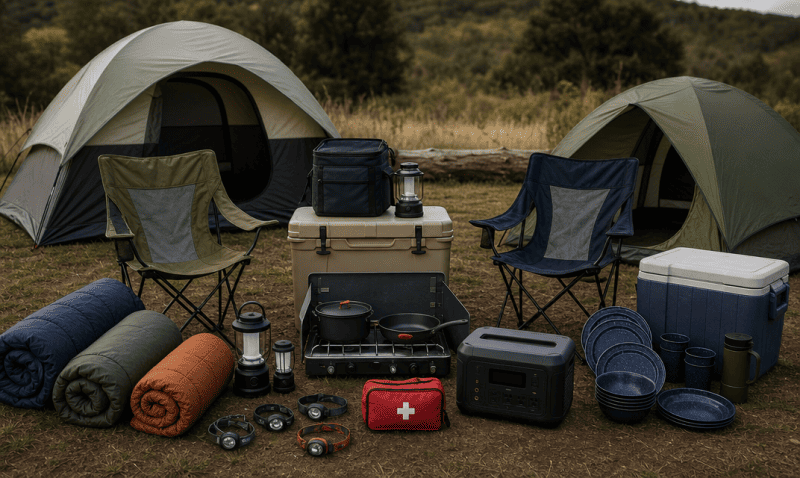
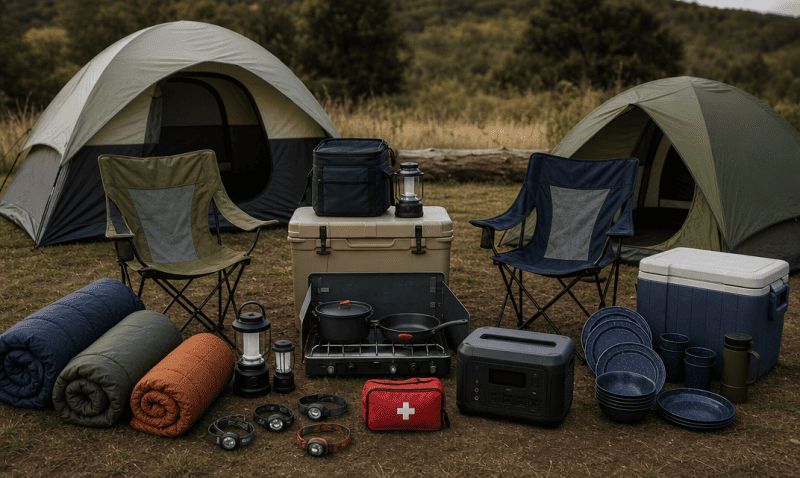
Aside from the above group camping checklist, another essential is "reliable power". Modern outdoor adventures include smartphones, lights, small electrical appliances, and other electronics. A dependable portable power station for camping keeps everyone connected and comfortable without draining a single person's battery pack for the whole group.
Stay Powered Outdoors with EcoFlow Portable Power Stations
Group camping planning is incomplete without a reliable power backup. EcoFlow's portable power stations are meant for this kind of use. They offer clean and reliable energy for the outdoors, without the noise and fumes of a traditional generator.
EcoFlow gives groups a dependable way to stay powered throughout the trip. The following are two of the best products for small and long group camping trips:
Tips to Plan a Fun and Successful Group Camping Trip
After the campsite and group camping gear are sorted, the only goal left to accomplish is to make the trip enjoyable. That comes down to two things. First, a bit of practical organization to keep the logistics running smoothly. Second, a few sets of activities that give the group something to look forward to each day.
The following are some proven tips to have a fun group camping trip:
Plan campfire gatherings by designating a shared campfire area where everyone can gather after dinner.
Organize outdoor games to keep children and adults involved. Bring along volleyballs, frisbees, cards, board games, or simple team games.
Arrange hiking, fishing, and stargazing activities by creating a loose schedule with optional activities.
Create one shared packing checklist instead of asking every person to bring everything.
Assign responsibilities because group camping works better when responsibilities are shared.
Prepare emergency supplies and make sure everyone knows where they are stored.
Check the weather before departure to avoid turning an enjoyable trip into an uncomfortable experience.
Follow leave no trace principles by leaving the campsite ready for the next visitors.
Conclusion
We can merge group camping trip planning into a few core steps. First, choose a campsite that offers enough space and facilities for everyone, pack the right shared gear, and organize responsibilities. When the campsite and essentials are sorted, the little touches in the form of shared campfire and planned activities can turn a good trip into a memorable one.
Among all, reliable power is as essential as tents and coolers, especially for charging devices, powering lights, preserving food, and more during a multi-day trip. That's what an EcoFlow portable power station offers and keeps everyone comfortable and connected, even off the grid. So, choose the right EcoFlow product depending on your group and tick all the group camping checklist items to have enjoyable and memorable
Frequently Asked Questions About Group Camping
How many people can join a group camping trip?
There is no single ideal group size. A group camping trip can include a few friends or family members or expand into a much larger gathering. The practical limit depends on the campsite's capacity, available facilities, parking, and the type of outdoor activities you plan to do.
How do I find the best group camping sites?
To find the best group camping sites, look for spaces that accommodate your entire group and offer convenient parking, restrooms, drinking water, gathering areas, and nearby activities. National parks, state parks, private campgrounds, and designated group campsites can all work well.
What equipment do I need for group camping?
Core group camping gear includes tents, sleeping bags and pads, cooking equipment, food storage, water containers, tables and chairs, lighting, first-aid supplies, and weather-appropriate clothing. You will also need a portable power station to charge multiple devices, power lights, run a portable refrigerator, and support other compatible camping electronics.
How much power do I need for group camping?
Your power requirements depend on the number of campers, length of the trip, and equipment you plan to run. Smaller groups on short weekend trips may only need a compact power station to charge phones and run lights. Larger groups on multi-day trips require higher-capacity power options to power shared equipment such as refrigerators, cameras, and other electronics.
For press requests or interview opportunities, reach out to our media team
media.na@ecoflow.com