Great Lakes Water Levels 2026: The "Low Water" Cycle Begins
- Understanding the Great Lakes Water Level Cycle
- Current Status and Practical Impacts
- Processes Driving Water-Level Changes and Adaptation Strategies
- Building Long-Term Resilience and Smart Water Management
- Backup and Portable Power for Low-Water Challenges
- Frequently Asked Questions
- Ready to Build Resilience with EcoFlow DELTA Pro 3?
After several years of above-average water in the Great Lakes that resulted in localized flooding, shoreline erosion, and property damage, the trend is now reversing toward low water as part of a long-term cycle. However, recent changes are happening faster than normal, raising concerns about ecological and economic stability. This article covers what causes the Great Lakes water cycles, where they're at now, and how communities, industries, and homeowners around the lakes are adapting to these challenges with smart solutions like the EcoFlow DELTA Pro 3.
Understanding the Great Lakes Water Level Cycle
The water level in the Great Lakes undergoes a natural cycle of highs and lows, changing roughly every 15 years based on historical data. It’s driven by snowmelt, precipitation, evaporation, and long-term climate patterns.
A high-water cycle began in 2014, coinciding with a cold air outbreak, low temperatures, extensive ice cover, and high precipitation. It caused coastal erosion and flooding.
Then levels began dropping in 2021, associated with lower precipitation, reduced runoff, higher temperatures, and increased evaporation. Climate change is exacerbating this natural cycle and causing levels to drop faster than ever, making it more important than ever to switch to alternative energy solutions to improve the environment.
Current Status and Practical Impacts
These are the monthly mean water levels in May 2025 relative to long-term records since 1918:
Lake Superior was ~4” below its long-term average May level but still 20” above the record low. The overall range since 2018 is about 4 ft.
Lake Michigan-Huron was ~6” below its long-term average but 25” above the record low. The overall range is a little over 6 ft.
Lake Erie was 5” above its long-term average and 40” above its record low. The overall range is about 6.5 ft.
Lake Ontario was ~2” below its long-term average but 35” above the record low. Its overall range is just over 7 ft.
Current levels are low and expected to stay that way for 2026, but they’re still higher than historic lows. However, past cycles showed a gradual rise and fall, but the speed at which it’s currently dropping is raising concern.
When levels are low, wetlands dry up, there’s reduced capacity for shipping, boating, and hydropower generation, and it changes shorelines and waterfront access.
To protect your home from potential outages, use a whole-home backup power system.
Processes Driving Water-Level Changes and Adaptation Strategies
Total Water Supply (TWS) in a lake is driven by this formula:
TWS = P + R – E +/- GW + I – O – CU +/- D, where
P = over-lake precipitation; adds to lake levels.
R = runoff into the lake, including overland precipitation and evapotranspiration, driven by land use, soils, vegetation, and topography; adds water to the lake.
E = evaporation from the lake, driven by air and water temperatures, wind, and low humidity; lowers lake levels.
GW = groundwater may add or subtract water. It’s influenced by land use, vegetation, soils, moisture, topography, drainage, and elevation.
I = inflow from another lake, which raises lake levels.
O = outflow into another lake, river, etc., which lowers water.
CU = consumptive use drawn for irrigation, residential, and industrial uses; lowers water levels.
D = diversion of large amounts of water primarily for hydropower use; it lowers water levels.
Communities traditionally tried to control lake levels with dredging, seawalls, breakwaters, dams, etc. Instead, modern approaches focus on adaptation, including better forecasting, restoring wetlands and natural shorelines, and using flexible dock and marina designs that adapt to fluctuating levels.
Installing a whole-home generator can prepare your home for potential power outages if hydropower is disrupted.
Building Long-Term Resilience and Smart Water Management
Long-term resilience requires education and adaptation. Currently, the NOAA hydrology team is researching better ways to predict changes in precipitation, evaporation, and runoff, helping make better long-term forecasts.
Smart water management is critical for adaptation. Recent Lake Ontario plans allow for more natural variations to promote healthy lake and shoreline ecosystems while moderating extremes to allow for navigation, boating, and hydropower.
Municipalities are bringing in new zoning laws and restoration projects because wetlands and natural shorelines are much better at absorbing fluctuations than hard barriers like seawalls. Industries are adapting with flexible marina and dock designs so they can be used regardless of where the water is.
Finally, individuals can adapt with better home energy security so we no longer depend on an unreliable grid.
Backup and Portable Power for Low-Water Challenges
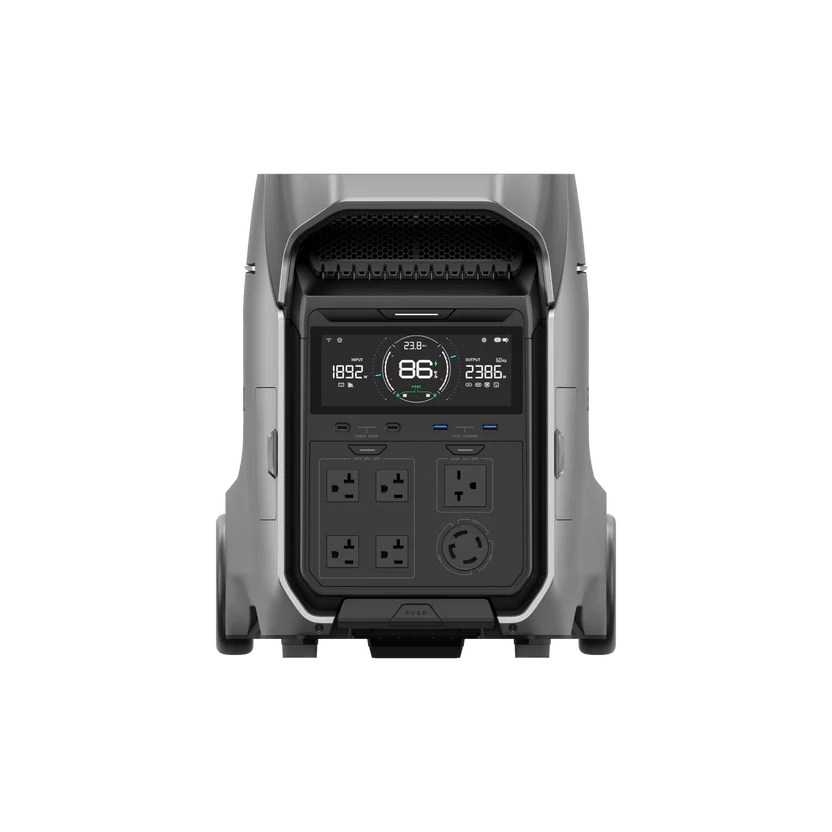
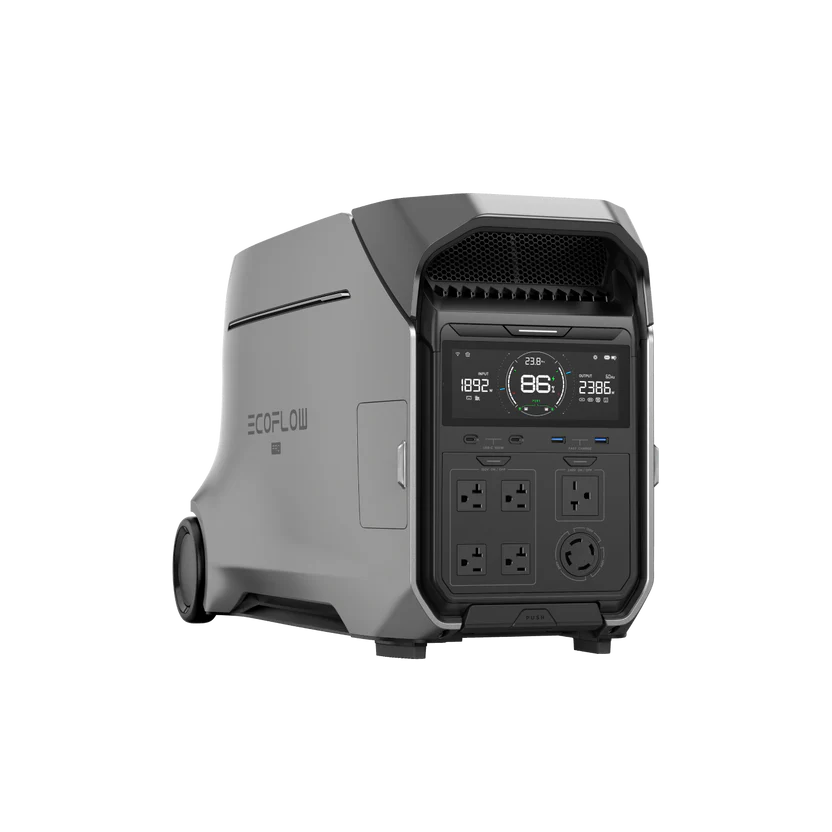
We might be unable to control low water and the blackouts they can cause. However, we can create our own reliable, scalable, portable power solution with the EcoFlow DELTA Pro 3 so that when the power goes out, our lights stay on.
Frequently Asked Questions
Could a Tsunami Form in the Great Lakes?
Yes, a tsunami can form in the Great Lakes. However, they are meteotsunamis caused by rapid changes in air pressure and/or high winds, like the 10-foot wave in 1954 that killed seven people.
Why Is the Great Lakes Water Level So Low?
The Great Lakes undergo a natural water cycle that changes roughly every 15 years from higher to lower than average levels. Currently, we are in a low-water cycle combined with high temperatures and evaporation, resulting in low levels.
Why Is Lake Erie So Low Right Now?
Lake Erie is currently in a low-water phase, part of a long-term natural cycle. However, that natural cycle is being affected by a warmer atmosphere that accelerates evaporation and causes levels to fall faster than ever before.
Ready to Build Resilience with EcoFlow DELTA Pro 3?
The Great Lakes have always experienced natural fluctuations in water levels driven by weather and long-term climate patterns. Add in human consumption, diversion, and nearby development that affects runoff, and we have more fluctuations. While high levels lead to shoreline erosion and flooding, low levels cause issues for shipping, boating, marina access, hydropower, and wetland health. Preparation requires flexible planning, adaptation, education, smart water management, and restoration of wetlands and natural shorelines. At home, we can use solar panels and the EcoFlow DELTA Pro 3 to enhance our own resilience.
For press requests or interview opportunities, reach out to our media team
media.na@ecoflow.com