Fast Wireless Charging Vs Wired: How To Choose
When you’re staring at a low battery, the real question isn’t “cables or no cables?” It’s “what gets me charged fast enough for my life?” In most cases, wired fast charging still wins for raw speed, but a fast wireless charger can be fast enough for everyday use if you pick the right setup and use it in the right situations.
What Is A Fast Wireless Charger And How Fast Is Wireless Charging?
A good place to start is understanding what “fast” even means here. Marketing makes everything sound quick, but there’s a big gap between slow 5W pads and modern wireless fast charger models.
Basic Charging Power Levels
Most wired phone chargers today sit in the 20–45W range, and some laptop-grade USB-C chargers go all the way up to 240W under newer USB Power Delivery (PD 3.1) standards.
By contrast, typical Qi wireless chargers for phones deliver 5–15W, while the latest Qi2 standard can reach around 25W for compatible devices.
So when you ask how fast wireless charging is, the honest answer is: usually slower than a wired fast charger, but much better than the old 5W pads people started with years ago.
Real-World Charging Time Comparison
Numbers on the box are one thing; how they feel in real life is another.
Tests and manufacturer data show that many phones with a 20–30W wired fast charger can jump from 0–50% in roughly 25–35 minutes if everything is set up correctly.
Qi wireless chargers in the 5–15W range often need around 3–4 hours to go from 0–100%, and roughly an hour to push a phone from empty to about half full.
Here’s a simple comparison for a typical modern phone battery (ballpark figures, your exact results will vary):
| Charging Method | Typical Power For Phones | 0–50% Charge (Approx.) | 0–100% Charge (Approx.) |
| Wired fast charging | 20–30W | ~25–35 minutes | ~70–90 minutes |
| Fast wireless charging | 10–15W | ~45–70 minutes | ~3–4 hours |
These aren’t lab-perfect numbers, just realistic ranges based on common hardware and published tests.
Factors That Change Charging Speed
Speed isn’t only about wattage:
Battery percentage: Phones usually charge very fast from 0–50%, then slow down to protect the battery.
Heat: Both wired and wireless systems will cut power if things get too warm.
Cable and adapter: Cheap or mismatched accessories can cripple wired fast charging.
Alignment: With a fast wireless charger, even a small misalignment between coils can drop the actual power.
In short, wired is still the speed king, but a solid wireless pad in the 10–15W range is perfectly fine for desk or nightstand use if you don’t need emergency top-ups all the time.
Wireless Charging Vs Wired: Which Is Better For Speed And Efficiency?
Once you know the rough speed difference, the next big comparison in wireless charging vs wired is energy efficiency and what that means for heat, battery life, and your bill.
Energy Efficiency And Heat
With a cable, power flows directly into the device, so modern wired fast charging is relatively efficient. Wireless charging sends power through an electromagnetic field, which naturally wastes more energy as heat.
Some independent tests have found wireless setups using around 40–50% more energy from the wall to fully charge a phone compared with a cable, especially when alignment is poor or cases are thick.
More wasted energy = more heat. That’s why your phone and fast wireless charger might feel warm after a long session.
Battery Health Over The Long Term
Both wired and wireless systems can be gentle on your battery if they’re well designed:
Good chargers slow down automatically near 80–100%.
Many phones limit the maximum speed when they detect high temperatures.
But because wireless charging has more losses, it’s easier for things to get hot if you:
Stack the phone on top of other devices
Charge in direct sunlight or a hot car
Use a non-certified pad with a poor coil design
For long-term battery health, moderate power levels (not the absolute fastest your phone can handle) and reasonable temperatures are more important than whether power comes through a cable or a pad.
Safety, Standards, And Compatibility
On the safety side, both technologies are mature. Qi is the standard fastest wireless charger pad for phones, with Qi2 as the newer spec that adds magnets and better alignment.
Wired fast charging often relies on standards like USB Power Delivery or proprietary protocols. These are generally safe when you use certified accessories and avoid extremely cheap, no-name gear.
From a pure “speed plus efficiency” standpoint, wired still wins. From a “good enough plus convenient” standpoint, wireless has become much more compelling than it was a few years ago.
Wireless Fast Charger Vs Wired: Which Fits Everyday Life Best?
Speed is always desirable, but it's the habits of daily use that help decide whether you will have fun using the wireless fast charger or the wired one.
Desk And Bedside Charging Habits
In the case of a desk or nightstand, convenience is more important than speed. The presence of a fast wireless charger is helpful as it enables you to:
Drop the phone down and pick it up constantly without hunting for a cable
Keep the port free, which is great if it’s already a little worn
Use stands that hold the screen at a readable angle during calls or video calls
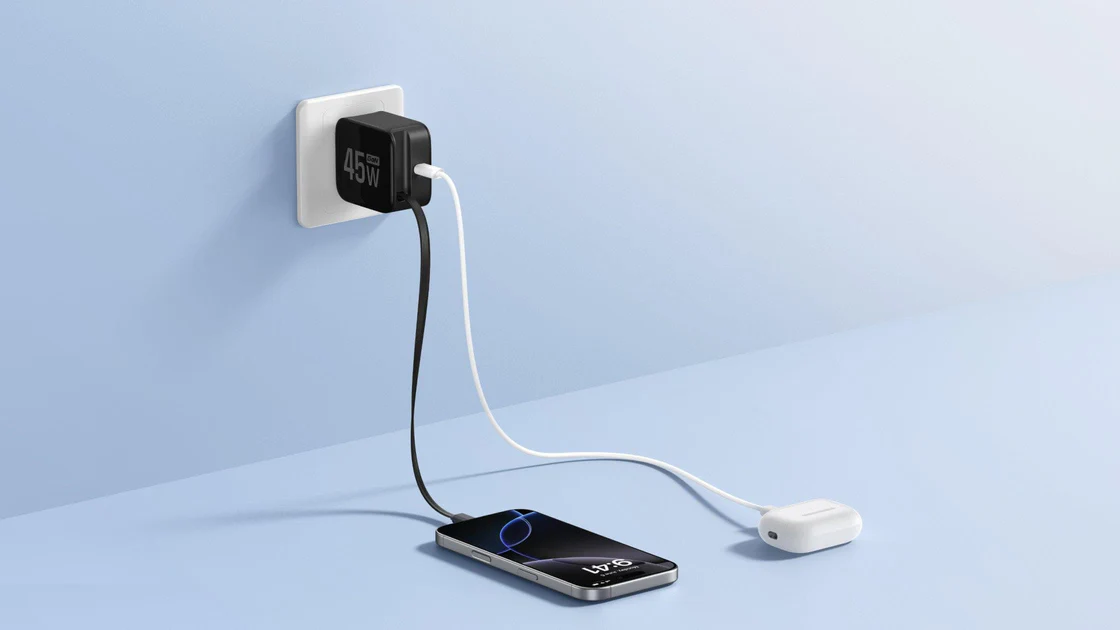
In this case, an AA10-15W15W charging pad already suffices. If you leave your smartphone on this holder for several hours, then it's pointless to enjoy maximum wire-based fast charging speeds. If you want a simple example, a compact 45W GaN wall brick such as EcoFlow RAPID Charger (with a built-in retractable USB-C cable) can easily handle most phones and small devices on the wired side, while a 25W Qi2.2 3-in-1 stand like EcoFlow RAPID Mag Wireless Charging Station can give you full-speed wireless charging for your phone, earbuds, and watch from a single, tidy spot on your desk.
Travel, Commute, And Car Use
On the go, your priorities change:
In a car: A good wireless mount avoids fumbling with cables while driving, but a wired cable in the console is usually faster, which matters if you’re only in the car for 20 minutes.
On trips: Wired chargers tend to be smaller and lighter, and one brick with a couple of USB-C ports can serve your phone, tablet, and other gear.
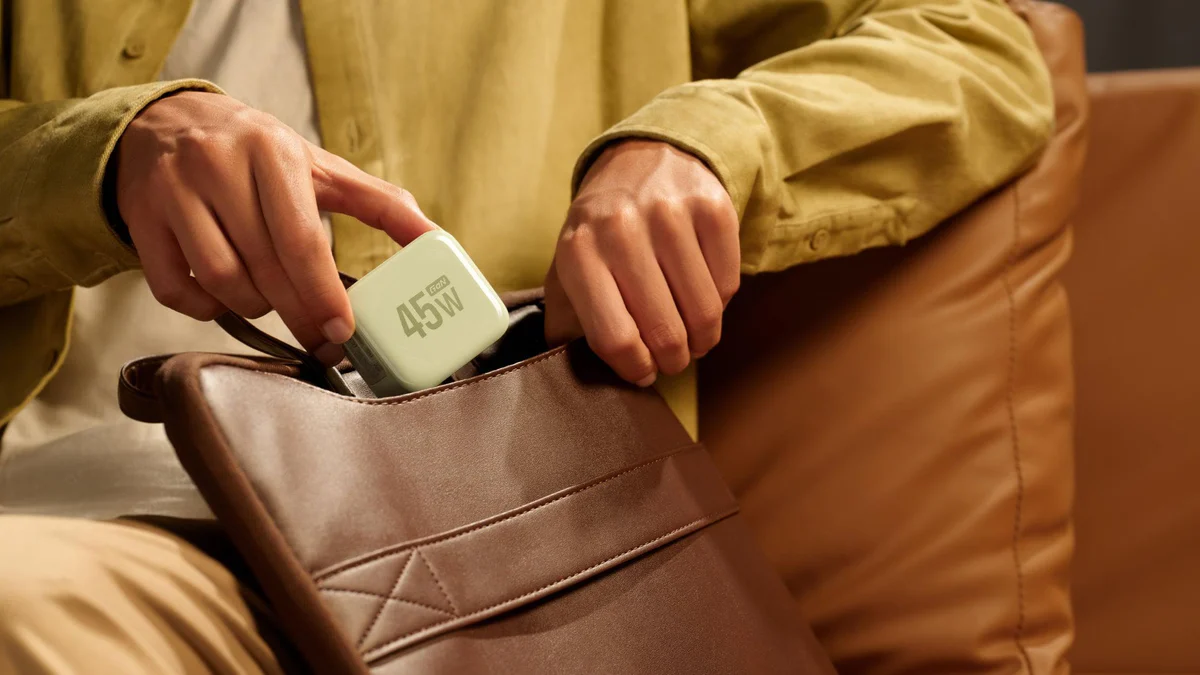
If you travel a lot and only get short charging windows at airports or cafés, wired still gives you the most “battery percent per minute.” For travel days, a small multi-port 45W GaN adapter such as EcoFlow RAPID Charger is easy to toss in a bag, and its built-in retractable USB-C cable cuts down on cable tangles in hotel rooms, airport lounges, and coworking spaces while still giving you full wired fast-charge speeds.
Gaming, Work, And Multitasking
Heavy usage, such as gaming, hotspot tethering, and video chats, can warm the phone without it being connected to the charger. Now, layer fast charging on top of this, and it gets warm.
In those situations, a wired charging solution with good airflow may be the better choice. The smartphone can be placed flat on a charging stand with an attached fan or positioned independently. Wireless charging platforms, especially those without cooling and flat designs, tend to trap heat beneath the smartphone.
The pattern here is simple:
If you’re staying put and just want easy top-ups, a fast wireless charger shines.
If you’re moving around or constantly in a hurry, a cable still feels more dependable.
How To Choose Between A Fast Wireless Charger And a Wired Charger?
After realizing your habits, the decision on whether to opt for fast wireless or wired becomes a matter of just a few factors to consider.
Key Specs To Check Before You Buy
When purchasing a fast wireless charger or a widecharger, the first question you should ask is whether it will allow your phone to charge fast.
Check the wattage range supported by your mobile model and make sure the charger falls within the same range.
Next, look at certification.
For wireless, that means Qi or Qi2.
For wired, look for common fast-charge standards such as USB-PD instead of random “super fast” marketing terms.
Then, note the quality and length of the cables. If the cable is low quality and/or very long, charging may be slowed down, regardless of the quality of the charging brick.
In wireless alternatives, look for safety mechanisms such as temperature control and foreign object detection so that the pad can respond in case things get too hot and keys and coins come into contact with the touchpad.
The easy-to-remember rule is that you shouldn't go for the largest watt rating on the package. Choose one that complements your smartphone's capabilities.
When To Pick Wired Fast Charging
Fast charging through cables is preferable if it is a case of either/or.
If you often require fast charging during short intervals, such as on your way out the door, between business meetings, or on the go, wired charging will provide you with more charge faster.
It's also handy if you have many gadgets and just one charging station. The brick and cord are easy to switch between different gadgets.
If you're plugging in while gaming, or doing something intensive, then wired charging is still the get me charged quickly, so I can move on option and will always feel the most trusted.
When To Pick A Fast Wireless Charger
Fast wireless charging is most suitable for easy and ubiquitous charging. The fast wireless charger stands out on your office desk or nightstand, allowing you to safely place your phone and charge it immediately, ne searching for a charging cable. Wireless is helpful if you're the type of person who is always picking up and putting down your phone, or if, in the long run, you value the life of your charging port. Wireless charging will also prove helpful if you're referring to overnight charging as opposed to emergency charging.
One easy method to decide is this: Use wired ones for emergency and travel situations, and use wireless ones for day-to-day parking spots in and around the home and office. Most people wind up needing both.
FAQ
Q1. Is Wireless Charging Bad For My Battery Compared to Wired?
Not necessarily. The latest phones manage battery life through sophisticated charging ramps, regardless of whether you use a cable or a dock. The primary issues affecting batteries are heat, deep discharges, and sustained high power rates. Wireless charging may run slightly hotter, as it is less efficient, but if you're using a sound dock, keeping your case thickness reasonable, and not baking the phone in your hot car, this isn't a significant issue. Modest tiers of power, typically 10-15W, and reasonable temperatures are much more important than your choice of dock versus cable.
Q2. Can I Use One Fast Wireless Charger For My Phone, Earbuds, And Watch?
Sometimes, but this depends on the capabilities of the other devices. Mocasese-like phones and kephones use the same technology, making them compatible with any wireless charging pad. Watches are more complex and often require specialized systems that only work with specific chargers. Before purchasing an overall fast wireless charger for all of your devices, look for one that names your types of devices explicitly, and not merely "one, watch, and earbud set. If so, then just one wireless charging pad for the phone and the regular chargers for all else is probably the better choice.
Q3. Is It Safe To Leave My Phone On A Fast Wireless Charger All Night?
If one is using qualified equipment, it is safe for the vast majority of people. Modern cell phones will cut back on the full power draw as soon as they reach a high level of charging and will "turn off "lowly at this point. Some models will also wait to charge the final few percent right before your typical waking point if you set optimized charging settings. More damage is likely to be caused by the following activities: letting the phone sit on top of books, boosters, or heavy, non-certified cases, as well as charging on plush bedding. When the charging mat and phone are only slightly warm to the touch and high-quality equipment is being used, wireless charging is safe.
Conclusion
Both options have a place: wired for speed, a fast wireless charger for everyday convenience. If you want a simple setup, keep a wired fast charger in your “panic” spots—like your desk or travel bag—and add one or two wireless pads where your phone naturally rests at home. That mix gives you quick top-ups when you’re in a hurry and effortless charging the rest of the time, without overthinking it.
If you’d like a concrete combo, pair a compact 45W GaN wall adapter, such as EcoFlow RAPID Charger, with your wired emergency boosts with a foldable 3-in-1 Qi2.2 wireless stand like EcoFlow RAPID Mag Wireless Charging Station on your desk or nightstand, so you always have both maximum speed and easy everyday charging covered.
For press requests or interview opportunities, reach out to our media team
media.na@ecoflow.com