Best Campgrounds in Southern California for Beachside Adventures
There's a specific kind of quiet that only happens when you fall asleep to waves instead of traffic, and Southern California's coastline has plenty of it. From San Diego up through Santa Barbara, state park campgrounds let you wake up and walk straight onto sand. The hard part isn't finding one, it's picking the right one, so here are the best campgrounds in Southern California worth booking and what makes each stand out.
Before you pick a spot, it's worth packing one thing that makes any of these trips easier: a portable power station like the EcoFlow DELTA 3 Classic keeps phones charged and lights on no matter which campground you land on.
Best Beach Campgrounds in Southern California
Every one of these campgrounds puts you within a short walk or drive of the Pacific, which is the whole point of oceanfront camping in California, though they don't feel alike once you're actually there. Some are built for surfers chasing dawn patrol, others for a family hauling coolers and folding chairs, or an RV that needs a hookup and a level pad. Here's how they compare before we get into what makes each one worth the drive.
.png)
.png)
Campground | Best For | Location | Camping Style |
San Onofre State Beach Campground | Surfing and classic beach camping | Near San Diego | Tent camping |
Crystal Cove State Park Moro Campground | Scenic views and hiking | Orange County | Tent camping |
Leo Carrillo State Park Campground | Nature and coastal exploration | Malibu | Tent camping |
Doheny State Beach Campground | Families and beginner campers | Dana Point | Beach camping |
Carpinteria State Beach Campground | Relaxing coastal getaways and RV trips | Santa Barbara | Tent and RV camping |
.png)
.png)
San Onofre State Beach Campground
San Onofre is one of the best campgrounds in Southern California and sits between Los Angeles and San Diego, and surfers treat it like a second home. The campground splits into two areas: the Bluffs, where sandstone cliffs drop to the water along six dirt trails, and San Mateo, a mile inland with hookups, a small store and surf shop, and a nature trail back to the coast.
The surf breaks are the real draw here, including Old Man's, a mellow, beginner-friendly wave that's taught generations to surf.
This is unpolished, old-school camping. Expect train noise at night, cold outdoor showers only, and 'flush' pit toilets rather than modern restrooms. Most surfers wouldn't have it any other way, with waves out the tent door and a fire ring waiting when they get back from the water. Trails, the southernmost surf spot in the area, sits right off the last stretch of bluff campsites, so it's worth a look even if you're set up further up the bluff.
Sites at San Mateo book up to six months out through ReserveCalifornia. The Bluffs only take online reservations mid-March through mid-September, first-come first-served the rest of the year, so the closer to a summer weekend, the faster spots go.
Crystal Cove State Park Moro Campground
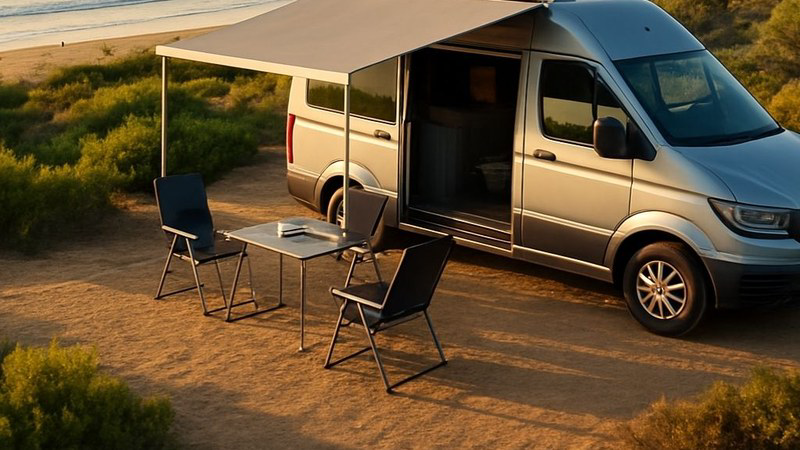
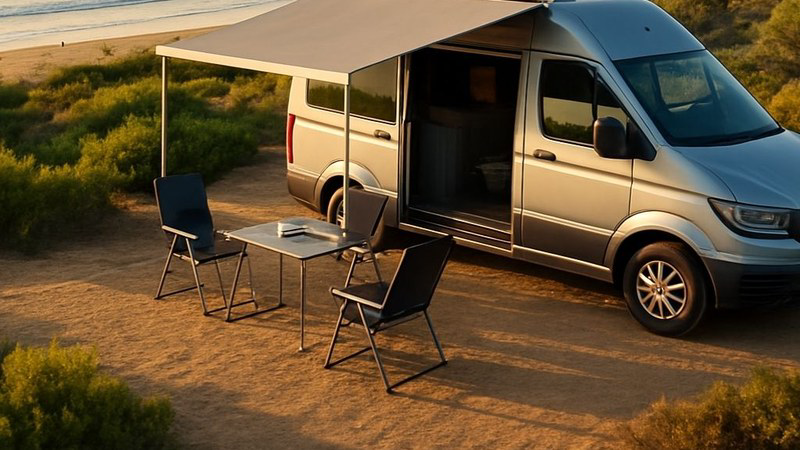
Moro Campground sits on a bluff above Crystal Cove, offering some of the most scenic oceanfront camping California has along this stretch of the coast, with hookup sites for RVs and non-hookup pads for tents and van conversions, plus flush toilets and coin showers nearby. A tunnel under Pacific Coast Highway drops you straight onto the beach, tide pools sit within walking distance, and the Moro Canyon trails head inland through coastal sage scrub.
Just south along the same stretch of coast, Crystal Cove's historic beach cottages and the Beachcomber Cafe make a nice break from camp food if you want dinner without packing it in. Fires here are gas-only, so leave the firewood at home.
If Moro fills up, or you want something more remote, 32 hike-in backcountry sites sit further inland across three areas, trading a short hike for real solitude and a quieter night.
Spots go fast the moment the six-month booking window opens, so plan to be online right when it does.
Leo Carrillo State Park Campground
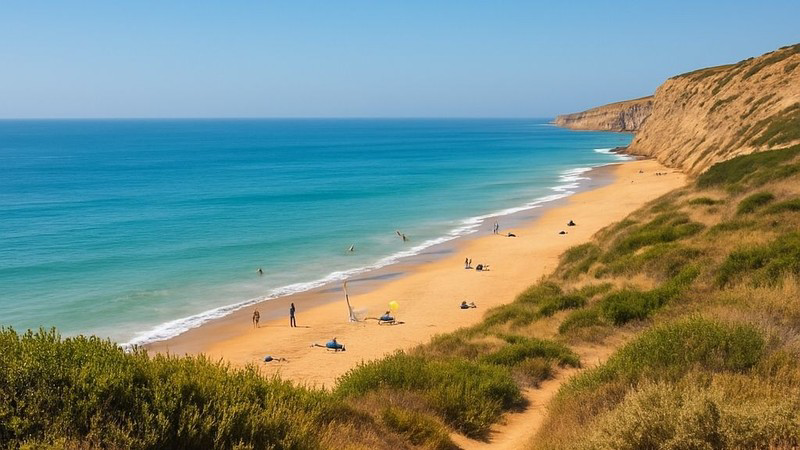
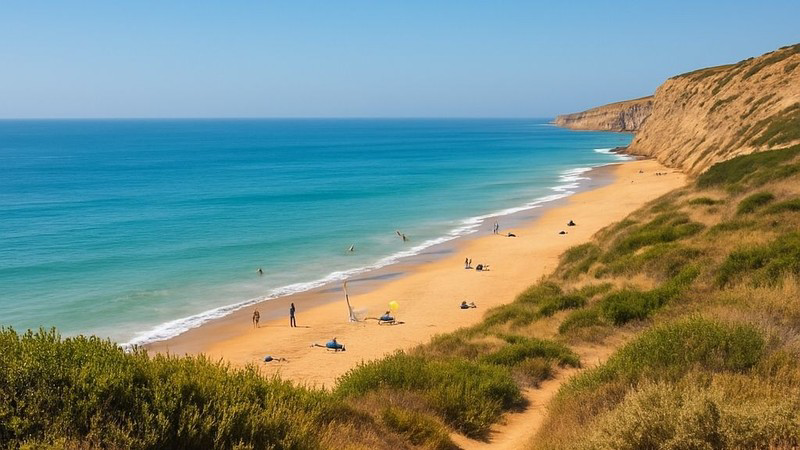
Leo Carrillo convinces people who don't think of themselves as campers to give Southern California beach camping a try. It sits under a canopy of sycamores off Pacific Coast Highway northwest of Malibu, with restrooms and showers on site and more shade than most beach campgrounds further south offer.
Below the bluff are sea caves, tide pools, and reefs that turn a beach walk into real exploration, plus a surf break of its own for anyone who'd rather not drive further south for waves. Low tide reveals starfish, anemones, and hermit crabs, and a grotto only reachable at the right tide has become a bit of a local secret among photographers.
A nature center runs junior ranger programs for families, and trails toward Nicholas Flat bring a shot at spring whale watching. It's chaparral country, so stick to marked trails and watch for wildlife like rattlesnakes along the way.
Doheny State Beach Campground
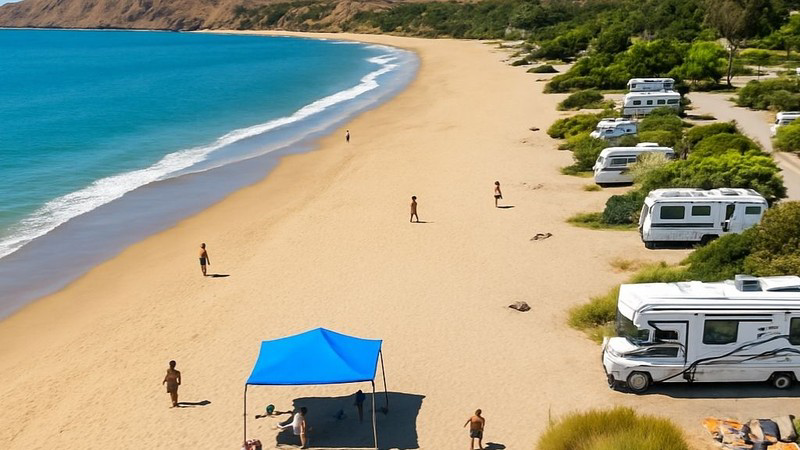
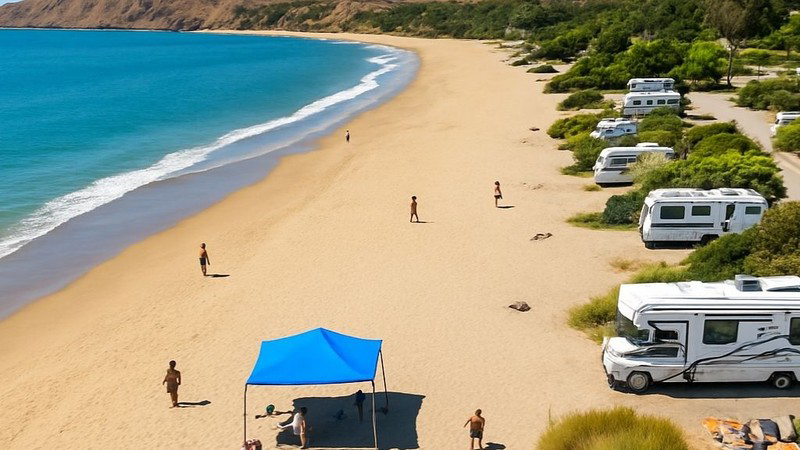
Doheny has welcomed campers since 1931, when it became California's first official state beach, and it still feels built for an easy, no-friction introduction to camping on the beach in Southern California. Some sites sit just steps from the sand, with a visitor center and aquarium tanks for kids, a bike path along San Juan Creek, and a small reef and tide pool area worth checking at low tide.
There's a real sense of community here that families notice right away, the kind where the same neighbors show up every Fourth of July. The waves are gentle enough for a first-timer to learn on, and Dana Point Harbor is a short walk away for tacos or a whale watching tour.
Doheny is a dry campground with no hookups, and site layouts vary, so it's worth glancing at the map before you book if a water view matters.
If you want fuller hookups, South Carlsbad State Beach offers electric and water connections, a dump station, and its own on-site restaurant and general store known as The Camp Store, all on the same bluff-top layout as Doheny. If you'd rather trade beach-level camping for a shaded bluff, El Capitan State Beach near Santa Barbara sits among sycamores and oaks, though it's also a dry campground with no hookups and a 30-foot length limit for RVs and trailers.
Doheny is about as forgiving a place to start as Southern California offers, especially with young kids or a first tent.
Carpinteria State Beach Campground
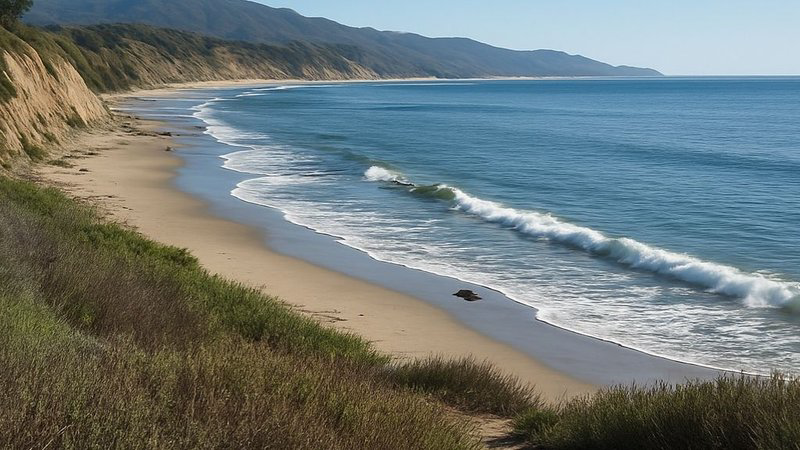
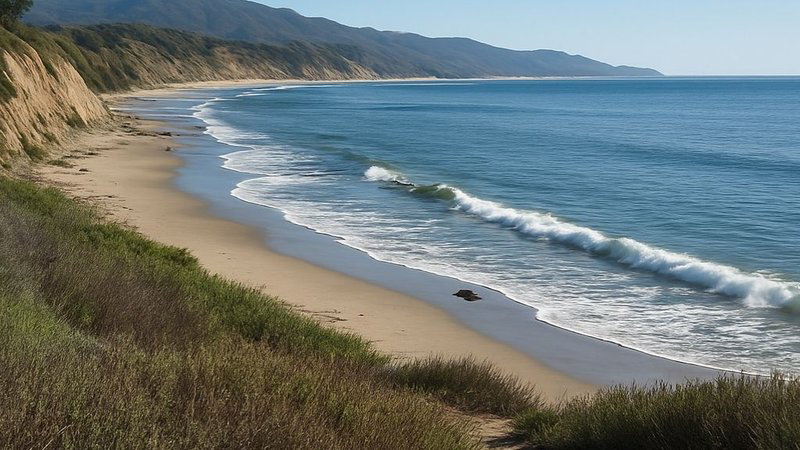
Carpinteria sits twelve miles south of Santa Barbara, a favorite for beachside camping California families have returned to for decades, on a stretch of coast known for calm, swimmer-friendly water.
The campground is genuinely big, over 200 sites across four loops named after the Channel Islands, most with restrooms and showers, and a good number offering full hookups for RVs.
The wildlife is what makes the drive north worth it. Harbor seals haul out at a rookery a short walk down the Bluff Trail, with pups born every February through April, and gray whales pass offshore from December into May. A ranger-led interpretive program runs seasonally for families who want more than a self-guided walk.
Add tide pools, a mile of sand, and a downtown just outside the entrance for coffee or dinner, and it works equally well for a family reunion, an RV trip, or a slower coastal weekend.
One local quirk: natural tar seeps onto the sand here, so bare feet can pick some up. A small bottle of baby oil handles cleanup before it ends up in the tent or the car.
Book up to six months out through ReserveCalifornia, and aim for a beachfront site near 358 to 380 if you can, since inland loops trade the view for more privacy.
What Makes a Great Beach Campground in Southern California
Once you've looked at more than a couple of California coastal campgrounds, a pattern shows up in what actually separates a good one from a great one. It usually comes down to a handful of things:
Direct beach access and ocean views, not just proximity on a map
Campsite facilities and available amenities, from hot showers to hookups
Accessibility from major Southern California cities, since a two-hour drive changes the whole trip
Nearby activities such as surfing, hiking, swimming, and wildlife watching
Tent, car camping, and RV options that match your setup
Reservation availability and how far in advance you need to book
None of these factors matter equally to every camper. A surfer chasing a specific break cares less about hookups than someone bringing an RV and a cooler full of groceries for a week. Knowing which of these you actually care about is what turns "pick a campground" from a scroll through search results into an actual decision.
Worth knowing before you book: Pets are allowed at every campground on this list, but the rule is the same everywhere: leashed in camp, never on the beach. Fire rules vary more than people expect, from open fire rings at most sites to gas-only fires at Crystal Cove, so check before you pack wood. And if you're eyeing a summer weekend, most of these campgrounds release reservations exactly six months out, often at midnight, with the most popular sites gone within minutes.
How to Prepare for a Comfortable Beach Camping Trip
Southern California beach camping has its own quirks that inland camping doesn't prepare you for, and most of them come down to two things: the environment working against your gear, and your gear running out of juice before you're ready to leave.
Protect Your Setup From Coastal Conditions
Oceanfront camping California style puts you right up against the elements, dealing with wind that doesn't let up, sand that finds its way into everything with a zipper, and salt air that's genuinely corrosive to anything metal left exposed overnight Nighttime temperatures also drop more than people expect, even in the middle of summer, since that marine layer rolls in fast once the sun goes down.
A few things make a real difference: pack gear in weather-resistant bins rather than open bags, keep electronics zipped away when you're not using them, and bring a windbreak or a tent rated for coastal conditions rather than the cheapest dome you can find. A warmer sleeping bag than you think you need is never a bad call out here.
Keep Your Campsite Powered
How much power you need for beachside camping in California really depends on the kind of trip you're planning and who's coming with you. A weekend with a couple of tents and phones to charge is a different equation than a week-long stay with a family, a cooler running off battery, and an RV that needs to stay comfortable overnight.
For weekend beach campers and tent campers, the EcoFlow DELTA 3 Classic covers the basics without adding bulk to your car. At 1,024Wh, it's enough to keep phones and cameras charged, run a string of lights through the evening, and handle small appliances like a portable fan or a coffee maker, all while staying light enough that packing it in and out of the car isn't a chore.
Keep Your Campsite Powered Anywhere with the EcoFlow DELTA 3 Classic
For families, RV campers, and longer coastal trips, the EcoFlow DELTA 3 Max is built for a bigger job. Its 2,048Wh capacity and 2,400W of continuous output give you enough headroom to run a mini fridge, charge devices for a whole family, and power a fan or small heater at the same time, without babysitting what's plugged in. If your trip stretches past a couple of nights or your setup leans more toward RV than tent, the extra capacity is the difference between rationing power and just not thinking about it.
Power Bigger Camping Trips with the EcoFlow DELTA 3 Max
Whichever trip you're planning, it's worth browsing the full lineup of portable power stations to match capacity to how many nights, and how many people, you're actually powering. And if a Southern California beach trip turns into a longer coastal habit, the same setup travels well into glamping in California too.
Conclusion
Camping on the beach in Southern California doesn't come in just one version. It comes in several, depending on whether you want to surf at dawn, watch seal pups from a bluff trail, or get the kids close enough to the water that the whole trip feels effortless.
The best campground is the one that matches how you camp, so let what you care about most, whether that's a surf break, a hookup, or a shorter drive, make the call for you. And once the Southern California coast feels familiar, camping in Northern California is worth exploring for a change of scenery.
Pick your coastline, check the booking window, and pack the EcoFlow DELTA 3 Max to keep everything running once you get there.
Frequently Asked Questions About Beach Camping in Southern California
What is the best time of year for beach camping in Southern California?
Late spring through early fall brings the most reliable weather, with summer being the busiest and hardest to book. Spring offers wildflowers and gray whale migration with lighter crowds, while fall tends to bring warm days and quieter campgrounds once school is back in session.
Do Southern California beach campgrounds require reservations?
Yes, nearly all of them. Most state park campgrounds open reservations exactly six months in advance through ReserveCalifornia, and popular spots for summer weekends can book out within minutes of that window opening.
Can you bring an RV to Southern California beach campgrounds?
Most of these campgrounds accommodate RVs, though hookups and length limits vary by location. Carpinteria and San Mateo at San Onofre offer electric and water hookups, while Doheny and the San Onofre Bluffs are dry camping only, so check size restrictions before you book.
What should I bring for camping on the beach in Southern California?
Beyond the basics, pack layers for cooler nights, a windbreak for your site, closed storage to keep sand out of your gear, and a reliable way to keep devices charged since outlets are rare at most of these campgrounds.
For press requests or interview opportunities, reach out to our media team
media.na@ecoflow.com