Sodium Ion Batteries Explained: Future Energy Storage Technology in 2026
- What Is a Sodium Ion Battery and how it works?
- Advantages and Limitations of Sodium Ion Batteries
- Safety and thermal stability advantages
- Current limitations of battery sodium technology
- Are Sodium Ion Batteries Ready for Everyday Use?
- Current commercialization progress of sodium-ion batteries
- Why Lithium Iron Phosphate (LiFePO4) batteries remain a practical choice today
- Smarter Home Energy Solutions Available Today
- EcoFlow STREAM Ultra X for households with larger energy storage needs
- Building a smarter home energy storage setup
- Potential impact on renewable energy systems
- Challenges facing large-scale adoption
- Conclusion
- FAQs
With the development of energy storage technology, sodium ion batteries have attracted research and commercial energy interests. With many people interested, the question of whether sodium-based battery systems could eventually replace the highly dominant lithium battery systems of today is being explored.
Sodium battery development is becoming a focus of interest for sustainability because of its potential cost and availability of materials. However, it is still in its early stages of development and not widely used in homes. A knowledge of the working principle of the sodium-ion battery, the differences between such battery and the present battery systems, and what the sodium-ion battery might provide in the future gives a clearer idea of the current evolution of energy storage systems.
What Is a Sodium Ion Battery and how it works?
A Sodium Ion Battery is an energy storage technology that uses sodium ions moving between the battery electrodes during charging and discharging. Although the principle of operation is similar to most other rechargeable battery systems in use today, sodium is the main charge carrier as opposed to lithium.
Growing interest in sodium ions batteries has been driven by the fact that sodium is much more abundant worldwide than lithium and could enable alternative strategies for the development of future energy storage systems. But battery performance, production scale and commercialization readiness are important to consider.
Difference between lithium and sodium batteries
When looking up information about a sodium battery, one of the most frequently asked questions is how this battery differs from the available lithium battery technologies. Both types of battery systems store and release electricity through the movement of ions, but they are based on different materials and are in different stages of market maturity.
In simple terms:
Feature | Sodium-Ion Batteries | Lithium-Based Batteries |
Primary material | Sodium | Lithium |
Material availability | Higher global availability | More concentrated supply |
Commercial maturity | Developing | Widely commercialised |
Current household usage | Limited | Common |
Energy density | Generally lower today | Higher in many applications |
Currently, lithium technologies are more popular for residential and small scale applications due to existing production and market availability.
Why sodium battery technology is gaining attention
The need for energy is still growing in the residential, transportation and renewable energy sectors, resulting in renewed interest in battery sodium technology. Alternatives are being researched and manufactured that could diversify the supply of batteries and be used to support the long-term development of energy storage.
There are several reasons why people are still interested in sodium-ion batteries:
More raw materials available
As energy storage use becomes more widespread,
Desire to decrease supply concentration
continuing expansion of renewable energy sources
The continued investment in technology in batteries.
Another factor that makes sodium batteries prominent is the potential for developing energy storage solutions to support future electricity systems as technology advances.
Meanwhile, attention and interest is not necessarily immediate to the home. In the meantime, challenges such as performance, scale, and practical availability continue to be significant considerations on the path to widespread commercialization of sodium battery technology.
Advantages and Limitations of Sodium Ion Batteries
While the need for energy storage continues to rise, sodium ion batteries are being discussed as they offer benefits with respect to conventional battery supply chains. But while research and development has been promising, there are practical challenges for sodium battery technology before it can be widely used in the daily life. The knowledge of opportunities and constraints provides a realistic picture of the state of this technology.
Benefits of sodium-ion batteries for energy storage
The fact that sodium batteries are still attracting attention is partly because they could help power future energy storage systems via increased access to materials and supply diversification. As sodium is naturally abundant, there's potential for alternative battery ecosystem to develop in the longterm.
Some of the benefits that are mentioned are:
greater material availability than lithium
Risk of reducing supply concentration of interest
The increasing importance of renewable energy systems
(Continued) innovation in battery production.
Areas of potential for future large scale energy storage development.
The appeal for energy storage markets isn't in only replacing old and existing technologies but in broadening opportunities for the future as electricity demand grows around the world.
Meanwhile, most of these benefits are not realized on a public scale but continue to be those of development.
Safety and thermal stability advantages
Sodium-ion batteries are still a subject of interest for other reasons, too, such as their thermal response under certain operating circumstances. As battery systems are increasingly added to the energy supply of the home, transport systems and renewable electricity networks, it is increasingly important to consider battery safety.
Scientists are investigating if there are benefits to sodium chemistry for the following:
thermal stability characteristics
lower dependency on certain raw materials
minimized overheating issues under certain scenarios
suitability, stationary storage research
But chemistry is not the only factor that affects battery safety. Quality of manufacturing, system design, battery management, and installation quality are still all equally important factors in the real-world performance.
Therefore, while it is true that safety discussions on sodium technologies need to be considered in the light of the current development and not with the status quo of established household use, it is also true that these technologies are maturing and will continue to develop over the next years.
Current limitations of battery sodium technology
Although there has been an increasing interest, sodium battery technology is not yet as commercialized and used in the household as the more developed battery systems that are currently available.
There are still several barriers to broader adoption:
The manufacturing scale is not large enough.
Energy density enhancements are still being developed.
The commercial availability is still fairly limited.
Production ecosystems keep growing,
Long term performance data is still developing
In other words, while sodium technologies have long-term promise, most homes do not specify them as their energy storage alternative of choice.
For homeowners who are concerned about practical energy management in today's world, the maturity, reliability, availability and past performance of batteries are more crucial than future potential.
This gap between promise and availability of the technology is particularly relevant to the question of whether or not sodium batteries are available for common household applications.
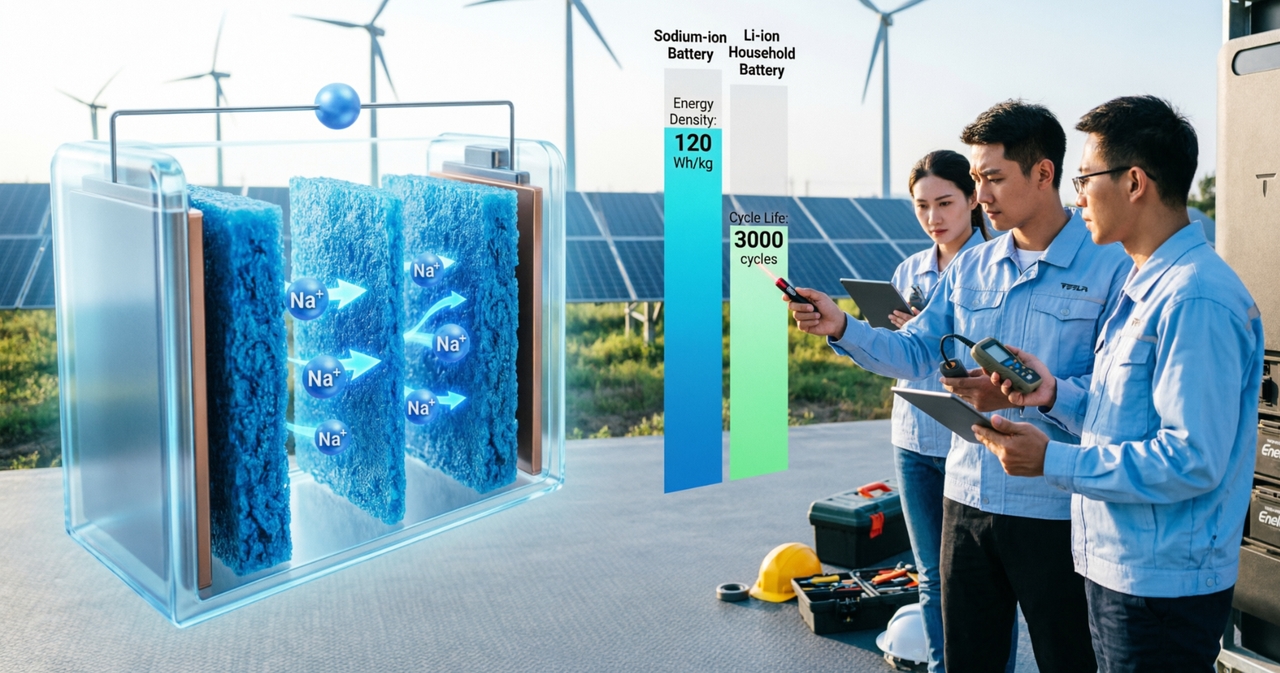
Are Sodium Ion Batteries Ready for Everyday Use?
Sodium ion batteries are still being researched for use in energy storage, but commercialization and widespread use in homes are not yet widespread. There are some factors like energy density improvements and technology maturity, and scale of production that are still developing.
For existing homes wanting to manage their energy use, mature battery technology is a more accessible and reliable solution today. It is important to understand the state of sodium technology today so that the future potential can be distinguished from the current energy decision.
Current commercialization progress of sodium-ion batteries
Sodium-ion battery technology has made more strides in recent years for commercial use, and is still in its early stages for use in homes. Manufacturers are still continuing to invest in research and production expansion, but sodium batteries have yet to become commonplace energy storage solutions for residential use.
Current development is mainly focused on:
scaling manufacturing capability
improving battery performance
reducing production costs
validating long-term reliability
expanding commercial applications
Some manufacturers are actively looking into sodium technologies and projects that typically come along with the development of CATL sodium ion batteries and the innovations in batteries. But today, most domestic consumers are still on traditional batteries.
Sodium technology is still in the early stage of development and is not yet a standard energy technology in the home.
Why Lithium Iron Phosphate (LiFePO4) batteries remain a practical choice today
The development of new batteries technologies is not yet complete but lithium iron phosphate (LiFePO4) battery systems are one of the most viable and popular energy storage solutions for homes today.
The advantages of LiFePO4 systems are:
proven commercial maturity
established long-term performance
broad market availability
system interoperability with solar powered energy systems
real-life applications for managing energy in the home
While developing sodium technologies, LiFePO4 battery systems are already being applied in residential electricity systems to enable day-to-day use.
Mature technologies remain more valuable in the short-term and predictable for homes more interested in taking immediate action to be more energy efficient, as opposed to waiting for future battery advances.
Comparing future sodium battery potential with current home energy storage solutions
Comparisons of future sodium battery possibilities to current battery storage possibilities for home energy systems aren't as much about what can be achieved in theory as it is about what can be achieved in practice.
Sodium batteries might be further developed and will find a place in future energy systems. But, most current household energy decisions are made based on:
available technology
installation readiness
energy management flexibility
proven system reliability
immediate usability
This is why traditional battery-based systems continue to be the best choice for homeowners who want to manage their electricity usage rather than try something new.
While this is indeed an important aspect of the future of innovation, household energy needs remain present today.
What households can use today for smarter electricity management
The demand for electricity in modern houses continues to evolve and many homes are seeking options to meet the required flexibility and to help with future energy planning.
People nowadays pay attention to the following when buying a home:
solar-supported energy systems
home battery storage
cutting down on peak hour power consumption
keeping track of the amount of energy used at home
improving electricity efficiency
Instead of waiting for new technology, many homes are already taking advantage of practical, achievable solutions for energy management that are available today.
This transition from future battery potential to real world home energy optimisation is contributing to the evolution of modern home energy systems.
Smarter Home Energy Solutions Available Today
Although sodium batteries are still evolving, many people are already making their homes more energy-efficient with current, more advanced energy storage technology.
The Lithium Iron Phosphate (LiFePO4) battery system has been designed for solar energy storage, thereby cutting down the reliance on the grid and enabling households to better manage their growing energy needs. These solutions provide homeowners with immediate energy storage benefits and, in the meantime, other battery technologies are still being developed.
Why LiFePO4 home battery systems are becoming more important
Electricity consumption has become increasingly dynamic in the home, and homeowners are increasingly mindful of how energy is used during the day. Recent trends in energy usage have led to a growing demand for home battery systems, such as the rise in appliance demand, remote work, solar adoption, and shifting electricity pricing models.
LiFePO4 home battery systems are gaining in significance and could support households as follows:
improve electricity flexibility
store solar-generated energy
minimise the need for higher cost electricity periods
Assist in managing energy daily
Enable more efficient and sustained use of electricity in the long term.
The idea of using electricity more efficiently has now evolved to using electricity more purposefully, and in many homes, this is becoming more important by the day.
EcoFlow STREAM Ultra/Pro/Max Home Solar Battery for everyday energy storage management
The EcoFlow STREAM Ultra/Pro/Max Home Solar Battery is a solution for everyday electricity management, not future experimental technology, for families looking for practical storage solutions that exist now.
These are designed for the home seeking to:
Better control electricity consumption on a day-to-day basis
Promote the use of solar power storage
Minimize peak demand periods of electricity usage
Enhance the long-term energy flexibility of the household through improved options and information.
Create a more integrated HE system
Mature home battery systems do not supplant future battery innovation but enable households to reap the advantages of energy storage today, as improvements and advances are still in the works.
EcoFlow STREAM Ultra X for households with larger energy storage needs
As electricity demands grow through various appliances and remote places of work as well as energy consumption, some homes need extra flexibility.
The EcoFlow STREAM Ultra X Home Solar Battery is designed for households that have a higher requirement for electricity and a longer planning time.
This system can be used with:
increased consumption of electricity in the home
solar-supported energy storage
Higher-level energy management procedures
improved electricity flexibility
wider integration into the smart home
Households that are looking to do more than just power their homes can benefit from larger battery systems to help develop a more flexible long-term energy strategy
Building a smarter home energy storage setup
With home energy setups, it's generally not about waiting for the next breakthrough in batteries, but rather about making some good choices with the available technology today.
Today, many families are concerned with:
awareness of how electricity is used
integrating solar generation
improving storage flexibility
reducing grid dependence
designing for efficient use of energy over the long term in the home
Practical home energy systems are providing opportunities for improving the way electricity is used today, and as new technologies, like sodium-ion batteries, continue to develop, there will be further opportunities to do so in the future.
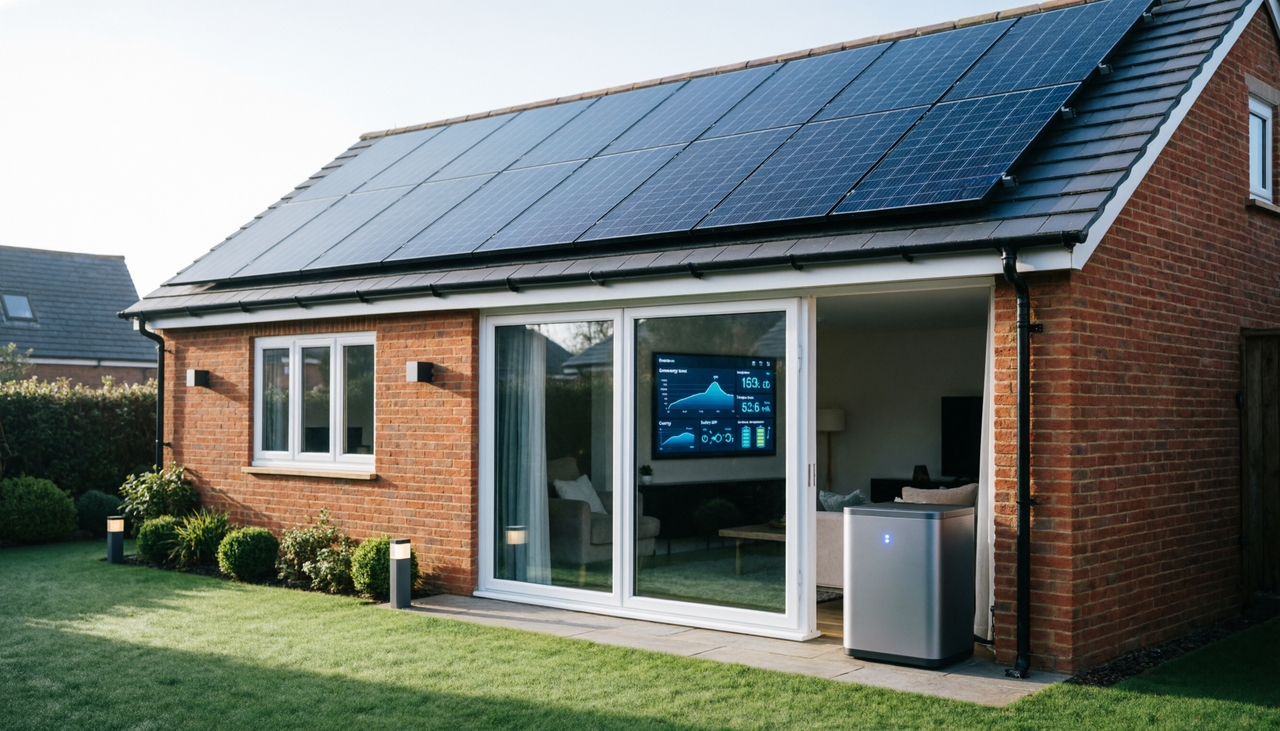
Future of Sodium Ion Battery Technology
While sodium ion batteries are not yet commonly used in the home energy storage market, research and development efforts are advancing in various energy sectors. The growing global trend toward enhancing energy resilience, expanding battery supply chains, and adapting to evolving electricity needs over time is driving interest in sodium technology.
Future development will also rely on scientific advancement but also on the capabilities of the manufacturing industry, commercialization readiness and adoption in the home.
Expected improvements in sodium-ion batteries
Despite these efforts to overcome these current weaknesses, researchers and manufacturers are still focused on enhancing sodium-ion batteries in key performance areas that will help drive their practical use. The present development work is mainly directed to reducing the cost competitiveness of sodium technology compared to existing battery technologies.
Further priority areas include:
improving energy density
expanding manufacturing scale
increasing charging efficiency
reducing production costs
reducing fluctuations in performance over time
Sodium battery technologies could be increasingly relevant in selected energy storage applications in the future if progress continues.
Potential impact on renewable energy systems
With the growing share of renewables, future battery technologies could be increasingly contributing to flexible electricity storage. Partly, there is an interest in batteries sodium because of the prospect of more diversified options to handle renewable energy.
Future applications may include:
supporting solar energy storage
improving electricity balancing
increasing capacity of the storage where it is implemented.
optimizing wind and solar generation in smart grids and smart microgrids
But, these opportunities remain subject to further commercialization advances and ready-to-use implementation.
The integration of renewable energy is still largely driven by well-established storage options available in the market for today's households.
Challenges facing large-scale adoption
Despite the increasing attention, there are still some obstacles to the widespread home or commercial use of sodium battery technology.
Key challenges include:
manufacturing expansion requirements
less developed technology than well-established systems
developing supply ecosystems
long-term performance validation
commercial competitiveness
All of these contribute to the fact that although sodium technologies are a subject of interest, they have not yet become a popular option in the residential energy storage market.
So far, the older battery technologies are still fulfilling most functions in household energy management.
Conclusion
The surge of interest in sodium ion batteries brings to light the continued evolution of energy storage technology. They offer several potential benefits, including their availability and their role in future energy systems, and are a subject of continued research and development.
Meanwhile, there is yet a long way to go regarding the spread of the use of households. Sodium technology continues to grow; they are therefore still tied to future, rather than current, energy choices for the household.
In the modern homeowner, solutions that already exist today – like mature technologies like LiFePO4 battery systems – can enable electricity efficiency, integration with solar power, and better energy planning in the home. Despite the continued advancement of battery technology, the benefits that can be derived from the enhancement of energy generation, storage and management in the present times are still significant for the benefit of the households.
FAQs
Are sodium-ion batteries safer than lithium batteries?
Safety discussions for sodium-ion batteries continue to develop as the technology has not been deployed at the large-scale that would be considered for more advanced battery technologies. Chemistry, system design, manufacturing quality and energy management controls are all necessary to ensure battery safety.
Are sodium-ion batteries commercially available today?
Sodium batteries are starting to be sold in certain markets and for some pilot products, but are not widely available in the market yet for domestic use. Commercial energy systems are still in their early stages for large scale and most residential energy systems are still implementing common battery technologies.
Can sodium batteries be used for home energy storage?
Potential energy storage applications include home systems, and in theory, future sodium battery systems can be developed to meet this requirement. Presently, however, most households are using commercially available mature technologies for batteries due to availability, proven performance, and compatibility with present home energy systems.
Why are LiFePO4 battery systems widely used today?
The LiFePO4 battery systems are still widely used due to their availability and the fact that they are compatible with the use of electricity in the home.
Common reasons include:
established commercial maturity
compatibility with solar systems
proven long-term usage
Available energy control systems for the daily use of domestic energy services
Older battery technologies are a viable choice for homes concerned with energy efficiency today.
What should households consider when choosing energy storage?
While considering energy storage solutions, households shouldn't overlook practical considerations rather than cutting a dash for new technologies.
Useful considerations include:
electricity usage patterns
battery maturity and reliability
ability to fit into home systems
long-term energy goals
Solar integration potential
It is often more beneficial to adopt a system to meet actual energy requirements in the home rather than one based exclusively on the expectation of the future.