PV Panel Size UK: Standard Solar Panel Sizes, Dimensions & Sizing Guide
- What size are solar PV panels in the UK?
- Solar PV panel sizes UK: common dimensions and wattage
- PV panel size per kW: how many panels do you need?
- How to choose the right PV panel size for your home
- Using a PV panel sizing calculator
- Why panel size alone is not enough for energy savings
- 5 tips to maximise efficiency regardless of PV panel size
- Conclusion
- FAQs
When installing a solar system in your UK home, one of the most crucial decisions is what the PV panel size should be. The dimensions of the solar panels impact the roof space required, overall energy generation, setup costs, and long-term power cost savings. When it comes to rooftop solar panels or home energy systems, knowing about their sizes can help in making wise choices.
Today's solar panels are more efficient than ever and require fewer panels to produce the same amount of electricity. But panels size, power rating and roof configuration are still significant factors in deciding which solar power system is best for your home. This guide provides information about the most common PV panel sizes UK and standard sizes in addition to the different PV panel wattages and their respective homes and energy storage requirements.
What size are solar PV panels in the UK?
Solar panels in the UK come in a variety of sizes, depending on wattage, manufacturer, and use. The most common type of residential solar panel is rectangular and is engineered to fit snugly on the roof of a house while capturing the greatest amount of sunlight. Homeowners pick panels based upon the compromise of energy output and roof area.
When wondering about what size are solar PV panels, it is crucial to keep in mind that size generally goes up with size. Panels with high output usually have more solar cells, but they do not necessarily increase the installation's complexity significantly.
Standard PV panel size in the UK
In the UK, the standard PV panel size for residential systems is approximately:
Length: 1.7–1.9 metres
Width: 1–1.2 metres
Thickness: 30–40 mm
Weight: 18–25 kg
The typical range of a solar panel that can be found in most homes today is between 350W and 450W. These panels will fit the standard UK roof space with maximum efficiency and produce decent energy output throughout the day.
Typically, a standard solar PV panel size comes in 60-cell or 72-cell panels. Smaller, more basic systems can be based on 60-cell panels, and larger systems with higher output can be based on larger 72-cell panels for producing more electricity.
Typical PV panel size for residential systems
Typical PV panel size for UK houses is based on the energy demand of the house, as well as roof size. Households with smaller numbers may use systems of 3kW to 4kW, and larger households are increasingly opting for larger systems over 5kW to enhance their energy independence.
System size is also impacted by panel efficiency. More efficient panels produce more electricity in a smaller roof space, which is helpful if your home is small and in a shaded area.
Solar PV panel sizes UK: common dimensions and wattage
Modern solar PV panel sizes UK range greatly in terms of their output and technology. Low-watt panels are also smaller, and can be used for small installations; high-watt panels will be larger, and are better for big installations.
Once consumers are familiar with the standard sizes of panels, they can better estimate the amount of power they will be able to produce on their roofs and how many panels they require.
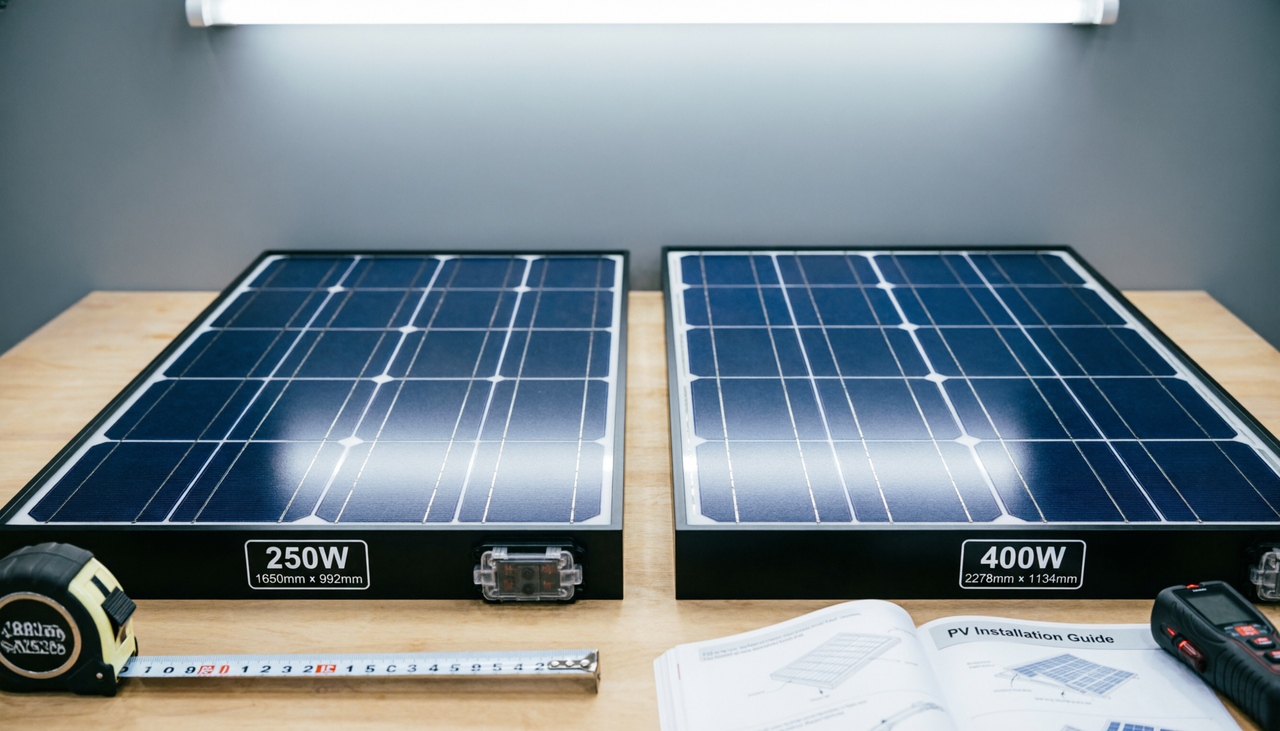
250W PV panel size and dimensions
The 250W PV panel size tends to be smaller than more modern high output residential panels. These panels are less common these days, but still exist in older installations and in small off-grid systems.
Typical dimensions include:
Length: 1.6 metres
Width: 1 metre
Weight: 16–18 kg
Homeowners will want to install more panels to get the same system output from an older 250W panel as compared to newer 400W+ panels. They can still be used effectively in sheds, garages, caravans and small roof top installations.
400W PV panel size and dimensions
The 400W PV panel size is one of the most preferred types for contemporary residential PV systems in the United Kingdom, as it offers an excellent balance between efficiency and roof space.
Typical dimensions include:
Length: 1.75–1.9 metres
Width: 1.1–1.2 metres
Weight: 20–25 kg
The advantage of these larger panels is that they can produce more electricity with a smaller number of panels. These are particularly beneficial for houses where you don't really have a lot of space on your roof, but you need to use a lot of energy each day.
Today's solar systems are often equipped with 400W panels, as they offer more benefits over the long haul, less installation complexity, and can be used efficiently in conjunction with using home battery storage to create more energy independence.
PV panel size per kW: how many panels do you need?
Knowing the size of the PV panel size per kW can assist homeowners in calculating the number of PV panels needed to produce the electricity they need. The total number of panels is based on the energy usage per year, panel wattage and roof space. The more efficient the panels, the more electricity will be produced by each panel, meaning that fewer panels are required for the system.
In the UK, virtually all contemporary residential systems use panels with a capacity of 350W to 450W. This translates to reduced panels when compared with the older, lower-watt systems. The efficiency of the system is also influenced by the orientation of the roof, shading and exposure to sunlight throughout the year, however.
Example system sizes (1kW, 3kW, 5kW systems)
Here are some common examples of solar system sizes based on modern residential panels:
System Size | Approximate Number of Panels | Roof Space Needed | Typical Household Use |
1kW System | 2–3 panels | 5–6 m² | Small sheds, garages, or low-energy homes |
3kW System | 7–9 panels | 14–18 m² | Small-to-medium households |
5kW System | 11–14 panels | 22–28 m² | Larger homes with higher electricity usage |
The standard 3kW or 4kW system is still a popular option for the UK where the balance of installation cost and the savings in electricity are optimum for households. For households using EVs, heat pumps or battery storage, these systems can be sized up to 5kW+ to provide more energy independence.
The final system design will also be influenced by the solar PV panel sizes UK selected, the roof design, and future energy objectives.
How to choose the right PV panel size for your home
There are more factors to consider when selecting the appropriate PV panel size than just installing panels on top of a roof. The first step in choosing an energy system size is for homeowners to reflect on how much electricity they use, how much roof space they have, their budget and the long-term energy objectives.
In small houses with small roofs, large high efficiency panels can be better options because they produce more power than a smaller panel. For garage or extension projects or partial installation on a roof, size may be more important than power output and a smaller panel might be just as effective.
Some key points to bear in mind:
The total amount of electricity used by a home per year.
Direction and shading of roofs
Available installation area
Desired energy savings
The future of energy consumption expectations
Battery storage compatibility
Families that also intend to install EV's or home battery systems in the future could consider installing slightly larger systems at the outset. This prevents costly upgrades in the future and enhances the solar performance over time.
Using a PV panel sizing calculator
A PV panel sizing calculator is used to calculate the optimum size of your solar system based on electricity consumption and your roof conditions. These tools help to streamline the planning process by providing approximate system output, number of panels needed, and potential savings.
Homeowners can use sizing calculators to evaluate various panel wattages and determine whether battery storage is part of the installation.
What inputs are required
To make accurate recommendations, most solar sizing calculators will need a few important pieces of information:
Annual Electricity Use (in kWh)
The size of the roof and usable space.
Square footings for cabinets and other components of the rooftop
The location/address of the home.
The percentage of electricity offset is the desired percentage of electricity offset.
Preferred panel wattage
Giving accurate information makes the results more reliable, and will help the homeowner avoid oversized or undersized systems.
How to estimate system size accurately
Homeowners must first check their annual electric bills to understand their average consumption before getting a good estimate of how big the system must be. This provides the clear picture of the amount of solar generation that is required on an annual basis.
A good rule of thumb is to closely match the size of the solar system to the electricity used during the day (DOHD) and not to try to produce as much electricity in the system as possible. Larger systems can be unnecessarily expensive to install, and smaller systems will reduce the potential savings.
When comparing the standard solar PV panel sizes, higher-efficiency panels may be more effective for homes with smaller roof areas. Solar combined with battery storage can also be used to enhance self-consumption rates and decrease reliance on expensive grid electricity during peak hours.
Why panel size alone is not enough for energy savings
The PV panel size matters, but it's not just about the size and wattage of a PV panel, there's more to it. Not many homeowners think beyond the number of panels they can fit on the roof and when they will be using them. Household energy demand is usually high during the morning and evening hours, while the majority of the solar energy generation occurs during the day.
Too much solar energy is often exported back to the grid rather than used within the house when it is produced during the day. This reduces the actual cost savings from solar systems and makes it more expensive to use grid electricity in the evening. This is why modern solar set-ups are becoming more and more efficient and are pairing this with battery storage for increased savings and energy independence.
The role of battery storage in solar systems
Major contribution of battery storage to solar efficiency and electricity bill reduction. Batteries store excess solar energy during the day when it is not in use to be used when energy demand is higher.
The advantages of battery combinations with solar systems are:
Savingg unused energy for night use to reduce the need for other energy sources.
Minimize the use of peak rate electricity from the grid
Improve overall self-consumption of solar power
Keep the power on in the event of a power outage
Boost savings on your solar investment over time
Bigger solar PV panel sizes UK can be particularly beneficial for homes that generate excess electricity during the day, while smaller systems can benefit from battery storage. This stored energy, rather than exported energy, allows homeowners to get the greatest value from each kilowatt-hour produced.
EcoFlow STREAM solutions for UK solar users
UK homes are now seeking solar solutions that are effortless, expandable and manageable. Unlike traditional energy storage systems, EcoFlow STREAM solutions support high efficiency solar panels and increase the amount of solar energy stored and consumed by the household during both day and night.
EcoFlow STREAM Ultra X Home Solar Battery
The EcoFlow STREAM Ultra X Home Solar Battery is engineered for homes seeking to integrate high-performance solar energy generation into their everyday routines and energy storage needs. It is particularly effective in contemporary systems comprised of 400W PV panel size systems, in which the production of electricity is increased and energy management is made smarter.
This is perfect for families with larger houses, EV owners, and households looking to minimise reliance on rising electricity costs in the UK.
4×400W Rigid Solar Panel + STREAM Ultra
The 4×400W Rigid Solar Panel + STREAM Ultra package offers a powerful solar power solution along with smart home energy storage. This system is ideal for homeowners looking into PV panel size per kW and to make their PV installation plan for medium to large home solar systems.
This kind of system enables households to go beyond just solar generation and make a more comprehensive home energy system.
Estimate your solar energy usage and savings
Solar savings estimation is not just about the total solar power generation. Beware of electricity usage, battery capacity and the amount of energy that can be used at home during the day from solar power.
Important factors include:
Daily electricity consumption
Panel wattage and efficiency
Exposure to the sun and the direction of the roof.
Battery storage size
Battery storage can make a major difference for many UK homes, when added with the right-sized solar panels, compared to solar panels by themselves. This is achieved through a well-balanced system, which enables homeowners to consume more of their own electricity, and lower the risk of their long-term electricity bill increases.
5 tips to maximise efficiency regardless of PV panel size
Position panels to capture maximum sunlight
No matter how large the PV panel size UK is, it may not perform well if there is shading during high sun hours. In the UK, the best annual energy generation tends to be from south-facing roofs that are lightly shaded.
Keep panels clean and regularly maintained
Solar efficiency can decrease as dust, bird droppings and debris accumulate. Your solar PV panel sizes UK system can be kept to deliver consistent energy output throughout the year with simple maintenance and inspections.
Match panel size with battery storage
More energy would be produced with larger panels, but if they lack storage, they may end up wasting electricity. A combination of the correct standard solar PV panel size setup with battery storage ensures maximum self-consumption and minimises the need to draw power from the grid.
Use energy-heavy appliances during daylight hours
Homeowners can use more of the electricity generated on-site if they run their washing machines, dishwashers or EV charging during the hours when the sun is producing electricity. This enhances the cost of a PV panel size per kW system and reduces electricity costs.
Use a PV panel sizing calculator before installation
The best PV panel sizing calculator can help you estimate your household's actual energy requirements, rather than over- or under-sizing. You can make sure your equipment is sized correctly, which means you'll be more efficient, have a better return on investment and save money over time.
Conclusion
One of the most crucial aspects to consider when setting up a solar power system in the UK is the size of the pv panel. Correctly sized panels can enhance efficiency, lower electricity bills and help minimize long-term savings for homeowners from the basic understanding of the standard dimensions of solar panels, to determining the number of panels required for each kW. Tools such as a PV panel sizing calculator also help to ensure system output meets actual household consumption.
But panel size is not the only factor required for complete energy independence. Combining solar panels with smart battery storage solutions allows households to store excess electricity and use it when energy prices are highest. EcoFlow STREAM Ultra X Home Solar Battery, 4X400W Rigid Solar Panel + STREAM Ultra offer smarter solutions to optimize the solar generation, the self-consumption and make the long-term energy savings more reliable.
FAQs
What is the standard PV panel size in the UK?
The typical standard PV panel size for residential systems in the UK is 1.7m high by 1m wide. Modern House panels produce 350W to 450W, depending on the efficiency and technology.
Typical house panel sizes in the UK are:
250W panels: roughly 1.65m × 1m
400W panels: around 1.75m × 1.1m
High efficiency panels: slightly larger and higher efficiency
Most homeowners select the size of the panels they need based on the roof space, energy consumption and installation projects, rather than on the physical size of the panel.
How many solar panels do I need for 4kW?
Most homes in the UK require 9-12 panels, depending on the panel wattage and roof conditions, for a 4kW Solar PV system. Typically, a home with modern 400-watt PV panel size modules will need fewer panels, as every panel will produce more electricity.
The following is a typical 4kW set-up and requires:
A panel's wattage and efficiency
Available roof space
Household electricity consumption
The use of high-efficiency solar panels will allow fewer panels to be used for a given system output.
Does bigger panel size mean more power?
Larger physical size does not necessarily mean enormous amounts of power output. Many compact panels have been designed to deliver better performance in smaller sizes, thanks to modern technology. It is the efficiency, not just size, that counts.
When looking at what size PV panels are available, you should take into account:
Panel efficiency rating
Wattage output
Roof compatibility
Local sunlight conditions
Making a larger panel does not necessarily translate to higher efficiency in most cases and, in fact, higher efficiency panels will offer better performance over time.
How accurate is a PV panel sizing calculator?
When using accurate household information, a PV panel sizing calculator can give a good approximation. The following calculators provide a good approximation of system sizes based on electricity usage, roof area, exposure to sunlight, and local weather data.
To get optimum results, the user should add the following:
Annual electricity consumption
Shading and orientation of the roof
Energy savings objectives
While calculators can be helpful tools for making recommendations, it is still recommended to have professional evaluations prior to final installation to help design systems and maximize their performance.