How Much Does It Cost To Run A Tumble Dryer? 2026 Guide
Average tumble dryer running costs in the UK
Understanding the cost of running a tumble dryer per load UK helps households manage energy use and lower electricity bills. Costs vary by dryer type, energy efficiency, and load size. Standard condenser or vented dryers use 2–3 kWh per load, while heat pump tumble dryers are more efficient at 1–1.5 kWh per cycle.
The cost of running a tumble dryer per load typically ranges from £0.40 to £0.80, with modern energy-efficient machines costing less per hour. To reduce the cost, run full loads, use lower temperatures, or pair with a home solar battery—allowing electricity generated during the day or stored off-peak to be used for drying clothes in the evening, when grid prices are higher.
Main types of tumble dryers and their running costs
Different tumble dryers vary in energy use and running costs. Understanding each type helps households choose the right machine for efficiency and savings. Below are the main types of tumble dryers and their typical running costs.
1. Vented dryers
Vented dryers expel warm, moist air outside through a vent, making them simple and inexpensive upfront. However, they consume more electricity, typically 2–3 kWh per load, which increases the cost of running a vented tumble dryer over time. They are best suited for homes with good ventilation, but may be less energy-efficient for frequent use.
2. Condenser dryers
Condenser dryers collect moisture in a tank instead of venting it outside. They are convenient for homes without external vents but use similar energy to vented dryers, around 2–3 kWh per load. While slightly more versatile, their electricity costs can still add up, so running full loads is recommended to reduce the average cost of running a tumble dryer.
3. Heat pump dryers
Heat pump dryers are the most energy-efficient option, using 1–1.5 kWh per load by recycling heat rather than expelling it. This reduces electricity consumption and lowers long-term costs significantly. Despite higher upfront prices, pairing heat pump dryers with smart energy management or home solar/storage systems can maximise savings and efficiency.
What affects tumble dryer running costs
Several factors influence how much energy a tumble dryer uses, which directly impacts electricity bills. Understanding these variables helps households plan their laundry efficiently. Below are some key factors that affect tumble dryer running costs:
Load size
The size of each load significantly affects energy consumption. Larger loads can be more efficient if the dryer's capacity is used fully, reducing the cost of running a tumble dryer per load in the UK. Small or half loads often lead to more cycles and higher overall costs.
Load size | Typical energy use per cycle | Estimated cost per load* |
Half load | 2.5–3.5 kWh | £0.60–£0.90 |
Full load | 2–3 kWh | £0.50–£0.75 |
Multiple small loads | Higher total usage | +£0.10–£0.30 overall |
Dryer type
The type of dryer, vented, condenser, or heat pump, determines energy use. Vented and condenser dryers typically consume 2–3 kWh per load, while heat pump tumble dryers use 1–1.5 kWh, making them more cost-effective over time. Choosing the right type can substantially reduce energy bills.
Dryer type | Energy use per load | Estimated cost per load* |
Vented dryer | 2.5–3 kWh | £0.60–£0.80 |
Condenser dryer | 2–3 kWh | £0.50–£0.80 |
Heat pump dryer | 1–1.5 kWh | £0.25–£0.45 |
Energy efficiency rating
Machines with higher energy ratings (A++ or A+++) use electricity more efficiently. Investing in energy-efficient models lowers the average cost of running a tumble dryer and supports environmentally friendly practices.
Energy rating | Relative efficiency | Typical savings per load |
A | Baseline | — |
A+ / A++ | More efficient | £0.05–£0.15 |
A+++ | Highest efficiency | £0.15–£0.30 |
Frequency of use
How often a dryer is used directly impacts running costs. Frequent use increases electricity bills, especially with less efficient models. Scheduling laundry during off-peak hours or using dryers alongside home solar or storage solutions can help reduce costs further.
Usage frequency | Weekly energy use | Estimated weekly cost* |
1–2 loads/week | 2–6 kWh | £0.50–£1.80 |
3–5 loads/week | 6–15 kWh | £1.50–£4.50 |
Daily use | 14–21 kWh | £3.50–£6.50 |
Timing and energy source
When and how electricity is used plays a key role in the cost of running a tumble dryer. Electricity prices are often higher during daytime peak hours, while off-peak periods and self-generated power can significantly reduce costs. By choosing the right time to run appliances and using alternative energy sources, households can lower per-load expenses without changing their laundry habits.
Energy timing/source | How it affects costs | Typical savings |
Peak daytime electricity | Higher unit prices during busy hours | — |
Off-peak tariff (e.g. Economy 7) | Lower night-time electricity rates | £0.10–£0.30 per load |
Home solar energy | Uses self-generated electricity | £0.20–£0.40 per load |
Home solar battery | Stores cheap or solar power for later use | £0.15–£0.40 per load |
The best energy‑smart solutions for home laundry
Laundry appliances such as tumble dryers are among the most energy-hungry devices in the home, making the timing and source of electricity especially important. Managing when and how this energy is used can significantly reduce electricity bills without changing everyday laundry habits.
By combining high-energy appliances with a home energy storage system, households can shift laundry use away from expensive peak-time electricity. Solar panels generate electricity during the day, or low-cost power is charged overnight, and this energy is stored in a battery to be used later for washing and drying.
EcoFlow's STREAM series is designed around this simple idea—capture energy when it's cheaper or cleaner, and use it when it's needed most—helping households maximise savings while keeping laundry and other essential appliances running reliably.
Ideal for homes with existing solar panels
For households already equipped with solar panels, the STREAM Ultra + AC Pro bundle provides reliable and flexible energy storage for all your laundry needs. The all-in-one STREAM Ultra includes a built-in inverter, enabling seamless connection to both solar panels and your home grid. Paired with the STREAM AC Pro battery, the bundle delivers a total storage capacity of 3.84 kWh and a 2,300 W output, enough to power tumble dryers, washing machines, and other essential appliances efficiently, even during peak demand or grid outages.
A standout feature of this bundle is scalable placement. Unlike many batteries that require stacking, up to six units can be installed in different locations around the home, such as the utility room, garage, or laundry area, allowing a customised setup that suits your home's layout while keeping high-energy appliances reliably powered.
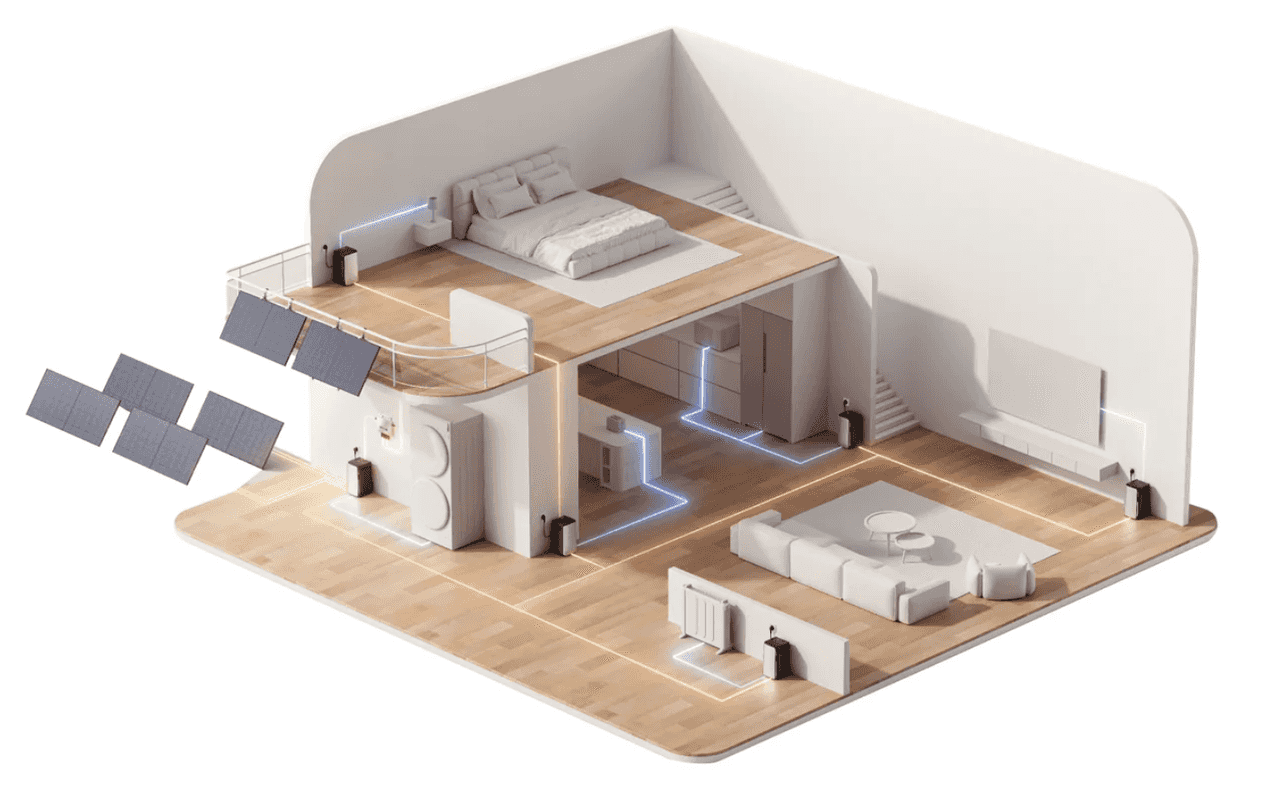
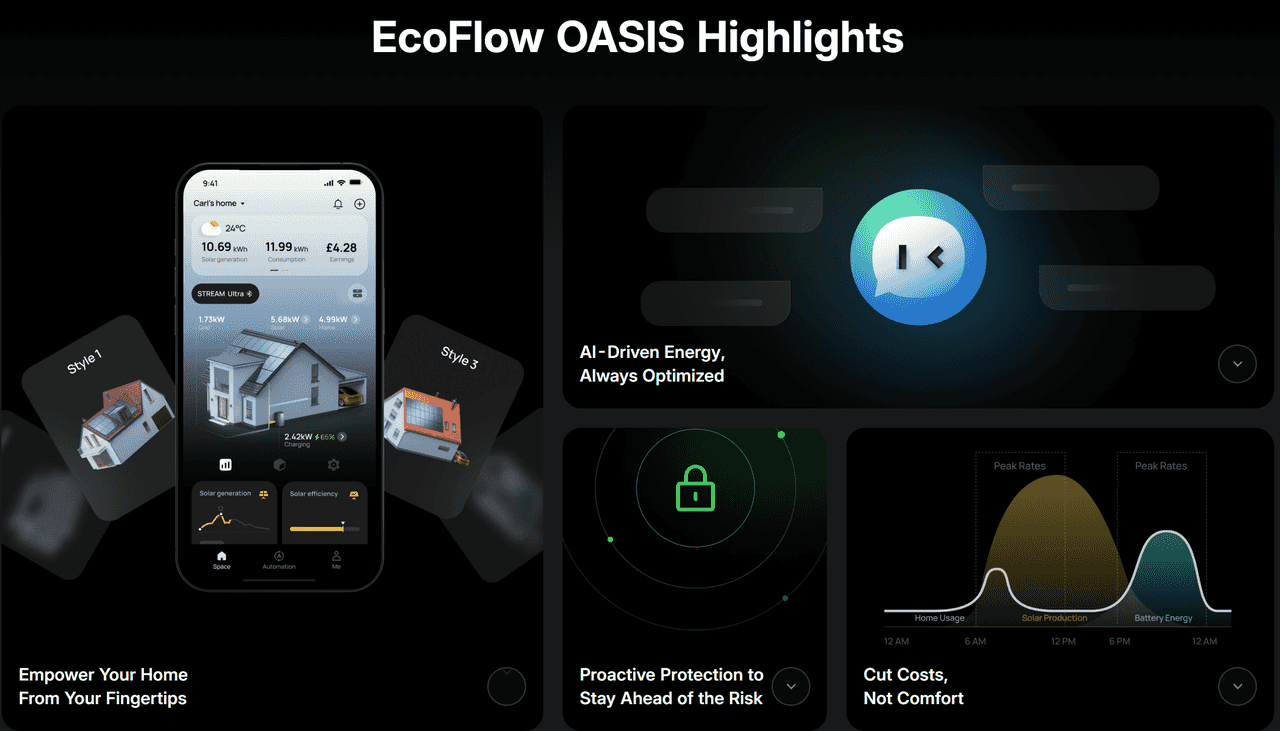
The bundle integrates seamlessly with EcoFlow's OASIS Home Energy Management System. Using AI, it monitors electricity costs, solar generation, and appliance usage. It automatically charges when energy is cheapest or when excess solar power is available and discharges during peak hours. This approach ensures your laundry appliances run efficiently, saving on electricity bills and reducing dependence on the grid.
For high-energy laundry homes without solar panels
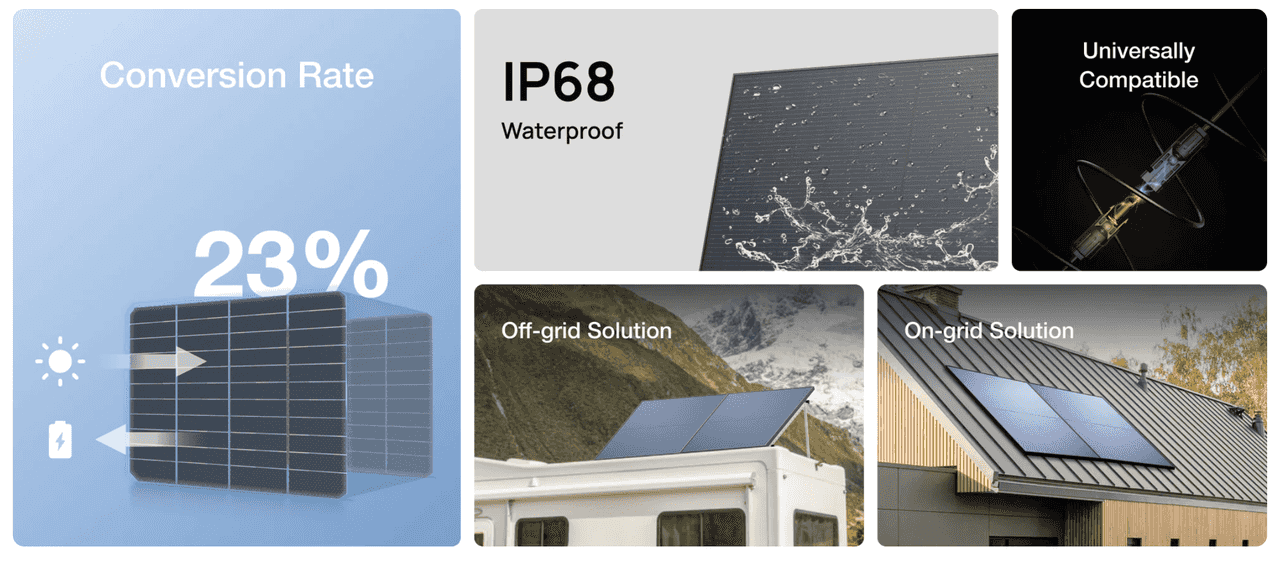
For households with heavy laundry and high energy demands, the 450W Rigid Solar Panel + STREAM AC Pro + STREAM Ultra setup delivers a complete solar generation and storage solution. With a combined storage capacity of 3.84 kWh and 2,300 W output, it can handle multiple high-demand laundry appliances simultaneously, including tumble dryers, washing machines, and dishwashers.
The included EcoFlow 450W Rigid Solar Panel maximises solar efficiency with a 23 % conversion rate, even in limited installation spaces. Its robust, weather-resistant design ensures reliable power generation throughout changing outdoor conditions. When paired with the STREAM Ultra and AC Pro, it improves energy capture, increases self-consumption, and reduces grid reliance, perfect for powering all your home laundry appliances efficiently and cost-effectively.
Through the EcoFlow smart app, users can track energy usage, schedule charging during lower-cost periods, and automatically supply stored power when electricity prices are highest. This smart control turns daily laundry into a more cost-efficient routine and helps households keep tumble dryer running costs lower in 2026.
How to reduce running costs?
Reducing the cost of running a tumble dryer for 1 hour can make a noticeable difference in your energy bills. By combining smart usage habits with renewable energy options, you can save money and increase efficiency. Here's how to optimise your home laundry setup:
Use shorter cycles when possible
Choosing shorter drying cycles when clothes are lightly damp lowers energy consumption. Modern dryers often include eco or quick-dry modes, helping reduce the cost of running a tumble dryer per load without compromising results.
Avoid over‑drying clothes
Over-drying wastes electricity and can damage fabrics. Use moisture sensors or set appropriate dryness levels to ensure clothes are dry without unnecessary energy use.
Clean filters and lint traps
Regularly cleaning the lint trap and dryer filters improves airflow and efficiency. This simple step reduces the energy required per cycle, helping lower the average cost of running a tumble dryer.
Wash with a higher spin speed to reduce drying time
Higher spin speeds in your washing machine remove more water from clothes, reducing the dryer runtime. This lowers energy use, extends the appliance's lifespan, and cuts running costs.
Use renewable energy + storage solutions like EcoFlow
Pairing your dryer with home energy storage systems such as EcoFlow STREAM allows you to run high-energy appliances using stored solar or off-peak electricity. This not only saves money but also reduces dependence on the grid.
Conclusion
Understanding how much it costs to run a tumble dryer helps households make smarter energy choices and reduce electricity bills. By selecting the right dryer, maintaining appliances properly, and using energy-efficient practices, you can significantly cut running costs over time.
Combining these habits with renewable energy and smart storage solutions further maximises savings and environmental benefits. For households looking to take full control of their home energy, products like EcoFlow STREAM Ultra + AC Pro make it easy to power high-energy appliances efficiently while lowering dependence on the grid.
FAQS
How much does it cost to run a dryer for 2 hours?
The cost of running a tumble dryer for hours depends on the dryer type and energy efficiency. On average, a standard vented or condenser dryer consumes 2–3 kWh per load, while heat pump dryers use around 1–1.5 kWh. Running a dryer for 2 hours typically costs between £0.80 and £1.60 for standard machines, but using energy-efficient models or pairing with solar/storage solutions can lower this significantly.
Do tumble dryers use a lot of electricity?
Tumble dryers are among the higher energy-consuming appliances in a household due to their heat generation. Traditional vented and condenser models can use around 2–3 kWh per cycle, whereas modern heat pump tumble dryers are more efficient, using roughly half that energy. Proper usage, like full loads and shorter drying cycles, helps reduce electricity consumption.
Is 2 hours too long for a dryer?
Two hours may be longer than necessary for many modern dryers, especially heat pumps or high-spin washer combinations. Over-drying not only wastes energy but can also damage fabrics. Using shorter cycles, higher washer spin speeds, or EcoFlow home storage systems to power the dryer efficiently can save electricity and reduce running costs.