Air source heat pump grant: How to reduce the cost of home heating
- What is an air source heat pump grant
- Overview of UK air source heat pump grant schemes (2026)
- Who is eligible for an air source heat pump grant
- How much does an air source heat pump cost with a grant
- How to reduce running costs beyond the grant
- How to apply for an air source heat pump grant
- Conclusion
- FAQS
What is an air source heat pump grant
The grant for air source heat pumps is a type of financial support from the government designed to lower the cost of energy-saving heating systems. These systems absorb heat from the outside air to heat your home and supply hot water, even in the coldest months of the year. They work by using electricity to transfer ambient heat from the air into a higher temperature through a heat exchange and compression process, rather than generating heat by burning fuel. As a result, one unit of electricity can produce several units of usable heat, making air source heat pumps highly efficient and low-carbon.
Due to the high installation costs of these systems, the grant assists in paying for a significant part of the initial expenses. This indicates that you are not required to pay the entire sum on your own, thus making the upgrade significantly more affordable. With rising energy prices, many households are also turning to solar and batteries to better manage electricity use and cut energy bills. This article explains how combining heat pump grants with solar and battery systems can make home energy upgrades more affordable and sustainable.
Overview of UK air source heat pump grant schemes (2026)
To support the transition to low-carbon heating, the UK government provides several government grants for air source heat pumps. These schemes help offset high upfront installation costs through national programmes, local authority funding, and tax incentives, making air source heat pumps more affordable for homeowners across the UK.
Scheme name | What it supports | Grant amount | Who it's for |
Installation of air source heat pumps to replace gas, oil, or LPG boilers | Up to £7,500 | Homeowners in England and Wales are using MCS-certified installers | |
Air source heat pumps as part of whole-home energy efficiency upgrades | Partial or full cost covered (means-tested) | Low-income or vulnerable households; runs until March 2026 | |
Low-carbon heating upgrades, including air source heat pumps | Typically £10,000–£30,000 per home (varies by council/project) | Households with low EPC ratings, delivered via local authorities | |
Free or subsidised air source heat pump installations | Up to full installation cost | Eligible households in Scotland | |
Installation of air source heat pumps | 0% VAT (until March 2027) | Automatically applied to eligible installations across the UK |
Note: Details are for reference only and may change by region; eligibility and funding are subject to official UK government announcements.
Who is eligible for an air source heat pump grant
To be eligible for the UK air source heat pump grant, homeowners need to meet specific requirements established by the government. These rules make sure that assistance is directed toward appropriate homes and improvements in heating systems. Here are the criteria for air source heat pump grant eligibility:
Ownership of property
To be eligible, the person applying must own the property where the heat pump will be set up. This includes homeowners, people who own land, and those with a second home or a holiday house. Renters cannot apply by themselves since they need the property owner's permission and responsibility for the installation.
Current heating system
The funding assists in replacing heating systems that use fossil fuels, such as gas, oil, or electric boilers. It cannot be used to enhance or change a current low-carbon heating system. The newly installed heat pump must fully take the place of the old system.
Property Location
The Boiler Upgrade Scheme is available for residences located in England and Wales. Separate assistance programs, each with distinct regulations, exist for Scotland and Northern Ireland. The property should be a pre-existing structure and not primarily newly constructed buildings.
Energy Performance Certificate (EPC)
Your house must possess a current EPC. This document indicates how energy efficient the home is and verifies that it complies with minimum insulation standards. Generally, an EPC remains valid for a decade.
Approved Installer Requirement
The heat pump should be set up by an installer who is MCS-certified. They will submit the grant application to you and make sure the system complies with government regulations. If there isn't an authorised installer involved, you won't be able to claim the grant.
How much does an air source heat pump cost with a grant
In the UK, installing an air source heat pump typically costs between £8,000 and £14,000. The final price depends on factors such as your home's size, insulation levels, and the complexity of the installation. While the upfront cost can seem high, government support can significantly reduce what you actually pay.
Through the Boiler Upgrade Scheme, eligible homeowners can receive a grant of up to £7,500. This amount is deducted from the total installation cost before you make payment, lowering your initial financial outlay.
Example:
Total installation cost: £13,000
Grant amount: £7,500
Amount you pay: £5,500
Without the grant, you would need to cover the full £13,000 yourself. With the funding applied, you save £7,500 upfront, making the switch to low-carbon heating far more affordable.
How to reduce running costs beyond the grant
Though the installation cost is backed by government funding, it does not limit your monthly heating cost. For utility costs, you must consider your home's daily energy efficiency.
Enhance the insulation of your residence
Proper insulation retains warm air indoors and stops heat from flowing out. Insulating the attic, walls, and any gaps around doors or windows aids in minimising heat loss. By improving your home's ability to keep heat, your heating system will operate less often and consume less energy.
Use smart heating management systems
Smart thermostats and programmable timers assist in improving temperature control. Keeping a steady, moderate temperature allows the heat pump to operate more effectively. Sudden shifts in temperature can result in greater energy use and higher costs.
Enhance radiators and floor heating systems
Heat pumps work best with bigger radiators or underfloor heating systems that function at lower temperatures. Ensuring that your radiators are properly sized and balanced improves the distribution of heat. This reduces the strain on the system and enhances effectiveness.
Schedule consistent maintenance sessions
Regular maintenance ensures that the heat pump operates efficiently and dependably. Maintaining filters and checking system settings aids in reducing unnecessary energy waste. A properly maintained unit consumes less energy and may help avoid costly repairs in the future.
Choose the Right Energy Tariff
Electricity prices affect how much you spend overall. Switching to a cheaper plan or one that saves you money at certain times can lower what you pay for each unit of energy. Using your heating when demand is lower can also reduce your monthly expenses.
EcoFlow energy solutions for heat pump households
Installing an air source heat pump reduces carbon emissions, but operating it on regular grid power can still be expensive. This is where EcoFlow energy options provide significant benefits. By saving electricity produced by solar panels and supplying it to your home system, EcoFlow systems enable your heat pump to operate using more affordable or renewable energy rather than depending entirely on high-rate electricity.
For larger households: 450W Rigid Solar Panel + STREAM Ultra X
The 450W Rigid Solar Panel + STREAM Ultra X setup is ideal for larger homes that run an air-source heat pump alongside everyday appliances. The 450W rigid panel delivers high output with up to 23% conversion efficiency, generating more power per square metre, particularly useful for UK rooftops with limited space. Its durable, weather-resistant design ensures dependable year-round performance.
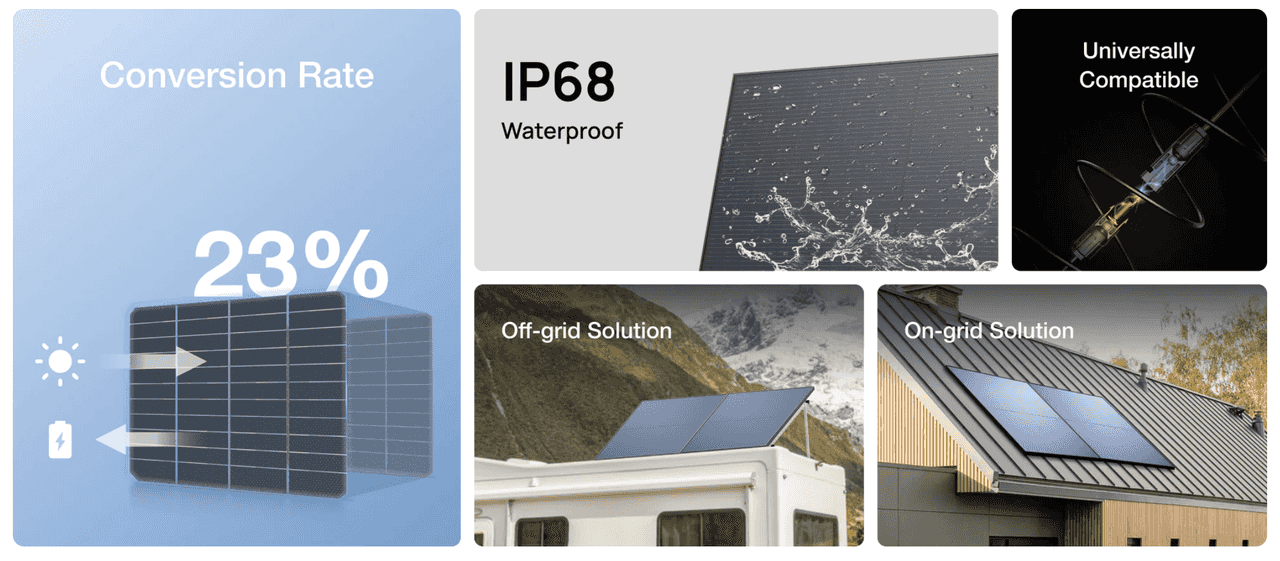
At the centre of the system is the STREAM Ultra X, an all-in-one solar battery with integrated inverter functionality. With a 3.84 kWh storage capacity and up to 1,200 W output, it can reliably support essential household loads such as air source heat pumps (during cycling periods), washing machines, dishwashers, refrigerators, lighting, home office equipment, and smart home systems. It stores surplus solar energy or low-cost overnight electricity and automatically discharges when grid prices rise, helping power your heat pump more economically during peak hours.
Another advantage is its scalable and flexible installation. Up to six STREAM batteries can operate in parallel without vertical stacking, meaning they can be placed in different areas such as a garage, utility room, or living space.
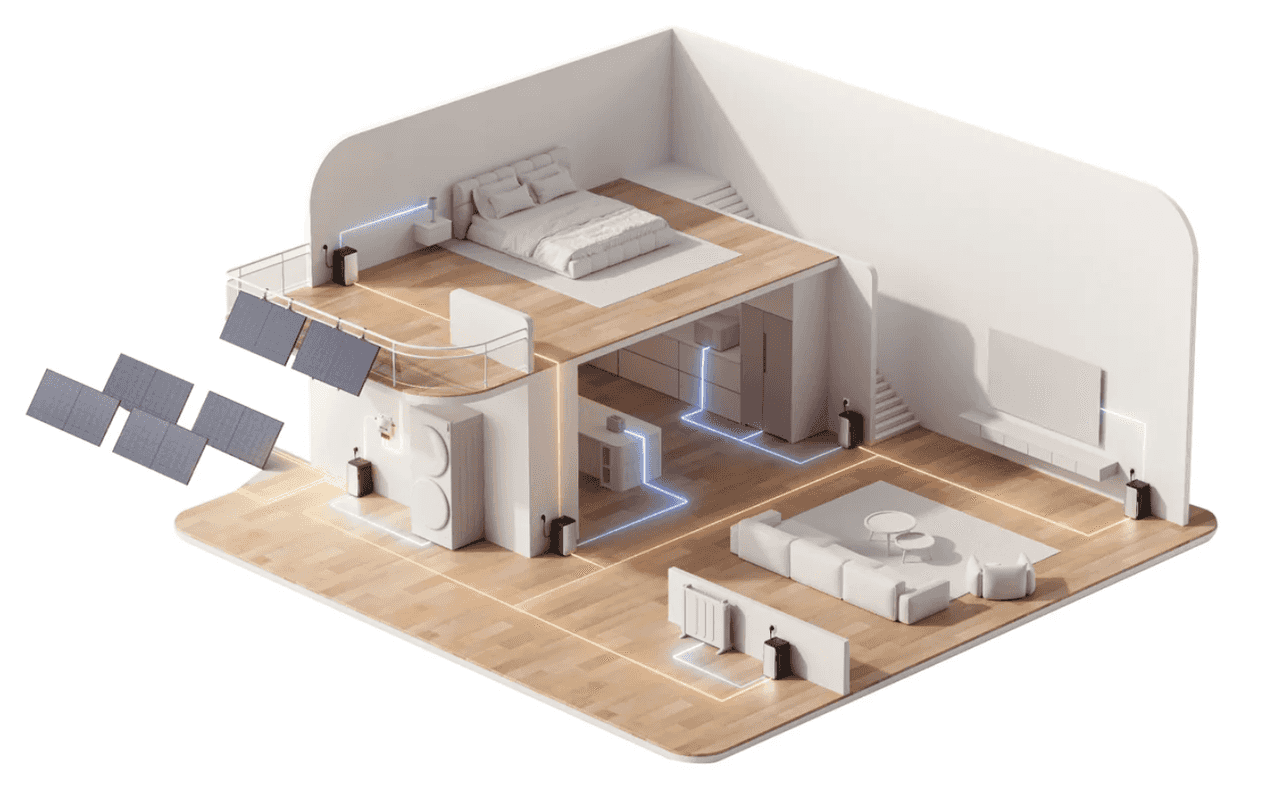
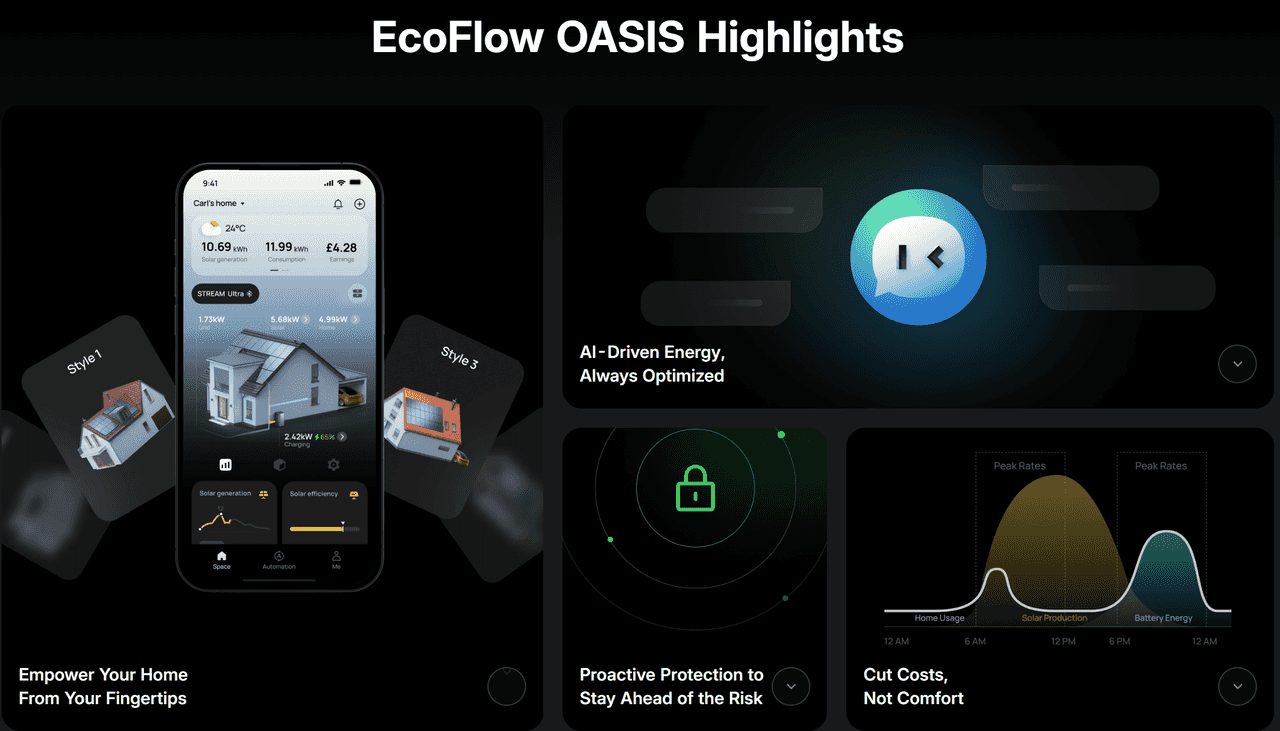
Through the EcoFlow app and AI-powered OASIS Home Energy Management System, the system monitors usage, solar production, and tariffs in real time, optimising charge and discharge cycles to maximise savings and energy independence.
For high-demand homes: 450W Rigid Solar Panel + STREAM AC Pro + STREAM Ultra
For properties with higher heating loads or multiple high-energy appliances, the 450W Rigid Solar Panel + STREAM AC Pro + STREAM Ultra bundle is designed to deliver greater output capacity and system headroom.
In this configuration, STREAM Ultra acts as the core intelligent battery, providing energy storage and system control, while STREAM AC Pro expands both usable capacity and AC output, enabling the system to handle heavier and more simultaneous loads. This setup is optimised for homes that require higher peak power and greater flexibility.
With a combined storage capacity of 3.84 kWh and up to 2,300 W output, the system can comfortably run an air source heat pump under higher demand, alongside kitchen appliances, home office equipment, and other daily electrical loads, without overloading the system. This makes it particularly suitable for larger households or homes with more intensive electricity usage patterns.
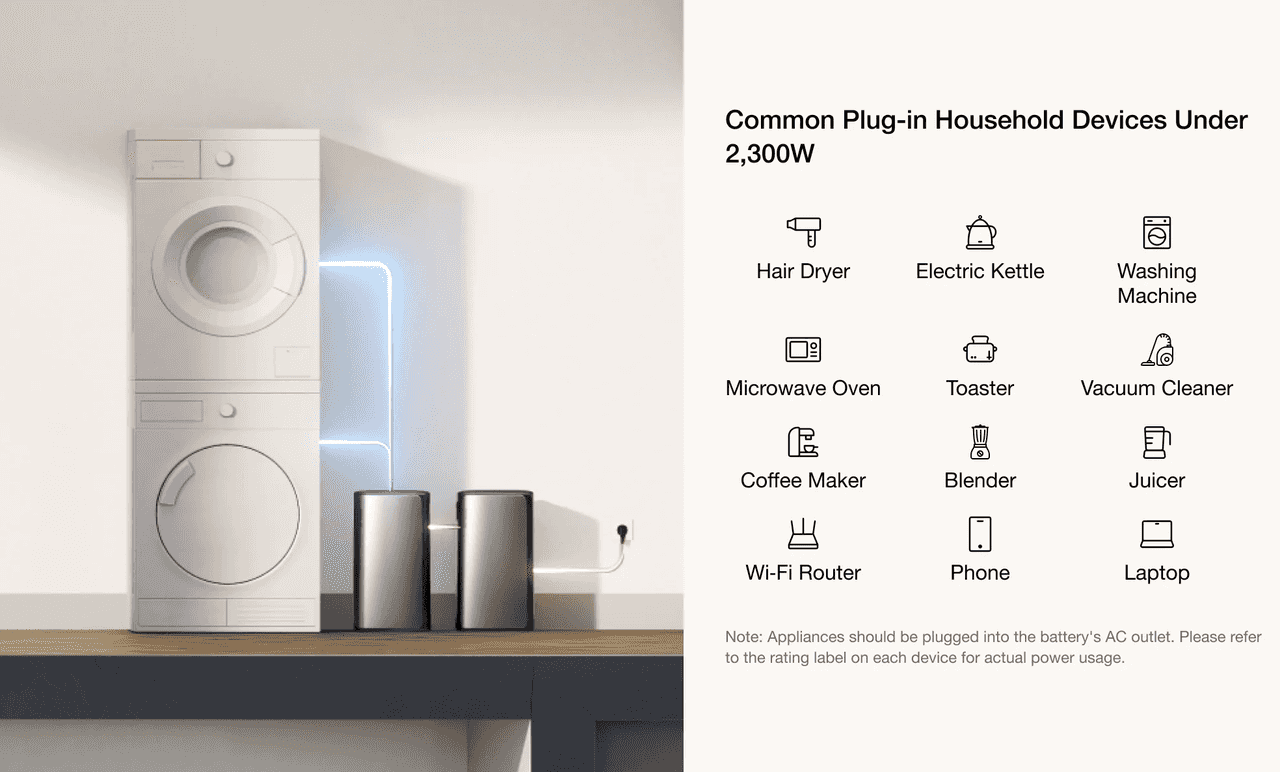
As with other STREAM configurations, up to six units can operate in parallel without vertical stacking, allowing batteries to be placed across different areas of the home as energy needs grow.
Using the EcoFlow app, homeowners benefit from AI-powered energy management that automatically charges batteries during low-cost periods and discharges them during peak times. For high-demand households, this intelligent load shifting helps reduce running costs, smooth electricity demand, and increase overall energy independence.
How to apply for an air source heat pump grant
Requesting a grant for an air source heat pump in the UK is typically easy since the installer takes care of the majority of the work on your behalf. Through the Boiler Upgrade Scheme, homeowners do not make a direct application. Rather, the procedure is overseen by a certified installer.
Check if you qualify
Make sure you meet the basic requirements. You typically need to own the property, replace an existing fossil fuel heating system, and have a valid Energy Performance Certificate (EPC).
Talk to an MCS-certified installer
Contact an installer approved under the Microgeneration Certification Scheme (MCS). They will assess your home, confirm eligibility, and recommend a suitable heat pump system.
Get a quote with the grant included
If eligible, the installer applies for the grant and deducts the approved amount from your total quote. You only pay the remaining balance.
Approve and install
Once the application is approved, you confirm the installation. After the system is fitted and commissioned, the grant is paid directly to the installer.
Conclusion
By lowering the high upfront installation expenses, an air source heat pump grant makes it more financially feasible to switch to low-carbon heating. Initiatives like the Boiler Upgrade Scheme reduce the upfront cost, but the long-term savings are contingent upon adequate insulation, intelligent controls, routine maintenance, and an appropriate energy rate.
For greater savings, adding solar panels and battery storage (such as EcoFlow systems) lets you use stored or renewable energy to run the heat pump, reducing reliance on expensive grid electricity and improving control over household energy costs.
FAQS
Why is my electric bill so high with an air source heat pump?
Your electricity expenses may rise because heat pumps use electricity instead of gas, resulting in a shift in costs rather than a reduction. Inadequate insulation, high thermostat settings, or frequent temperature changes lead the system to work harder. Incorrect sizing or insufficient maintenance can also increase energy usage. By integrating products such as EcoFlow home batteries with solar panels, you can harness renewable energy and enhance the efficiency of your heat pump, leading to cost savings over time.
What are the disadvantages of an air source heat pump?
Air source heat pumps typically have higher upfront costs compared to conventional boilers, even with financial support options available. They work best in houses that have proper insulation and may not function well in very cold conditions. Some models may generate significant noise, and the installation requires sufficient outdoor space for the unit. Moreover, operational costs may increase if electricity prices are elevated or if the system is not accurately adjusted.
At what temperature do heat pumps stop working in winter?
Air source heat pumps can operate in very cold temperatures, typically down to approximately -15°C to -20°C. However, their efficiency often decreases as the temperature drops. In extremely cold weather, additional heating may be necessary to maintain comfort.