Cheapest Time to Use the Washing Machine for Lower Energy Costs
Why the time you use your washing machine matters
The time you use your washing machine in the UK can have a big impact on your electricity bills. Electricity demand rises during the day, especially between 4 pm and 7 pm, when most households cook, heat, and use appliances; these are known as peak hours, and electricity costs more during this time. Overnight and early morning, demand drops, creating off-peak hours when energy is cheaper. By doing your laundry during these off-peak times, you can save money and ease the strain on the grid.
In this article, we'll explain when it is cheaper to use a washing machine in the UK, how electricity pricing works, and practical ways to cut your energy costs. We'll also explore how home solar batteries can help you run appliances whenever it suits you, without worrying about peak-hour prices.
How electricity pricing works: peak vs off-peak hours
Understanding peak and off‑peak pricing helps you see why timing matters with your appliance use. It also helps you find the cheapest time to put the washing machine on in your area.
Tariff Type | Typical off‑Peak window | Peak window | Why does it cost more? |
Economy 7 | 00:00 (midnight) – 07:00 am (seven hours overnight) | 07:00 am – midnight ‑ general daytime/evening usage | Electricity demand is highest during the day and evening, so suppliers charge more to cover higher grid usage and wholesale costs. |
Economy 10 | 10 hours split across the day: e.g., Overnight (00:00–05:00), Afternoon (13:00–16:00), Evening (20:00–22:00) | Other daytime hours when fewer off‑peak slots apply | Energy use is higher during the daytime when fewer off-peak slots are active, making electricity more expensive. |
Smart/Dynamic TOU | Varies daily; cheapest, often late night/early morning (e.g., 02:00–06:00) | Usually ~16:00 (4 pm) – 19:00 (7 pm) on weekdays | Prices increase during peak hours due to high household demand and higher wholesale costs. Off-peak rates are cheaper when demand is low. |
Note: Actual peak and off-peak times can vary by supplier and region, so always check your specific tariff plan.
Cheapest time to use a washing machine
When is the cheapest time to use a washing machine in the UK? Below is a detailed guide to help you understand the best times to do your laundry and how to reduce your electricity costs effectively.
The most affordable hours to do laundry
In the UK, electricity prices change throughout the day depending on how much power people use. On many time-of-use tariffs, such as Economy 7, the best time to use the washing machine is usually available late at night and in the early morning, typically between midnight and around 7 am, because national demand on the grid is at its lowest.
That's why overnight off-peak hours are often the best time to put the washing machine on. Running a load during these cheaper periods can cost significantly less than washing during the day, especially compared with peak hours in the early evening (around 4 pm–7 pm), when most households are cooking, heating, and using appliances.
Are weekends cheaper for laundry?
Weekends can offer cheaper electricity depending on your tariff type. If you're on a standard single-rate tariff, the price per unit stays the same every day, so Saturday or Sunday laundry won't save you money. But on time-of-use tariffs, such as smart dynamic pricing plans, off-peak rates can apply on weekend days as well as nights, meaning electricity may be cheaper across wider periods of the weekend when demand is lower, especially outside weekday peak times. Using a smart meter makes this even easier, as it shows real-time electricity prices and helps you spot the cheapest weekend hours to run your washing machine with confidence
Some suppliers even run special weekend pricing programmes (for example, half-price electricity on Sundays between 11 am and 4 pm for enrolled customers), which can be the best time to wash clothes if you're signed up for those deals. Always check your supplier's tariff details to see if off-peak or weekend discounts apply to you.
The best energy‑smart solutions for home laundry
For many UK households, running appliances like washing machines and tumble dryers can quickly increase electricity bills, especially during peak hours. This is where home energy storage becomes a smart solution. With modern solar battery storage systems from EcoFlow, you can capture solar energy during the day or store electricity when rates are lower, then use that stored power later when demand and prices are higher. It gives you greater control over when and how you use energy, helping reduce reliance on costly peak-time electricity while keeping your laundry routine convenient.
For high-energy households with solar panels: STREAM Ultra + AC Pro
One of the most effective solutions for higher energy demand homes is combining solar panels with the EcoFlow STREAM Ultra + AC Pro. The STREAM Ultra is a purpose-built home solar battery with a 1.92 kWh capacity that scales with your lifestyle, converting surplus solar energy during the day into stored power for later use. It supports up to 2,000 W of solar input through multiple MPPT channels to maximise solar capture, helping households make the most of their rooftop panels.
The STREAM AC Pro acts as an additional battery that works alongside the Ultra, storing excess electricity for later use. When paired together, the combined system reaches a total storage capacity of 3.84 kWh, and when connected in parallel, the Ultra and AC Pro can deliver up to 2,300 W of total output—enough to run energy-hungry appliances like washing machines during peak tariff periods using stored energy instead of expensive grid electricity.
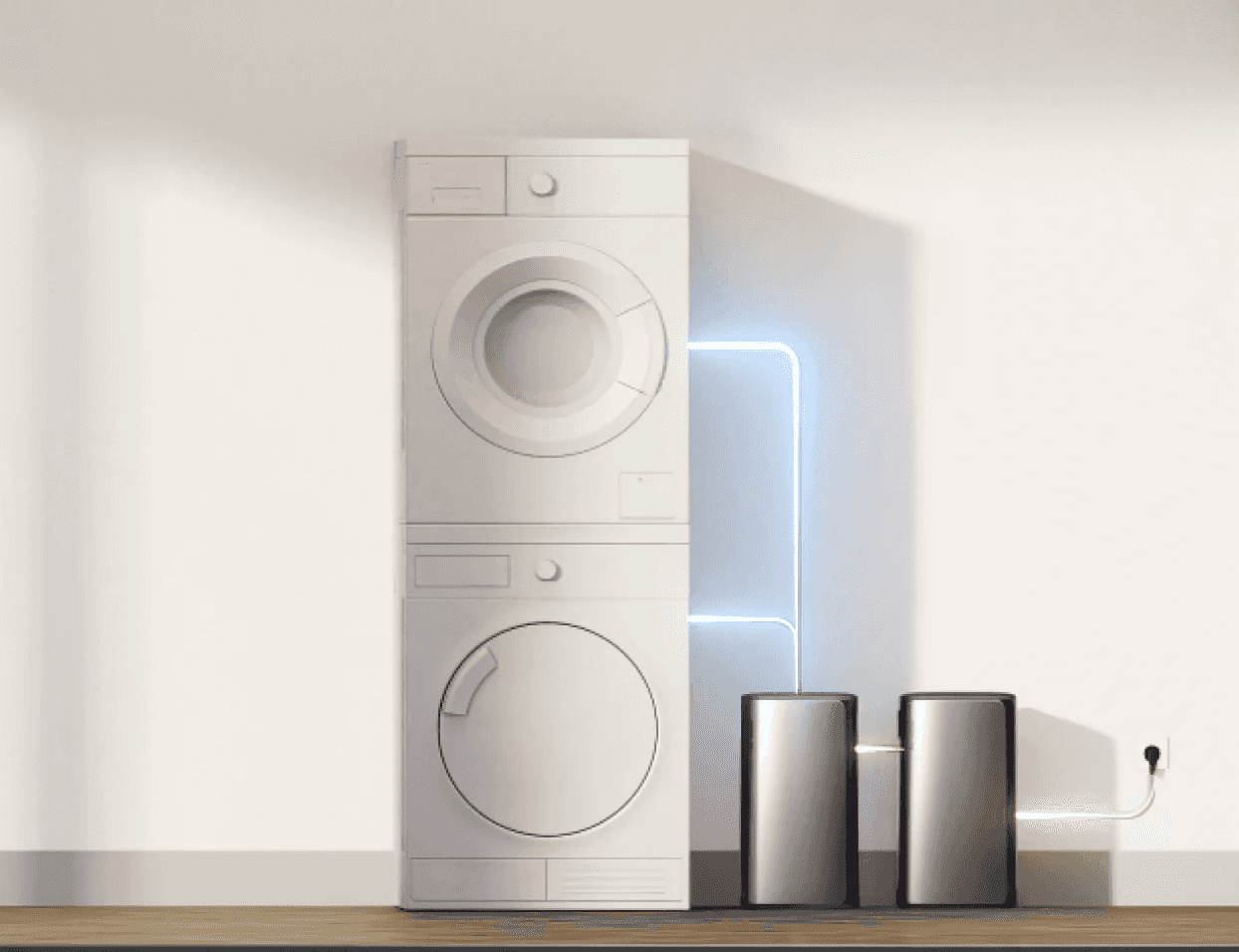
A major benefit of this setup is distributed placement flexibility. Instead of concentrating on storage in one spot, you can place units where you need them most — for example, one near your laundry area for washing machines and tumble dryers, and another in the kitchen or utility room for other high-use devices. This decentralised layout boosts energy efficiency by reducing waste and ensuring stored solar power is available closer to the appliances that use it most. The modular design also means you can expand capacity over time as your home's energy needs grow, turning your solar generation into a more resilient, cost-effective system overall.
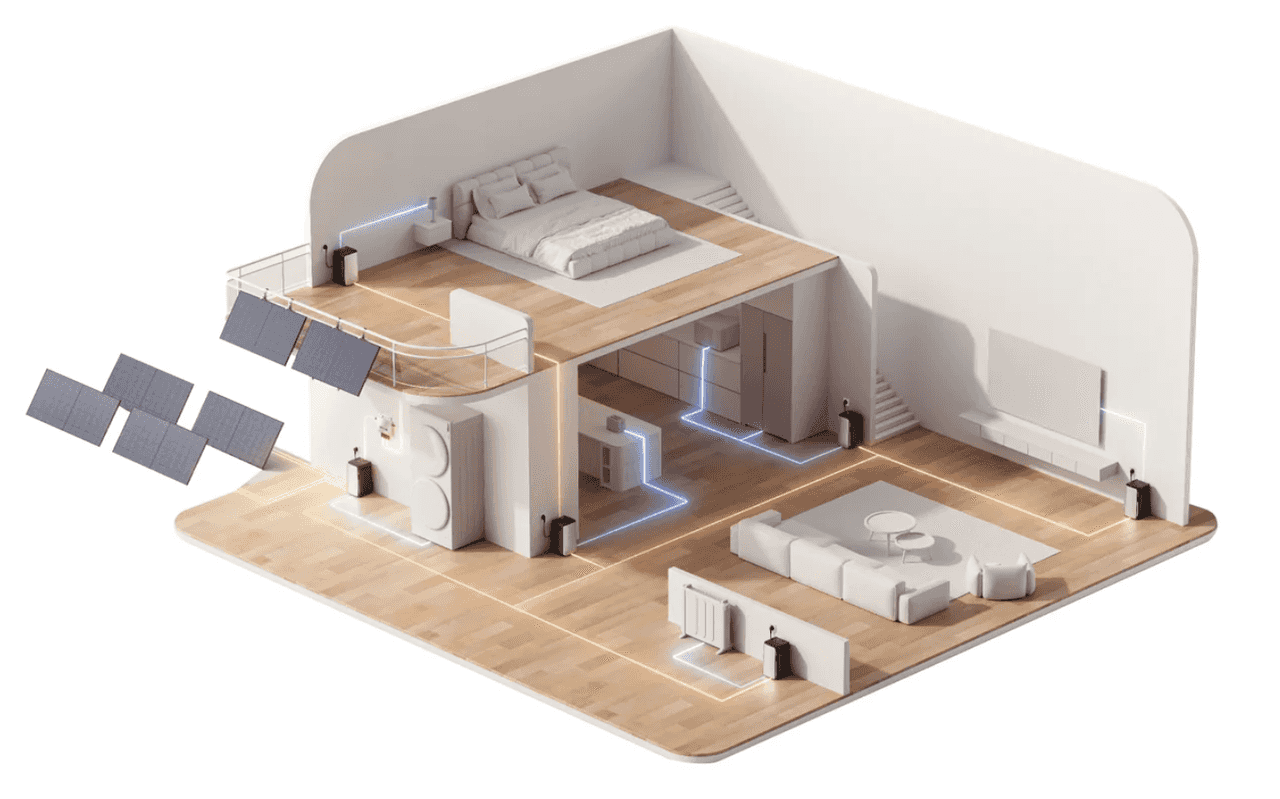
For high-energy households without solar panels: 450W Rigid Solar Panel + STREAM AC Pro + STREAM Ultra
For UK households that use a lot of electricity but don't yet have rooftop solar, the 450W Rigid Solar Panel + STREAM AC Pro + STREAM Ultra system offers a smart, scalable way to generate and store energy with minimal reliance on the grid. During the day, the solar panel generates electricity that is first used by the home, with any surplus stored in the battery instead of being wasted or exported, then released when demand rises or electricity prices peak—reducing how much power needs to be drawn from the grid and helping lower overall energy costs.
At the core of this setup is the EcoFlow STREAM Ultra, which pairs with the STREAM AC Pro to form a flexible home energy storage system tailored to everyday needs. Combined, the system provides a total storage capacity of 3.84 kWh and can deliver up to 2,300 W of output when used together—enough to power high-use appliances such as tumble dryers, washing machines, refrigerators, and kitchen equipment without relying entirely on expensive grid electricity.
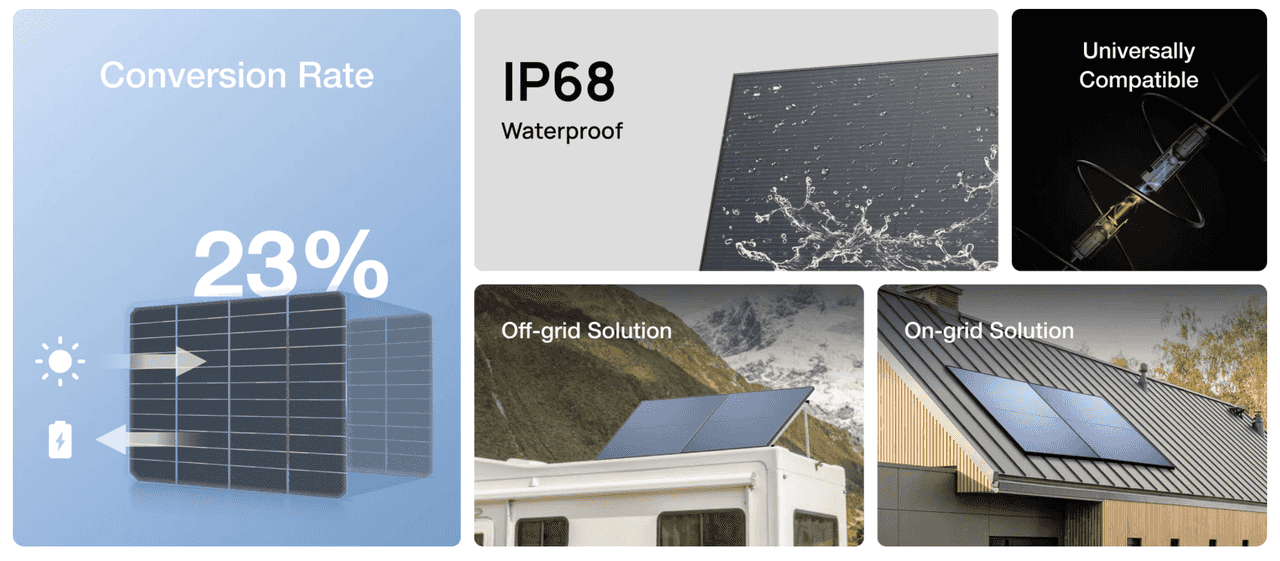
To keep this storage system consistently supplied with clean energy, the setup is powered by a high-performance 450W rigid solar panel. Designed for UK homes with limited installation space, it delivers strong output from a compact footprint, maximising energy generation even on smaller rooftops. With an industry-leading 23% conversion efficiency, the panel captures more usable energy in low-light and cloudy conditions. Built to withstand the UK's changing weather, it ensures reliable, long-term performance and helps maintain a steady supply of power for everyday household use.
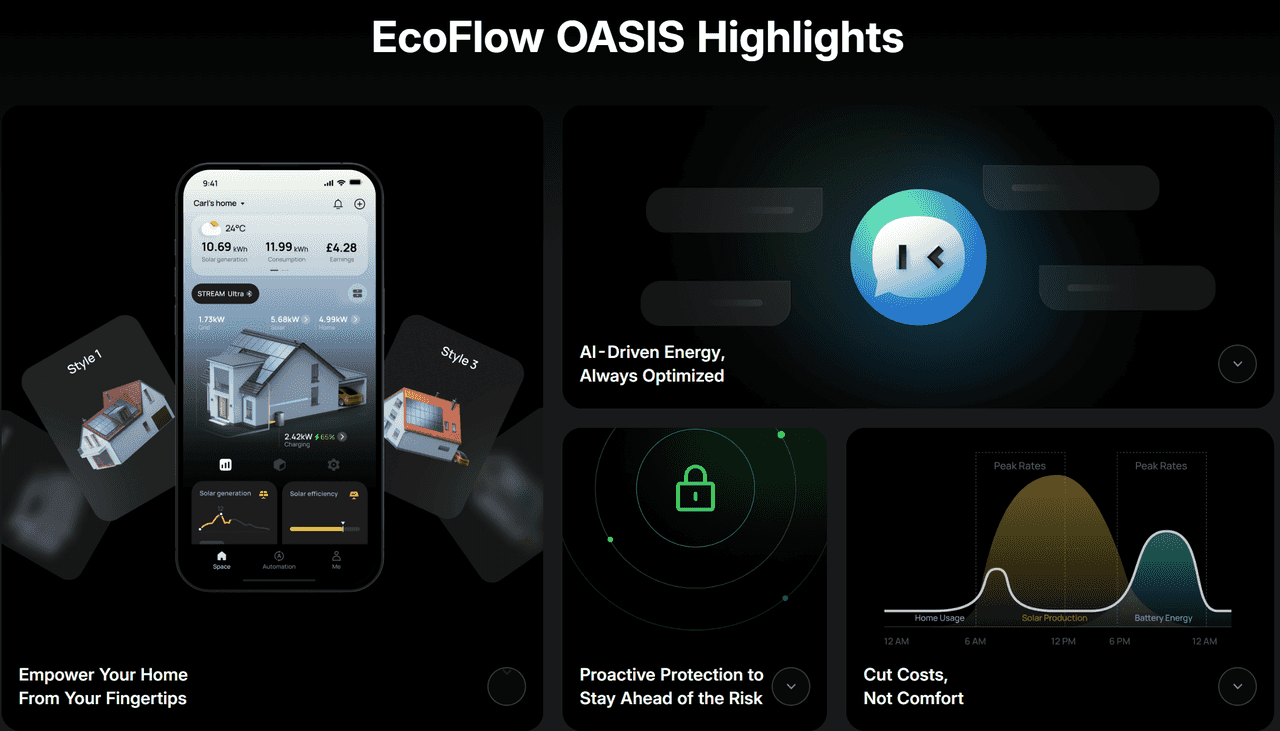
Bringing everything together, EcoFlow's OASIS Home Energy Management System adds an intelligent control layer to the system. Through the app, users can monitor real-time consumption, track solar generation, schedule battery discharge, and optimise energy use based on time-of-use tariffs—giving households clear visibility and greater control over when and how their stored energy is used.
Simple laundry habits that lower energy costs
Cutting laundry costs isn't just about tariffs; small changes in how you wash can make a noticeable difference to your electricity bill.
Wash full loads whenever possible
Running your washing machine half-empty uses nearly the same energy and water as a full cycle. By waiting until you have a full load, you maximise energy efficiency and reduce the total number of washes each week, lowering overall electricity costs.
Use eco or low-temperature settings
Heating water is the main contributor to a washing machine's energy consumption. Switching from 40°C to 30°C or selecting eco mode reduces electricity usage significantly while still keeping clothes clean for daily wear.
Avoid peak hours if you're on a time-of-use tariff
For households on Economy 7 or smart tariffs, running laundry during off-peak hours, like late at night or early morning, helps take advantage of lower rates, cutting the cost per wash without changing your routine.
Air-dry clothes when possible
Tumble dryers are among the most energy-intensive appliances in the home. Drying clothes on a rack or clothesline saves electricity, extends the life of fabrics, and reduces the cost of running a tumble dryer over time.
Conclusion
Finding the cheapest time to use a washing machine in the UK can make a noticeable difference to your annual electricity costs. By understanding washing machine peak hours, switching to off-peak washing machine usage, and adopting energy-smart habits, you can lower bills without changing your routine too much. Whether it's choosing cheap times to use the washing machine or using smarter energy storage solutions, small timing decisions add up over time. With the right tariff strategy and flexible systems like EcoFlow's STREAM Series, you gain greater control over when and how your home uses power.
FAQs
Is it cheaper to do the washing after 7 pm?
If you are wondering, is it cheaper to use a washing machine at night? It depends on your electricity tariff. On standard single-rate tariffs, electricity costs the same all day, so washing after 7 pm won't usually be cheaper. However, on time-of-use tariffs like Economy 7 or certain smart tariffs, electricity becomes cheaper later at night, typically from midnight onwards. If you want flexibility regardless of tariff timings, using an EcoFlow home energy storage system allows you to store solar energy and run your washing machine whenever it suits you.
What time is not a good time to do laundry?
In the UK, the most expensive time to run appliances is usually during peak hours, typically between 4 pm and 7 pm, when electricity demand is highest. During this period, many households cook, heat homes, and use multiple appliances, which pushes prices up on time-of-use tariffs. Running your washing machine at this time can cost more compared to late-night off-peak hours. With an EcoFlow battery system, you can avoid these high-cost windows by powering appliances from stored energy instead of the grid.
What is the most economical way to use a washing machine?
The most cost-effective approach is to wash full loads, use eco or 30°C settings, or adopt an off-peak washing machine usage routine if you're on a time-of-use tariff. Avoiding tumble dryers where possible and air-drying clothes can also significantly reduce energy use. Combining smart washing habits with off-peak scheduling helps lower electricity bills over time. For even greater savings and control, EcoFlow energy storage solutions let you manage when and how your household appliances draw power.