DIY Photovoltaic Panels: How to Build, Choose, and Buy the Best Solar Setup
- What are photovoltaic panels and how do they work?
- DIY photovoltaic panels: Is it worth building your own?
- Which photovoltaic panel is best for DIY and home use?
- Best Solar Solutions to Pair with Photovoltaic Panels
- 2. 4×400W Rigid Solar Panel + STREAM Ultra — Best for Higher Output and Bigger Savings
- DIY vs Ready-Made Solar Systems: Which One Should You Choose?
- Conclusion
- FAQs
So you're considering solar power. Perhaps you're starting to pay more each month to keep the lights on, or you've just reached a point where you don't want to pay for something you can't control. For whatever reason, you're asking the right question.
Over the past couple of years, putting photovoltaic (PV) panels - that is, panels that convert sunlight to electricity - on your roof has become a very real option for UK householders. They've become cheaper and better, and there are now options for those who want to roll their own or use a ready-made system.
This guide covers the full picture: what PV panels actually are, whether building your own is a smart idea, how to do it if you decide to go that route, and which ready-made solar setups are worth your money. Let's get into it.
What are photovoltaic panels and how do they work?
Solar panels, as most people know them, are also called photovoltaic panels (which literally means "light electricity"). Every panel contains many solar cells, typically made of silicon. The sun's rays excite the electrons and generate an electric current. That's the photovoltaic effect, which has been used in solar power for decades. Understanding photovoltaic panels: how do they work in practice makes it much easier to choose the right setup for your home.
The current that flows out of a solar panel is DC (direct current), but that's not what we use. So it has to go through an inverter, which then turns it into AC (alternating current), the kind of electricity that runs your toaster, dishwasher, and other household appliances.
If you have a battery, any solar electricity you produce but don't use straight away is stored. If you don't have a battery, you can either lose excess energy or, in some cases, feed it back into the electric grid.
There are three types of PV panels:
Monocrystalline - most efficient (18-22%), good low light performance, and longest lifespan. They are more expensive, but low-light performance is important in the often-cloudy UK.
Polycrystalline - lower efficiency (15-17%), but cheaper, and a good option for sunny locations or budgets.
Thin-film - lightweight and flexible, but less efficient (10-13%). Great for unusual angles, but usually not the best choice for rooftop systems.
Monocrystalline panels are best for most UK homes. They extract as much as possible from the weak wintertime sun, and reduced efficiency isn't a problem.
DIY photovoltaic panels: Is it worth building your own?
The short answer is: depends on what you want to do.
Homemade solar panels can be a fun and frugal project for some. But for most of us who want to save money on power bills and are connected to the grid, they aren't very good. Let's look at the facts.
Benefits of DIY photovoltaic panels
The initial cost is indeed cheaper. Purchasing the cells and building your own panel can save 30-50% of the cost. I'm handy and patient, so I save money.
You understand the system. You know what you've done. So maintenance, fixing, and upgrades are less of a mystery.
You can design it to fit. Off-the-shelf panels are stock sizes. If you have an oddly-shaped roof segment, a garden wall, or a shed, home-built panels allow you to adapt to the shape — something worth considering alongside standard photovoltaic panels dimensions, which typically run 1,700mm × 1,000mm for a 400W commercial unit.
They're ideal for off-the-grid, small-scale use. Setting up a shed, greenhouse, CCTV system, or camper? Do-it-yourself panels make a lot of sense. Low risk, low effort, low cost.
Limitations and risks
Efficiency won't be as high as commercial panels. You won't be able to replicate the factory's quality. Cell alignment, soldering quality, and encapsulation integrity all impact performance - and even slight flaws are magnified.
No warranty, no certification. Encapsulated commercial panels have 25-year warranties and safety certifications. Yours won't. And that means insurance and peace of mind.
You can't connect them to the grid. To connect UK solar systems to the grid, they must be MCS (Microgeneration Certification Scheme) certified. Your DIY panels won't meet them, so you can't receive the Smart Export Guarantee and may find yourself in trouble with your insurer.
It's not as quick as you might think. It takes a long time to seal them up and get them to work. Add that to the cost savings, and the cost-benefit analysis might not be so black and white.
There are real safety risks. If it's not wired correctly or if it's not weatherproofed, that not only means it won't work as well, but it could pose a fire or electrical safety risk, particularly outdoors.
How to make photovoltaic panels (Step-by-Step Guide)
If you've decided to go ahead — maybe for a shed, a garden setup, or because you genuinely enjoy this kind of project — here's how to do it properly.
Tools and materials you'll need
Solar cells (monocrystalline recommended, typically 156mm × 156mm)
Tabbing wire and bus wire
Soldering iron and solder
Flux pen
Plywood or aluminium backing board
EVA (ethylene-vinyl acetate) encapsulation film
Tempered glass or UV-resistant acrylic for the front cover
Junction box with bypass diodes
Silicone sealant
Multimeter (non-negotiable — you'll use this constantly)
Basic steps to build a panel
Step 1: Arrange solar cells
Lay your cells out on a flat surface and plan the grid before touching a soldering iron. For a basic 12V panel, 36 cells in a 4×9 arrangement are standard. Work out your expected voltage and current on paper first. Handle each cell carefully — they snap easily, and there's no fixing a cracked cell.
Step 2: Solder connections
Apply flux to the front bus bars on each cell, then solder tabbing wire from the front of one cell to the back of the next. Work row by row and test conductivity with your multimeter as you go. Don't rush this part. A cold solder joint looks fine, but quietly kills your output over time.
Step 3: Mount and seal the panel
Transfer your cell array onto the backing board, layer EVA film over the top, then fit the glass or acrylic cover. Press firmly and allow adequate curing time. Sealing every edge with silicone — moisture is the biggest long-term threat to a DIY panel. A small gap will eventually let water in and degrade your cells.
Step 4: Connect the inverter and battery
Wire the output leads to your charge controller first, then to your battery, and finally to your inverter if you're running AC appliances. Follow the sequence carefully and double-check polarity before making any connections live. Mixing up positive and negative at this stage can destroy your components instantly.
Step 5: Test output
Take your panel outside on a clear day and measure output voltage and current with your multimeter. Compare against your calculated expected output. A well-built panel on a sunny day should hit close to its theoretical maximum — if it falls significantly short, go back and check your solder joints before assuming the cells are faulty.
Common mistakes to avoid
Not conducting multimeter tests during construction. Wait to check when the panel is sealed. Test after each set of cells. Repairing a bad joint is quick. Finding it after the seal means restarting.
Using normal glass instead of tempered glass. Regular glass cracks from thermal shock and light impacts. Tempered glass can withstand both. It's worth the extra cost.
Rushing the silicone stage. The most frequent failure of DIY panels is water ingress. Allow the sealant to be cured (typically 24 hours) before taking the panel outside.
Not accounting for shading. Shading a single cell can reduce the output of an entire string. Consider the placement of your panel throughout the day and what may cause shading throughout the year.
Mixing mismatched cells. Make sure all cells have similar voltage and current. Combining cells from different batches or quality levels creates an imbalance that reduces overall output and can cause uneven degradation.
Which photovoltaic panel is best for DIY and home use?
Whether you're looking for cells to build your own photovoltaic panel or buying a ready-made panel to power your home, there are some factors to consider.
Key factors to consider
Efficiency rating. This is the percentage of sunlight striking the panel that is converted to electricity. The higher the better, particularly in the UK with its predominantly cloudy skies.
Power output (watts). Wattages vary from less than 100W to more than 450W. For a home system, look for 350-450W panels. If you are doing an off-grid DIY project, you may prefer a lower-wattage model.
Temperature coefficient. Panels are slightly less efficient when they are hot. The lower the temperature coefficient (e.g., -0.3% per °C), the better the panel will perform on hotter days (not a big concern in the UK, but still important).
Low-light performance. This is a crucial one for the UK. Keep an eye out for panels that perform well in diffuse light, rather than just peak sun.
Durability and warranty. This is essential for a fixed installation. Warranties for commercial panels are typically 25 years. DIY builds offer none.
Size and weight. Ensure that whatever system you want to install will fit in the space provided and that your roof will be able to support the weight (especially if you want to install more than one panel).
DIY vs Pre-Built Panels: Performance Comparison
Factor | DIY Panels | Pre-Built Commercial Panels |
Upfront cost | Lower | Higher |
Efficiency | 12–16% (variable) | 18–22% (consistent) |
Lifespan | 5–10 years (typical) | 25+ years (warranted) |
Grid compatibility | No | Yes (MCS-certified) |
Safety certification | No | Yes |
Installation time | High | Low (professional install) |
Warranty | None | 10–25 years |
Best for | Off-grid / small projects | Home energy savings |
The efficiency and durability gap compounds significantly over time. A commercial panel at 20% efficiency, running reliably for 25 years, will produce far more electricity — and save far more money — than a DIY build degrading at 14% efficiency over a shorter lifespan.
Best Solar Solutions to Pair with Photovoltaic Panels
Generating solar electricity is only half the job. If you want that electricity to actually power your home — reducing what you pull from the grid and what you pay each month — you need a system that stores what your panels generate and feeds it back into your home at the right time.
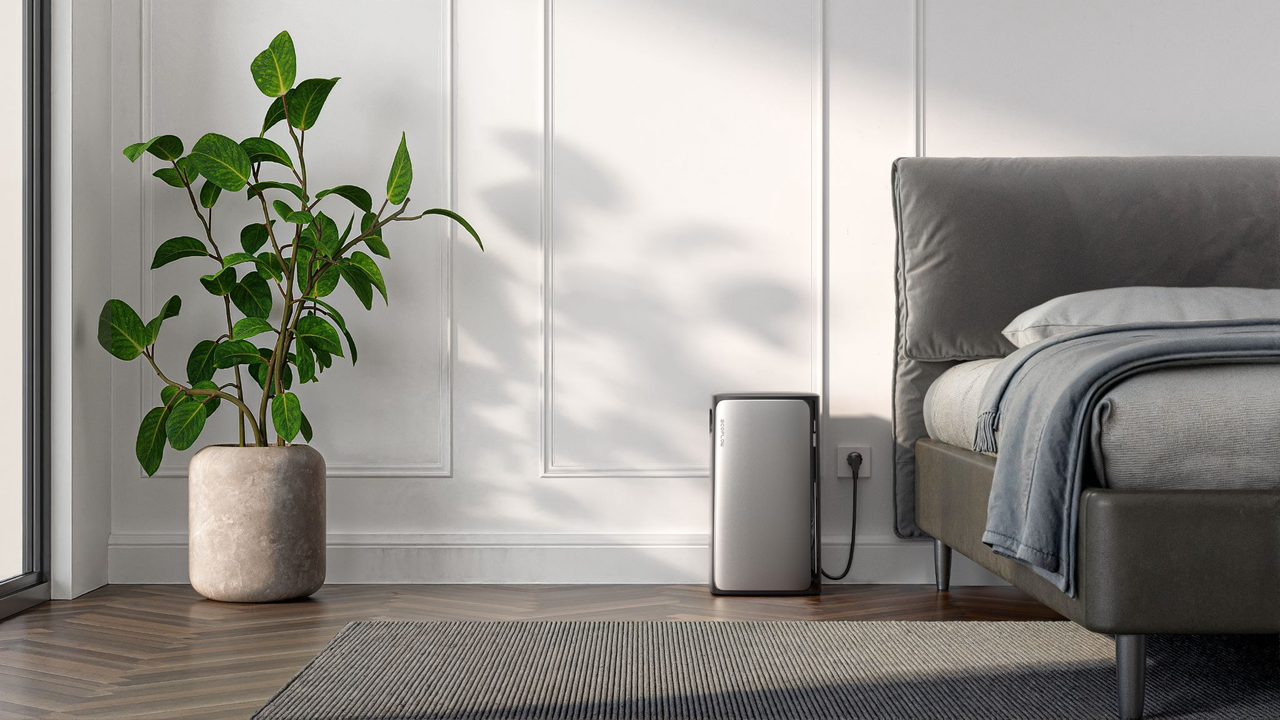
That's exactly what the EcoFlow STREAM series is built for. It's a home solar battery system designed for daily household use, not just emergencies. Panels charge the battery during the day; the STREAM feeds that store energy back into your home's circuit, so your appliances run on solar power instead of grid power. Your meter records less, and your bill follows.
Here are three setups worth looking at, depending on your household's needs:
1. EcoFlow STREAM Ultra X — Best All-in-One Starter System
The STREAM Ultra X is EcoFlow's flagship home battery, and it's designed to be the centrepiece of a proper home solar setup. It has a built-in inverter, so you don't need separate equipment to connect it to your home's electrical system — the plug in your panels, connect to your circuit, and it handles the rest.
A single unit stores 3.84 kWh and delivers up to 1,200W of output on its own. Add a second STREAM Ultra X or an AC Pro unit and output jumps to 2,300W — more than enough for ovens, dishwashers, and washing machines running simultaneously. And because the batteries sit independently rather than stacking, you can place them wherever they work best in your home.
If you're new to home solar storage and want something that covers everyday household needs from the start, the STREAM Ultra X is the natural starting point.
2. 4×400W Rigid Solar Panel + STREAM Ultra — Best for Higher Output and Bigger Savings
This bundle pairs four 400W rigid solar panels with the STREAM Ultra battery unit, and it's designed for households with higher energy demands — or those who want to replace as much grid electricity as possible with solar.
Four panels generate significantly more electricity than a single-panel setup, particularly during summer or from a south-facing roof with good exposure. STREAM Ultra manages solar input and grid interaction, while the increased generation capacity gives you more stored energy to draw from throughout the day and into the evening.
DIY vs Ready-Made Solar Systems: Which One Should You Choose?
Now that you've read all this, the answer is that it depends on your desired application.
If you're the DIY type who enjoys making things, want to understand how solar energy works, and have a small off-grid project to work on, then by all means DIY. It's perfectly valid, and for small projects, it works well without requiring certification for grid connection.
However, if your real intent is to save money on your electricity bill, then you're better off with a certified off-the-shelf system. A few reasons why:
The efficiency difference adds up. A 20% efficient commercial panel with a 25-year lifespan produces much more electricity than a 14-16% efficient DIY panel with a shorter lifespan. Which in turn impacts the savings you make every year.
Grid connection requires certification. In Britain, grid connection requires MCS certification. Homemade panels aren't eligible, which means no Smart Export Guarantees or easy grid connection.
Warranties are real financial protection. With a commercial panel, if it fails, you can do something. A DIY system failure is your sole responsibility - and parts can be costly.
Commercial systems are not just easier, they're smarter. An energy management system like EcoFlow STREAM not only stores electricity but also determines when to utilize solar power, when to draw on the stored electricity, and how to interact with the grid. You can't do that with a DIY system.
Conclusion
Solar panels have entered a new phase in the past few years-they're no longer exotic or expensive. They're an affordable option to get some control over your power bill.
If you want to roll up your sleeves and do it yourself, go ahead - but be realistic about what can be achieved. It's a great way to learn a lot and to live off the grid. To replace significant grid electricity consumption and save you money year-in and year-out, a certified system beats it.
The EcoFlow STREAM series is made for the second scenario. It converts the sun's rays into electricity for your home, saving you money on grid electricity and helping to reduce your energy bills. Whether you're starting with a single STREAM Ultra X or expanding to a whole expansion system, it's designed to fit into the way you live.
The future is solar. It's here for many households in the UK. It's just a matter of timing.
FAQs
How do photovoltaic panels work?
Solar panels generate electricity by harnessing the photovoltaic effect. The panels are made up of many solar cells, usually silicon, which are activated by photons from sunlight to emit electrons, creating a DC (direct current) flow. The DC is then converted to alternating current (AC) by an inverter, which your appliances use.
Can I build my own photovoltaic panels at home?
Yes, you can make your own PV panels from individual solar cells, tabbing wire, a backing board, and encapsulant. DIY PV panels are fine for off-grid applications such as sheds, gardens, and campervans. They are not suitable for residential grid connection and bill savings: they can't match commercial efficiencies, they're not covered by a warranty, and they can't be MCS-certified for UK grid connection.
Which photovoltaic panel is best for home use?
Monocrystalline panels are the most efficient, least light-sensitive, and longest-lasting panels for most UK domestic use. When combined with a home battery, such as the EcoFlow STREAM Ultra X, they make an efficient system that absorbs and stores solar energy during the day and then supplies electricity to your home's grid, minimising your electricity bill.
What size photovoltaic panel do I need?
It depends on your home's energy needs. A typical family in the UK consumes 8-10 kWh a day. Four panels at 400W will produce around 4-6 kWh per day in the UK. For most households, four to six panels with battery storage can supply a significant amount of energy daily, and grow from there as finances permit.
Are DIY photovoltaic panels worth it?
For off-grid, smaller applications, yes - DIY panels are cheaper, and a fun project. For energy savings and grid-tied applications, usually not. Commercial systems are more efficient, safer, covered by a warranty, and qualify for UK energy savings programs.