Watts to Amps: Quick & Easy Conversion Guide for Canadians
Whether you’re plugging in a space heater during a cold Ontario winter, running an air conditioner during a humid BC summer, or setting up camp in the Rockies, knowing how electricity works in your space really matters. Most everyday appliances list their power needs in watts, but your home circuit breakers and outdoor outlets are rated in amps. This mismatch often leads to a common question: how to convert watts to amps?
This guide walks you through electrical conversions in plain terms, looks at real Canadian scenarios, and shows how modern smart power solutions can take the guesswork out of the equation while keeping your home and appliances safe.
Understanding Watts, Amps, and Volts in Simple Terms
Electrical terms can seem confusing at first, but they’re actually quite simple. A helpful way to understand them is to think of electricity like water flowing through a garden hose. This makes it much easier to see what volts, amps, and watts mean and how they work together.
What Are Watts (W) and What Do They Measure?
Watts measure the total electrical power an appliance uses or puts out. In the garden hose analogy, wattage is like the total amount of water coming out of the hose over time. It’s basically the end result or the actual work being done. When you look at a kettle, microwave, or hair dryer, the wattage rating tells you exactly how much energy that device needs to do its job.
What Are Amps (A) and Why Do They Matter in Daily Use?
Amps measure the amount of electrical current flowing through a circuit. In the hose analogy, amps are like the thickness of the water stream itself. Amps matter a lot in daily life because your home wiring and circuit breakers have hard limits on how much current they can safely handle. Pull too many amps at once on a single circuit, and the wires overheat. That’s when your breaker trips to stop an electrical fire from starting.
The Role of Volts (V) in Canada’s Standard Electrical Grid
Volts measure the electrical pressure pushing the current through the circuit, similar to the water pressure inside the hose. In Canada, the standard residential grid operates primarily on a 120-volt system for everyday standard wall outlets. For high-draw appliances like your kitchen range, clothes dryer, or EV charger, Canada uses 240-volt circuits to meet the high demand. Knowing your voltage is the secret key to converting watts to amps accurately.
In real-world situations such as camping, RV trips, or backup power during outages, a portable solar generator (or battery-based power station) can help provide a flexible energy buffer when access to standard outlets is limited.
The Watts to Amps Formula & How to Calculate
You do not need an engineering degree to perform basic electrical calculations at home. Once you understand the fundamental relationship between the three core variables, running a quick calculation for wattage or electrical current draw requires nothing more than simple division.
The Basic Formula: Amps = Watts ÷ Volts
The standard mathematical formula to find amperage when dealing with Alternating Current (AC) resistive loads in everyday life is straightforward:
Amps (A) = Watts (W) ÷ Volts (V)
By taking the total power rating (watts) marked on the product label and dividing it by your system’s voltage (typically 120V in Canada), you can instantly determine exactly how many amps are running through your wires.
Step-by-Step Conversion Examples for Standard Canadian Household Items
Let’s look at a couple of everyday examples you might encounter while prepping breakfast or doing chores around the house:
Example 1 (The Morning Coffee): Imagine you plug a 1,500-watt premium coffee maker into your standard Canadian kitchen counter outlet (120V). Using our quick formula: 1,500W ÷ 120V = 12.5A. This single appliance draws 12.5 amps of current.
Example 2 (The Heavy Duty Dryer): Consider a large 4,800-watt clothes dryer connected to a dedicated 240V heavy-duty outlet. The calculation shifts to: 4,800W ÷ 240V = 20A. Notice how doubling the voltage to 240V allows the appliance to pull a massive amount of power while keeping the overall amperage remarkably low and safe.
Quick Mental Estimation Tips for Everyday Life
If you don’t have a calculator, you can use a simple 120V-based approximation to estimate current draw. A practical mental shortcut is to round 120V down to 100V for quick estimates. This slightly overestimates the current, which can be useful for fast safety checks when evaluating multiple appliances on the same circuit.
For example, an 800W microwave draws about 6.7A at 120V (800 ÷ 120). Using the 100V shortcut, you would estimate about 8A. This produces a higher, more conservative estimate, which can help you quickly assess whether a circuit is approaching its limit. However, for accurate load calculations, always use the standard formula.


Real-Life Canadian Scenarios: Why This Conversion Saves Lives and Appliances
In Canada, where seasonal weather can be extreme, knowing how your power usage works helps protect your home and appliances.
Scenario 1: Managing Household Appliance Loads and 15A/20A Breaker Limits
Most standard Canadian household rooms are served by a shared 15-amp circuit, meaning the circuit is rated for a maximum load of 15 amps. On a hot June afternoon, running a 1,400W portable air conditioner (11.7A) in a home office while a 1,200W electric kettle (10A) is plugged into the same circuit would push the total load to about 21.7A. This overload will likely cause the breaker to trip, cutting power to the outlets and devices on that circuit. Understanding how appliance loads add together can help prevent nuisance trips and reduce unnecessary thermal stress on aging wiring and electrical connections.
Scenario 2: RVing, Camping, and Off-Grid Living Power Logistics
Exploring the gorgeous campgrounds of Alberta or the rugged coasts of the Maritimes in an RV requires strict power budgeting. Many standard Canadian campsites provide either a modest 15A or 30A hookup. A portable power station can help smooth out these limitations by providing additional stored energy for high-draw electronics. If you try to run your RV’s rooftop air conditioner, an electric griddle, and a microwave simultaneously without calculating the cumulative amperage beforehand, you will instantly trip your campsite site’s dedicated pedestal breaker, cutting off power to your rig in the middle of the night.
Common Mistakes: Ignoring Voltage Differences (120V vs. 240V) and Overloading Circuits
The most common mistake Canadians make is thinking a watt is always a watt, no matter the voltage. Run a 3,000W heater on a 120V generator line and you’re pulling 25 amps. This may trip the breaker and, if repeatedly overloaded, can cause overheating risks. Run the same 3,000W heater on a 240V line and you’re only pulling 12.5 amps, which remains within typical operating limits.
People also forget the 80% rule. In Canada, under Canadian Electrical Code (CEC) Rule 8-104 guidelines, for circuits not exceeding 225 A, a calculated load is considered continuous if it persists for a total of more than 1 hour in any 2-hour period. For safety, such loads should not exceed 80% of a circuit’s rated capacity, ensuring your setup stays fully compliant. So on a standard 15-amp breaker, you’re really only safe running about 12 amps for continuous use.
How to Manage Power Usage More Safely and Efficiently
Manually calculating amps for every single light bulb, appliance, and device in your home can quickly become exhausting, especially when seasonal emergencies strike or when you are deep in the Canadian wilderness.
Monitoring Home Power Demand During Summer Peaks
During Canadian summers, air conditioners and fridges run nonstop to keep up with the heat. Then throw in a sudden power failure from a severe thunderstorm or a tropical system hitting Eastern Canada, and your whole home’s electrical balance gets pushed to the limit. Trying to track every amp yourself during an emergency is stressful and potentially hazardous.
That’s where the EcoFlow DELTA Pro Ultra Whole-Home Backup Power provides a reliable alternative. It is designed as a home backup power system for Canadian households, supporting both 120V and split-phase 240V output through its system configuration. This allows users to prioritize and run selected essential appliances during outages, within the system’s rated power capacity.
Beyond being a solid emergency backup solution, it provides real-time power monitoring through its app. You don’t need to calculate usage manually, as the system displays your total system output and real-time load distribution. When paired with the Smart Home Panel 2, this helps you better manage essential appliances circuit by circuit, reducing the risk of overloading the system during outages or off-grid use.
Tracking Power Consumption While RVing or Camping
When you head off-grid to enjoy those long Canadian summer days, keeping your gear powered up shouldn’t mean tripping breakers at your campsite. Run a portable air conditioner or a high powered outdoor blender over 1,400 watts, and you’ll exceed the safe continuous load limit of a standard 15 amp outdoor circuit.
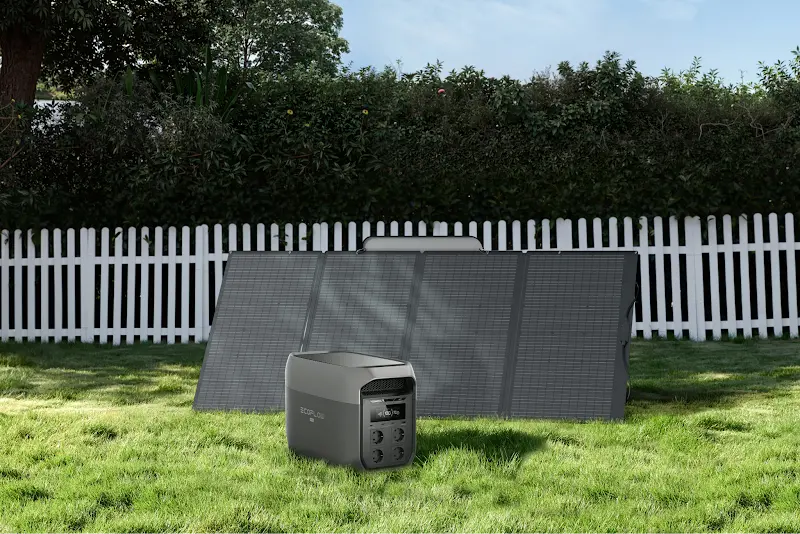
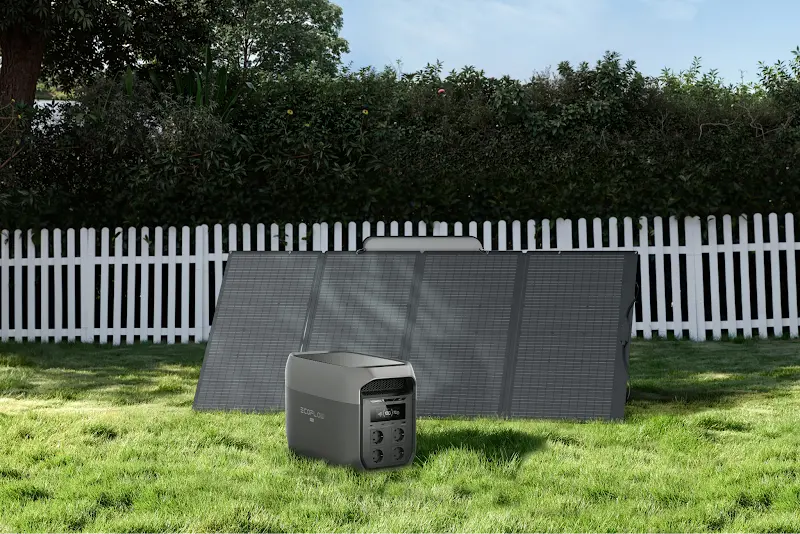
To enjoy nature without giving up the comforts, the EcoFlow DELTA 3 Max (2048Wh) + 400W Solar Panel provides a portable off-grid power solution designed for RV and camping use. It supports high-wattage appliances and can handle short-term power surges from demanding devices, while recharging through solar energy during the day.
The smart app lets you monitor real-time power usage, including input and output wattage, so you can better manage your energy consumption while off-grid. This helps you stay within safe operating limits during your outdoor adventures across Canada.
Watts to Amps Quick Reference Chart for Canadians
To save you from doing manual math during your busy day, use this handy reference table based on Canada’s standard 120V electrical system to quickly understand your household power dynamics.
Common Canadian Appliance Wattage and Amperage Table (120V System)
| Appliance / Device | Average Wattage (W) | Estimated Amperage (A) @ 120V | Circuit Load Status (15A Circuit) |
|---|---|---|---|
| LED Smart TV | 100W | 0.8A | Very Low (Safe) |
| Standard Refrigerator | 300W–700W | 2.5A–5.8A | Moderate (Typical Household Load) |
| Toaster / Coffee Maker | 1,500W | 12.5A | High (Heavy Draw Single Load) |
| Standard Electric Kettle | 1,200W–1,500W | 10.0A–12.5A | High (Heavy Draw Single Load) |
Note: Appliances with motors, like refrigerators, draw higher reactive current and a brief startup surge than simple calculations show.
When to Consult a Licensed Electrician Instead of DIY Calculations
Doing the basic math for small portable items is sufficient. But DIY calculations only get you so far. If you need to install an EV charger, wire up a basement workshop, hook up a transfer switch for a backup generator, or your breaker panel keeps tripping for no obvious reason, avoid assumptions and call a licensed electrician. Handling permanent electrical work takes professional know-how to stay compliant with the Canadian Electrical Code.
Conclusion
Knowing how to convert watts to amps is useful in household electrical planning. Just remember: Amps = Watts ÷ Volts. Stick to your circuit limits and you’ll avoid a lot of blown breakers and safety headaches.
If you prefer not to do the math manually, a smart power system like the EcoFlow DELTA series can help simplify energy management. It provides real-time monitoring of power usage and helps you keep track of electrical loads more easily, whether you’re at home during an outage or camping off-grid.
FAQ
How Do I Convert Watts to Amps Quickly?
To convert watts to amps quickly, simply divide the wattage by the voltage of the circuit. For a standard Canadian household outlet, divide your device’s total watts by 120 to instantly find the total amps.
How Many Watts Can a 15 Amp 120V Outlet Handle?
A standard 15-amp 120-volt outlet can handle a maximum peak load of 1,800 watts. However, for continuous safety over several hours, the Canadian Electrical Code (CEC) strictly requires limiting the total load to 80% of that maximum, which is 1,440 watts.
Does Voltage Affect Watts to Amps Conversion?
Yes, voltage directly impacts the conversion because a higher voltage reduces the total amperage required to deliver the same amount of wattage. For instance, a 2,400-watt appliance draws 20 amps on a 120V line, but only draws 10 amps on a 240V line.
Can I Safely Calculate Watts to Amps Myself at Home?
Yes, you can safely calculate watts to amps yourself using the simple division formula for all your household electronic appliances. However, you should never attempt to perform physical modifications or DIY changes to your permanent electrical panel wiring yourself.
What Happens if I Exceed Amps in a Circuit?
Exceeding the maximum amperage on a circuit will cause your home breaker panel to instantly trip and cut off power to prevent wires from overheating. If a breaker fails to trip properly, excessive amperage can degrade your wiring and lead to a hazardous electrical fire.