How to Calculate Voltage Drop: Formula, Examples & Wire Size Guide for Canada
- What Is Voltage Drop and Why Does It Matter in Canadian Homes?
- What Formula Is Used to Calculate Voltage Drop?
- How Do Voltage Drop Calculations Work in Real Canadian Examples?
- How Do You Choose the Right Wire Size for Canadian Conditions?
- What Voltage Drop Limits Does the Canadian Electrical Code Recommend?
- Conclusion
- FAQ
Planning an electrical project in Canada goes well beyond matching a breaker to a wire size. Whether you’re feeding a detached garage workshop in Alberta, wiring a basement suite in Ontario, or installing a whole‑home backup system to ride through a winter outage, you need to get the voltage drop right. Run the wire too long or go too thin, and your equipment won’t get the voltage it needs to run safely or efficiently.
This comprehensive guide breaks down exactly what voltage drop is, how to calculate it using standard Canadian formulas, and how to choose the right wire size (AWG) to keep your home safe, compliant, and ready for any power emergency.
What Is Voltage Drop and Why Does It Matter in Canadian Homes?
Before we get into the math, It is important to understand what’s actually happening with the electricity moving through your home. Every time current flows through a wire, it hits natural resistance. That resistance inevitably siphons off a bit of energy along the way.
How Resistance Causes Voltage Loss
Every conductor has inherent resistance that limits current flow. As current (I) flows through a wire with resistance (R), some electrical potential is lost as heat. Ohm’s Law spells it out: the drop rises directly with the amount of current running through the circuit.
Why Long Wire Runs Increase Drop
The longer a wire runs, the more resistance it builds up. In many Canadian homes, especially newer suburbs with sprawling layouts or acreages with detached shops, circuits often cover serious distances. A wire gauge that works fine for a 3‑meter hop from the panel can turn into a significant voltage drop issue if you stretch it 40 meters across the property.
Canadian Electrical Code Recommendations
To keep electrical systems running reliably, the Canadian Electrical Code (CE Code) provides commonly accepted design recommendations for voltage drop in residential systems.
Most residential appliances, electronics, and motor loads are designed to operate within a relatively narrow voltage range, making voltage drop an important design consideration. Maintaining proper voltage drop levels helps ensure stable voltage conditions across the system, supporting overall voltage regulation and protecting sensitive electrical devices. Excessive voltage drop can lead to, and you risk overheating inside your walls, premature appliance breakdowns, and lights that flicker every time a heavy load kicks in.


What Formula Is Used to Calculate Voltage Drop?
Voltage drop in single-phase residential circuits can be calculated using either imperial or metric-based formulas depending on the conductor data available. The underlying principle remains the same: voltage drop is proportional to current, conductor length, and resistance.
1. Primary Formula (Imperial System – Most Common in Canada)
For most North American residential wiring calculations using AWG sizing and circular mil values, the standard formula is:
Voltage Drop (V) = (2 × K × I × D) ÷ CM
Where:
K = resistivity constant of conductor material
I = current (amps)
D = one-way distance (feet)
CM = circular mil area of conductor (AWG-based)
Use this formula when:
You are working with AWG wire sizes
Your data source uses circular mil values
Most residential Canadian electrical design cases
2. Alternative Formula (Metric System)
When working with metric conductor data (resistance per kilometer), the voltage drop can also be calculated as:
Voltage Drop (V) = (2 × I × D × Rc) ÷ 1000
Where:
Rc = resistance of conductor (ohms/km)
D = one-way distance (meters)
Use this formula when:
Using metric wire specifications
Working from manufacturer datasheets in ohms/km
Designing solar, EV, or European-standard systems
3. Voltage Drop Percentage (Final Step Conversion)
To evaluate whether a circuit meets design recommendations, convert voltage drop into percentage:
Voltage Drop % = (Voltage Drop ÷ Supply Voltage) × 100
Use this step when:
Verifying compliance with design guidelines
Comparing 120V vs. 240V systems
Checking against typical 3% / 5% targets
Engineering Notes: Materials & Canadian Reality
Both formulas describe the same single-phase behavior, but since Canadian electrical tools and AWG sizes lean imperial, the circular-mil formula remains the residential standard.
However, switching from copper to aluminum changes the math entirely. Because aluminum has higher natural resistance(K ≈ 21.2 ohms-cmil/ft compared to copper’s 12.9) , you must typically bump up the conductor by one or two full AWG sizes to maintain the same voltage drop performance over a distance.
Why This High-Stakes Math Matters for Home Backup
This material and distance calculation becomes critical during a Canadian winter blackout. Emergency backup systems such as solar generators or whole-home battery systems often operate over long wiring distances from the main panel. When the grid goes dark, these systems instantly face heavy, simultaneous loads: refrigerators, freezers, and the crucial furnace blower fan required to keep your pipes from freezing. Shortchange your wire gauge on these runs, and the resulting voltage drop will starve your equipment, risking compressor stalls or sensitive electronic failures.
Therefore, a robust backup strategy requires looking beyond mere battery capacity. For homeowners deploying the EcoFlow DELTA Pro 3 Portable Power Station, executing precise voltage drop calculations ensures that its 120V and 240V outputs deliver unwavering, rock-solid power to your critical circuits, no matter how far they are from the source.
How Do Voltage Drop Calculations Work in Real Canadian Examples?
Four common residential wiring scenarios across Canada. All examples assume copper conductors, use standard AWG circular mil values, and follow CE Code voltage drop recommendations (3% branch circuit / 5% total system).
Example 1: 120V Basement Entertainment Circuit
Scenario Setup: 14 AWG Copper Wire / 25 m (82 ft one-way) / 15A Load
Step-by-Step Calculation:
Defined Values: I = 15 A, D = 82 ft, K = 12.9, CM = 4,110
Formula Application: Voltage Drop = (2 × 12.9 × 15 × 82) ÷ 4,110 = 7.72 V
Percentage Calculation: Voltage Drop % = (7.72 V ÷ 120 V) × 100 = 6.43%
CE Code Verdict: Failed. This significantly exceeds the Canadian Electrical Code recommended 3% limit (3.6V max) for branch circuits. Running heavy loads under these conditions can cause digital equipment to reboot or flicker. Upsizing to 12 AWG copper wire is highly recommended.
Example 2: 240V Baseboard Heater
Scenario Setup: 12 AWG Copper Wire / 35 m (115 ft one-way) / 20A Load
Step-by-Step Calculation:
Defined Values: I = 20 A, D = 115 ft, K = 12.9, CM = 6,530
Formula Application: Voltage Drop = (2 × 12.9 × 20 × 115) ÷ 6,530 = 9.09 V
Percentage Calculation: Voltage Drop % = (9.09 V ÷ 240 V) × 100 = 3.78%
CE Code Verdict: Marginal. Slightly above the ideal 3% target, but still functional. However, to ensure peak heating efficiency and reduce energy loss during extreme Canadian winter freezes, upgrading to 10 AWG copper wire is the best practice.
Example 3: Detached Garage/Workshop Subpanel
Scenario Setup: 8 AWG Copper Wire / 45 m (148 ft one-way) / 30A Load
Step-by-Step Calculation:
Defined Values: I = 30 A, D = 148 ft, K = 12.9, CM = 16,510
Formula Application: Voltage Drop = (2 × 12.9 × 30 × 148) ÷ 16,510 = 6.94 V
Percentage Calculation: Voltage Drop % = (6.94 V ÷ 240 V) × 100 = 2.89%
CE Code Verdict: Passed! The drop is safely maintained below the 3% threshold, making it perfectly compliant and ready to handle workshop power tools, air compressors, and garage lighting without performance drops.
Example 4: Level 2 EV Charging Circuit (Continuous Load)
Scenario Setup: 6 AWG Copper Wire / 30 m (98 ft one-way) / 40A Continuous Load
Step-by-Step Calculation:
Defined Values: I = 40 A, D = 98 ft, K = 12.9, CM = 26,240
Formula Application: Voltage Drop = (2 × 12.9 × 40 × 98) ÷ 26,240 = 3.85 V
Percentage Calculation: Voltage Drop % = (3.85 V ÷ 240 V) × 100 = 1.6%
CE Code Verdict: Excellent Performance. A voltage drop of just 1.6% means minimal heat buildup along the run and maximized charging efficiency.
How Do You Choose the Right Wire Size for Canadian Conditions?
Selecting the ideal wire size requires balancing your regular power consumption against the physical constraints of your home’s layout and ambient temperatures.
Start With Load Current and Distance
Every electrical installation begins by determining the maximum continuous current load (measured in Amps) and measuring the absolute distance the cable must travel. In Canada, internal home routing around framing, cold air returns, and structural bulkheads can easily add 5 to 10 meters of hidden distance to a straight-line measurement, so always budget a bit of slack into your distance values.
Compare Common AWG Sizes
For reference, standard household circuits rely on a familiar hierarchy of copper wire sizes:
| Wire Size (AWG) | Max Ampacity (Amps) | Typical Canadian Standard Residential Applications |
|---|---|---|
| 14 AWG | 15 A | General lighting circuits, bedroom receptacles, and short auxiliary branch circuits (under 12 meters/40 feet). |
| 12 AWG | 20 A | Kitchen counter receptacles (T-Slot outlets), dedicated bathroom circuits, outdoor GFCI receptacles, and extended basement runs where 14 AWG fails voltage drop limits. |
| 10 AWG | 30 A | Electric clothes dryers, small central air conditioning units, essential charging lines for home battery storage. |
| 8 AWG | 40 A | Small subpanels for detached garages, electric kitchen ranges, medium-sized heat pumps. |
| 6 AWG | 55 A – 65 A | Level 2 EV charging stations, whole-home backup power transfer panels (such as the Smart Home Panel 2). |
When to Upsize Conductors
If your distance calculation reveals that your voltage drop will cross the 3% threshold, it is time to upsize your conductor to the next thickest AWG size. Upsizing is also highly recommended if your cables run through uninsulated attic spaces that experience sweltering heat in summer, or if multiple current-carrying wires are tightly bundled together in a single conduit, as high ambient heat naturally increases electrical resistance. This careful line planning is also important in off-grid backup systems where portable power stations supply critical loads during extended blackouts.
Whole-Home Backup and EV Charging Circuits
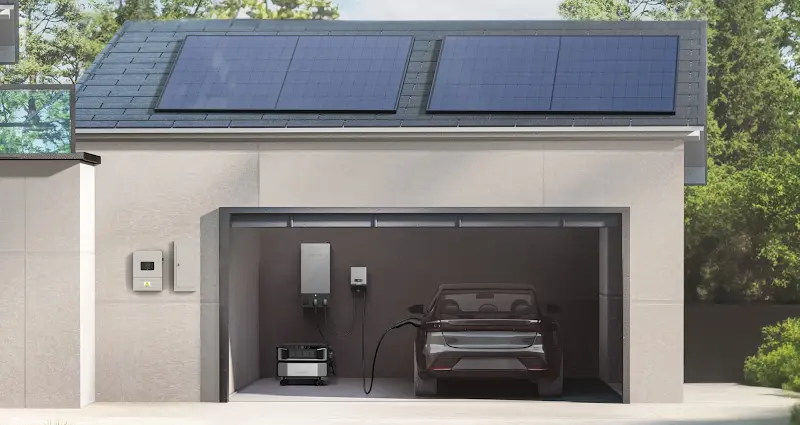
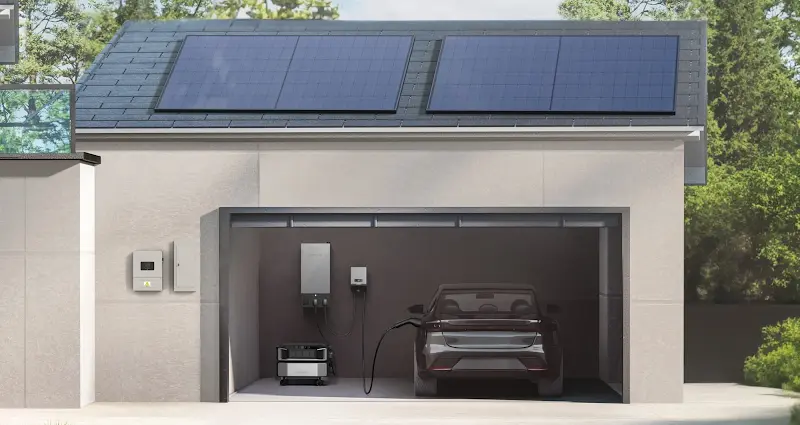
An increasing number of Canadian homeowners are looking to integrate whole-home emergency backup and EV charging infrastructure into a single unified system. This kind of installation needs to reliably run high-power heating systems, water pumps, lighting, and critical kitchen appliances during a black-out, while seamlessly managing high-draw Level 2 EV charging circuits on a daily basis. Because these modern power ecosystems deal with high-current 240V configurations, managing your line lengths and conductor thicknesses directly affects the overall system efficiency.
When routing these essential lines, you must carefully cross-reference your load demands with the voltage drop limits outlined by the Canadian Electrical Code. For families deploying the robust EcoFlow DELTA Pro Ultra + Smart Home Panel 2 + EcoFlow Power Pulse EV Charger, conducting thorough voltage drop planning ensures your entire household transition remains completely seamless. This deliberate planning guarantees that daily EV charging runs at peak efficiency and that your whole-home backup power operates smoothly during severe winter storms.
What Voltage Drop Limits Does the Canadian Electrical Code Recommend?
While some global standards vary, Section 8 of the Canadian Electrical Code (CE Code) provides precise, mandatory requirements to ensure system-wide efficiency and safety under Section 8 (Rule 8-102).
The Recommended 3 Percent Limit for Branch Circuits
The CE Code suggests that voltage drop is generally kept within about 3 percent for branch circuits as a design guideline. On a standard Canadian 120V line, this means your maximum allowable drop is 3.6 Volts, meaning your outlet should read at least 116.4 Volts under full load.
The Recommended 5 Percent Limit for Feeders and Branch Circuits
When you calculate the cumulative voltage drop of the entire electrical run—combining the feeder line (the cable running from the main service entrance to a subpanel) and the final branch circuit together—the total combined voltage drop must not exceed 5 percent. This equals a maximum loss of 6 Volts on a 120V system or 12 Volts on a 240V system.
Conclusion
Calculating voltage drop helps a residential electrical system run safely, efficiently, and within today’s load demands. Apply the standard single-phase formula and pick the right copper or aluminum AWG size. That cuts energy loss and keeps voltage stable at the load. The CE Code typically recommends holding voltage drop to about 3% for branch circuits and 5% for feeders and branch circuits combined.
As Canadian homes add higher loads—Level 2 EV chargers, heat pumps, solar arrays—voltage drop becomes a real design factor. Sizing conductors properly keeps the system efficient across longer cable runs. That matters especially for modern home energy and backup systems, which need stable input during peak demand and outages.
FAQ
What Happens if the Voltage Drop Is Too High?
Excessive voltage drop starves your appliances of necessary operating voltage, causing electric motors to overheat, digital electronics to malfunction, and lighting to dim significantly. Over time, this constant undervoltage leads to premature equipment failure and wastes energy as heat inside your home’s walls.
Can You Use Aluminum Wire for Long Runs?
Yes, you can absolutely use aluminum wire for long circuit runs, provided you expand the conductor size to counteract aluminum’s higher natural resistance compared to copper. You must also ensure you use terminals, paste, and breakers explicitly rated for aluminum connections to prevent long-term corrosion.
How Far Can You Run 8 Gauge Wire on a 20 Amp Circuit?
You can run an 8 gauge copper wire on a 20-amp, 120V circuit up to approximately 50 meters (164 feet) before crossing the recommended 3 percent voltage drop threshold. If you are running a 240V circuit, that safe distance doubles to roughly 100 meters (328 feet).
What Is the Acceptable Voltage Drop for 240V?
The maximum recommended voltage drop for a 240V residential circuit is 7.2 Volts for an isolated branch circuit (3%), and up to 12 Volts (5%) for a combined feeder and branch circuit run. Keeping your drop within these boundaries ensures heavy appliances like dryers, ovens, and EV chargers perform optimally.
What Wire Size for a 100 Amp Sub Panel That's 200 Feet Away?
For a 100-amp residential subpanel located 200 feet away, you should use a minimum of 1 AWG copper wire or 2/0 (00 AWG) aluminum wire to keep your total voltage drop under the standard 3 percent limit. Always verify your final choice against local utility rules and specific provincial amendments to the CE Code.