Starlink Internet Canada 2026: Speeds by Province, Plans & Rural Coverage
- What Is Starlink and How Does It Work in Canada?
- Starlink Canada Plans & Pricing (2026)
- Starlink Speeds by Province (2026 Data)
- Starlink Rural & Remote Coverage in Canada
- Starlink vs. Other Rural Internet Options in Canada
- How to Order Starlink in Canada
- Is Starlink Worth It in Canada in 2026?
- Frequently Asked Questions
- Stay Connected, Reduce Downtime, Power Your Starlink With EcoFlow
Starlink has changed what's possible for internet access outside Canada's cities, but pricing, speeds, and reliability still vary widely by region. Here's a breakdown of Starlink's 2026 Canadian plans, how fast it actually runs across different provinces, and where it fits, or falls short, as a rural and remote broadband option, so you can decide if it's right for your home.
What Is Starlink and How Does It Work in Canada?
SpaceX runs Starlink, a satellite internet service, delivering it through low-Earth-orbit satellites positioned about 550 km (342 mi) up, versus roughly 35,786 km (22,236 mi) for geostationary providers like Xplore. That shorter distance cuts latency to around 25 milliseconds, compared to 600+ ms for geostationary satellites, close to city cable or fibre.
The dish's phased-array antenna tracks satellites automatically, a key part of how Starlink works that eliminates manual pointing.
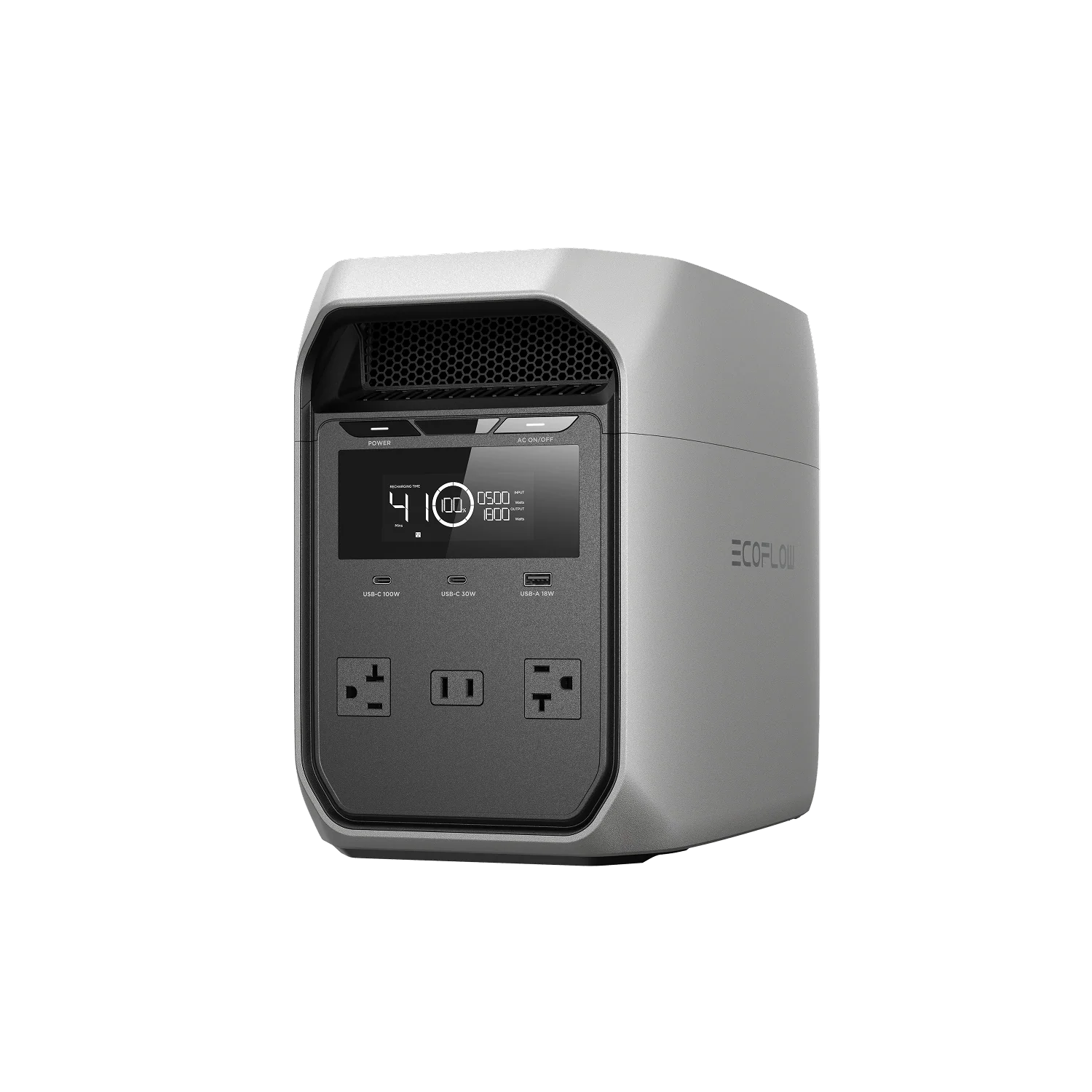
A Starlink kit runs on grid power through a standard outlet, so an outage takes your internet down with your lights. Many rural households pair the dish with a backup source, such as the EcoFlow DELTA 3 Classic (1024Wh), so a storm doesn't also cut off calls or remote work.
Starlink Canada Plans & Pricing (2026)
Residential 100 Mbps — $75/month
The entry-level plan suits everyday households: browsing, streaming, and video calls on a handful of devices, with unlimited data and no contract.
Residential 200 Mbps — $115/month
This mid-tier plan handles busier homes: multiple simultaneous streams, online gaming, or a household on video calls throughout the day.
Residential Max — $150/month (400+ Mbps in select areas)
Max uses a higher-performance dish and priority network access, delivering over 400 Mbps where capacity allows, aimed at large households or small businesses that can't tolerate slowdowns.Max uses a higher-performance dish and priority network access, delivering over 400 Mbps where capacity allows, aimed at large households or small businesses that can't tolerate slowdowns.
Roam/Portable Plans
Roam serves cottages, RVs, and second properties, with capped-data options starting around $70/month and an unlimited tier closer to $200/month. Rates shift as SpaceX adjusts capacity pricing, so confirm current rates before budgeting.Roam serves cottages, RVs, and second properties, with capped-data options starting around $70/month and an unlimited tier closer to $200/month. Rates shift as SpaceX adjusts capacity pricing, so confirm current rates before budgeting.
Hardware Costs
The standard kit costs roughly $399 to $499 outright, though many areas offer free rental with a $19 shipping fee. The compact Mini runs around $249.
Most rural users eventually add a mast mount or surge protector, the kind of essential Starlink accessories that keep a permanent install tidy. Running the dish around the clock also draws more continuous power than most home routers, so it’s worth checking Starlink’s power consumption before sizing a battery backup for it.
Starlink's pricing is subject to change but is correct as of the time of this writing.
Starlink Speeds by Province (2026 Data)
Starlink in Canada regularly outperforms the CRTC's baseline, though the exact national average varies by provider and testing method.
Fastest Provinces
The territories and less populated provinces tend to post the best numbers. Northwest Territories, Nunavut, and Yukon see the least network congestion, while Manitoba and Saskatchewan also perform well above the national trend.
Slowest/Most Congested Provinces
Ontario and Quebec see the most congestion during peak evening hours, given their larger user bases. British Columbia and Nova Scotia sit in a similar range, though still well above older satellite or DSL speeds.
Starlink Rural & Remote Coverage in Canada
Best Use Cases
Starlink best suits:
Farms
Acreages
Hunting or fishing camps
Off-grid cabins where cable and fibre never reached
Remote workers who moved outside city limits but still need dependable calls.
Where Starlink Struggles
Dense tree cover, deep valleys, and downtown high-rises can block the clear sky view the dish needs.
Residential terms are also built around a fixed address, so it isn't meant as a primary connection for apartment or condo living, the way Roam is for travel.
Federal & Provincial Rural Broadband Subsidies
Ottawa's Universal Broadband Fund is investing $3.225 billion to bring 50/10 Mbps internet to underserved communities, targeting 98% of Canadians connected by 2026, according to Innovation, Science and Economic Development Canada.
Some provinces also rebate satellite installation costs for income-qualifying households, so check your provincial program first.
Starlink vs. Other Rural Internet Options in Canada
Fibre or cable, where available, typically beats Starlink on price and consistency. Fixed wireless providers like Xplore can cost less, though speeds drop at the edge of coverage. Older geostationary satellite plans are cheaper upfront but carry much higher latency, making calls and gaming frustrating.
Starlink's real advantage shows up where none of those options reach.
How to Order Starlink in Canada
Check availability at starlink.com/ca with your postal code, since capacity varies by region and some areas carry a one-time congestion surcharge.
Choose a plan, decide between purchasing or renting the hardware, and complete the order.
Self-installation takes most people under an hour: mount the dish, plug in the router, and let the app guide the alignment.
Is Starlink Worth It in Canada in 2026?
For rural and remote households without cable or fibre, Starlink is close to the best option available, supporting remote work and streaming where nothing else could.
For urban and suburban Canadians with existing fibre, it's a harder sell at these prices.
The main trade-offs are weather-related slowdowns and total dependence on steady grid power. A multi-day outage takes the dish down along with everything else in the house, which is why many rural households size their backup power around the whole whole rather than just the router. An EcoFlow DELTA 3 Max (2048Wh) covers that broader load, keeping the dish, fridge, and a few essentials running well past the first few hours of an outage.

Frequently Asked Questions
How Much Does Starlink Cost per Month in Canada in 2026?
Standard residential pricing runs $75 for 100 Mbps, $115 for 200 Mbps, and $150 for the Max tier with speeds over 400 Mbps in some areas. Roam plans for cottages or travel start around $75/month for capped data and climb toward $200/month for unlimited data.
Does Starlink Work in Extreme Winter Weather?
Yes. The dish has a built-in heating element that melts light snow and frost automatically. Heavy, wet snow or thick ice can still block the signal temporarily, but most winter conditions across Canada don't meaningfully disrupt service.
Can I Use Starlink for a Cottage or RV Part-Time?
Yes, that's exactly what the Roam plans are built for. You can pause and resume service by month, making it practical for seasonal cottages, hunting camps, or RV trips instead of paying for year-round residential service you're not using most months.
Stay Connected, Reduce Downtime, Power Your Starlink With EcoFlow
Starlink solves the connectivity half of the rural internet problem, but it adds a dependency on uninterrupted grid power that cable and DSL customers rarely think about. A dish that goes dark the moment a winter storm knocks out power defeats the purpose of choosing satellite internet.
Pairing your setup with a whole home backup power solution keeps your router, modem, and dish running through a multi-day outage instead of just the first few hours.