Solar Generators in Canada: What They Are, How They Work, and Whether You Need One
- What a Solar Generator Is and Why Canadians Are Switching
- How Solar Generators Work From Sunlight to Usable Electricity
- What a Solar Generator Can Power at Home, at the Cottage, and On the Road
- How to Choose the Right Size Solar Generator in Canada
- When a Solar Generator Makes Sense in Canada and What to Look for
- Frequently Asked Questions
- Get Reliable, Quiet Backup Power Without Fuel or Fumes
Solar generators are becoming increasingly popular across Canada thanks to their quiet, indoor-safe operation and ability to charge with free solar. Unlike gas generators, they use solar panels and battery storage to deliver clean energy without fuels, fumes, or heavy maintenance. Whether for home backup or off-grid energy, choosing the right system comes down to understanding your energy needs.
What a Solar Generator Is and Why Canadians Are Switching
Canadians are making the switch to solar-powered home backup because solar generators create clean energy using photovoltaic panels instead of the constant maintenance, noise, increasingly expensive fuels, and toxic emissions of traditional gas generators.
And unlike standard battery packs, which only offer DC electricity, solar generators have built-in inverters to convert the DC electricity into the AC electricity that most homes and appliances need.
How Solar Generators Work From Sunlight to Usable Electricity
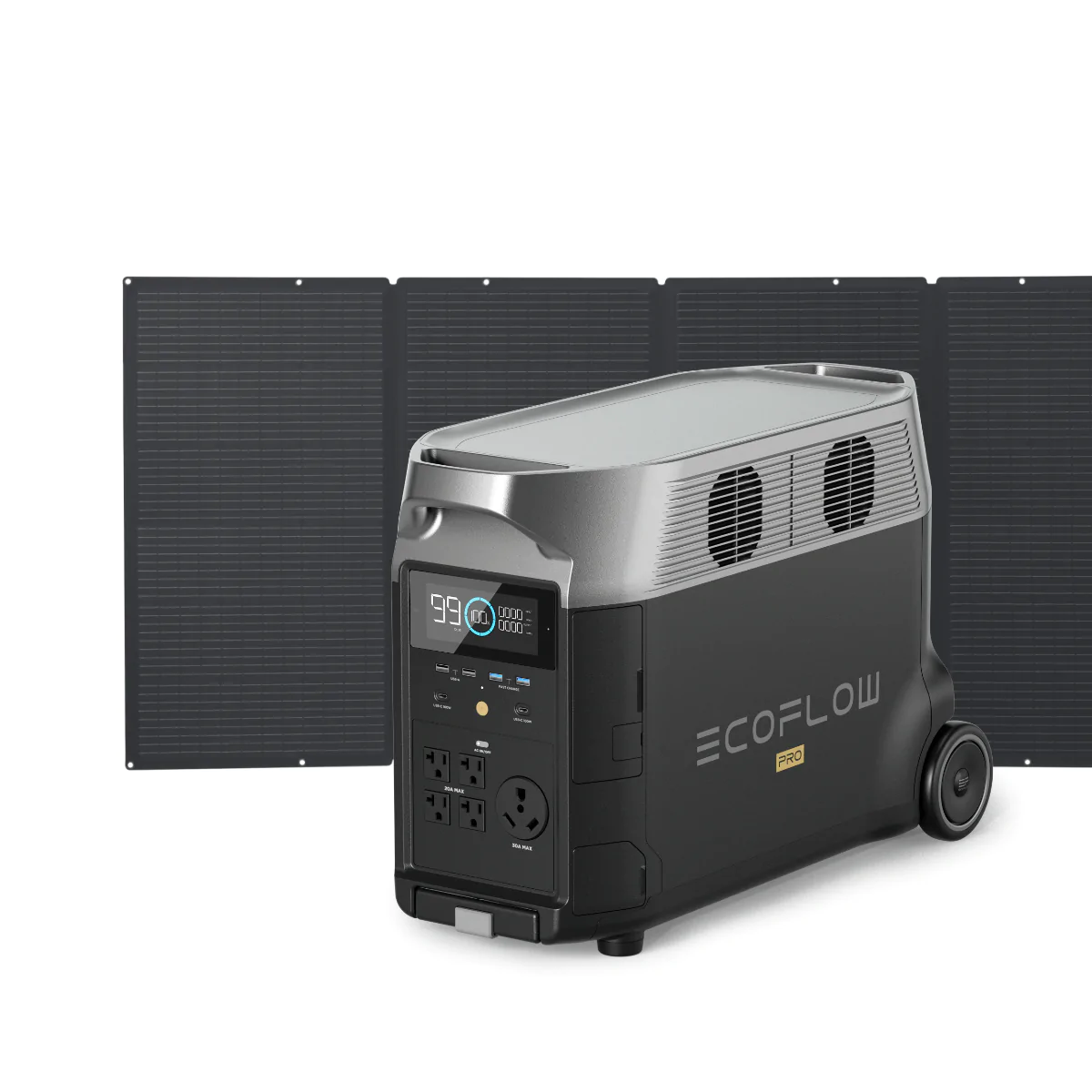
Solar generators work using photovoltaic panels that capture sunlight to produce one-way direct current (DC), which is directed into a storage battery.
When you plug in an appliance, the built-in inverter converts the stored DC electricity into the alternating current (AC) that it needs.
However, operating in Canada means dealing with variable weather, low winter light, and often partial shading. Fortunately, these systems are built for adaptability.
Built-in advanced charge controllers already maximize production on cloudy days. And severe weather is a temporary issue, as photovoltaics work in most conditions, except when snow blocks the panels entirely.
Surprisingly, cold temperatures enhance production since photovoltaic panels are more efficient in the cold.
However, available light declines in winter, so northern setups may need more panels. Also, keeping your battery-operated whole home generator indoors is important since freezing temperatures reduce its ability to recharge.
What a Solar Generator Can Power at Home, at the Cottage, and On the Road
Solar generators offer numerous outputs and capacities to run everything from Wi-Fi to fridges, medical devices, and electric heaters. It can power an off-grid cottage, supplement or back up your home, power your home office, or provide portable power for road trips. While exact runtimes vary with load and capacity, having photovoltaics means you can recharge every day.
Smaller capacity models (200-800Wh) are perfect grab-and-go sizes for recharging phones, running Wi-Fi, and powering LED lights during outages or when travelling.
For fridges and medical devices, 2000-3000Wh capacities should last through a 24-hour blackout, and it’s a perfect size for cottages and road trips with higher energy needs.
Finally, higher-capacity models over 4000Wh are for running electric heaters or whole home backup power solutions.
How to Choose the Right Size Solar Generator in Canada
Sizing solar generators depends on your energy needs. List every appliance and their running watts (W). Total that up to get your absolute minimum output.
To determine capacity, you need watt-hours (Wh). Take the running watts of each appliance and multiply them by the number of hours it runs each day to get Wh. Add up all your watt-hours to get the minimum capacity.
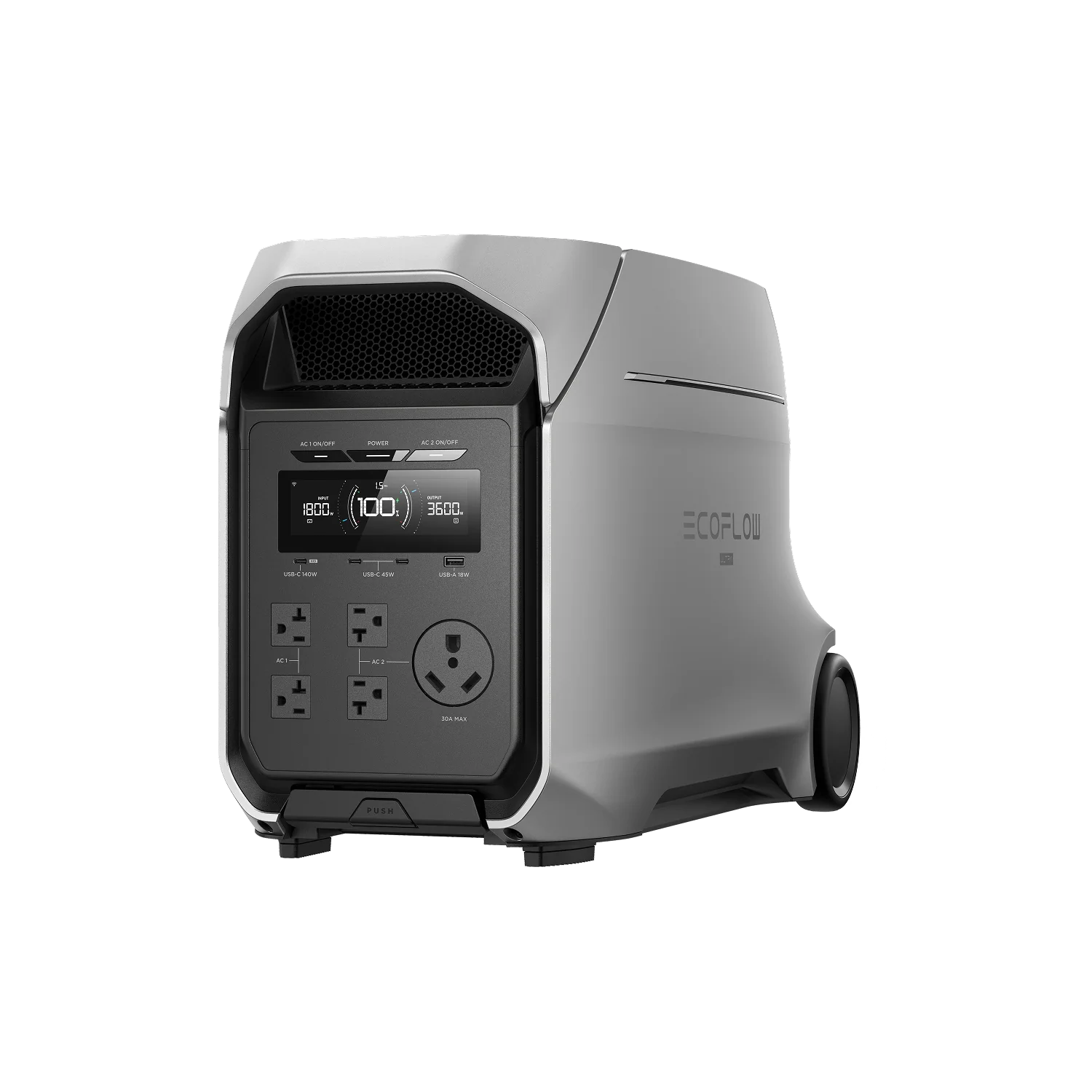
However, appliances like fridges and washing machines with electric motors require a brief startup surge that may be 2-3 times higher than their running watts. This means you need a much higher output than dictated by running watts or a model like the EcoFlow DELTA 3 Ultra Plus Portable Power Station (3072Wh), which offers 3600W of standard output but 7200W of temporary surge to handle that starting wattage.
When a Solar Generator Makes Sense in Canada and What to Look for
Solar generators are perfect for power outages without having to go outside in severe weather. They can also supplement your household power and reduce electricity costs and offer off-grid flexibility in cabins, rural areas, and road trips.
Look for a system with at least 20% more output and capacity than your minimum requirements, and consider whether it supports 240V appliances like heat pumps and dryers.
The EcoFlow DELTA 3 Ultra Plus Portable Power Station (3072Wh) has 3600W of output, a temporary surge of 7200W, and 3-11kWh of expandable capacity. It’s ultra-quiet, emission-free, indoor-safe, low-maintenance, and offers smart monitoring.
If you need more power or support for 240V appliances, the EcoFlow DELTA Pro 3 Portable Power Station offers 4000W of output, 120V/240V plugs, and 4-48kWh of expandable capacity to run your entire home during extended outages.
Frequently Asked Questions
Do solar generators work in Canadian winters?
While shorter days and heavy snow can reduce production, solar panels actually operate more efficiently when cold. However, the battery storage unit should be kept indoors in Canadian winters to ensure safe and efficient charging.
How do I size a solar generator for my home backup needs?
Sizing a solar generator depends on your energy needs. Calculate your total load in watts and choose an output with at least 20% more. Then, you need to choose a capacity (in watt-hours) that will last for the duration of your outage.
Are there solar incentives in Canada that can help lower the cost?
While most federal programs have now closed in Canada, numerous provincial and utility rebates, municipal grants, and low-to-no-interest loans are available to help lower costs.
Can a solar generator safely power medical devices like a CPAP?
A solar generator can power medical devices like CPAP since they typically supply stable, clean electricity. You just must ensure the output (watts) and capacity (watt-hours) will support your machine for the duration you need it.
Get Reliable, Quiet Backup Power Without Fuel or Fumes
Solar generators offer Canadians a quieter, cleaner, safer, and lower-maintenance alternative to traditional generators. By combining battery storage, solar charging, an inverter, and smart technology features, they provide essential power during outages or support off-grid cottages or travel.
Choosing the right system depends on your energy needs, surge demands, capacity requirements, and whether you need support for 240V appliances. The EcoFlow DELTA Pro 3 Portable Power Station offers robust, expandable power for any appliance in any Canadian home.