Ontario Solar Panel Rebate: How Much Can You Save Today?
With electricity rates still climbing across Ontario, more homeowners are starting to see solar as less of a “green upgrade” and more of a practical way to manage energy costs. That shift has made a lot of people curious, but figuring out what rebates and programs are actually available isn’t always straightforward, especially with recent changes at both the provincial and federal level.
This guide breaks down Ontario’s current solar rebates, financing options, and net metering rules in simple terms. You’ll get a clearer sense of what kind of upfront savings are realistic, how the payback works over time, and what to look for when planning a solar or backup power system that actually fits your home and usage.
What Solar Panel Rebates and Incentives Are Available in Ontario?
A lot has changed in Ontario’s energy market over the past few years, but there are still plenty of ways for homeowners to save when going solar. Navigating the evolving landscape of solar panel rebate programs can help reduce upfront costs, though balancing these incentives with low-interest financing and utility perks can be confusing at first. Taking the time to understand what’s available can help you get the most value from your investment.
Federal Financing and Tax Incentives Supporting Solar Investment
At the federal level, direct cash subsidies for residential solar installations have largely shifted. The popular Canada Greener Homes Grant has wrapped up its intake for single-family homes, meaning direct grants are no longer the primary driver for residential setups. Instead, the federal strategy focuses on accessible financing to eliminate high upfront hurdles.
In contrast, incentives for businesses and corporate entities include the Clean Technology Investment Tax Credit (ITC), which provides up to a 30% refundable tax credit on eligible capital costs for clean technology investments. While this credit applies through corporate tax filings rather than direct payments to individual property owners, it helps reduce the after-tax cost of qualifying clean energy projects across Canada.
Utility and Municipal Programs That May Support Solar Adoption
On a local scale, Ontario homeowners can take advantage of targeted programs that mix provincial frameworks with local utility initiatives to provide substantial financial relief.
Ontario Home Renovation Savings (HRS) Program: Jointly administered by Enbridge Gas and Save on Energy, the Home Renovation Savings Initiative offers up to $10,000 in direct rebates ($1,000 per kW for solar panels up to $5,000, plus $300 per kWh for battery storage up to $5,000). However, there is a critical regulatory catch: taking this rebate disqualifies you from net metering. The program strictly mandates a “load displacement” model (zero grid export), meaning the system must be designed to prioritize on-site consumption and battery storage, with no electricity exported to the grid.
Municipal PACE Financing Programs: Property Assessed Clean Energy (PACE) mechanisms may be available in certain participating municipalities in Ontario, allowing property owners to finance solar upgrades through long-term repayment tied to their property tax bill rather than personal credit profiles. Financing terms vary by program and may include low-interest options depending on local implementation.
Net Metering: Ontario’s Primary Solar Savings Mechanism
Beyond upfront rebates, net metering is a key mechanism for reducing electricity costs for Ontario homeowners with solar systems. This regulatory framework allows residential solar installations to interact with the local distribution grid.
The core mechanism is straightforward:
Grid Integration: Any excess electricity generated by your rooftop panels that your home doesn’t immediately consume is automatically sent back to the local distribution grid.
Retail Value Credits: Your local utility company (such as Hydro One or Alectra) measures this exported energy and awards you a credit on your hydro bill typically based on the retail electricity rate per kilowatt-hour within the billing structure.
12-Month Rolling Expiry: These accumulated energy credits can roll over to subsequent billing cycles for up to 12 consecutive months, allowing homeowners to offset higher seasonal usage during winter months with summer generation.
Bill Offset: These credits are applied against future electricity consumption charges, which can significantly reduce overall hydro bills, although fixed monthly charges and certain delivery and tax components still apply.
For a detailed breakdown of the legal and technical regulations, you can refer to Ontario Net Metering Official Page.
How Much Can You Save with Ontario Solar Panel Rebates?
Calculating the true value of an Ontario solar installation requires balancing your initial out-of-pocket setup expenses against structural rebate deductions and long-term utility bill elimination.
Average Residential Solar System Costs in Ontario
For a standard single-family home in Ontario, a typical residential solar array ranges from 6 kW to 10 kW in capacity. Depending on your choice of premium tier-1 monocrystalline panels, microinverters, and structural racking suitable for heavy Canadian snow loads, the gross investment generally ranges from $15,000 to $30,000 before applying any local credits or incentives.
Estimated Upfront Savings from Rebates and Incentives
By actively leveraging regional financing like municipal PACE programs, your immediate out-of-pocket capital requirements can drop significantly. However, maximizing your savings requires navigating a critical regulatory boundary in Ontario’s modern clean energy landscape.
Certain incentive programs (such as HRS) may have system design requirements that affect eligibility for net metering participation. To help you determine the most profitable strategy for your household, here is how the two primary financial paths compare:
| Financial Metric | Path A: Pure Net Metering | Path B: Solar + Battery Storage (HRS Incentive) |
|---|---|---|
| Upfront Cash Incentives | $0 | Up to -$10,000 (≈ $5,000 panels + $5,000 battery support) |
| Excess Energy Export to Grid | Supported (1:1 retail rate credit) | Not supported (self-consumption only model) |
| Optimal Electricity Plan | Traditional Time-of-Use (TOU) rates | Ultra-Low Overnight (ULO) rates with battery arbitrage |
| Backup Power During Outage | No (system shuts down with grid) | Yes (limited to essential loads, depending on system size) |
What Is the Payback Period for Solar Panels in Ontario?
Understanding the solar payback period is ultimately a business decision for your household. Determining exactly when your system pays for itself and starts generating pure profit is a vital step in the planning phase.
How to Calculate Solar Return on Investment (ROI)
To establish a clear financial baseline, use this simple formula to estimate your system’s payback period:
Payback Period = (Gross System Cost − Upfront Rebates) ÷ Annual Hydro Bill Savings
By dividing your net upfront cost by your annual electricity bill savings, you can estimate when your system will break even and start paying you back in real terms.
Typical Payback Timelines for Ontario Households
Given Ontario’s current electricity rates and the availability of active local incentives, most residential properties see a full return on investment within 8 to 12 years, depending on system size, installation costs, and household energy usage. Because solar panels typically have a lifespan of 25 years or more, homeowners can continue to benefit from lower electricity bills for the remainder of the system’s operating life, although actual savings may vary based on maintenance needs, equipment replacement cycles, and changes in electricity rates.
Factors That Can Shorten or Extend Payback Periods
Your specific break-even timeline isn’t set in stone. It is heavily influenced by several localized variables, including:
Roof Orientation and Shading: South-facing roofs with zero tree canopy blockages capture peak sun hours and generate maximum credits.
Local Utility Rates: As local tier structures and global electricity prices rise, your avoided cost savings increase, speeding up your payback timeline.
Snow Clearout Habits: Heavy winter snow accumulation can temporarily block generation; minor seasonal maintenance helps maintain your projected annual ROI.


Choosing the Right Solar Power Solution for Your Home
Rooftop solar installations are fantastic, but they aren’t a one-size-fits-all answer for every living situation. Depending on your property type, structural freedom, and emergency preparedness goals, alternative modern solar configurations—such as portable power station setups—might suit your lifestyle perfectly.
Solar Power for Apartments, Renters and Backup Needs
If you live in a high-rise apartment, rent a townhouse, or move frequently across Ontario, standard fixed roof programs like the Ontario Home Renovation Savings (HRS) program aren’t a direct fit. Traditional grid-tied incentives demand full property ownership and permanent architectural modifications. In these situations, your goal shifts to finding non-permanent systems that cut down daily charging costs and deliver reliable emergency backup during localized grid failures.
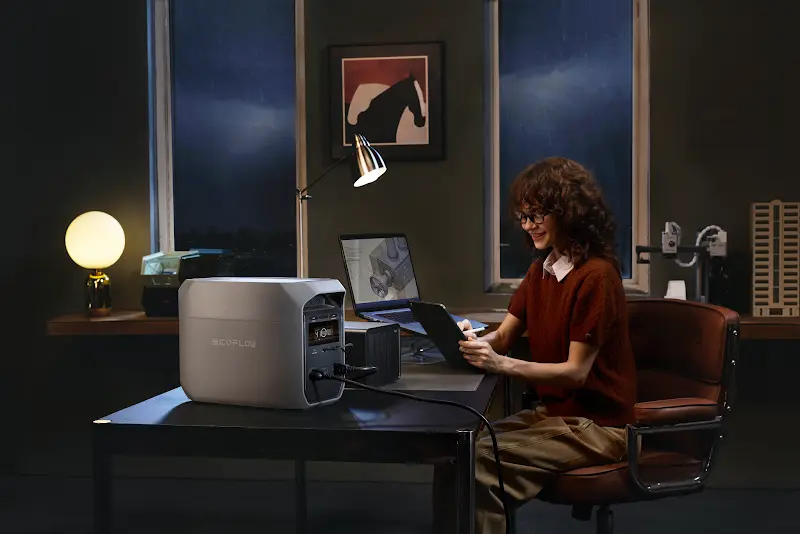
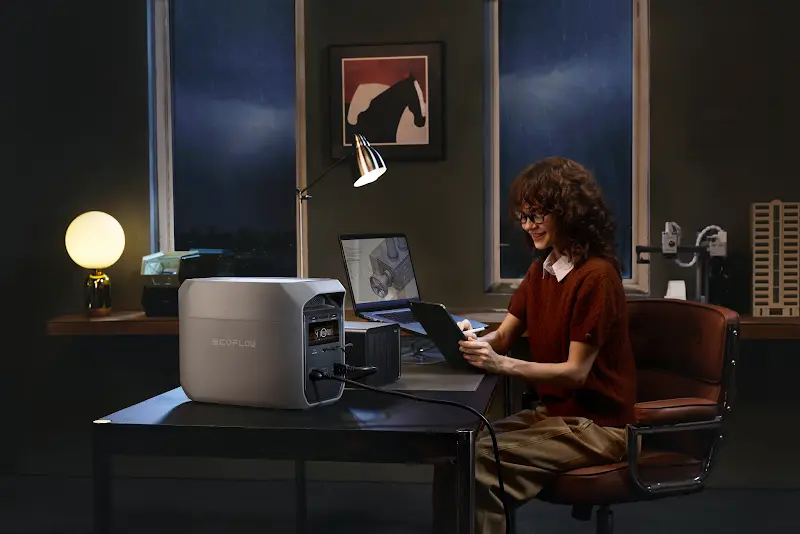
For flexible setups, portable power stations paired with solar panels, such as the EcoFlow DELTA 3 Classic (1024Wh) + 220W Solar Panel, can be used in balcony or patio environments where permitted. These systems can recharge from solar input and provide backup power for low-load to moderate-load devices such as routers, laptops, and smartphones. Solar performance varies depending on sunlight conditions and is lower during cloudy weather, but can still contribute to gradual recharging over time.
High-Capacity Solar Systems for Home Energy Backup
For detached homeowners and rural residents across Ontario, relying solely on a grid-tied rooftop solar array has an important limitation. Standard net-metered solar systems are designed to shut down automatically during power outages due to anti-islanding safety requirements, meaning they cannot supply electricity to the home when the grid is down unless paired with battery storage.
To provide backup power and improve energy flexibility, portable power stations such as the EcoFlow DELTA 3 Max (2048Wh) + 400W Solar Panel can be used as a supplemental system. These systems can recharge from solar input during daylight hours and provide backup power for essential household devices such as refrigerators, routers, and small pumps, depending on load requirements and system configuration. Solar charging performance and usable runtime vary based on sunlight conditions and appliance power demand.
How to Apply for Ontario Solar Incentives
Following a clear, step‑by‑step application process helps you avoid missing out on any municipal or provincial funding.
Step 1: Assess Your Home’s Solar Potential
Start by checking your roof condition, age, and sun exposure. Solar maps can give you a quick estimate of usable space and potential annual sunlight before you talk to a contractor.
Step 2: Get Quotes from Certified Solar Contractors
Contact a few licensed solar installers in Ontario and compare at least three detailed quotes. Look at equipment specs, mounting systems, and warranty coverage—not just price.
Step 3: Apply for Financing or Incentives
Before installation starts, apply for any available rebates or financing programs, such as the Ontario Home Renovation Savings (HRS) program or local PACE options. Pre-approval helps secure your budget early.
Step 4: Installation and Utility Approval
Your installer will handle the setup and coordinate with your Local Distribution Company (LDC) for inspections, meter upgrades, and Electrical Safety Authority (ESA) approval.
Step 5: Start Generating Power and Savings
Once everything is approved, your system goes live. You can track performance through an app, reduce your hydro bills, and start building net metering credits over time.
Conclusion
Investing in residential solar power across Ontario remains a smart financial move. Even as federal grants have ended, the suite of available programs—including the current Ontario Home Renovation Savings (HRS) initiative, low-interest municipal PACE financing, and flexible net metering frameworks—offers viable pathways to help reduce utility bills. Whether you decide on a permanent rooftop array to maximize property equity or choose a versatile, high-capacity portable solar generator setup to safeguard your home against blackouts, taking control of your energy future protects your wallet from rising energy prices. Start assessing your property’s solar potential today to lock in your long-term monthly savings.
FAQ
Do Solar Panels Work in Winter in Canada?
Yes. Solar panels still work in winter because they generate electricity from sunlight, not heat. Cold temperatures can sometimes improve efficiency, and snow reflection can boost output through the albedo effect. Heavy snow may temporarily reduce production, but it typically slides off naturally from sufficiently tilted panels, provided freezing ice crusts haven’t locked the snow in place.
How Long Do Solar Panels Last in Canada?
Most modern solar panels last 25–30 years. Tier-1 manufacturers typically guarantee about 80–85% output over a 25-year period. Batteries and inverters also have long lifespans, often supporting thousands of charge cycles depending on usage conditions.
What Appliances Cannot Be Used with Solar Power?
Almost any appliance can run on solar if the system is appropriately sized. The main limitation is power demand. High-load devices like electric dryers, hot tubs, or large HVAC systems may require a bigger system or battery storage.
How to Connect an Air Conditioner to Solar Panels?
An air conditioner can run on a solar setup that includes a charge controller, battery, and inverter. In portable power stations, these components are integrated, allowing you to plug the AC into the power output while solar panels recharge the system, though runtime is limited by the battery’s total watt-hour capacity.
Can You Put a Tarp over Solar Panels?
No. A tarp blocks sunlight, stopping energy production and potentially trapping moisture, which can cause damage. Solar panels are built to withstand snow, ice, and harsh Canadian weather without extra covering.