Ontario Electricity Rates Update (2026): Current Prices, Bill Breakdown & What Homeowners Need to Know
- Ontario Electricity Rates in 2026 (Current Overview)
- How Ontario Electricity Pricing Works (TOU vs. Tiered vs. ULO)
- Why Ontario Electricity Rates Are Rising in 2026
- Ontario Electricity Bill Breakdown (What You’re Really Paying For)
- Why Electricity Price Volatility in Ontario Is Changing How Homeowners Use Energy
- When Ontario Homes Need Full Energy Independence Solutions
- How to Lower Your Ontario Electricity Bill (Practical Insights)
- Is Solar Power Worth It in Ontario Under Current Electricity Rates?
- Conclusion
- FAQ
Opening your hydro bill lately feels like a bit of a jump scare. By now, in April 2026, most of us have felt the sting of that 30% rate hike from late last year. It changed the vibe from “set it and forget it” to “do I really need to run the dryer right now?” With On-Peak prices sitting at a steep 20.3¢/kWh and the summer tier thresholds about to tighten up, those old habits just aren’t cutting it anymore.
Living in Ontario today means navigating a grid under massive pressure. Between nuclear refurbishments and every other person on the block plugging in an EV, those costs are flowing straight down the line to us. This guide goes beyond a basic list of numbers. Here’s a breakdown of how the 2026 pricing actually works and how to handle the volatility without feeling like you’re living in the dark.
Ontario Electricity Rates in 2026 (Current Overview)
As we move through April 2026, it’s clear that the days of “cheap” electricity in Ontario are in the rearview mirror. We’ve landed at a higher baseline, mostly because the province is pouring billions into grid modernization and refurbishing our nuclear fleet at Darlington and Pickering. While that’s good for long-term reliability, it’s hitting our wallets right now.
What Is the Average Electricity Rate in Ontario in 2026?
The “average” rate is a bit of a moving target depending on your specific plan. However, most folks on the standard Time-of-Use (TOU) setup are looking at a blended rate of about 14¢ to 16¢ per kWh once you factor in all the extra line items. On the TOU plan specifically, your base energy price swings from a low of 9.8¢/kWh (Off-Peak) to a staggering 20.3¢/kWh (On-Peak).
Hydro One vs. Local Utilities: How Rates Differ
It’s a bit of a regional lottery. While the actual price of the “Electricity” (the supply) is regulated by the Ontario Energy Board (OEB) and stays the same across the province, your total bill changes based on who delivers it. If you’re a Hydro One customer, especially in a low-density rural area, you’re likely paying higher Delivery Charges. It simply costs more to maintain the wires that reach a farmhouse in Muskoka than it does to power a condo in downtown Toronto. Conversely, if you’re with Toronto Hydro or London Hydro, your delivery fees might be lower, but you’ll often see higher fixed monthly service charges just for being connected.
How Much Ontario Households Typically Pay per Month
For a household using around 750 kWh a month, you’re likely staring at a bill between $130 and $160 CAD. This already accounts for the Ontario Electricity Rebate (OER), which was bumped up to 23.5% in late 2025 to help soften the blow of the rate hikes. If you’re in a high consumption home, maybe you have electric baseboard heating or a drafty older build, it’s not uncommon to see those winter bills rocket past the $300 mark.
How Ontario Electricity Pricing Works (TOU vs. Tiered vs. ULO)
Overview of Ontario Electricity Pricing System
Choosing a pricing plan in 2026 feels a bit like trying to solve a puzzle where the pieces change shape every six months. The Ontario Energy Board (OEB) technically lets you switch between three different plans once a year, or more, depending on your utility, to try and keep your costs down. Here’s the breakdown of how these actually play out on a typical day.
Time-of-Use (TOU) Pricing Explained
Most of us are on this one. It’s designed to charge more when demand on the grid is high and offer lower rates when usage is low, like running your laundry at night. Understanding this structure is key if you want to know how to maximize savings with Time-of-Use pricing in a practical way.
On-Peak (20.3¢/kWh): This hits right when you’re making breakfast or getting home for dinner (7-11 AM and 5-7 PM in winter).
Mid-Peak (15.7¢/kWh): The “bridge” hours during the day.
Off-Peak (9.8¢/kWh): Weeknights after 7 PM and all day on weekends and holidays.
Tiered Pricing System Explained
Tiered pricing doesn’t care when you use power, only how much. You pay one rate for a set amount (Tier 1) and a higher rate (Tier 2) once you cross a threshold. The big catch is May 1st. In April, your “cheap” Tier 1 threshold is 1,000 kWh. But on May 1st, it drops to just 600 kWh for the summer. If you usually use 800 kWh, you’ll stay in the cheap zone in April, but come June, you’ll suddenly be billed for 200 kWh at that higher Tier 2 rate. It’s a classic source of June bill frustration for Ontario homeowners.
Ultra-Low Overnight (ULO) Plan Explained
Introduced for people who charge electric vehicles or have home battery storage, ULO offers a rock-bottom rate of just 3.9¢/kWh between 11 PM and 7 AM. But there’s a heavy trade off. To get that cheap overnight power, you have to accept a massive 39.1¢/kWh On-Peak rate from 4 PM to 9 PM. Crucially, while TOU gives you a break on weekends, the ULO peak rate applies every single day. If you’re baking a roast on a Sunday afternoon, you’re paying that top-tier price.
Which Pricing Plan Applies to Most Ontario Homes in 2026?
While TOU is still the default for most, the ULO plan is seeing a massive surge in adoption. It’s the fastest-growing plan this year, mainly because it pairs so perfectly with smart home systems and EVs that can be scheduled to sip power when it’s cheapest.


Why Ontario Electricity Rates Are Rising in 2026
The upward pressure on your Ontario hydro bill is not coming from just one place. It’s a “perfect storm” of massive infrastructure bills coming due and a fundamental shift in how the province uses power. Here’s why the math is changing:
Infrastructure Upgrades: A huge chunk of your bill goes toward keeping the lights on for the next 30 years. The multi-billion dollar refurbishments at Darlington and Pickering are massive, essential projects, but they carry high current-year costs. Darlington’s Unit 4 just wrapped up this March, and while it was technically under budget, Ontario Power Generation (OPG) has still had to seek rate increases to cover these “mega-project” costs.
Rising Demand: We’re using more power than ever, but not just for our toasters. The rapid adoption of EVs and heat pumps is putting unprecedented strain on local transformers. On top of that, massive AI data centers are popping up across the GTA, sometimes consuming as much electricity as an entire mid-sized city. The grid simply wasn’t built to expand this fast, and those expansion costs are flowing directly to ratepayers.
Carbon Pricing: When everyone turns on their AC during a humid July afternoon, Ontario has to fire up “peaker” plants, usually natural gas units to fill the gap. With the federal carbon tax hitting $110 per tonne this April, and a “hidden” carbon cost on fuel regulations adding about seven cents per litre to the supply chain, the cost of that peak power has become incredibly expensive to produce.
Weather Impact: 2026 has been a weird year for weather. We’ve seen more frequent “shoulder season” temperature swings, ice storms one week and 20°C the next. This creates high demand for heating and cooling outside of the traditional peak months, meaning our “average” usage isn’t as predictable as it used to be.
Ontario Electricity Bill Breakdown (What You’re Really Paying For)
Your “Hydro” bill is a bit of a misnomer because you’re paying for a lot more than just the water spinning a turbine. In April 2026, the electricity itself is often only about half the total cost. Understanding the rest is the only way to spot where your hard-earned cash is leaking out.
Supply Charges vs. Delivery Charges Explained
The Supply Charge is the actual cost of the power you used. Think of it like the price of the groceries. The Delivery Charge, however, is what you pay to get those groceries from the farm to your fridge. In Ontario, this includes a fixed monthly service fee (around $40-$50 for most urbanites) plus a variable rate for the distance the power traveled. For many households, these delivery fees account for nearly 40-50% of the final number.
Transmission, Regulatory, and Debt Retirement Costs
Then there are the smaller line items that add up. Regulatory Charges cover the cost of the Ontario Energy Board (OEB) and the Independent Electricity System Operator (IESO) managing the whole provincial grid.
Hidden Fees Most Homeowners Don’t Notice
But the one that catches people off guard is the Line Loss Adjustment Factor. Electricity is never perfectly efficient; it actually loses energy as heat while traveling through wires. In 2026, if you live in a rural area, your adjustment factor could be as high as 1.10. This means if your meter says you used 1,000 kWh, you’re actually billed for 1,100 kWh to cover the power that “disappeared” on its way to your house.
Example Breakdown of a Typical Monthly Bill
| Category | Estimated Cost (750 kWh) | Notes |
|---|---|---|
| Electricity (Supply) | $114.00 | Based on a blended TOU rate (~15.2¢/kWh) |
| Delivery Charge | $ 51.00 | Include Toronto Hydro’s updated 2026 service fee |
| Regulatory Charges | $4.50 | Standard OEB administrative fees |
| Subtotal (Before Tax) | $169.50 | Before tax and rebates |
| HST (13%) | $22.04 | The standard provincial sting |
| Ontario Electricity Rebate (OER) | $45.01 | 23.5% credit applied to the subtotal + HST |
| Total Bill (Final) | $146.53 | Your actual Out-of-pocket cost |
By now, simply knowing what these charges are is not enough to save you money. Most of that delivery fee is fixed, you pay it just for being connected to the grid. This is why the conversation is shifting. It’s no longer about how much you use, but when you use it. As the gap between “cheap” and “expensive” hours continues to widen, managing your consumption around those On-Peak spikes is the only real lever you have left.
Why Electricity Price Volatility in Ontario Is Changing How Homeowners Use Energy
For most of us in Ontario, the pressure of rising hydro costs goes beyond the big numbers on the page. Those real costs are hidden in our daily routines. Under the Time-of-Use (TOU) framework, a huge chunk of your bill comes from “passive consumption.” Devices like your Wi-Fi router, the fridge, your home office setup, and all those standby chargers run 24/7. This means they are drawing power during those brutal 20.3¢/kWh On-Peak windows. In this environment, the real objective is managing which devices draw from the grid when prices are at their peak rather than simply using less power.
This is where a tool like the EcoFlow DELTA 3 Max Plus Portable Power Station (2048Wh) changes the game. Instead of being at the mercy of the clock, you can use its ultra-fast charging to top up the battery during Off-Peak hours, or even the 3.9¢/kWh ULO rate if you’ve made that switch. Then, you use that stored energy to run your essential loads, like the fridge, router, or a space heater, during those expensive afternoon spikes. For renters, condo dwellers, or anyone in a smaller home, this portable station acts as a “financial buffer.” It lets you navigate Ontario’s complex rate tiers without having to wait until 9 PM to start a load of laundry or turn on the dishwasher. Optimization starts small, but for high consumption homes, those minor tweaks often aren’t enough. When you’re dealing with the massive demand of a modern Canadian household, you need to look at the bigger picture.
When Ontario Homes Need Full Energy Independence Solutions
By April 2026, many high consumption Ontario homes are reaching a breaking point. If you’ve made the switch to a heat pump, plugged in an EV, or use electric heating, your usage is a constant, high load demand. In these cases, small tweaks like “unplugging the toaster” or waiting until 7 PM to do a load of laundry just don’t move the needle on a bill that’s regularly clearing $300 or $400. When your energy profile is this complex, the gains from basic conservation start to vanish.
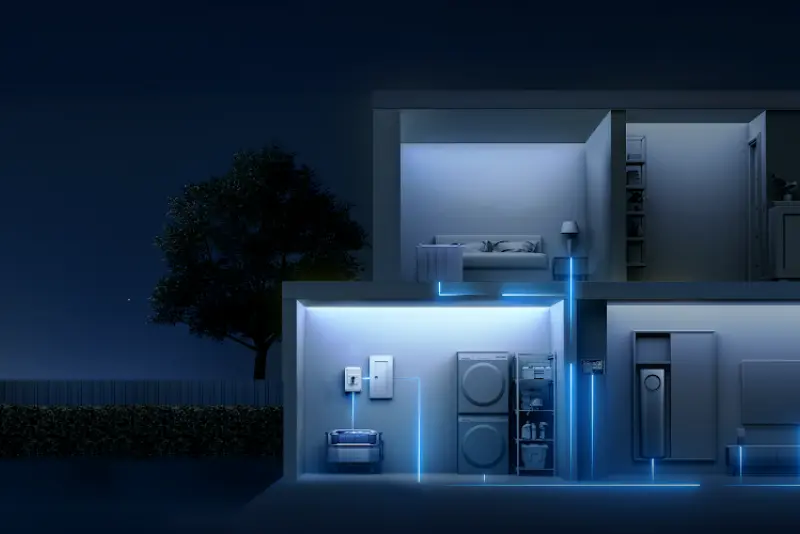
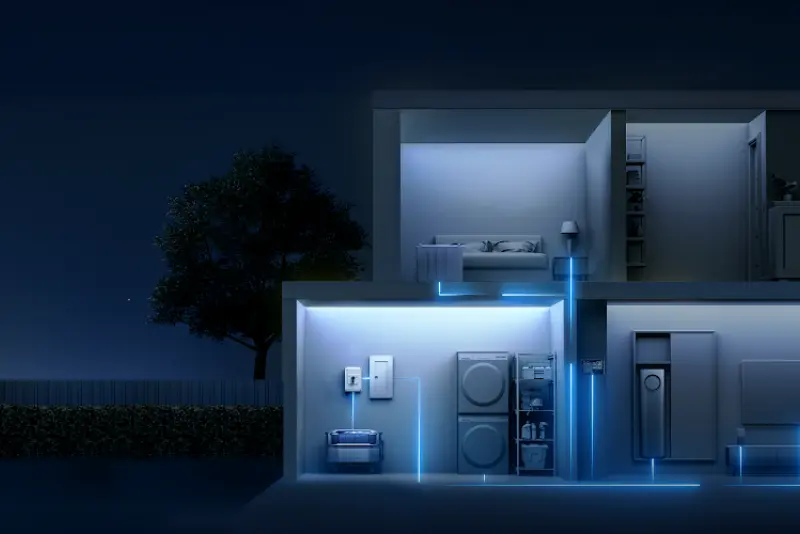
This is exactly where the EcoFlow DELTA Pro Ultra Whole-Home Backup Power moves from being an “emergency backup” to a core part of how your house functions. It’s designed specifically for the heavy lifting required by Canadian homes, integrating directly with your electrical panel to handle both 120V and 240V loads (yes, even your central AC or well pump). The real magic happens when you use it for “peak shaving.” By pairing the Ultra with solar panels, you harvest free energy during the day. Instead of selling that power back to the grid for pennies, you store it and discharge it during those expensive 20.3¢/kWh On-Peak evening windows. If you’re on the Ultra-Low Overnight (ULO) plan, the math is even better: you can charge the unit at 3.9¢/kWh while you sleep and “zero out” your usage during the 39.1¢/kWh evening spike. In an era of grid instability and infrastructure fees that only seem to go up, this setup offers a path toward true energy sovereignty. It ensures that whether it’s a rate hike or a January ice storm, your home stays powered on your own terms.
How to Lower Your Ontario Electricity Bill (Practical Insights)
Lowering your hydro costs in 2026 comes down to a mix of habit shifts and snagging the right tech, especially while the government is still footing part of the bill. It’s less about finding one “silver bullet” and more about stacking small wins. Here’s how to actually move the needle:
Shifting Usage: Move your laundry and dishwasher runs to after 7 PM or weekends. It cuts your unit cost from 20.3¢ down to 9.8¢. If you’re on the ULO plan, waiting until 11 PM drops that rate to a tiny 3.9¢.
Smart Thermostats: Heating and cooling still swallow 60% of your energy. The Home Renovation Savings (HRS) program currently offers a $100 rebate for smart thermostats. These gadgets can “pre-chill” your home before the expensive 4 PM to 9 PM price hike kicks in.
Reducing Phantom Power: Gaming consoles and home office setups draw “phantom power” even when they’re off. Using smart power strips to fully kill the juice can save you about $100 a year. In some setups, a portable power station can also be used to store cheaper off-peak electricity and power small devices during high-rate periods.
Is Solar Power Worth It in Ontario Under Current Electricity Rates?
With hydro rates hitting a new baseline this year, the math on solar has shifted from a “maybe one day” project to a “right now” financial strategy. This shift is exactly why solar power in Ontario electricity rates discussions has become a major focus for homeowners looking to cut long-term costs. The “payback period”, the time it takes for the system to pay for itself, has dropped significantly. In 2026, most Ontario homeowners are breaking even in 7 to 9 years, down from the 12-year slog we saw a decade ago.
Solar Panel Cost vs. Long-Term Hydro Savings
As grid prices climb, the value of every kilowatt-hour you produce yourself goes up. A typical 7.5kW system in Ontario now costs between $2.42 and $3.50 per watt installed. While the old federal loans are gone, the Home Renovation Savings (HRS) program has stepped in with rebates up to $10,000 for combined solar and battery setups. Dodging those 20.3¢/kWh On-Peak charges means the system starts “earning” its keep much faster.
Net Metering Program in Ontario Explained
Ontario’s Net Metering program allows you to send extra power back to the grid for a 1:1 credit. It acts like an energy bank, letting you use July sunshine to pay for your December heat. Just watch the clock, these credits expire on a rolling 12-month cycle. If you overbuild your system, those extra credits eventually vanish, so sizing the array to your actual yearly needs is the key to a good ROI.
Conclusion
The energy landscape in Ontario has shifted from “pay-as-you-go” to a strategic game where timing is everything. With peak rates now exceeding 20¢/kWh and the grid under constant pressure, the best way to lower your 2026 hydro bill is to stop being a passive consumer and start becoming an active manager. Whether you opt for simple habit shifts like off-peak laundry or invest in high-tech “peak shaving” solutions like the EcoFlow DELTA series, taking action now ensures that your home stays powered, your budget stays predictable, and you are no longer at the mercy of the next rate hike.
FAQ
1. How much does 1 kWh of electricity cost in Ontario?
On the standard Time-of-Use plan, the base cost for a kilowatt-hour is between 9.8¢ and 20.3¢. Once you add in the 2026 delivery fees and regulatory charges, most people see an “all-in” price closer to 15¢ to 18¢ per kWh.
2. What is the cheapest time to do laundry in Ontario?
Stick to the Off-Peak hours: 7 PM to 7 AM on weekdays, and all day on weekends and statutory holidays. If you’re on the new ULO plan, waiting until after 11 PM is even cheaper, but watch out for the expensive weekend afternoon rates on that specific plan.
3. What runs up your electric bill the most?
Heating and cooling are the heavy hitters. Electric space heaters, older central AC units, and electric water heaters are usually the culprits behind a $300 bill. Even a small space heater running in a home office can add $40 to $60 a month if used during On-Peak hours.
4. What time of day is electricity cheapest in Ontario?
If you have the Ultra-Low Overnight (ULO) plan, it’s between 11 PM and 7 AM at a rock bottom 3.9¢/kWh. For everyone else on the standard plan, the “cheap” window is the 7 PM to 7 AM Off-Peak period.
5. How does TOU compare to Tiered rates?
Time-of-Use (TOU) is all about when you use power, it’s cheaper at night and expensive in the afternoon. Tiered rates don’t care about the clock; they charge you one flat rate for the first “tier” of power (like 600 kWh in the summer) and a higher rate once you cross that limit.
6. How much energy does a 2 person household use per day?
A typical couple in a condo or small home uses about 15 to 20 kWh per day. If you have electric heating or you’re charging an EV, that number can easily double or triple.