Air Conditioner Power Consumption: How Much Electricity Does AC Use in Canada? (2026 Guide)
- How Much Power Does an Air Conditioner Use?
- How to Calculate Air Conditioner Power Consumption (Step-by-Step)
- What Affects Air Conditioner Energy Consumption?
- Which Type of Air Conditioner Uses the Least Electricity?
- How Much Does It Cost to Run an Air Conditioner in Canada?
- 5 Practical Ways to Reduce Air Conditioner Power Consumption
- Best Energy-Efficient Cooling Solutions for Canadian Summers (2026)
- Portable AC vs. Alternatives: Which Saves More Energy?
- Conclusion
- FAQs
- Does inverter AC really save electricity?
As Canadian summers get more intense, moving from those heavy heat domes in Southern Ontario to the dry scorchers out in the Prairies, staying cool is not really a luxury anymore. Rather a necessity. But with utility rates climbing across the provinces, a lot of us are left wondering if our comfort is going to absolutely tank our bank accounts. This 2026 breakdown looks at what air conditioners actually draw, how to calculate those costs based on your local rates, and some modern ways to keep your home chilled without that dreaded “bill-shock” in August.
How Much Power Does an Air Conditioner Use?
To get a handle on your monthly bill, you have to look at the raw power your cooling unit needs. Air conditioners are rated in watts, and the amount of juice they pull depends mostly on their cooling capacity and how they’re built.
Average Wattage by AC Type
Different units are built for different jobs, and the power draw reflects that:
Portable AC: Usually pulls between 900W and 1,500W. These are the go-to for Toronto condos where you aren’t allowed to hang anything out a window.
Window AC: Uses about 500W to 1,200W. Generally, these are more efficient than portables because they don’t radiate as much heat back into the room.
Central AC: This is the heavyweight. It’ll draw 2,000W to 5,000W to cool a full detached house.
What Is BTU and How It Relates to Energy Use
BTU (British Thermal Unit) is basically just a measure of how much heat an AC can kick out of a room in an hour. Higher BTUs mean more cooling power, but here’s the key: it also means a higher wattage requirement. For a standard bedroom in Canada, an 8,000 BTU unit is the sweet spot. If you’re trying to cool a large open concept living area, you’ll likely need 12,000 to 14,000 BTUs. For a more technical breakdown of how these cooling units translate into actual electricity costs, you can consult a BTU to kWh conversion guide.
Typical Daily & Monthly Energy Consumption (kWh)
We measure electricity in kilowatt-hours (kWh). If you run a 1,000W (1kW) portable AC for 8 hours a day, you’re burning through 8 kWh daily. Over a 30-day stretch in a Canadian summer, that adds up to 240 kWh, which is a pretty big jump in any household’s energy profile.
How to Calculate Air Conditioner Power Consumption (Step-by-Step)
Calculating your AC’s impact on your wallet doesn’t require a degree in electrical engineering. By following a few simple steps, you can estimate your seasonal spending with surprising accuracy.
The Basic Formula: Watts × Hours ÷ 1000 = kWh
To find out how many kilowatt-hours (kWh) you’re burning through, use this calculation: Total kWh = (Wattage × Hours of Use) ÷ 1000
Real Example: Portable AC in a Toronto Condo
Let’s say you live in a Liberty Village condo and run a 1,200W portable AC for 10 hours during a humid July day. You would multiply 1,200 watts by 10 hours to get 12,000 watt-hours, then divide by 1,000 to get 12 kWh per day.
Estimating Monthly Cost Based on Canadian Electricity Rates
In Ontario, your costs in 2026 vary wildly depending on your rate plan. Following the big price jumps in late 2025, residential rates have leveled out a bit, but the “when” still matters most. Under the current Time-of-Use (TOU) plan, running that AC during the off-peak overnight or weekend hours costs about 9.8¢ per kWh, while mid-peak daytime usage jumps to 15.7¢. If you’re cooling during the busy on-peak morning or evening hours, you’re looking at 20.3¢ per kWh.
What Affects Air Conditioner Energy Consumption?
Not every 1,200W unit performs the same once you plug it in. In 2026, we’re seeing that the “rated” wattage on the sticker is often just a starting point. Several environmental and technical factors determine how hard that compressor has to work to hit your target temperature.
Room Size & Insulation (Canadian Homes vs. Condos)
Older Victorian homes in places like Cabbagetown or Halifax often struggle because they lack the airtight seal of a modern build. Cool air literally falls out of the house, forcing the AC to run twice as long. On the flip side, those sleek glass-walled condos in Toronto or Vancouver can act like greenhouses. If you have floor-to-ceiling south-facing windows, you’ll need significantly higher BTUs just to fight off the solar heat gain.
Temperature Settings & Thermostat Habits
The wider the gap between the sidewalk and your living room, the more juice you use. A common mistake in 2026 is coming home to a hot house and cranking the AC to 18°C to “cool it down faster.” It doesn’t actually cool faster; it just stays on longer. Setting your AC to 21°C when it’s 32°C outside in Calgary burns way more energy than settling for a comfortable 24°C. Most newer smart thermostats now have “Eco-Recovery” modes that prevent these massive energy spikes by gradually reaching your target.
Energy Efficiency Ratings (EER, SEER Explained)
EER (Energy Efficiency Ratio): This is a “snapshot” of efficiency. It measures how the unit performs when it’s exactly 35°C outside. It’s useful for knowing how your AC will handle the absolute hottest day of the year in a Southern Ontario heatwave.
SEER (Seasonal Energy Efficiency Ratio): This is more like your car’s “combined city/highway” fuel rating. It measures efficiency over an entire Canadian cooling season, accounting for those mild June nights and the scorching August afternoons.
Climate Differences Across Canada (Toronto vs. Vancouver vs. Calgary)
In Canada, your location on the map completely changes how your AC behaves, especially with 2026 projected to be one of the hottest years on record. In Vancouver, the humidity is generally lower, so while you’re seeing a 3.75% rate hike this April, you might still only need your unit for a few weeks in late summer. Toronto and Ottawa are a different story; the thick “Humidex” air forces compressors to run nearly 24/7 as de facto dehumidifiers, which gets expensive when Ontario’s on-peak rates hit 20.3¢ per kWh. Meanwhile, Calgary faces intense solar gain from clear skies, but the dry mountain air usually cools off enough at night that you can swap the AC for a fan, a luxury those in the muggy GTA can only dream about during a heatwave.
AC Type & Technology (Inverter vs. Non-Inverter)
The biggest technical shift in 2026 is the dominance of inverter technology over traditional fixed-speed units. Traditional ACs operate on a simple but inefficient “on/off” cycle; they run at 100% capacity until the room hits your target, then shut down completely, only to kick back on at full blast once the temperature rises a degree or two. This constant stop-start behavior causes massive power surges, often 3 to 5 times the normal running current, which is why your lights might flicker when the compressor starts. In contrast, modern inverters act more like a dimmer switch, varying the motor speed to match the room’s needs without ever fully stopping. Once they reach the desired temperature, they slow down to a crawl, sometimes using as little as 20% of their rated power, to maintain a rock-steady environment. This smoother operation is not just about comfort; instead can slash your electricity usage by 30% to 50% and typically extends the life of the unit to 12 or 15 years since it is not being battered by those violent power spi
Which Type of Air Conditioner Uses the Least Electricity?
If lowering your bill is the top priority, your hardware choice matters way more than how often you fiddle with the thermostat. While every home has its own quirks, certain technologies are specifically engineered to stop bleeding power.
| AC Type | Typical Efficiency | Best Suited For | Energy Pro/Con |
|---|---|---|---|
| Window AC | High | Single rooms / older apartments | Pro: Better seal than portables. Con: Block natural light. |
| Portable AC | Low to Mid | Condos with window restrictions | Pro: Easy to move. Con: Exhaust hose radiates heat back inside. |
| Central AC | High (Scaled) | Full detached houses | Pro: Most efficient for the whole-home. Con: Massive power draw for just one room. |
| Inverter AC | Ultra-High | Any modern installation | Pro: Compressor varies speed to save 30%+. Con: Higher upfront cost. |
Best Choice for Small Canadian Apartments
For a standard 600-sq-ft condo, a high efficiency window unit or a dual-hose inverter portable AC is the best play. When weighing the pros and cons of a portable air conditioner vs. window AC, it is clear that while window units are more efficient, they’re often banned by condo boards, leaving portables as the only option. However, avoid single hose models; they create negative pressure that sucks hot hallway air into your apartment. The move is a dual-hose inverter model. These keep the air pressure balanced and use variable-speed motors to slash energy use. They might cost more upfront, but they’re whisper-quiet and pay for themselves in hydro savings within two summers.
How Much Does It Cost to Run an Air Conditioner in Canada?
Let’s talk about loonies and toonies. Your location in the Great White North heavily dictates your summer cooling budget, especially after the significant rate jumps we saw across several provinces in late 2025 and early 2026.
Average Cost Per Hour, Day, and Month
On average, running a medium-sized AC in Canada now costs between $0.12 and $0.40 per hour. While that doesn’t sound like much, if you’re running it for 8 to 10 hours a day during a humid Southern Ontario July, you’re going to notice it.
Provincial Cost Comparison (Ontario, BC, Alberta)
| Province | Avg. Rate (est. 2026) | Est. Monthly Cost (8h/day) |
|---|---|---|
| Province | $0.14 - $0.17/kWh | $40 - $60 |
| BC | $0.11 - $0.14/kWh | $35 - $45 |
| Alberta | $0.16 - $0.20/kWh | $55 - $75 |
Example: Running a Portable AC During a Heatwave
Imagine a 5-day humidex emergency in Montreal or Toronto where the AC runs for 18 hours a day. For a single 1,200W portable unit, that’s about 21.6 kWh per day. In Ontario, that five-day stretch alone could add $20 to $30 to your weekly bill once you factor in delivery charges and HST.
5 Practical Ways to Reduce Air Conditioner Power Consumption
If you’re tired of watching your hydro meter spin like a top, there are a few smart moves that’ll actually move the needle on your bill.
1. Set the Ideal Temperature (24–26°C Recommended)
It’s tempting to crank the dial to 18°C when you walk into a humid house, but that doesn’t actually cool the place any faster. It just keeps the compressor pinned at 100% power for hours. The sweet spot is 24-26°C. For every degree you can tolerate above 23°C, you’re looking at a 3-5% drop in energy use. In provinces like Ontario or Alberta where rates are tiered, that small change is the difference between a standard bill and a total blowout.
2. Improve Insulation & Seal Air Leaks
Whether you’re in a drafty Montreal triplex or a post-war semi in Toronto, cool air is literally falling out of your home. Cold air is heavier than warm air, so it escapes through gaps under doors and around window frames. A weekend spent weatherstripping and sealing leaks is the highest ROI project you can do. If your attic hasn’t been topped up since the 90s, check your R-values, better insulation means your AC hits the target and actually stays off for a while.
3. Use Fans to Support Cooling
A common mistake is thinking fans actually lower the air temperature. They don’t, but they create a “wind-chill effect” on your skin that makes you feel about 2°C cooler. This is a massive win for your wallet because it allows you to bump your AC thermostat up to 26°C while staying comfortable. For those in a Toronto or Vancouver condo where central air isn’t an option, running a portable unit during the afternoon “On-Peak” window is a total financial trap.
One practical way to reduce exposure to peak electricity pricing is by using a high-capacity system like the EcoFlow DELTA 3 Max Plus Portable Power Station (2048Wh). Users can charge the unit during lower-cost overnight periods under Ontario’s time-of-use or ultra-low overnight pricing structure, then use the stored energy to run essential loads such as air conditioning during higher-priced daytime peak hours. It’s a smart way to bypass high utility rates while maintaining a setup that doubles as an emergency backup for those unpredictable summer storms.
4. Regular Maintenance (Filters, Coils)
In Canada, our AC units spend most of the year as expensive dust collectors. By the time June rolls around, that buildup is a silent efficiency killer. A clogged filter chokes off airflow, forcing the motor to work overtime and spiking your energy use by roughly 15%. Make it a habit to rinse or swap those filters every two weeks during the high-heat season. Also, take a look at the outdoor unit; if the coils are matted with grass clippings or cottonwood fluff, it can’t “exhale” heat properly. A quick spray with a garden hose can instantly improve your unit’s performance.
5. Upgrade to Energy-Efficient Models
If your air conditioner is more than 10 years old, you are likely paying significantly more for cooling than necessary due to outdated efficiency standards. According to ENERGY STAR Canada and Natural Resources Canada (NRCan), modern ENERGY STAR certified air conditioners with inverter technology are substantially more efficient than older fixed-speed units from the mid-2010s. Depending on the model and usage conditions, efficiency improvements can reach up to 20–40%. While upfront costs are higher, lower operating costs under Canadian electricity pricing structures can help improve long-term payback over several cooling seasons.
Best Energy-Efficient Cooling Solutions for Canadian Summers (2026)
As we look toward more sustainable living, the best cooling strategy often involves a hybrid approach, pairing high efficiency appliances with smart power management to dodge those rising provincial rates. Investing in a solar generator allows you to capture free energy during the long Canadian summer days to help offset the cost of running your AC during the humid nights.
What to Look for in a Low-Power AC or Cooling Device
In Canada, energy efficiency standards for air conditioners continue to evolve under Natural Resources Canada (NRCan) and ENERGY STAR guidelines. High-efficiency window units are typically rated using CEER (Combined Energy Efficiency Ratio), with top-performing models often exceeding 15.0 in modern certification programs. Many of the most efficient units also carry CEE Tier 3 classification, which identifies products that deliver superior seasonal efficiency. Advanced inverter-based systems often feature Eco Modes that optimize compressor and fan operation to reduce unnecessary energy consumption and improve humidity control.
Portable Power Solutions for Flexible Cooling
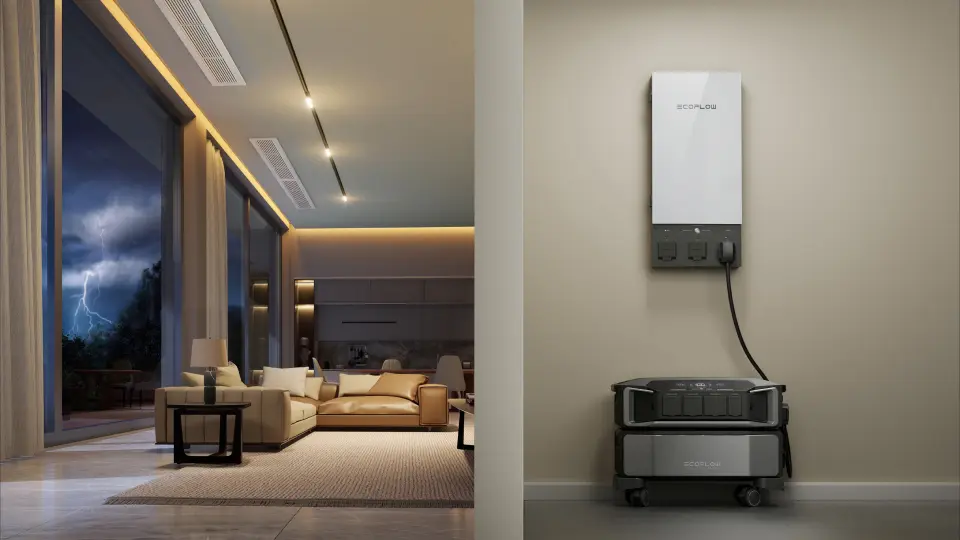
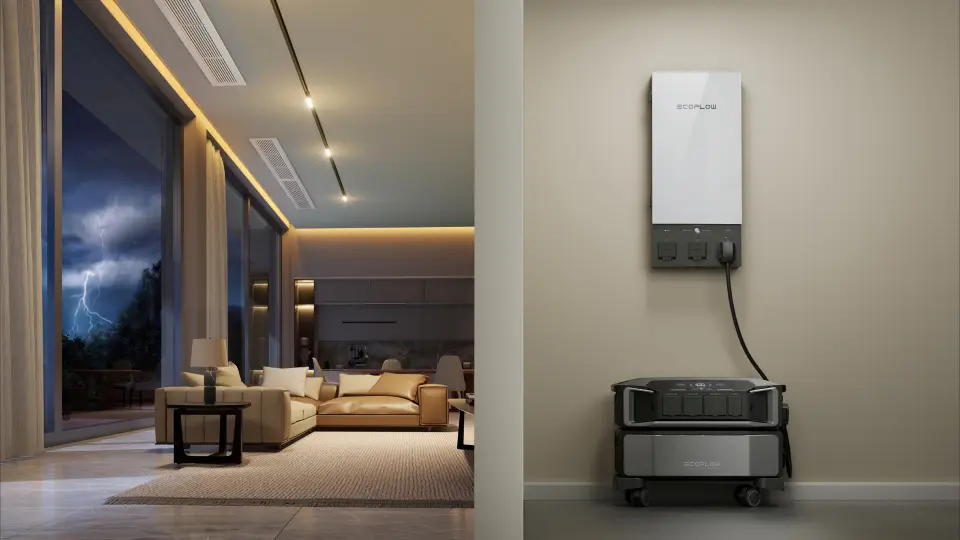
In regions like Ontario and Alberta, summer heatwaves are increasingly leading to “brownouts” or peak-pricing surges. If you’re a homeowner or cottage dweller, a high capacity system like the EcoFlow DELTA Pro Ultra Whole-Home Backup Power is a game changer. This whole home solution can actually run a central AC system or multiple high wattage window units during a blackout.
The Move: Use the system for Rate Arbitrage. In Ontario, you can charge the unit during the Ultra-Low Overnight window and discharge it during the afternoon peak. By pairing it with solar, the system can also store excess daytime solar generation for use during evening peak demand periods, improving overall self-consumption efficiency.


Portable AC vs. Alternatives: Which Saves More Energy?
Is a portable AC always the answer? Not necessarily. Depending on the weather and your local climate, you might have much better options that won’t punish your hydro bill.
Fans vs. Portable AC
A fan uses roughly 30-50W, while even a small AC pulls 1,000W+. If your room is under 27°C, stick to the fan. It won’t lower the temperature, but the wind-chill effect makes it feel 3°C cooler for a fraction of the cost.
Evaporative Coolers vs. AC
Evaporative (swamp) coolers are great in Calgary because they cool by adding moisture to dry air. But in the GTA or Ottawa, they’re useless. Once humidity hits 60%, the AC is the only move, it acts as a dehumidifier, which is the only way to actually feel comfortable in a Canadian swamp summer.
When AC Is Actually More Efficient
If you aren’t stuck with condo restrictions, a window unit is nearly twice as efficient as a portable one. Portable models have a fatal flaw: the exhaust hose radiates heat back inside like a radiator. New 2026 federal standards now require window units to hit a CEER of up to 15.3, saving you $20-$40 a month over their portable cousins.
Conclusion
Mastering your AC’s power draw is the only way to survive a 2026 Canadian summer without your hydro bill going off the rails. It’s not just about the hardware you buy, but how you manage the juice it drinks. By picking a high efficiency inverter, keeping those filters spotless, and getting clever with “rate arbitrage” using a portable power station like the EcoFlow DELTA series, you can stay perfectly chilled. You get to keep the thermostat right where you want it without that mid-month “bill shock” ruinous to your summer vibe.
FAQs
Does leaving the AC on all day use more electricity?
Yes. It’s always cheaper to turn it off when you’re out, but a smart thermostat is the real winner here. Setting it to 26°C while you’re away prevents your walls from soaking up heat, so the unit doesn’t have to work at 100% capacity for hours the moment you walk through the door.
Is it cheaper to run AC at night in Canada?
Definitely. In Ontario, standard Time-of-Use (TOU) Off-Peak rates run from 7 PM to 7 AM at around 9.8¢/kWh. If you’re on the Ultra-Low Overnight plan, it’s a tiny 3.9¢/kWh between 11 PM and 7 AM. Pre-cooling your home at night is the best way to dodge the 39.1¢/kWh peak daytime prices.
How much electricity does a portable AC use per hour?
Most units pull 0.9 to 1.5 kWh per hour. For a standard 12,000 BTU model, expect to use about 1.2 kWh while cooling. At average Ontario rates, that’s roughly $0.19 to $0.25 per hour.
What size AC is most energy-efficient for a bedroom?
An 8,000 BTU unit is the sweet spot for a typical 300-sq-ft bedroom. Don’t go bigger; an oversized unit cools too fast and shuts off before it can remove humidity, leaving you feeling cold and clammy.
Does inverter AC really save electricity?
Yes, by 30-50%. Because they vary their speed instead of constantly “slamming” on and off at full power, they avoid massive energy spikes. In a typical Canadian summer, the hydro savings usually cover the higher upfront cost in about two years.
Is it cheaper to run a fan or an air conditioner?
It’s not even a contest. A fan uses about 35W, while an AC pulls 1,200W+. You can run a fan for over 30 hours for the same price as one hour of AC. If the mercury is under 25°C, stick to the fan.
How many kWh does an AC use per month in Canada?
Expect 250 to 450 kWh per month for a single unit running 8 hours a day. Depending on your province, that adds roughly $35 to $80 to your monthly hydro bill.