Motorhome vs. Travel Trailer: Key Differences to Know
- Quick Comparison: 2026 Canadian RV Decision Matrix
- Motorhomes vs. Travel Trailers: RV Types at a Glance
- Living Space, Comfort, and Interior Layouts
- Financial Considerations and Total Cost of Ownership (TCO)
- Driveability, Manoeuvrability, and Road Safety
- Campsite Logistics and Setup Efficiency
- Off-Grid Capabilities and 2026 RV Tech
- Who Is Each RV Best For? (Buyer Personas)
- Choosing Your Path to the Open Road
- FAQs
Transparency and Disclaimer
This guide is provided for educational purposes and is updated as of April 2026. The financial estimates, depreciation rates, and technical data are based on 2025 industry benchmarks from organizations such as the RVDA of Canada, the National RV Dealers Association (NRVDA), and recent market valuation reports. All prices are listed in Canadian Dollars (CAD) and reflect current inflation trends. This content is not professional financial or legal advice. Please consult with a local dealer or insurance specialist before making a significant purchase.
Quick Comparison: 2026 Canadian RV Decision Matrix
The table below provides a high-level overview of the motorhome vs trailer trade-offs. These metrics help you quickly evaluate which category aligns with your budget and road travel preferences in the current Canadian market.
| Feature | Motorhome (Class A, B, C) | Travel Trailer / Fifth Wheel |
| Initial Cost (CAD) | High ($120,000 to $750,000+) | Moderate ($30,000 to $180,000) |
| Maintenance | Complex (Engine + House) | Simple (Structure + Seals) |
| Driveability | Familiar (Similar to a van or bus) | Learning Curve (Hitching + Sway) |
| Setup Time | Fast (Often under 15 minutes) | Moderate (Often 30+ minutes) |
| Depreciation | Steep (Approx. 15% in year one) | Moderate (Approx. 9% in year one) |
Motorhomes vs. Travel Trailers: RV Types at a Glance
Selecting the right recreational vehicle starts with a clear understanding of how each unit moves. Whether you prefer a self-contained motorhome or a towable rig changes your entire travel experience.
What Is a Motorhome? (Classes A, B, and C Explained)
A motorhome is a self-propelled unit where the engine and living quarters share the same chassis. These are categorized into three main classes. Class A units are the largest, built on heavy-duty frames that offer a bus-like view of the road. Class B units, or camper vans, offer the best fuel economy and ease of parking in Canadian city centres. Class C units use a truck chassis with a distinct sleeping area over the cab. Motorhomes are often the preferred choice for those who move to a new location every morning.
What Is a Travel Trailer? Towable RV Basics in 2026
A travel trailer is a living unit that must be pulled by a secondary vehicle. This category includes traditional bumper-pull models and larger fifth wheels that connect to a hitch in a truck bed. Many Canadian shoppers choose a travel trailer because they already own a capable truck or SUV. In 2026, these units feature advanced lightweight materials and aerodynamic designs, allowing a wider range of SUVs and even some electric vehicles to tow them efficiently across the country.
The "Drive vs. Tow" Philosophy: Choosing Between a Single Unit and a Two-Part Rig
Your choice often depends on how comfortable you feel with the mechanical connection to the road. Driving a motorhome feels like operating a large van or a shuttle bus. In contrast, towing involves a two-part system that pivots at the hitch, requiring more attention during turns and lane changes. Those who want a straightforward experience on the highway often lean toward motorhomes. If you prefer having a separate vehicle for local errands once you arrive, a trailer is likely your best option.
Living Space, Comfort, and Interior Layouts
The physical design of your RV determines how much room you have to sleep, cook, and relax. Interior volume is a major factor for families and full-time travellers in Canada.
Sleeping Capacity and Floor Plan Versatility
Travel trailers generally offer more diverse floor plans because they do not have to accommodate an engine or a driver cockpit. You can find trailers with dedicated bunk rooms for children or large rear dens that feel like a small house. A motorhome must dedicate part of its length to the driving area. However, motorhomes offer the convenience of having all amenities under one roof. While you should remain buckled while driving, having your kitchen and bathroom accessible during a quick pull-over makes long Canadian highway hauls much easier.
Storage, Kitchen, and Bathroom Space: Where Each Platform Shines
Storage needs vary between the two types. Most motorhomes feature basement storage, which consists of large exterior compartments under the floor for heavy gear. A travel trailer typically offers passthrough storage at the front, which is ideal for long items like camping chairs or fishing rods. Inside the unit, trailers often provide larger kitchens and residential-sized bathrooms. Because they do not have to share space with automotive components like engine humps, they offer a more open and comfortable interior for cooking and showering.
Financial Considerations and Total Cost of Ownership (TCO)
Calculating the true cost of an RV requires looking past the purchase price. In 2026, you must account for fuel consumption, insurance premiums, and regular mechanical maintenance in Canadian dollars.
Upfront Purchase Price and Financing Trends in 2026
Recent 2026 market data shows that trailers remain the most affordable entry point for new buyers. A high-quality trailer often costs a fraction of the price of a motorhome. However, the total investment for a trailer must include the cost of a capable tow vehicle. If you do not already own a truck or SUV with sufficient towing capacity, the combined cost of the vehicle and the trailer may match the price of a Class C motorhome. Financing rates in Canada also vary depending on whether the unit is considered a vehicle or a secondary residence.
Ongoing Operational Costs: Fuel, Insurance, and Maintenance
Maintaining a motorhome involves the same tasks as a car, such as oil changes and transmission service, alongside house maintenance. This double-duty upkeep makes a motorhome more expensive to keep on the road over time. Insurance rates also tend to be higher for a motorhome because the policy covers a high-value engine and chassis. For a travel trailer, insurance is often much lower, and some Canadian providers offer a simple extension or a low-cost endorsement on your existing auto insurance policy, as noted in Go RVing Canada’s Insurance Guide. Fuel costs are typically similar, as towing a heavy trailer reduces a truck's efficiency to a level comparable to a motorhome.
Ownership Practicalities: Storage, Parking, and HOAs
Finding a place to park your RV when you are not travelling can be a hidden expense. Many modern housing developments in provinces like Ontario and Alberta prohibit parking large RVs on the street or in driveways. A motorhome is usually taller and longer, making it harder to find an affordable storage spot. While some small trailers can fit in a standard garage, most owners will need a dedicated storage lot. In 2026, climate-controlled storage for a large RV can cost several hundred dollars per month.
Depreciation and Long-Term Resale Performance
Recent valuation insights from JD Power suggest that trailers hold their value better over time than motorhomes. A motorhome loses value as the kilometres on the odometer increase. Once a motorhome reaches high mileage, its resale value drops sharply regardless of the interior condition. Since a trailer has no engine, its value is tied to the condition of the shell and appliances. As long as you keep the roof sealed and the interior clean, a trailer remains a stable asset in the secondary market.
Canadian TCO Estimation Blueprint (2026 Estimates)
Fuel Expense: (Annual Kilometres / Fuel Consumption L/100km) x Price per Litre
Maintenance Budget: 1% of value for trailers; 2% for motorhomes (Industry Average)
Average Insurance (CAD): $700 to $1,800 (Trailers) vs. $2,200 to $6,000 (Motorhomes)
Professional Storage: $80 to $400 per month based on size and location
Driveability, Manoeuvrability, and Road Safety
Safety is the most important part of any road trip across the diverse Canadian landscape. Understanding how each vehicle handles in wind and mountain terrain will help you stay focused.
The Learning Curve: Towing Articulation vs. Motorized Footprints
Driving a motorhome is a task that most people can master in a single afternoon. It behaves like a large moving truck where you only need to worry about your height and your wide turning radius. Towing is more complex because of articulation, which is how the trailer moves independently of the truck. Backing up a trailer requires moving the steering wheel in the opposite direction of where you want the trailer to go. This learning curve is the primary reason many travellers prefer the straightforward experience of a motorhome.
Passenger Safety and In-Transit Comfort
Passenger safety is a critical consideration for families. In a tow vehicle, all passengers sit in seats that have passed automotive crash tests and are equipped with modern airbags. In a motorhome, passengers often sit at a dinette or on a sofa with simple lap belts. While these are legal, they do not offer the same protection as a modern truck or SUV. Furthermore, provincial laws like Ontario's Highway Traffic Act require all passengers to remain buckled in fixed seats while the vehicle is in motion. However, the comfort of having quick access to the kitchen or bathroom during short rest stops is an obvious benefit for those travelling with pets or young children.
Campsite Logistics and Setup Efficiency
How you spend your time at the campground depends on how easily your unit transitions from the road to a living space. Setup efficiency varies greatly between motorhome and towable classes.
The "Basecamp" Advantage of Travel Trailers
The greatest strength of a trailer is the ability to unhitch your vehicle and drive away. This allows you to set up a permanent basecamp with all your outdoor gear while keeping your truck free for daily use. You can drive to grocery stores, narrow trailhead parking lots, or local attractions without the stress of navigating a massive RV through traffic. This flexibility is ideal for people who stay in one location for a week or more and want to explore every corner of the area.
Motorhome Conveniences for Frequent Movers
Motorhomes are built for the traveller who loves to be on the move. When you arrive at a campsite, you often only need to push a button to activate automatic levelling jacks. There is no heavy lifting and no uncoupling required. This makes a motorhome the perfect choice for road trips where you stay in a different park every night. If you enjoy a fast-paced itinerary, the time you save during setup and teardown will make your trip much more enjoyable.
Off-Grid Capabilities and 2026 RV Tech
Modern technology has made it possible to enjoy the Canadian wilderness without giving up home comforts. High-tech power systems have revolutionized the camping experience for those seeking total independence.
Solar, Lithium, and Power Management Systems
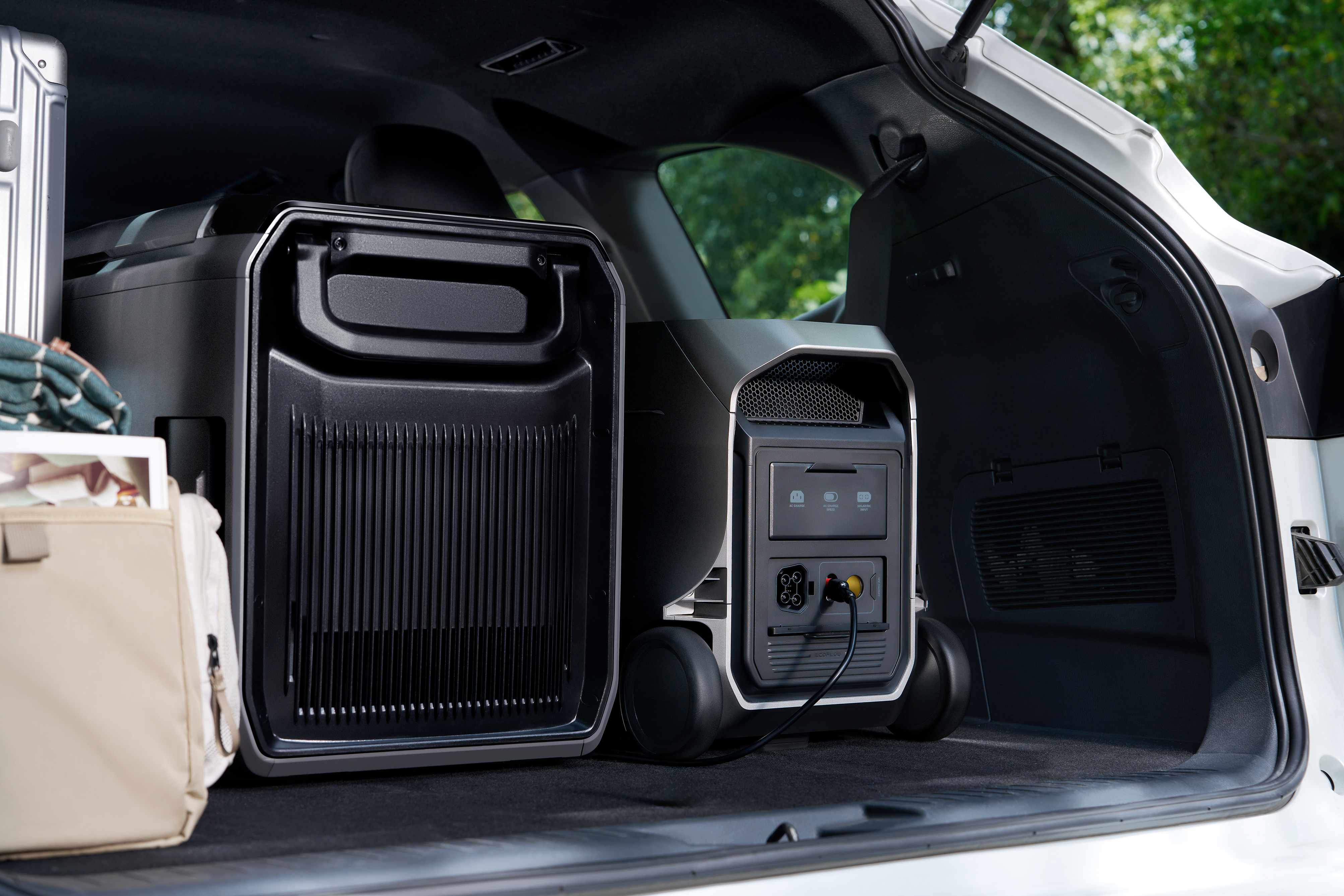
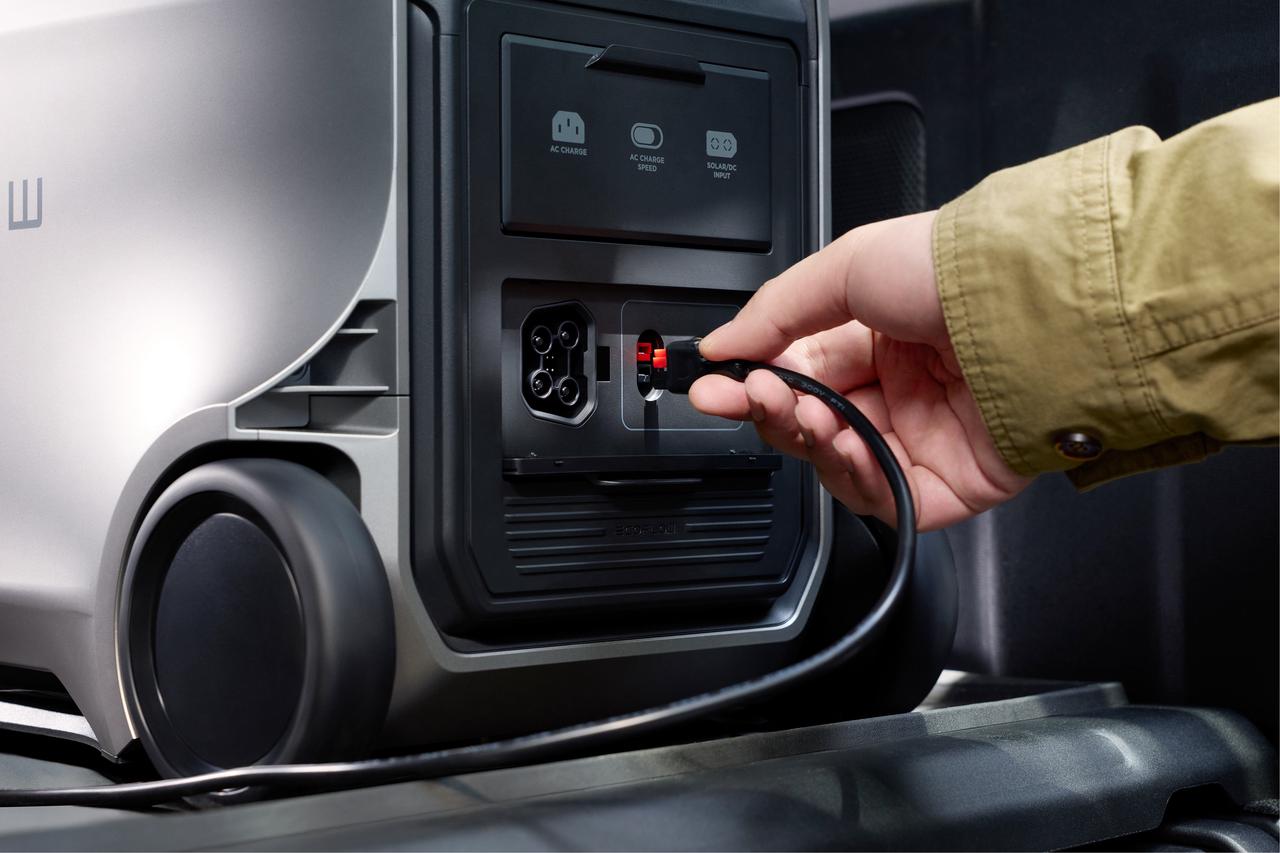
By 2026, factory-installed lithium battery banks and high-wattage solar panels have seen widespread adoption across mid-to-high tier models. A motorhome offers a distinct advantage: the engine's alternator can charge house batteries during transit. With the EcoFlow Alternator Charger, you can top up your system at industry-leading speeds while driving, ensuring you arrive at your destination with a full charge. Trailers rely more heavily on solar power and high-capacity battery banks. Systems like the EcoFlow Power Kits or DELTA Pro series are ideal for these setups, providing seamless power for long-term stays.
For those looking for the ultimate in portable off-grid power, the EcoFlow DELTA 3 Ultra Plus provides a native 30A RV port. This allows travel trailer owners to run their air conditioning and heavy appliances without a noisy generator. It is a silent, efficient solution that turns trailers into a high-tech basecamp with its 3,072Wh capacity and 3,600W output.
Connectivity and Smart-Home Integration
Staying connected is easier than ever with integrated Starlink-ready arrays and multi-carrier 5G cellular boosters. Most 2026 models feature a central control hub that connects to a smartphone app, allowing you to check your tank levels or adjust your air conditioning from your phone. This technology is vital for digital nomads who work from remote locations in the Canadian Rockies. Being able to monitor your power usage and water levels remotely ensures that you never run out of resources while you are focused on work.
Who Is Each RV Best For? (Buyer Personas)
Selecting the right vehicle depends on your specific goals and travel style. Most Canadian buyers fall into one of three categories based on how they plan to use their unit.
The Seasonal Family and "Three-Season" Adventurer
For families who only take three or four trips a year during the warmer months, a trailer is almost always the best value. The lower purchase price and minimal insurance costs make it easier to justify the expense when the vehicle is in storage. These "three-season" adventurers appreciate the safety of a tow vehicle and the basecamp lifestyle that allows them to use their truck for trips to the lake or the local supply store.
The Full-Time Nomad and Remote Worker
Remote workers often prefer the space-per-dollar value of a large travel trailer or a fifth wheel. Since they spend all year inside the unit, having a separate bedroom and a dedicated office space is essential. However, nomads who travel solo and move to a new town every few days may find that the driveability and ease of a Class B motorhome is worth the higher price tag.
The Luxury Traveler and "Glamp-Site" Enthusiast
Luxury travellers usually choose between a high-end Class A motorhome or a premium fifth wheel. Both options offer residential amenities like tile showers and theatre seating. If you plan to stay in luxury RV resorts that offer paved pads and full utilities, a motorhome provides a seamless and prestigious experience. If you want the most possible living space and a massive interior for long-term resort stays, a luxury fifth wheel is the top choice.
The "Test Drive" Checklist
Visibility: Can you see clearly from the mirrors and cameras?
Storage: Does the passthrough or basement fit your largest gear item?
Turning: Can you manoeuvre the combined length or the single unit comfortably?
Tech: Does the smart hub interface feel intuitive or overwhelming?

Choosing Your Path to the Open Road
The decision between a motorhome and a towable one will shape every kilometre of your journey. By comparing the costs, the driving experience, and the lifestyle benefits, you can choose the path that fits your family's needs. Whether you choose the all-in-one convenience of a motorhome or the versatile freedom of a trailer, the open road is waiting for you. Take your time, weigh your options, and enjoy the adventure of finding your perfect home on wheels.
FAQs
Q1: Is a Travel Trailer Better Than a Motorhome?
It depends on your priorities. A trailer is better for those who want to save money and have a separate vehicle at camp. A motorhome is better for those who want a simple driving experience and quick setup times.
Q2: What Is Cheaper, a Travel Trailer or a Motorhome?
A trailer is significantly cheaper to buy and maintain in CAD. However, you must account for the cost of a tow vehicle and storage fees, which can impact the total long-term cost of ownership.
Q3: Is a Motorhome Easier to Drive Than a Travel Trailer?
Most people find a motorhome easier to drive because it does not involve a trailer that can sway. We discuss the differences in backing up and highway handling in the Driveability and Manoeuvrability section.
Q4: Do Travel Trailers Hold Their Value?
Yes, trailers generally hold their value better than motorhomes because they lack an engine. This makes them a more stable financial investment for many buyers in the 2026 Canadian market.