Portable Air Conditioner for Automobile: Do They Work in Canada? (2026 Guide)
- What Is a Portable Air Conditioner for an Automobile?
- Do Portable Air Conditioners for Cars Really Work in Canada?
- When a Portable Car Air Conditioner Might Work
- Why Most Portable Air Conditioners for Automobiles Don’t Work Well
- Best Alternatives to Portable Air Conditioners for Automobiles
- How to Choose the Right Cooling Solution for Your Car in Canada
- Conclusion
- FAQ
As summers in the Great White North hit record-breaking highs, from the humid heatwaves in Southern Ontario to the blistering dry stretches across the Prairies, staying cool on the road is no longer just a luxury. Whether you’re navigating the Rockies or pushing north toward the Yukon, the demand for supplemental cooling is surging. This 2026 guide explores whether a portable air conditioner for your vehicle is a smart move or just a lot of hot air, helping you navigate the best cooling solutions for our unique northern climate.
What Is a Portable Air Conditioner for an Automobile?
Before you drop any cash, we need to get the terminology right. People use “portable AC” to describe everything from a $20 desk fan to a high-end compressor unit. A real portable car AC is a self-contained system. It’s designed to chill the air in your cabin or sleeping area without you needing to idle the engine and burn through $1.85/L gas just to keep the vents blowing.
How a Portable Car Air Conditioner Works
Genuine units use a refrigeration cycle, compressor, refrigerant, and coils, exactly like your fridge at home. They pull in the sticky cabin air, strip out the moisture and heat, and blast out cold air. Because physics is a thing, they have to vent that heat somewhere, usually out a window via a flexible hose.
Key Differences from Built-in Car Air Conditioning
Your car’s factory AC is a beast powered by the engine’s serpentine belt. Portable units are usually electric, which is their biggest selling point. You can run them with the engine off, perfect for camping, but they won’t have the same raw cooling power (BTUs) as the massive system built into your dashboard.
Why These Devices Are Gaining Popularity in 2026
Between the EV boom and the “Van Life” explosion, portable cooling has gone mainstream. Nobody wants to spend the night idling a gas engine in a provincial park (and getting the side-eye from neighbours). Modern nomads are looking for efficient, off-grid ways to sleep through a heatwave without draining their starter battery. For many adventurers, a reliable cooling unit has become a must-have device for your cool summer on the road.
Do Portable Air Conditioners for Cars Really Work in Canada?
Short answer: Yes, but it’s not a “plug and play” miracle. Their effectiveness depends entirely on the tech you’re running and where you’ve parked.
Performance in Canadian Summer Conditions
If you’re cruising through a moderate BC coastal summer, a portable unit is a total game changer. But things change fast when you hit a 35°C heatwave in the Ottawa Valley. In those humid, heavy conditions, a low-powered unit is going to lose the fight against the “greenhouse effect” of your car’s windows. To actually see the mercury drop when it’s sweltering out, you need a compressor-based system. Anything else is just moving warm air around.
How Much Can They Actually Cool a Car?
A high quality portable unit is designed to maintain a comfortable 20-22°C inside a well insulated van or the sleeping quarters of a small SUV. Even when the outside temp is soaring, it can create a solid bubble of relief. Just manage your expectations, these are built for “area cooling.” Don’t expect a single portable unit to chill down a 7-passenger minivan packed with kids and gear while you’re flying down the Coquihalla.
The Biggest Limitations You Need to Know
Think of your car as a metal oven. Without window reflectors to block the sun, heat pours in faster than a small AC can pump it out. This is the part people often forget: you must vent the hot exhaust air out of a window. If that hose isn’t sealed or vented properly, you’re just recycling heat back into the cabin, which is a massive waste of battery. Another thing to consider is insulation, tossing a heavy blanket over your windows can make a huge difference in how hard the AC has to work.


When a Portable Car Air Conditioner Might Work
Despite the challenges, these devices are absolute standout performers in specific scenarios for Canadian explorers.
Cooling Small Enclosed Spaces (Campers, Vans, Trucks)
If you’ve converted a Sprinter or you’re rocking a rooftop tent, a portable AC is a game changer. It is far more efficient to chill a small, insulated sleeping pod than to try and cool down an entire sun-baked SUV. In 2026, we’re seeing a global shift toward smarter, inverter-driven portable units that can maintain a steady temp in these tight spaces for hours. If your setup is insulated, you can actually create a comfortable sanctuary while the outside world is baking.
Short-Term or Supplemental Cooling Use
Sometimes your factory AC just needs a bit of backup. Or maybe you’re on a long BC Ferries crossing to Vancouver Island; you’re stuck on a closed vehicle deck where idling the engine is a massive “no-go,” but you still want to keep the cabin bearable. A portable unit gives you that extra boost of comfort without the noise or fuel waste of keeping the motor running. It’s also handy for those “in-between” seasons when the days are hot but the nights are still cool enough to not need a full system.
Off-grid Adventures & Overlanding in 2026
The overlanding scene has exploded lately, and in 2026, tech-savvy campers are venturing deeper into the backcountry than ever. For those pushing into the Yukon or Northern Alberta, a portable AC ensures a restful night’s sleep even during an unexpected heatwave. If you can’t sleep because it’s 28°C at midnight, you’re not going to be sharp for the next day’s trek through the mountains. These units give you the stamina to stay out longer and explore further without burning out from heat exhaustion.
Why Most Portable Air Conditioners for Automobiles Don’t Work Well
Most people pick up a cheap unit on a whim and end up frustrated when it doesn’t do much. It usually comes down to the "physics of cooling”, basically, you can’t cheat the laws of thermodynamics, no matter how good the marketing looks.
Power Constraints in Vehicles
Your standard 12V cigarette lighter socket is fine for charging a phone, but it’s a bottleneck for real cooling. A genuine compressor AC needs way more “juice” than that thin wiring can safely handle. That’s why the high-end gear often requires a dedicated power solution or a direct beefy connection to a battery. To support these energy-intensive units, many users invest in a high-capacity portable power station to provide steady electricity.
Heat Load Inside Parked Cars
A car parked in the Alberta sun can hit 50°C in under an hour. That is a massive amount of thermal energy. A small, portable AC simply doesn’t have the “cooling muscles” (BTUs) to fight that kind of heat load from a standstill. I’ve found these units work best as “temperature maintainers.” If you pre-cool the car with the engine’s AC while driving and then switch over to the portable unit once you park in the shade, you’ve got a fighting chance. Trying to cool down a heat-soaked SUV at high noon? You’re basically bringing a squirt gun to a house fire.
Ventilation and Exhaust Challenges
Energy doesn’t just vanish; it has to be moved. If your exhaust hose isn’t sealed tight against the window, that hot air you just pumped out is going to seep right back in. It’s a common mistake, people just hang the hose out a cracked window and wonder why the cabin is still sticky. Without a proper seal, the unit is working twice as hard for half the result. Bottom line, if you can’t vent the heat out properly, you’re just paying for a very loud, very expensive space heater.
Best Alternatives to Portable Air Conditioners for Automobiles
If a full-blown AC unit is not in the budget or your power setup is a bit more “low-key,” you aren’t doomed to a summer of sweating. There are plenty of Canadian-tested ways to survive a heatwave without a compressor.
12V Car Fans (Budget Option)
Don’t expect these to drop the temperature in your SUV, because they won’t. What a high-velocity 12V fan will do is move air across your skin to speed up sweat evaporation, your body’s natural cooling system. On those cooler northern nights in the Yukon or the Maritimes, sometimes a strong breeze is all you really need to fall asleep. They draw next to no power, so you can usually run them all night off a standard starter battery (though I’d still be careful).
Evaporative Cooling Devices (Dry Climate Only)
For anyone trekkin’ through Alberta or Saskatchewan, a “swamp cooler” is a viable, low-power option. These work by pulling air through a wet filter, using the evaporation process to chill the breeze. In the dry Prairies, they’re great. But here’s the key: don’t bother with these if you’re in the Great Lakes or the East Coast. In 70% humidity, they just turn your car into a damp, sticky locker room.
Portable Power Stations + High-Efficiency Fans (Flexible Off-grid Setup)
When you’re running a “true-cooling” portable AC in the Canadian bush, the device itself is only half the battle. The real bottleneck is almost always your power source. This is where the EcoFlow DELTA 3 Plus Portable Power Station steps in as the backbone of your setup. It’s a high-output station with a 1,024Wh capacity (which you can expand all the way to 5kWh if you’re planning a long stint in the Rockies) and an 1,800W continuous output. It’s got enough muscle to handle compressor-based units like the WAVE 3, your 12V fridge, and high-wattage fans simultaneously without breaking a sweat.
In 2026, this kind of tech is essentially “energy infrastructure” for your rig. In the vast stretches of the Yukon or Northern Alberta where a wall outlet is a pipe dream, the DELTA 3 Plus keeps you independent. You can top it up in about 70 minutes using portable solar panels during those long northern summer days, or hit 80% charge in under an hour via a car alternator while you’re driving between campsites. This creates a closed-loop system that keeps your cabin chilled while you’re parked, without you ever having to worry about a dead starter battery or the noise of a gas generator.
True Portable AC Units (Compressor-Based)
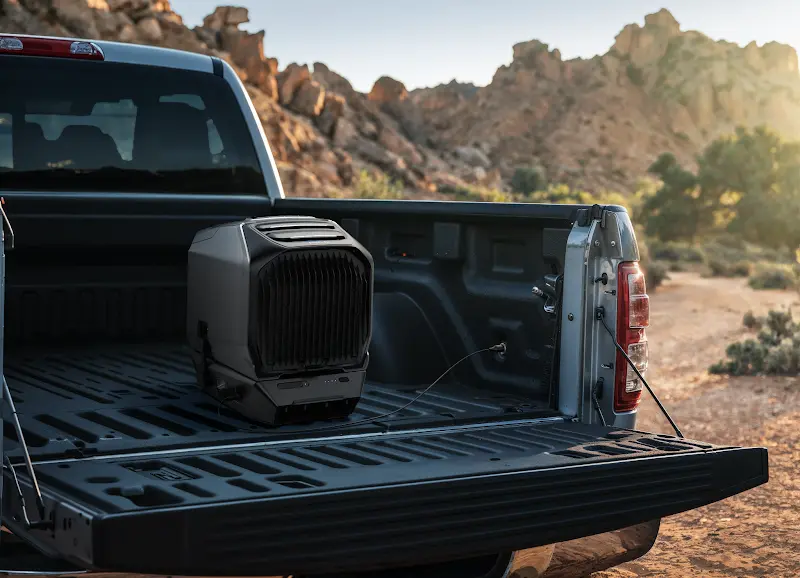
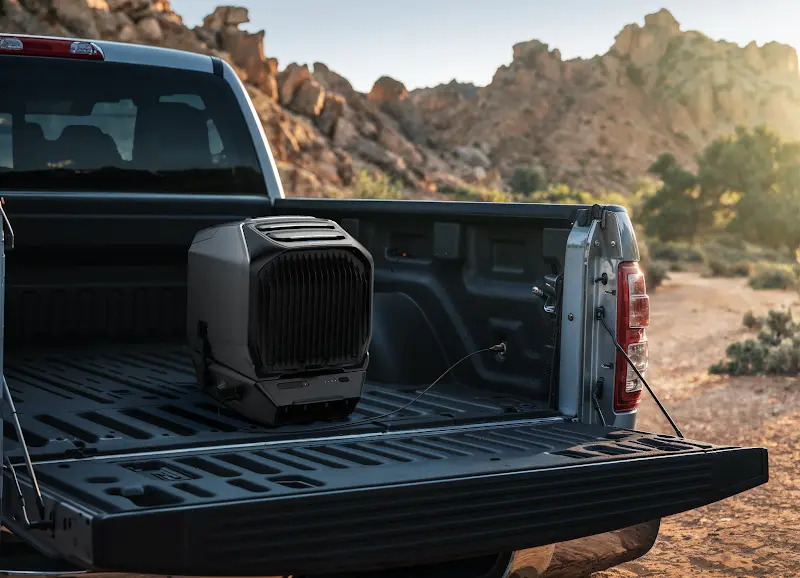
In the peak of a Canadian summer, especially in humid Southern Ontario or the dry BC interior, your car’s interior can turn into a sauna within minutes. This is where the EcoFlow WAVE 3 Portable Air Conditioner makes a massive difference. As a next-gen portable unit, it uses a legitimate compressor to pump out actual chilled air into spaces like SUV trunks or camper sleeping quarters. Unlike those “portable air conditioners” that are really just evaporative coolers, the EcoFlow WAVE 3 delivers true refrigeration. You’re not just feeling a damp breeze; you’re actually stripping the heat and humidity out of the air.
For us Canadians, the real value shows up when you’re off-grid. If you’re camping in Banff or Jasper, the daytime heat can be surprisingly stifling even if the nights are crisp. The EcoFlow WAVE 3 creates a stable, refrigerated environment when you’re parked, especially when you pair it with a power station like the EcoFlow DELTA 3 Plus. It puts out 6,100 BTU of cooling (and even has a heating mode for those sudden mountain frosts), making its performance feel way closer to a home window than a simple 12V fan. Another thing, it’s built to be modular, so it doesn’t eat up your entire trunk while you’re hauling gear through the provincial parks.
How to Choose the Right Cooling Solution for Your Car in Canada
Before you tap “buy,” think about our geography. A setup that works in the humid Maritimes is a different beast than what you’d need in the dry BC Interior.
Climate Considerations: If you’re in humid Southern Ontario, skip the swamp coolers. They only work when the humidity is low, which is rare near the Great Lakes. In sticky weather, you need a compressor unit like the WAVE 3 to actually strip moisture from the air.
Power Options: A real AC pulls serious juice. If you don’t have a dedicated station like the DELTA 3 Plus, you’ll kill your car battery in an hour. Without a separate power source, you’re stuck with weak 12V fans.
Portability and Space: Canada is a land of long hauls, and trunk space is precious. Ensure your unit and its exhaust ducting don’t force you to leave behind essential camping gear or groceries.
Noise and Efficiency: For light sleepers, noise is a dealbreaker. Look for units with a “Quiet Mode” (around 44 dB) and high efficiency so you aren’t waking up to a dead battery at 3:00 AM.
Conclusion
Canadian summers in 2026 aren’t messing around. Relying on a cheap plastic fan is fine for a mild night on the Atlantic coast, but it won’t save you during a humid Ontario heatwave or a blistering afternoon in the Prairies. If you actually want to enjoy the backcountry rather than just surviving it, you need a setup that can handle the real-world thermal load of a sun-baked SUV.
For the modern explorer, the ultimate move is pairing the EcoFlow WAVE 3 compressor AC with the DELTA 3 Plus power station, a combination that many consider the best portable AC for car setup available. This combo effectively turns your rig into a climate controlled sanctuary, letting you get a decent night’s sleep whether you’re tucked away in Algonquin or deep in the Rockies. Another thing, having a stable power source means you aren’t constantly checking your voltage or worrying about a dead starter battery in the middle of nowhere. Don’t let a spike in the forecast dictate your itinerary. Investing in a high performance system ensures you stay comfortable, no matter how far off the grid you decide to roam.
FAQ
Do portable air conditioners work well in cars?
They’re effective, but only if they’re compressor-based and you’re chilling a small, insulated space like a sleeping area. A cheap evaporative cooler or a basic fan won’t actually drop the cabin temperature when it’s 30°C outside, they just move the hot air around.
Can you use a portable AC in a parked car in Canada?
Yes, as long as you have an external power source. Using your vehicle’s starter battery is a recipe for being stranded. You also have to vent that hot exhaust air outside properly, or you’re just turning your car into a pressure cooker.
What can I use to cool my car without AC?
High powered 12V fans, ceramic window tints, and reflective sunshades are your best friends here. Keeping your windows cracked and finding some shade are essential, but if you want real refrigeration, a portable compressor unit is the only way to go.
Can I run a portable air conditioner using a car battery?
Not for long. Standard car batteries aren’t built for that kind of deep, sustained drain, you’ll likely kill it in under an hour. It’s way smarter to use a dedicated power station or a deep cycle battery setup to keep the air flowing without risking your engine’s ability to start.