Household Solar Power in Canada: Complete Home Solar Guide for 2026
Rooftop solar arrays across Canada have shifted from a niche environmental statement into a highly practical strategy for managing volatile provincial utility rates and securing home backup power. This guide addresses the core mechanics of modern residential installations by focusing on three distinct areas: how distributed generation connects directly to provincial electrical grids, how to accurately size an array using your actual consumption data, and what winter-hardened hardware is required to withstand extreme northern climates. With peak summer daylight hours approaching, evaluating your roof’s generation potential provides clear financial and operational advantages.
How Does Household Solar Power Actually Work in Canadian Homes?
Investing in residential solar requires a clear understanding of how generation hardware interacts with household circuitry and the broader local grid. Choosing the right solar panel type and placement is an important part of building an efficient system in northern climates. While the underlying photovoltaic physics remains identical globally, Canadian installations are engineered specifically to navigate massive seasonal swings and distinct provincial utility regulations.
What a Household Solar Power System Includes
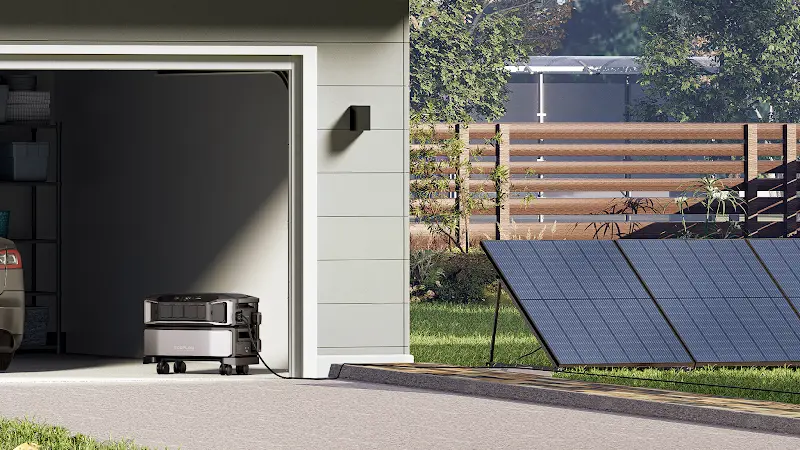
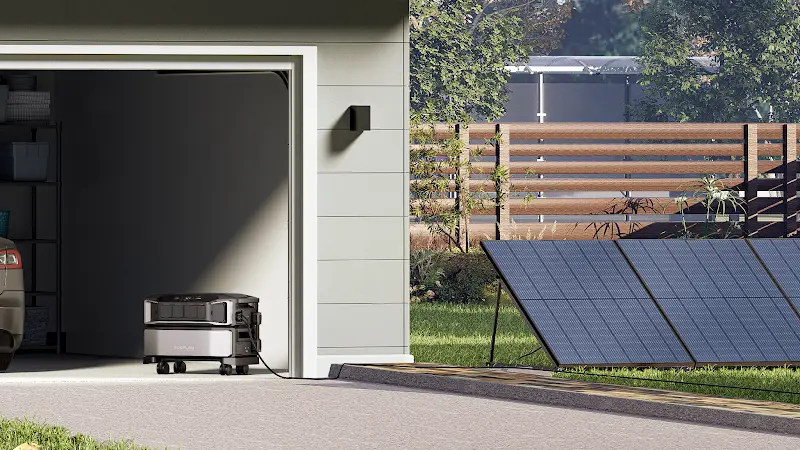
Canadian residential solar configurations require hardware engineered for sub-zero temperatures and structural snow loads. High efficiency monocrystalline panels mount to the roof or ground to capture solar radiation, routing direct current to a centralized string inverter or microinverters for alternating current conversion. Heavy duty racking systems anchor the array directly into roof rafters to withstand winter blizzards. Stationary lithium iron phosphate batteries complete the setup, securing backup power during outages and storing daytime generation for evening use.
How Solar Power for Homes Generates Electricity
Generation begins when sunlight hits silicon photovoltaic cells, freeing electrons to create direct current electricity. This raw energy travels through heavy-gauge conduit to the inverter, which modifies the current to match the standard 120V/240V split-phase alternating current required by Canadian households. The converted power then enters the main electrical panel, automatically distributing solar energy to active appliances, lighting, and real-time household loads. By maximizing solar energy for your home in practical applications, you can effectively insulate yourself from unpredictable municipal rate hikes.
How Net Metering Works in Canada
Net metering is a utility billing mechanism that allows homeowners to export surplus daytime solar generation to the local grid for consumption credits. When production outpaces household demand, excess electricity flows backward through a bi-directional meter. The utility tracks this volume, applying credits to offset power drawn at night or during winter. Regulatory frameworks vary by province; Ontario permits rolling credits for twelve months to reduce winter heating bills, while other regions incentivize immediate self-consumption.
How a Home Solar Power System Connects to the Grid
Grid-tied solar systems operate in automated synchronization with local utility infrastructure to maintain uninterrupted power. System logic prioritizes rooftop solar generation, drawing grid power only when cloud cover or evening hours drop production below active demand. To comply with the Canadian Electrical Code, internal anti-islanding protection automatically halts solar exports during a grid failure, preventing live current from feeding into downed lines and protecting emergency repair crews.
How Much Solar Power Does Your Home Really Need?
Accurate system sizing represents the critical factor in residential solar planning. Over-indexing on system capacity inflates upfront capital costs unnecessarily, while under-sizing leaves a property overly reliant on expensive grid power during peak utility pricing periods.
Check Your Annual Electricity Consumption
Determining ideal system capacity requires a comprehensive audit of the preceding 12 months of utility data to establish total consumption in kilowatt-hours (kWh). A full year review is necessary because Canadian properties exhibit extreme seasonal consumption deltas, driven by winter heating demands and summer air conditioning loads. Standard Canadian detached homes typically consume between 8,000 kWh and 12,000 kWh annually. This baseline fluctuates based on square footage, insulation performance, and primary heating configurations (such as natural gas versus electric heat pumps).
Solar System Sizing Rule of Thumb
With annual consumption established, homeowners can project required array capacity using regional generation averages rather than relying on rough household assumptions. Across Canada, 1 kW of installed solar capacity yields between 900 kWh and 1,300 kWh of electricity per year. Output sits at the higher end of this scale in southern provinces like Alberta and Ontario due to high solar irradiance, while coastal British Columbia delivers a lower specific yield due to persistent seasonal cloud cover.
To calculate your baseline needs, divide your annual consumption by an average Canadian production factor of 1,100 kWh per kW. For example, a property consuming 10,000 kWh per year requires approximately a 9 kW solar system:
10,000 kWh/year ÷ 1,100kWh/kW/year ≈ 9 kW
An array of this capacity translates to roughly 22 to 26 individual 400W solar panels. This specific math provides a realistic benchmark for long-term efficiency and cost savings before you begin factoring in physical roof constraints.
Roof Capacity and Real-World Adjustment
Theoretical system size must always reconcile with physical roof architecture. South-facing roof planes provide the highest generation efficiency, whereas east- and west-facing orientations generally experience a 15% to 20% reduction in total annual yield. Furthermore, physical obstructions like chimneys, skylights, dormers, and dedicated snow-guard zones reduce the total contiguous square footage available for panel installation.
Usage Alignment (Merged Section Replacement)
The ultimate goal of system engineering is matching generation potential with the property’s actual consumption footprint. This is often why many homeowners ask whether solar energy is worth it in Canada. Properties with heavy evening electricity usage frequently optimize their financial returns by pairing net metering configurations with physical battery storage, balancing high midday production with peak nighttime demand.
Which Solar and Battery Systems Fit Different Canadian Homes?
Every Canadian property presents a distinct structural footprint and operational reality, meaning a single, standardized hardware approach is impossible. From expansive rural properties managing heavy seasonal loads to urban townhomes prioritizing long term grid stability, selecting a precise component configuration is critical to achieving peak performance.
Whole Home Battery Systems for Large Houses
Auditing the electrical loads of a standard detached Canadian home reveals that running high-surge equipment, such as central air conditioning units, geothermal heat pumps, or heavy well pumps, during a grid failure demands a massive amount of starting current. Standard, low capacity batteries often fail under these heavy peak loads, risking both household comfort and the safety of sensitive electronics during extended winter or storm-driven blackouts.
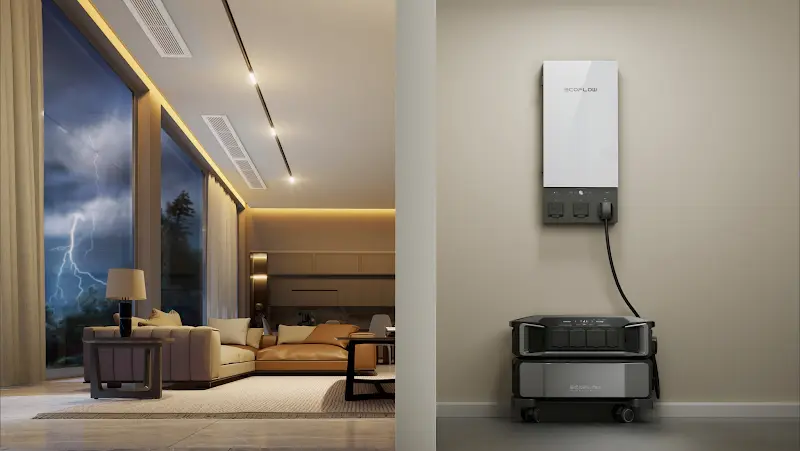
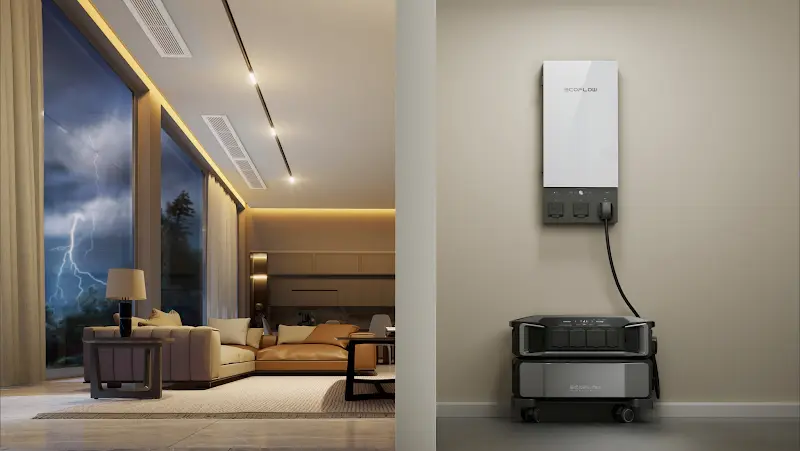
For comprehensive, uncompromised whole-home backup, the EcoFlow DELTA Pro Ultra Whole-Home Backup Power offers a highly reliable residential solution. Its robust power output effortlessly manages central AC systems and heavy duty household appliances simultaneously, preserving standard domestic operations when the grid fails. Furthermore, during extreme cold snaps, its integrated battery self heating function ensures stable, uninterrupted performance in sub zero environments, protecting critical home infrastructure from unexpected voltage drops.
Grid Tied Solar Systems for Stable City Homes
For urban and suburban homes situated within areas featuring highly reliable utility grids, a classic grid tied solar configuration offers the most economical entry point. These installations eliminate the capital cost of stationary battery banks entirely, utilizing provincial net metering frameworks to balance diurnal energy deltas. This setup works well for urban households that want to reduce long-term electricity costs and carbon emissions.
Hybrid Solar Battery Systems for Backup Needs
Hybrid configurations merge the economic utility of grid-tied net metering with the operational security of dedicated energy storage. Under normal conditions, the property runs on solar power and exchanges excess energy with the grid; however, the moment an infrastructure failure or severe storm triggers a blackout, the hybrid inverter isolates the home from the utility line within milliseconds. This instant islanding activates the dedicated emergency battery reserve, maintaining continuous power to critical circuits like medical equipment, refrigeration, home offices, and sump pumps.
Portable Solar Systems for RV and Cabins
For remote cabins or cross province RV road trips, power flexibility and fast energy recovery are central operational requirements. Operating far from utility lines requires a mobile, rugged power hub capable of rapid charging during short windows of optimal sunlight.
The EcoFlow DELTA Pro 3 + 400W Solar Panel bundle is designed for off-grid and recreational use. Built with an ergonomic pull-rod and highly durable wheels, the 51.5 kg power station can be moved from a vehicle straight to a campsite without strain. Its charging infrastructure is highly efficient; utilizing its dual PV ports supporting up to 2,600W of total solar input, or connecting directly to a standard AC source, the system can achieve rapid recharge under optimal AC or high solar input conditions. Whether running heavy power tools for seasonal cabin maintenance or keeping communication gear, laptops, and field lights active, this bundle provides stable power for outdoor and off-grid use.
How Do You Plan and Install a Solar Power System Safely?
Transitioning from structural blueprints to live grid generation requires careful preparation and compliance with Canadian electrical and building standards. Following a systematic, safety-first workflow ensures your residential installation operates reliably over its projected 25-to-30-year operational lifespan without code violations.
Check Roof Direction and Shade Conditions
Before purchasing hardware, you must verify the structural orientation of your property. South-facing roof planes provide the highest generation efficiency across Canada, whereas east- and west-facing exposures generally experience a 15% to 20% reduction in total annual yield. Utilizing digital solar mapping software or arranging a professional engineering site survey allows you to plot exact seasonal sun paths and identify shading risks from chimneys, dormers, or mature trees.
Understand Canadian Permits and Incentives
Navigating the financial landscape of Canadian solar requires up-to-date regional knowledge. The era of sweeping federal incentives has officially shifted, as the popular Canada Greener Homes Grant and the matching $40,000 zero-interest loan program have closed their application windows. Financing has successfully transitioned to targeted provincial, municipal, and property-linked initiatives.
Municipal CEIP Programs: This property linked framework allows you to finance up to 100% of upfront solar and battery costs through low interest municipal loans. Repayment is attached directly to the property rather than the individual, paid back over 15 to 25 years through standard property tax bills.
Provincial & City Rebates: Regional utilities and local programs offer upfront capital reductions calculated on installed system capacity. Notable examples include active utility programs like the BC Hydro solar and battery storage rebates, alongside targeted municipal cash-back incentives in cities like Banff and Canmore.
Permitting: Every project requires mandatory structural building and electrical permits to ensure compliance with the Canadian Electrical Code (CEC). Furthermore, your local distribution utility must formally review and execute a grid-interconnection agreement before the finished solar array is legally allowed to operate.
Choose Between Installers and DIY Setup
Homeowners generally choose between hiring a certified solar contractor or deploying a specialized DIY kit. Opting for an experienced installation firm handles the entire permitting loop, provides structural roof warranties, and guarantees proper system commissioning. Conversely, a DIY setup reduces upfront labor expenditures but demands advanced technical competence and strict compliance with the Canadian Electrical Code (CEC) to pass mandatory electrical inspections.
Plan Battery and Inverter Placement
Power inverters and stationary battery storage banks must be located within temperature stable, well ventilated indoor environments. Basements, mechanical rooms, or insulated, climate controlled garages represent ideal deployment zones. Proper placement protects sensitive power electronics from extreme Canadian seasonal temperature fluctuations, preserving charging efficiency and extending the service life of your investment. In addition to stationary installations, a portable power station can be used as a flexible backup option for temporary or mobile scenarios.
How Can You Maximize Solar Power During Canadian Summer?
The long daylight hours of the Canadian summer present an ideal window to maximize generation efficiency and accelerate the financial return on your hardware investment. By aligning household consumption with peak generation hours, you can significantly increase annual utility savings.
Adjusting Panel Tilt for Peak Solar Altitude
If your installation utilizes adjustable ground mounts or tracking racks, optimizing the panel tilt for summer improves total seasonal yield. Because the sun sits much higher in the sky during northern summer months, lowering the panel angle to between 15° and 25°, depending on your exact latitude, ensures the photovoltaic cells maintain direct perpendicular exposure to midday sunlight.
Timing Heavy Appliance Use for Solar Peaks
To lower your overall grid reliance, high consumption household tasks should be intentionally shifted to midday hours. Running heavy appliances such as clothes dryers, dishwashers, and electric vehicle (EV) charging stations between 11:00 AM and 3:00 PM ensures these devices run directly on your own real-time solar generation. This practice minimizes the volume of electricity you need to purchase from your utility provider.
Storing Excess Generation for High-Rate Evenings
In jurisdictions utilizing Time-of-Use (TOU) pricing frameworks, such as Ontario, electricity drawn during peak weekday hours carries a significant financial premium. Programming a home battery system to store surplus midday solar energy allows you to discharge that power locally during high rate evening periods. This strategy reduces your reliance on expensive grid power when utility costs are at their highest, maximizing the economic efficiency of your system.
Conclusion
Implementing a residential solar power infrastructure in Canada remains a highly effective, future proof approach to establishing long term energy independence and shielding your household from volatile utility rates. Navigating regional net metering frameworks, calculating an accurate system size, and selecting cold-hardy generation hardware ensures a reliable configuration tailored to the unique demands of the Canadian climate. Whether you deploy a comprehensive whole home backup system like the EcoFlow DELTA Pro Ultra to safeguard a detached property against extended winter blackouts, or utilize a mobile EcoFlow DELTA Pro 3 configuration for off grid summer travel, investing in tier-one solar hardware guarantees clean, independent power for decades to come.
FAQ
Why Are My Solar Batteries Draining so Fast?
Accelerated battery drainage usually points to high baseline household electrical loads, sub-optimal inverter programming, or cold ambient storage temperatures. In Canadian winters, automated systems like heat tapes, sump pumps, and space heaters draw substantial power silently. Furthermore, storing batteries in uninsulated spaces drops chemical efficiency, reducing apparent capacity. Reviewing real time monitoring software helps identify and isolate these hidden loads.
Does Rain Affect Solar Panels?
Rain limits real time solar output by diffusing direct sunlight, typically dropping system production down to 10% to 25% of its peak capacity. However, regular rainfall provides a practical maintenance benefit by washing away accumulated dust, pollen, and debris from the panel faces, which often yields higher operational efficiency once skies clear.
Is Solar Power Worth It in Canada in 2026?
Residential solar installations offer compelling financial returns. As provincial utility rates rise due to grid infrastructure projects and changing generation demands, the capital cost of solar components continues to decline. Solar modules operate with high efficiency in cold, clear conditions, and pairing arrays with modern energy storage systems provides effective protection against grid blackouts and changing utility rate structures.
Do Solar Panels Need a Lot of Maintenance?
Photovoltaic systems require minimal active upkeep due to the absence of moving parts. Standard maintenance involves occasional visual inspections, seasonal clearing of heavy snow accumulation if angles prevent natural sliding, and rinsing away surface debris. High-quality modules routinely maintain operational performance for 25 to 30 years.
Is It Better to Have More Solar Panels or More Batteries?
The ideal configuration depends directly on your primary operational goals. Expanding panel capacity maximizes total energy generation, driving down standard monthly utility expenditures. Conversely, increasing battery capacity extends backup runtime during prolonged grid failures. Balancing both assets is ideal, though budget limits usually dictate which element to prioritize during the initial deployment phase.