Solar Energy for Your Home in 2026: Costs, Savings, and Federal Incentives in Canada
- How Solar Energy Works for Canadian Homes (Beginner-Friendly Guide)
- How Much Does Solar Cost in Canada in 2026?
- How Much Can You Save with Solar in Canada?
- Federal and Provincial Solar Incentives in 2026
- Choosing the Right Solar System for Your Home
- Is Solar Worth It in Canada in 2026? (Real-World Scenarios)
- Step-by-Step: How to Install Solar Panels in Canada
- Conclusion
- FAQ
The days of viewing rooftop solar as just a “green hobby” are long gone. By mid-2026, skyrocketing utility rates in Alberta and Ontario, coupled with a grid that seems to struggle during every major ice storm, have turned solar panels into a tactical necessity for the average homeowner. We’ve reached a point where people are less interested in virtue signaling and more interested in decoupling their lives from a volatile energy market. In this guide, we’ll dive into what you’ll actually pay today, how much cash you’ll keep in your pocket over time, and the specific government kickbacks still on the table to help you build a home that doesn’t blink when the grid fails.
How Solar Energy Works for Canadian Homes (Beginner-Friendly Guide)
Understanding how the sun’s rays translate into power for your heat pump or EV charger is the first step toward making an informed investment. Many homeowners start by asking how solar panels work to better grasp the conversion of light into usable household electricity. In 2026, the technology has reached a “Goldilocks” period where efficiency is at an all-time high, and system integration is smoother than ever.
What Is a Residential Solar System?
A residential solar system typically consists of photovoltaic (PV) panels, a hybrid inverter, and often a battery storage component. These panels capture sunlight and convert it into DC electricity. The inverter is the “brain” of the system. It transforms that DC energy into the AC power your appliances use. In 2026, bifacial panels will become the industry standard for Canadian homes because they capture light on both sides, taking advantage of the sun from above and the light reflecting off the ground.
Does Solar Work in Canada’s Climate?
The short answer is yes, better than most people think. In fact, solar panels perform more efficiently in cold temperatures because the reduced heat lowers electrical resistance. The real secret weapon in the North is the Albedo Effect. During the bright, crisp days of February and March, fresh snow reflects up to 90% of sunlight. Bifacial panels can leverage this “snow mirror” to boost energy production by 20% to 30% compared to summer days. Most snow clears from tilted panels within 24-48 hours as the cells generate a small amount of heat that helps the layers slide off.
Net Metering Explained in Canada
Most provinces use a billing arrangement called Net Metering, which allows you to send excess electricity back to the municipal grid. When your panels overproduce, like on a sunny July afternoon, you receive credits on your utility bill. You can then “withdraw” these credits to offset the cost of electricity you pull at night.
How Much Does Solar Cost in Canada in 2026?
While the technology has become more efficient, the initial investment remains a primary consideration for most Canadian families. In 2026, we’ve moved past the “early adopter” phase, and the market has stabilized, but you’re paying for much more than just the panels on your roof.
Average Installation Costs by Province
The days of viewing rooftop solar as just a “green hobby” are long gone. By mid-2026, skyrocketing utility rates in Alberta and Ontario, coupled with a grid that seems to struggle during every major ice storm, have turned solar panels into a tactical necessity for the average homeowner. We’ve reached a point where people are less interested in virtue signaling and more interested in decoupling their lives from a volatile energy market. In this guide, we’ll dive into what you’ll actually pay today, how much cash you’ll keep in your pocket over time, and the specific government kickbacks still on the table to help you build a home that doesn’t blink when the grid fails.
Key Factors That Affect Solar Costs
The total price tag is influenced by your roof’s pitch, the quality of the panels (monocrystalline vs. polycrystalline), and local labor rates. Additionally, the complexity of your electrical panel and whether you require structural reinforcement for your roof can impact the final quote. In 2026, electrical work accounts for a larger chunk of the budget than it used to. Upgrading an older 100-amp service to 200-amp capacity to handle solar, an EV charger, and a heat pump typically adds $2,000 to $3,500 to your project.
Solar Battery Costs (Is Storage Worth It?)
Adding battery storage typically adds $12,000 to $22,000 to your system cost, including the backup gateway and labor. A Tesla Powerwall 3, for instance, often lands around $16,500 installed. While it increases the upfront price, storage is becoming a standard feature for Canadians. It’s no longer just about backup during a storm; it’s about avoiding high Time-of-Use (TOU) rates. By charging your battery when power is cheap and using it when rates spike in the afternoon, the battery starts paying for itself every single day. For those who need a more mobile or entry-level backup option before committing to a full-scale home array, a high-capacity solar generator can provide a cost-effective alternative for essential appliance support. In provinces like BC and Ontario, you can also access specific rebates up to $5,000 just for the battery, which significantly softens the blow.
How Much Can You Save with Solar in Canada?
Transitioning to solar serves as a calculated financial move to hedge against inflation rather than a simple “feel-good” environmental choice. One of the greatest benefits of solar energy is this long-term price certainty. With utility rates in provinces like Ontario jumping by nearly 30% recently, the cost of doing nothing has officially climbed higher than the cost of the hardware.
Average Monthly and Annual Savings
Depending on where you live and how much power your family gulps down, a well-sized solar system can slash your monthly electricity bill by 50% to 90%. For a typical detached home in the Prairies or Southern Ontario, this usually means keeping $2,200 to $3,200 in your pocket every year. Here’s the key: if you’re also charging an EV, those savings spike even higher. While grid charging can cost you roughly $4.50 per 100km, solar power drops that fuel cost to effectively $0.00 once the system is paid off.
Solar Payback Period in Canada
Thanks to high carbon-tax-driven electricity rates and the new Home Renovation Savings (HRS) rebates, most Canadian homeowners are seeing their systems pay for themselves in 6 to 9 years. In Alberta, savvy homeowners are using the “Solar Club” to sell surplus energy at high rates in the summer and buy cheap power in the winter, which can pull that break-even point even closer to the 6-year mark. After that, every kilowatt your roof produces is pure profit.
Long-Term Value: 25-Year Savings Potential
Most tier-one solar panels now come with a 25-year performance warranty, though many keep humming along well into their third decade. Over these twenty-five years, a typical Canadian household can expect to save anywhere from $45,000 to $65,000. These savings act like a tax-free raise. Since you aren’t paying the government a cut of the money you didn’t spend on your hydro bill, the effective value is even higher than the raw numbers suggest.


Federal and Provincial Solar Incentives in 2026
The Canadian government remains committed to its net-zero goals, though the way they deliver support has shifted. As of April 2026, the strategy is less about one big national check and more about stacking local wins.
Net-Zero and Clean Energy Programs
It’s important to clarify the current federal situation: the Canada Greener Homes Loan, which provided those famous $40,000 interest-free loans, closed to new applications on October 2, 2025. If you didn’t get your application in by then, you’re now looking to provincial and municipal programs as your primary source of funding.
However, the federal Clean Technology Investment Tax Credit(ITC) is still a massive deal for business owners and farmers, offering a 30% refundable tax credit on the capital cost of solar and battery systems. For residential homeowners, the focus is now on “Deep Retrofit” programs that encourage you to bundle solar with high-efficiency heat pumps and upgraded insulation.
How to Combine Incentives for Maximum Savings
To maximize your ROI in 2026, you need to play the “Stacking Game.” With the federal Greener Homes Loan having closed to new applicants in October 2025, the secret to a $0-upfront project lies in layering provincial cash with municipal low-interest financing. Combining these can often cover over 50% of your total project value in either direct savings or low-cost financing.
Choosing the Right Solar System for Your Home
Selecting the right hardware is about matching your lifestyle with the right level of energy security. By 2026, the “standard” install has changed; it’s no longer just about putting glass on your roof, but about how that power is managed when the grid starts acting up.
Grid-Tied vs Hybrid vs Off-Grid Systems
Most urban Canadians used to opt for Grid-Tied systems because they were simple and cheap. However, Hybrid systems, which combine solar with battery storage, are skyrocketing in popularity. They offer the best of both worlds: you stay connected to the grid for “unlimited” power, but you have a reservoir of energy to pull from during an outage or when rates spike. Off grid remains a niche for the deep bush or remote cabins. For a typical suburban home, the “Hybrid” model is the winner because it provides that elusive energy independence without requiring you to live like a pioneer. Even for those with a permanent home setup, keeping a portable power station on hand offers a versatile way to take that clean energy on the go for camping trips or specialized outdoor projects.
Do You Need a Solar Battery in 2026?
More and more Canadian families are realizing that installing solar panels alone doesn’t actually solve their biggest energy headaches. During those sweltering July weeks, running the AC and the fridge simultaneously, combined with Time-of-Use (TOU) billing, can still drive your bill into the hundreds. Plus, if the grid goes down due to a summer storm or a wildfire related “public safety power shutoff,” a standard grid-tied solar system actually turns off for safety.
This is why “Solar + Home Battery Storage” is becoming the mainstream choice. A next-gen system like the EcoFlow DELTA Pro Ultra Whole-Home Backup Power has evolved from a simple backup box into a true home energy hub. For a typical detached home, it doesn’t just keep the lights on during an outage; it acts as a daily financial tool. You “store energy by day and use it by night,” essentially skipping the expensive peak hours where utilities charge you triple. If your goal is to lower summer bills while maintaining year-round stability, a system like the DELTA Pro Ultra is a long term investment, not just emergency gear.
Key Features to Look for in a Solar + Storage System
When you’re shopping for a system this year, don’t get distracted by raw wattage alone. Here’s the key:
Expandability: Your needs will change. Maybe you’ll get an EV next year or add a heat pump in 2028. Ensure your system, like the DELTA Pro Ultra’s modular design, can grow with you.
Smart Energy Management: Look for an app-based interface that lets you track production in real-time. You want to be able to prioritize loads (like keeping the fridge running while killing the dryer) from your phone.
Cold Climate Performance: This is non-negotiable for Canada. Components must be rated for our winters. Some high-end batteries now include internal heating elements so they can live in an unheated garage without losing efficiency when it hits -20°C.
Is Solar Worth It in Canada in 2026? (Real-World Scenarios)
The “worth” of solar depends heavily on where you live and how you move through your day. In 2026, the question has shifted from “does it work in the cold?” to “how fast can it pay for itself?”
Urban Homeowners (Toronto, Vancouver)
In densely populated areas, solar is a primary tool for combating rising property taxes and utility costs. In Ontario, for instance, a 29% hydro rate hike has made a 10kW system a powerhouse for savings, typically keeping $2,200 to $3,200 in your pocket annually. Beyond the monthly bill, there’s the resale factor. Data from 2026 shows that Canadian buyers are increasingly paying a premium for solar-equipped homes, viewing them as “turn-key resilient” assets that are hedged against future inflation.
Rural and Off-Grid Living
Not every Canadian family needs a “whole home” system immediately. For many, a more realistic path starts with a lightweight, scalable solution. This is the sweet spot for suburban homes, rural residences, or off grid cabins where the goal is simply to keep the essentials, fridge, router, and lights, running when the grid fails.
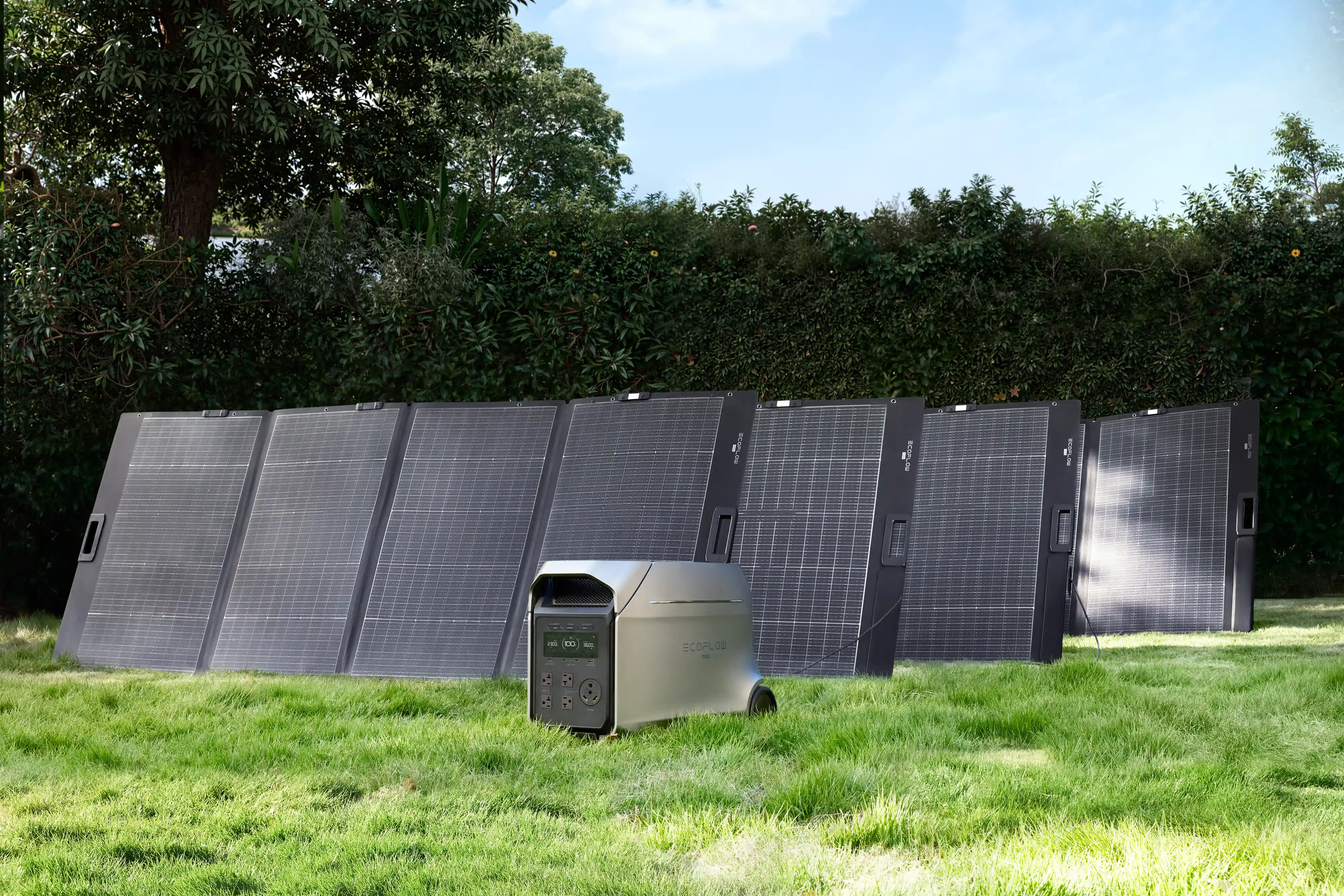
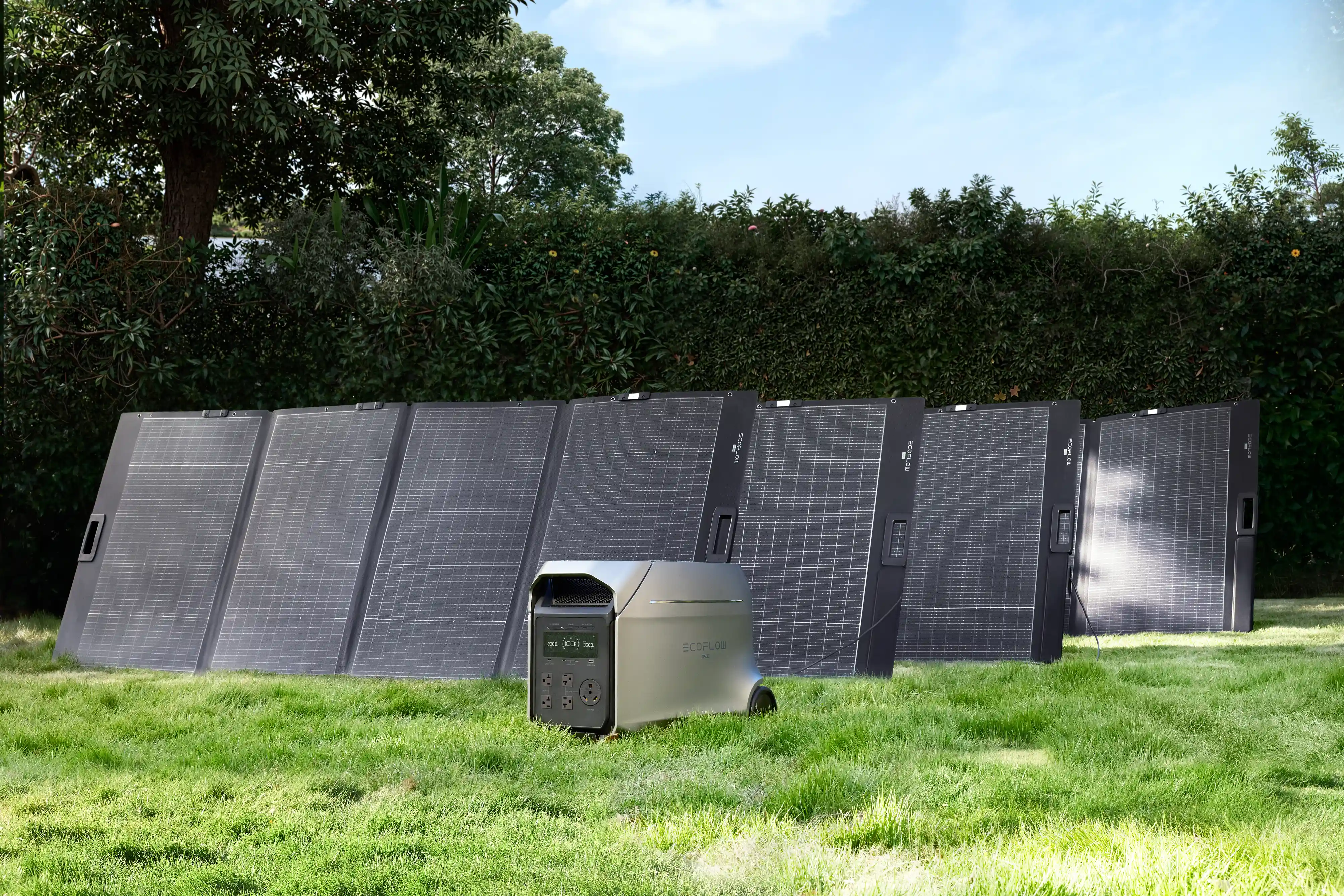
In these scenarios, the EcoFlow Delta 3 Ultra Plus Portable Power Station (3072Wh) offers a flexible entry point. It requires a much lower initial investment but supports modular expansion up to 11kWh. Its portable, suitcase-style design makes it versatile enough for RV trips or emergency backup, while its LFP battery chemistry ensures it remains stable in Canada’s low temperature environments. For those just starting out, this serves as a perfect “transition solution”, meeting core needs today before deciding whether to upgrade to a full-scale roof array later.
Cold Climate Considerations
If you’re in a heavy snow belt like Northern Ontario or Quebec, your hardware needs to be as rugged as the landscape. While snow clears quickly from tilted panels, 2026 standards require mounting systems engineered for 5,400 Pa snow loads.
Step-by-Step: How to Install Solar Panels in Canada
Ready to flip the switch? The process has changed a bit this year, especially with the closure of the federal loan program. Here is your updated roadmap for a successful, rebate-ready installation.
Step 1: Assess Your Home’s Solar Potential
Before you spend a dime, you need to know if your roof is a candidate. Use online tools or hire a professional auditor to check your orientation, south-facing is the gold standard, though east-west arrays are gaining popularity for catching “shoulder” power.
Step 2: Get Quotes from Certified Installers
Always get at least three quotes, but don’t just chase the lowest price. Ensure your installers are certified for the specific technology you want (like the EcoFlow home battery systems) and are familiar with your local utility’s interconnection rules.
A vital update for 2026: if you are in British Columbia, you must select an installer from the Home Performance Contractor Network (HPCN) beginning June 1 to stay eligible for BC Hydro rebates.
Step 3: Secure Local Incentives and Apply for Permits
Since the federal Greener Homes Loan stopped taking new applications last October, your focus is now on provincial and municipal “stacking.”
Prioritize Local Programs: Look for Ontario’s HRSP ($10,000 max), BC Hydro’s Residential Solar Rebate ($10,000 max), or Toronto’s HELP financing ($125,000 max).
The “Audit” Rule: Most of these rebates still require a pre-installation EnerGuide evaluation. Do not sign a contract or start work until your energy auditor has finished their initial assessment, or you’ll likely disqualify yourself from the cash.
Permitting: Your installer will handle the municipal building and electrical permits. They’ll ensure your system, and your EcoFlow home battery, meets current 2026 fire and safety codes, which is crucial for your home insurance.
Step 4: Installation and Grid Connection
The actual physical mounting of the panels and the wiring usually only takes 2 to 3 days. Once the hardware is up, your local utility provider (like Hydro One or BC Hydro) will come by to inspect the work and install a bi-directional meter. This meter is what allows for “net metering,” tracking the power you send back to the grid and the credits you earn.
Step 5: Monitor and Optimize Your System
Once the system is live, the real fun begins. Use your system’s software, like the EcoFlow app to watch your energy production in real time. The goal in 2026 is “Self-Consumption.” Adjust your heavy appliance usage (like running the dishwasher or laundry) to peak sunlight hours. This ensures you’re using your own free power rather than selling it back to the utility for a lower credit rate.
Conclusion
In 2026, solar has moved past being a “green” luxury, it’s now a practical hedge against a volatile grid. By pairing high efficiency panels with a smart hub like the EcoFlow DELTA series, you’re essentially opting out of the next rate hike or ice storm. You don’t need to do it all at once. Whether you start with a modular backup for the fridge and Wi-Fi or go all-in with a whole home system, the tech is finally as rugged as the Canadian climate. While the massive federal loans are in the rearview, the 2026 provincial rebates are still on the table for those who act before the next fiscal reset. Bottom line? Solar turns your roof into a high performing financial asset. It’s a shift from just surviving the winter to actively taking control of your home’s monthly overhead.
FAQ
1. Is solar still worth it in Canada with snow?
Absolutely. Panels are 10% to 15% more efficient in the cold because lower temperatures reduce electrical resistance. The Albedo Effect is your secret weapon; sunlight reflecting off fresh snow can boost generation by up to 20% on clear winter days. Most snow slides off naturally due to the panel tilt and the slight heat they generate while active.
2. How long do solar panels last in cold climates?
Expect a lifespan of 25 to 30 years. Modern panels are engineered to survive Canada’s “greatest hits”, heavy snow loads, hail, and temperature swings from -40°C to +40°C. While efficiency drops slightly over time (about 0.4% per year), they’ll still produce roughly 80% of their original power after three decades.
3. Can I go fully off-grid in Canada?
It’s possible but expensive. You’d need a massive battery bank and a backup generator to survive the “dark months” of December and January. For most, a hybrid system is better. It offers battery security during outages but lets you pull from (or sell to) the grid when needed, maximizing your ROI.
4. What happens during a power outage?
With standard grid-tied solar, your power shuts off for safety. However, with a battery system like the EcoFlow DELTA Pro Ultra, your home automatically switches to stored power in milliseconds. Your lights and fridge stay on while the rest of the neighborhood goes dark.