Best Home Wind Power Generators: Top Picks and Cost Analysis
A home wind turbine can make a lot of sense for Canadian homeowners, especially in rural areas where the wind is strong and fairly consistent. But unlike solar panels, a wind system depends heavily on where you put the turbine, how tall the tower is, and what kind of battery setup you’ve got backing it up.
This guide provides a comprehensive analysis of the best home wind power generators available today. We’ll break down sizing requirements, top regional picks, actual upfront costs, and real-world savings potential. Whether you’re powering an off-grid cabin in the Yukon, supplementing a working farm in the Prairies, or just want to find the perfect battery backup solution to keep your household running smoothly, here’s the real story.
What Size Home Wind Generator Do You Need?
There’s no universal answer here. The ideal setup depends heavily on your specific property type, local wind patterns, and baseline electrical consumption.
Small Wind Turbines for Cabins and Backup Power
Small wind turbines — typically rated between 400 W and 2 kW — are ideal for targeted applications rather than powering a full-sized household. Where they shine is in more targeted setups: a remote cabin, a seasonal cottage, or trickle-charging a portable power station or battery bank so it’s topped up when you need it.
Medium Residential Systems
Medium residential wind systems generally fall into the 2 kW to 10 kW range. These systems are popular with rural and semi-rural homeowners who want to offset a substantial portion of their grid reliance.
Large Home Wind Power Systems
For large rural properties or modern multi-generation households, large home wind power systems rated between 10 kW and 50 kW are the gold standard. These heavy-duty turbines can cover most or all of a high-demand property’s electricity needs, provided the wind resource is there to support them.
How to Estimate Your Household Energy Needs
Start with your hydro bill to calculate kWh usage on a monthly basis; this figure establishes your baseline. A typical Canadian household uses roughly 1,000 kWh a month, or about 33 kWh a day. However, homes using electric heating may consume significantly more, especially during Canadian winters when heating demand increases sharply.
It’s also worth checking a local wind map or, better yet, getting someone to log actual wind speeds on your property before you commit. What looks windy from the ground isn’t always what a turbine experiences at tower height.
Best Home Wind Power Generators in Canada
To simplify your search, we have analyzed the market to highlight the top-performing wind turbines well-suited for the rugged Canadian climate.
| Category | Recommended Model | Rated Power | Best Suited For |
|---|---|---|---|
| Best Overall | Primus Wind Power Air 40 | 160 W | Suburban/Rural Supplemental Power |
| Best for Cabins | Automaxx Windmill 1500 W | 1.5 kW | Off-Grid Cottages & Remote Cabins |
| Best for Off-Grid Living | Missouri Freedom II 2000 W | 2 kW | Deep Woods & Harsh Environments |
| Best for Farms & Rural Areas | Bergey Excel 15 | 15 kW | Large Agricultural Properties & Operations |
Best Overall Home Wind Generator
The Primus Wind Power Air 40 earns its spot at the top for a few practical reasons. It’s reliable, the internal electronics are well-designed, and it runs quietly — which matters if it’s going up near your house. For supplemental energy, it’s hard to beat as an all-rounder.
Best Small Wind Turbine for Cabins
For recreational properties, the Automaxx Windmill 1500W stands out. The kit is reasonably user-friendly, and it features an integrated automatic braking system that kicks in during sudden storms — useful if your cabin is anywhere near the Great Lakes or the Atlantic coast, where the wind can turn on a dime.
Best Wind Generator for Off-Grid Living
When your livelihood depends entirely on self-generated power, whether used standalone or to complement a solar generator setup, the Missouri Freedom II 2000W is a rugged, heavy-duty workhorse built for that reality. The components are hot-dip galvanized, which makes a real difference in harsh northern climates where rust and ice are constant issues.
Best Wind Turbine for Farms and Rural Properties
Got open acreage in the Prairies or rural Ontario? The Bergey Excel 15 is an industrial-grade powerhouse. At a massive 15 kW rating, it generates enough to run a farm and a large home at the same time, and it’s built to handle the wind loads you actually get, not just what’s on the label.
Battery Storage Solutions for Home Wind Power Systems
Generating clean kinetic energy from the wind is only half the battle. The other half — storing it so you can actually use it when you need it — is what makes the whole thing work.
Best Battery Storage for Small Wind Systems
With a small wind setup, dedicated storage is essential to manage the inherent variability of wind resources. While many Canadian cabins, seasonal cottages, and small off-grid structures benefit from strong wind conditions, peak generation rarely aligns with actual household electricity demand. Without a reliable battery bank, excess energy may be underutilized.
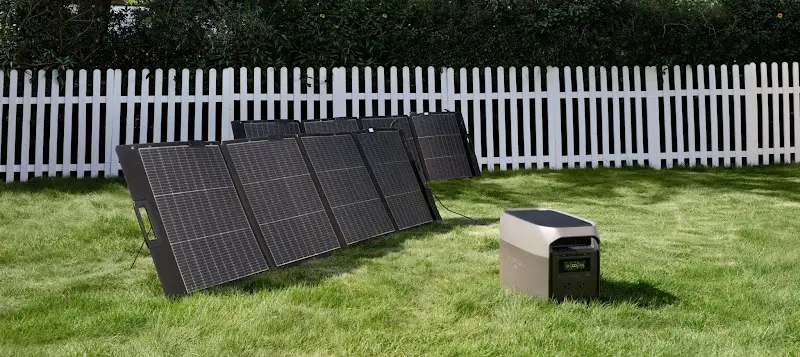
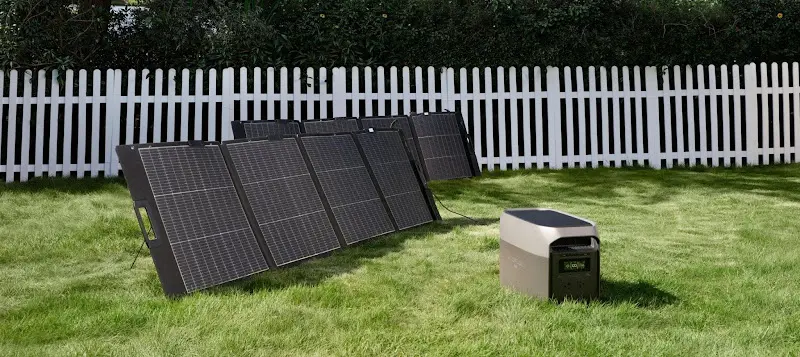
In this scenario, a portable power station such as the EcoFlow DELTA 3 Max (2048Wh) + 400W Solar Panel can be used as part of a hybrid setup. It can store surplus energy during high-wind periods, then power lights, routers, and small appliances when wind output is low. The 400W solar panel also helps supplement energy generation during calmer summer conditions, improving overall system resilience.
Pro Tip for Wind Setup: Portable power stations require stable DC input. Small wind turbines typically produce variable AC output, which needs to be converted and regulated using a wind charge controller (and often a dump load controller) before connecting to a battery system. This ensures voltage stability and helps protect the battery and inverter from irregular power input.
Best Whole-Home Backup Solution for Wind Energy
If you’re running a medium or large wind system, storage isn’t just about backup — it can also play an important role in improving overall system efficiency and self-consumption. In some regions, turbines may generate more power during nighttime or high-wind weather conditions, which may not always align with household electricity demand. An advanced storage system helps retain this self-generated electricity so it can be used when needed most.
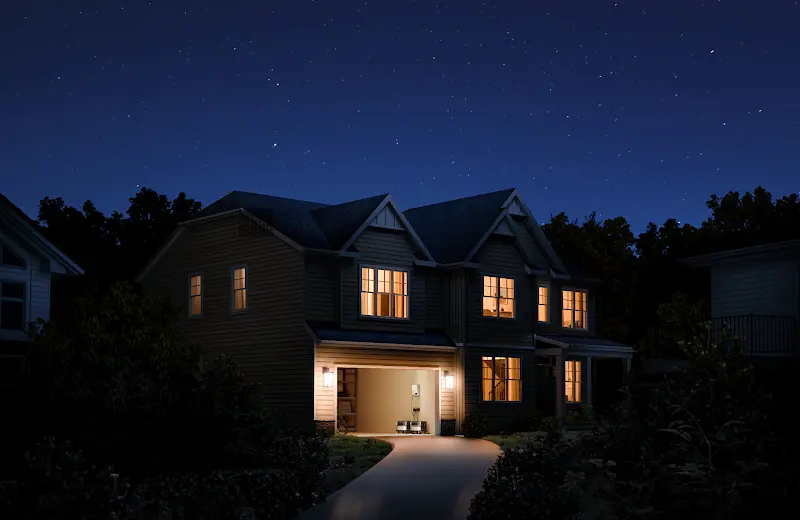
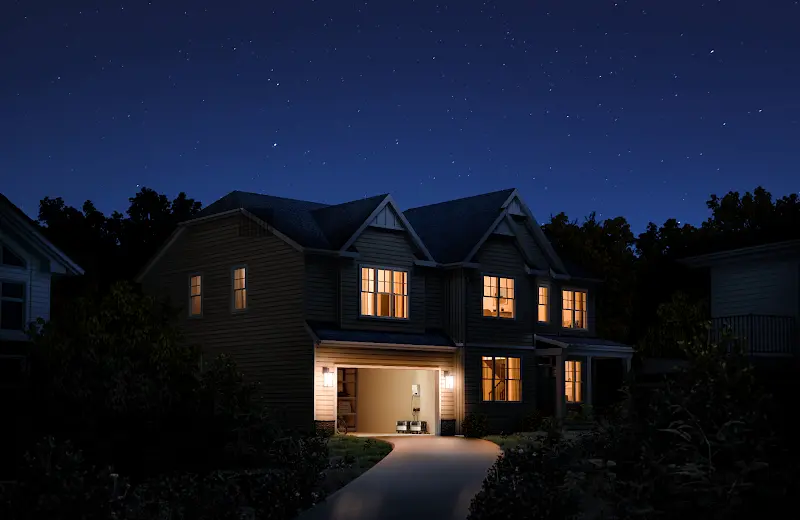
For families aiming to enhance energy independence and achieve more resilient whole-home power management, systems like the EcoFlow DELTA Pro Ultra Whole-Home Backup Power are designed to integrate with renewable setups. It can store surplus energy from your turbine and make it available during periods of low wind, grid outages, or higher household demand. For rural Canadian residences, farm operations, or off-grid lifestyles, this type of setup can help reduce reliance on the grid and improve the practical value of a residential wind energy system.
How Much Does a Home Wind Power System Cost in Canada?
Investing in residential wind energy requires a clear understanding of the financial commitments involved. Here’s a breakdown of what people actually pay in Canada for equipment, installation, and ongoing ownership costs.
| Cost Item | Budget Range (CAD) | Description |
|---|---|---|
| Base Equipment | $800 - $40,000+ | Depending on power capacity (from 400 W mini-turbines to 15 kW agricultural models). |
| Tower & Installation | $500 - $15,000 | Freestanding engineered towers require heavy cranes and deep concrete footings. |
| Battery Storage System | $3,000 - $15,000+ | Storage systems help manage time-of-use energy and improve self-consumption in hybrid renewable setups. |
| Annual Maintenance | ~1% - 3% of initial cost | Covers routine inspections of guy wires, bearing lubrication, and blade checks. |
Wind Turbine Equipment Costs: A small 400 W – 1.5 kW cabin turbine typically runs between $800 and $3,500 CAD. Move up to a mid-sized residential system (3 kW – 10 kW) and you’re looking at $6,000 to $25,000 CAD. For large 15+ kW systems, the price can climb past $40,000 CAD.
Installation and Tower Costs: A basic guyed tower for a small turbine might cost you $500 to $2,000 CAD. But for medium and large systems, you’ll need a freestanding engineered tower with deep concrete footings and a heavy crane to erect it — which pushes installation costs to somewhere between $5,000 and $15,000 CAD.
Battery Storage Costs: Storage requirements vary depending on system size and usage patterns. Portable or modular storage solutions may lower upfront costs, while whole-home backup systems such as the EcoFlow DELTA Pro Ultra can support larger-scale energy management within a broader hybrid setup. Most installations typically fall within the $3,000 to $15,000+ CAD range.
Maintenance Costs: Budget roughly 1% to 3% of your initial system cost each year for routine maintenance. That covers inspecting the guy wires, lubricating bearings, and checking the blades.
How Much Can You Save with a Home Wind Power System in Canada?
The financial case for wind energy isn’t just about feeling good about your carbon footprint. Done right, incorporating it among your methods to save energy can change your household’s operating costs in a meaningful way over the long term.
Factors That Influence Savings: Your savings depend on three main things: how much wind you get, what your provincial electricity rate is, and whether your utility offers net metering. If you’re in a high-rate province like PEI or Nova Scotia, the payback comes faster. In Quebec, where hydro rates are low, the math is harder to justify.
Estimated Annual Savings: A properly sited 5 kW turbine in the Prairies or along the coast can generate roughly 6,000 to 9,000 kWh a year. At the average Canadian base electricity rate of about $0.15 per kWh, that translates to somewhere between $900 and $1,350 a year in potential energy offsets, depending on your local utility’s net metering structure and fixed grid fees.
Typical Payback Periods: Most people find their payback period lands somewhere between 10 and 20 years. That timeline can shrink if there are federal/provincial green energy incentives available, or if you’re off-grid and would otherwise be paying to bring utility lines out to your property — which gets expensive fast.
Conclusion
For Canadian homeowners, a wind turbine can be a genuinely practical step toward energy independence — especially when it’s paired with the right hardware and storage infrastructure.
By accurately assessing your local wind assets and integrating a high-performance battery backup like the EcoFlow DELTA or Delta Pro Ultra series, you can secure a reliable, weather-resilient power grid of your very own.
FAQ
Do I Need Permission to Put up a Wind Turbine?
Yes, you generally need municipal zoning permits and electrical permits before installing a residential wind turbine in Canada. Requirements can vary by province and municipality. Local bylaws often set restrictions on tower height, property line setbacks, and noise levels, and some projects may also require additional building or utility interconnection approvals.
Can I Install a Small Wind Turbine in My Garden?
Yes, you can install a small turbine in a spacious yard, but it is often not ideal for dense suburban gardens due to turbulent air currents created by nearby houses and trees. Wind turbines perform best in smooth, unobstructed airflow conditions, and turbulence can significantly reduce their efficiency and energy output.
How Much Electricity Can a Home Wind Turbine Generate?
A home wind turbine can generate anywhere from roughly 30 kWh to over 2,000 kWh per month, depending on system size, local average wind speeds, and site conditions. A standard 1.5 kW turbine in a moderately windy location may produce enough electricity to support basic household appliances, though actual output varies significantly based on installation height and wind consistency.
Can a Wind Turbine for Home Cut Bills if Zoning Allows It?
Yes, a residential wind turbine can help reduce monthly electricity bills by offsetting part of your reliance on grid power. In regions where net metering programs are available, excess electricity may be exported to the grid in exchange for credits, depending on local utility policies and regulations.
Do Domestic Wind Turbines Make Noise?
Yes, domestic wind turbines produce an aerodynamic humming or swooshing sound as the blades slice through the air, though modern designs are significantly quieter than older models. Most quality turbines generate noise levels around 40 to 50 decibels at 50 feet, comparable to a refrigerator.
What Happens to Wind Turbines When the Wind Is Too Strong?
When wind speeds exceed safe operational limits, modern wind turbines utilize automatic electronic or mechanical braking systems to slow down or stop the blades entirely. This crucial safety mechanism prevents generator overheating and protects the structural integrity during severe Canadian storms.