Home Maintenance vs. Home Improvement in Canada: What’s the Difference?
- What’s the Difference Between Home Maintenance and Home Improvement?
- Which Projects Confuse Home Maintenance with Home Improvements?
- What Home Maintenance Should You Do Each Season in Canada?
- Which Home Improvements Should You Do First After Home Maintenance?
- How to Budget Home Maintenance and Home Improvement in Canada
- Begin Your Home Improvement Upgrade Today
- FAQs
Canadian homes take a beating from freeze-thaw cycles, wind-driven rain, and long heating seasons. That’s why the decision between home maintenance and home improvement matters so much. One protects what you already have. The other raises the baseline for comfort, efficiency, or resilience. When those lines blur, budgets blow up, and small issues turn into major repairs. The goal here is simple: sort the work correctly, handle the tasks that prevent expensive damage, then choose upgrades that actually pay off.
What’s the Difference Between Home Maintenance and Home Improvement?
Home maintenance keeps the house stable through Canadian seasons by catching wear early and fixing it before it spreads. Home improvement upgrades how the home performs, such as comfort in winter, moisture control, or energy efficiency.
Maintenance restores reliability: stopping a leak, replacing worn weatherstripping, servicing mechanical equipment, cleaning eavestroughs, and correcting drainage that causes foundation wetting.
Improvement upgrades the baseline: adding insulation, reworking ventilation capacity, finishing space for new use, redesigning drainage, and upgrading fixtures for accessibility.
A quick warning that saves money: deferred upkeep can quietly sabotage a renovation budget. If water intrusion, attic moisture, or unsafe wiring sit in the background, a planned remodel tends to stall midstream.

Which Projects Confuse Home Maintenance with Home Improvements?
Some jobs flip categories depending on scope. A “replace and match” job is often maintenance. A “replace and upgrade” job typically becomes home improvements territory. These common projects can be maintenance or improvement, depending on the scope. Use the cues below to label yours correctly.
Windows and Doors
Leans toward home maintenance when: you’re dealing with failed seals, drafts, sticking hardware, or water entry around frames.
Leans toward home improvements when: you’re upgrading performance, noise control, comfort, or appearance.
Roof Work
Leans toward home maintenance when: you’re repairing leaks, replacing damaged shingles, or restoring basic ventilation.
Leans toward home improvement when: you’re changing materials or assembly details, adding skylights, upgrading insulation strategy, or redesigning drainage details.
Basement Water Control
Leans toward home maintenance when: you’re clearing drains, sealing minor entry points, maintaining a sump pump, or extending downspouts.
Leans toward home improvements when: you’re adding backwater protection, regrading and reworking drainage, installing window well protection, or making larger water-management upgrades.
Electrical Changes
Leans toward home maintenance when: you’re replacing a failed device like-for-like safely.
Leans toward home improvement when: you’re adding circuits, extending branch wiring, powering new fixed equipment, or making changes that typically trigger permits and inspections.
Bathroom Work
Leans toward home maintenance when: you’re repairing leaks, renewing caulk and grout, or fixing a failing fan.
Leans toward home improvements when: you’re changing layout, improving ventilation capacity, upgrading fixtures for accessibility, or modernizing finishes at a larger scope.
What Home Maintenance Should You Do Each Season in Canada?
Seasonal timing matters because Canadian weather creates predictable failure points. Fall and winter priorities tend to revolve around moisture control, heat retention, and early detection of attic frost and ice dam signals.
Spring and Summer
Spring is the best time to check where meltwater is going, like downspout discharge, grading near the foundation, and any new cracks or staining. In summer, a quick pass on exterior sealing and drainage, especially around penetrations and window wells, helps you keep heavy rain outside.
Confirm downspouts discharge away from the foundation and the ground slopes away from the home.
Inspect attic and ceilings for staining that signals past ice damming or condensation.
Test the sump pump and clear floor drain obstructions, especially in homes with previous basement water issues.
Check exterior caulking around penetrations and vents; repair gaps that let water and pests in.
Clean dryer vents and bathroom fan outlets to reduce moisture and fire risk.
Fall and Winter
Fall is the best time to handle the jobs that get harder in freezing weather, like gutters, weatherstripping, and drainage checks. In winter, a quick look for attic frost, condensation, and ice buildup helps you catch moisture problems early.
Clean eavestroughs and verify water routes away from the foundation.
Replace worn weatherstripping and confirm windows latch tightly before the deep cold arrives.
Watch for attic frost or recurring ice dams; those patterns often point to air leakage and ventilation issues.
Keep a food safety plan for outages. As a practical benchmark, an unopened refrigerator stays cold for about 4 hours, a full freezer for about 48 hours, and a half-full freezer for about 24 hours.
Which Home Improvements Should You Do First After Home Maintenance?
Once critical upkeep is under control, the best upgrades solve recurring pain. For most Canadian households, that means reducing water risk, improving comfort in winter, cutting drafts, and reducing the disruption caused by outages.
Water Risk Reduction That Holds Value
Basement flooding creates the kind of stress that forces rushed decisions. A sensible sequence begins with drainage and sump reliability, then moves into larger upgrades when the property’s risk profile calls for it. The goal is fewer “one storm away” moments and less hidden damage inside walls and floors.
High-impact improvement ideas in this bucket often include better downspout extensions, window well protection, and in some cases, backwater protection, depending on local conditions and municipal guidance.
Draft Reduction and Air Leakage Control
Air leakage shows up as cold floors, uneven rooms, and condensation risk. Comprehensive air leakage control focuses on finding and sealing leakage paths with measures such as weatherstripping and caulking. It’s one of the rare upgrade categories that improves comfort quickly while also protecting building materials from moisture problems.
Resilience for Outages and Essentials
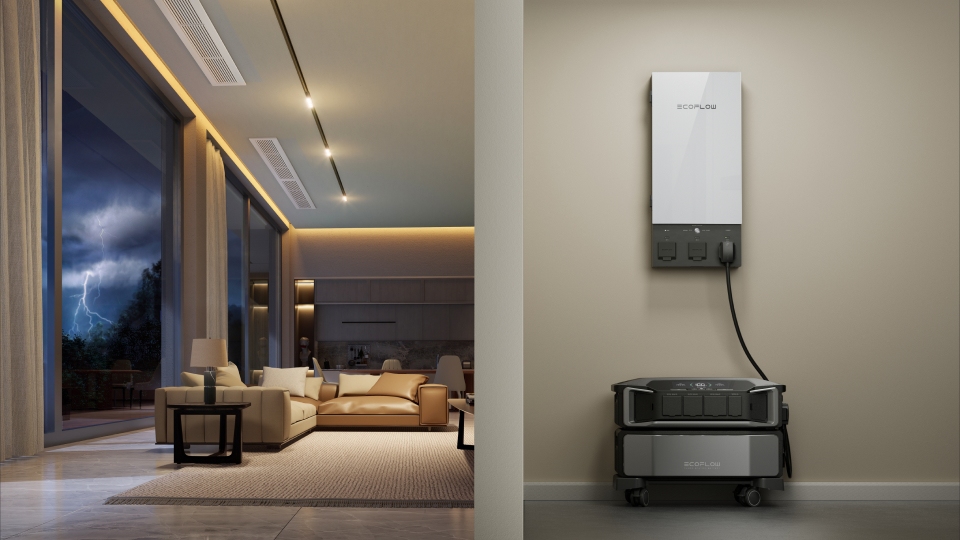
Power outages can stall critical sump pumps, cut heat circulation, and lead to costly food spoilage. In this context, upgrading to a dedicated energy storage system is a strategic home improvement that shifts a property from grid-dependence to self-sufficiency. Implementing a solution like the EcoFlow DELTA Pro Ultra Whole-Home Backup Power (UL 9540 Certificated) provides a professional-grade layer of protection, ensuring that the entire household remains operational and secure during extended grid failures without the need for manual intervention.
How to Budget Home Maintenance and Home Improvement in Canada
Budget problems usually show up when a surprise repair lands in the same pot of money as planned upgrades, and the upgrade gets derailed. Split the budget into maintenance, improvements, and a small contingency so one failure doesn’t wipe out the whole plan.
A Simple Two-Bucket System
Maintenance reserve: predictable upkeep and near-term replacements.
Improvement fund: scoped projects with a defined finish line.
Add a small contingency buffer for surprises tied to plumbing leaks, roof issues, or electrical hazards.
Use a Priority Score That Matches Real Pain
Rate each item from 1 to 5 in three categories:
Safety and water risk
Comfort impact
Operating cost impact
That keeps decisions grounded. A project that prevents basement water damage will often outrank a cosmetic refresh, even if the refresh feels satisfying.
Keep Tax Credits on Your Radar When Relevant
Two federal programs come up often during renovation planning:
Multi-generational Home Renovation Tax Credit (MHRTC): qualifying claimants can claim up to $50,000 in qualifying expenditures, with the credit calculated at 14.5% up to a maximum of $7,250.
Home Accessibility Tax Credit (HATC): a qualifying individual can claim up to $20,000 per year in eligible expenses for qualifying renovations that improve accessibility or reduce the risk of harm. Routine repairs and recurring maintenance are generally excluded from eligibility.
Receipts and documentation matter for any credit claim, so keep invoices and proof of payment organized.
Begin Your Home Improvement Upgrade Today
A calmer home comes from clear choices, not grand gestures. Sort current issues into upkeep and upgrades, then handle the items that reduce water risk and winter discomfort first. After that, choose one improvement that makes daily living easier and keep the scope tight enough to finish. Local permit rules and trade requirements can shape timing, so a quick check with your municipality pays off. Consistent upkeep reduces emergencies, and well-chosen home improvements make the house feel better every day.
FAQs
Q1: Is a permit required for routine home maintenance in Canada?
In most cases, routine home maintenance does not require the issuance of a permit from the local government. However, it should be noted that any changes that affect the structural integrity of the home, the plumbing, or the electrical systems require the issuance of a permit. An example of this is that replacing the deck board is considered home maintenance, but adding an extension to the deck is considered an improvement that requires the issuance of a permit. Therefore, it is recommended that one contact the local government for the purpose of ensuring compliance with the regulations of the province. This will assist in the reduction of any fines that may result at the time of resale.
Q2: Does the completion of major home improvements increase my annual property taxes?
Major home improvements can result in an increase in the amount of property taxes that one is required to pay. This is due to the fact that the improvements increase the value of the residence. In most cases, the local government conducts an annual assessment of the properties. Therefore, any upgrades that one makes to the residence, such as the finishing of the basement, can result in an increase in the amount of taxes that one is required to pay. However, in some provinces, the government offers an incentive for homeowners who install energy-efficient upgrades. This not only reduces the amount of money that one pays for utilities but also increases the marketability of the residence.
Q3: Should I notify my insurance provider after completing a home improvement project?
Yes, it is important that the insurance company is notified in case there are significant improvements made to the property, so that the insurance limits are adequate to cover the cost of replacing the property in case of damage or loss, given the upgrades made to the property. Improvements to the quality of energy systems or structural integrity may, in some instances, result in lower premiums, given that there is a reduced likelihood of damage from fire or water, respectively.
Q4: Is it always more cost-effective for DIY home maintenance tasks?
Not necessarily, as DIY is not always the most cost-effective solution, especially if specialized expertise is needed to address problems unique to the Canadian climate. Although homeowners are responsible for tasks such as cleaning gutters and changing filters, other tasks such as balancing the heating, ventilation, and air conditioning systems or inspecting the roof, given that the property is located in a high-altitude area, may require specialized expertise and may prove to be costly if DIY repairs are performed, especially if there are underlying damages that are not readily visible, such as mold or structural damage, which may prove to be more costly in the end than hiring a qualified individual to make repairs.
Q5: Are changes in climate-resilient landscaping classified as home improvements?
Yes, changes made to a home to make it climate resilient against extreme weather conditions, for instance, installing “Fire-Smart” vegetation or drainage systems, can be classified as home improvements. While yard cleanup is a normal process in every home, changes made to a home for long-term protection against wildfires and floods are important in a nation where climate change is a rising issue in Canada. Not only do these changes minimize long-term maintenance costs, but they also increase a home's profile in terms of climate resilience.