Best Air Conditioning Units for Tents in Canada
Travelling by vehicle into the Canadian wilderness, whether exploring the wind-swept shores of Tofino or finding a quiet spot along Ontario’s interior lakes, is a common summer activity. But when July heatwaves set in, a regular tent can quickly turn from a scenic escape into a hot and humid space that is difficult to sleep in. Lightweight tent fabrics are effective at keeping out sudden downpours, but they also trap heat easily, making a dedicated cooling system a practical solution for summer camping trips.
Building a reliable off-grid setup in northern regions requires more than simply purchasing a basic power unit online and plugging it in. This guide provides a practical overview of tent climate control under Canadian weather conditions. We will break down why standard household appliances fail in the backcountry, how to balance daily battery consumption, and what features to look for so you can stay comfortable across different regions of Canada.
What Makes a Tent Air Conditioner Work Well in Canada
Camping up north brings a mix of wild conditions. Our summer days offer incredible, stretched-out hours of daylight, but they also pack a heavy dose of humidity and sudden thermal spikes that turn a standard tent into a sweltering box. Keeping your sleeping area comfortable requires a system that combines high-output cooling with efficient energy use.
Choose Higher BTU for Trapped Tent Heat
A solid British Thermal Unit (BTU) rating matters because thin tent walls provide zero insulation. The summer sun beats right down onto the fabric all afternoon, baking the air inside. A higher BTU rating ensures the unit can effectively manage continuous heat buildup, knocking the indoor temperature down to a comfortable level quickly.
Seal Exhaust Hoses to Prevent Heat Leaks
A powerful cooling system will be ineffective if hot exhaust continually bleeds back into your living space. When setting up a portable unit, you need to firmly seal the exhaust ducting right against your tent’s ventilation flaps or zipper seams. Keeping these ports airtight guarantees that the sticky, humid air dumps entirely outside while the cold air stays locked within your footprint.
Match Power Consumption with Battery Capacity
An efficient cooling system is completely dependent on the power grid feeding it. For off-grid basecamps, a reliable portable power station serves as this crucial backbone. Because most provincial campgrounds and remote crown land areas rarely provide electrical hookups, you need to match your unit’s hourly power consumption with an appropriately sized battery bank. Balancing this electrical equation keeps your system running steadily all night without leaving you in a hot, dead zone before morning.
Why Do Standard Tent Cooling Setups Fail in Outdoor Heat
It is often tempting to use a standard household portable air conditioner for camping, but these units typically perform poorly in outdoor environments. Residential units are built strictly for sealed, drywalled rooms. Their internal compressors and fans simply lack the design structure to survive or overcome the raw heat loads found out in the open bush.
Single Hose Systems Pull Hot Air Back In
The main flaw with standard single hose portable ACs in a campsite comes down to basic pressure physics. As a single hose machine forces hot air out through the tent wall, it creates an internal vacuum. This negative pressure aggressively sucks hot, sticky Canadian air right back in through the tent’s mesh screens, floor seams, and zippers. The unit becomes inefficient due to recirculating warm air, wasting immense amounts of battery power while barely moving the temperature needle.
Weak Batteries Cannot Power AC Units Long Enough
Generic retail power stations and lightweight utility batteries lack the electrical backbone to handle the high inductive surges and continuous operational draws of an AC compressor. Sustaining this high air conditioner power consumption requires a sufficiently large power reserve, or the battery may deplete within one to two hours, causing the cooling system to shut down early in the evening.
Which Tent Air Conditioners Work Best for Camping
For road trippers, overlanders, and camp enthusiasts moving between different spots across the Maritimes or up into the Rockies, picking a cooling unit goes beyond basic specification sheets. True outdoor performance comes down to how easily the machine slides into a packed trunk, how well it survives jarring washboard dirt roads, and how fast you can get it running after a long drive.
Look for Compact Units for Smaller Tents
Fitting regular gear into an SUV or truck for a long-weekend getaway already limits your vehicle cargo room. Securing a compact portable air conditioner for automobile transport greatly minimizes this packing headache. This smaller footprint guarantees the unit fits neatly inside the tent without crowding your sleeping bags, cots, or dry storage containers.
Choose Lightweight Units for Easy Transport
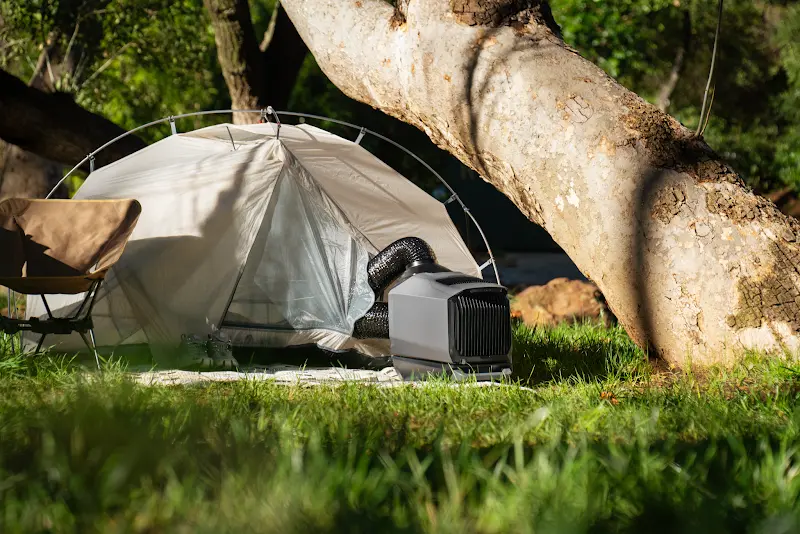
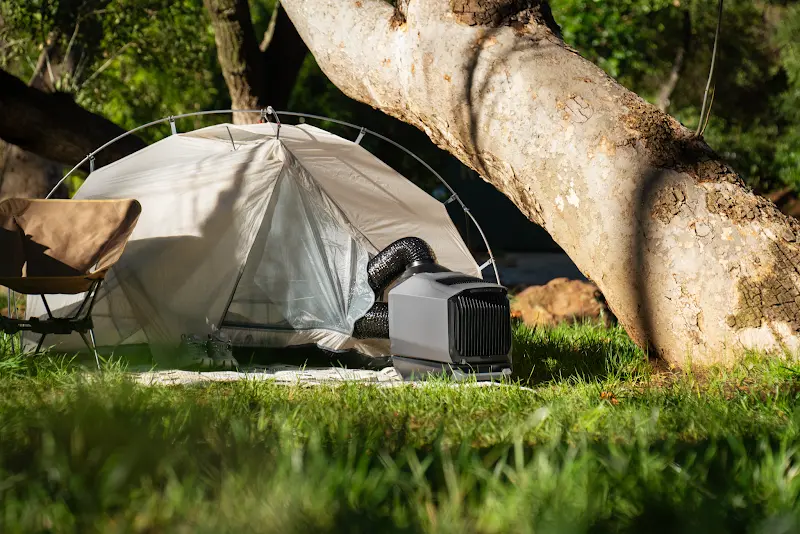
Managing a campsite alone means portability directly affects setup speed. Traditional residential portable ACs are heavy and difficult to transport, but the EcoFlow WAVE 3 Portable Air Conditioner weighs around 15 kg, making it easy for one person to carry. Purpose-built outdoor systems like the EcoFlow WAVE 3 are designed for improved outdoor cooling performance. It helps separate indoor and outdoor airflow more effectively, directing heat outside while maintaining more stable cooling performance inside the tent.
Once you arrive at camp, setup requires very little effort. There are no permanent mounting brackets or complicated assembly steps, allowing you to start the cooling system within minutes of arriving at camp. This speed significantly improves convenience in hot summer conditions.
Use Quiet Units for Overnight Camping
The deep silence of a Canadian night is arguably the best part of sleeping under the stars. A loud, vibrating compressor ruins the wilderness vibe and will quickly irritate your campground neighbours. Sourcing an outdoor unit with a dedicated sleep or eco mode drops the decibel output low enough to ensure a restful sleep while keeping the compressor operation smooth and unobtrusive.
Pick Durable Units for Frequent Camping
Backcountry equipment is exposed to gravel road vibrations, sudden summer downpours, and shifting loads inside a utility trailer. Choosing a unit with a rugged outer shell and shock-mounted internal components ensures long-term durability across seasons of northern travel.
How to Manage Your Outdoor Power Supply
Running an air conditioner off-grid demands a calculated approach to energy management. To secure continuous cooling across multi-day trips, you have to treat your battery storage and charging inputs as a single, connected ecosystem that matches your daily consumption with incoming power.
Figure Out Exact Daily Battery Hours
Before leaving cell service, calculate exactly how many hours you need to run the AC unit each day against its hourly watt consumption. Tracking these numbers allows you to size your off-grid storage accurately, preventing you from draining your primary power reserves before the sun sets.
Real-World Power Calculation Example
Let’s look at the actual numbers to see how this plays out at a real campsite. Most dedicated tent air conditioners draw between 400W and 600W per hour, depending heavily on the afternoon heat index and the type of tent material you are using. If you run a unit drawing an average of 500W for 6 hours overnight, your total energy demand hits:
500W × 6 hours = 3,000Wh (3kWh)
This means your portable battery bank needs at least 3kWh of usable capacity to maintain that cooling loop until morning. For off-grid travel across Canada, hitting this benchmark requires a high-capacity power station backed by solar panels to replenish the cells during daylight hours.
Without that baseline capacity, you face two predictable outcomes: the system will cut out entirely before dawn, or you will be forced to throttle down the cooling performance to a weak fan mode just to make the battery last.
Angle Solar Panels Toward Direct Sunlight
Solar generation in the backcountry depends heavily on local conditions. Setting up on an exposed beach along Lake Huron allows your panels to run at peak efficiency, but moving into a dense canopy of B.C. pines or catching the shifting shadow of your own vehicle cuts your charging input down to a fraction of its rating.
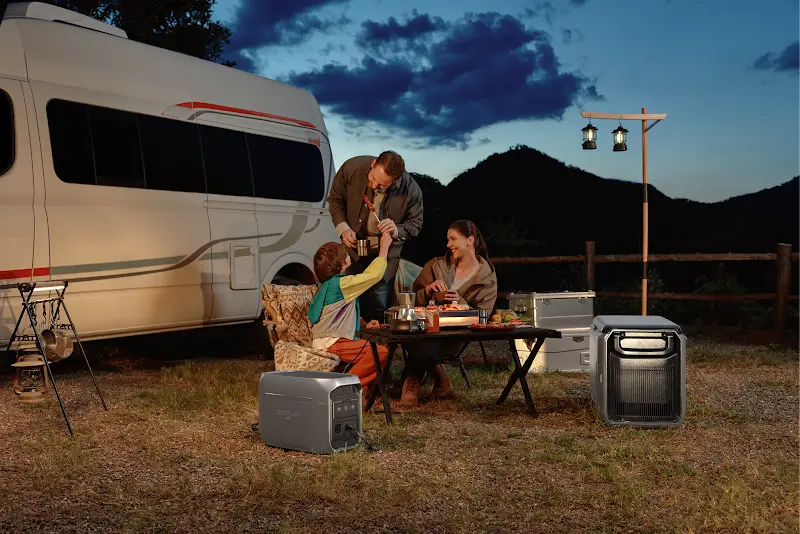
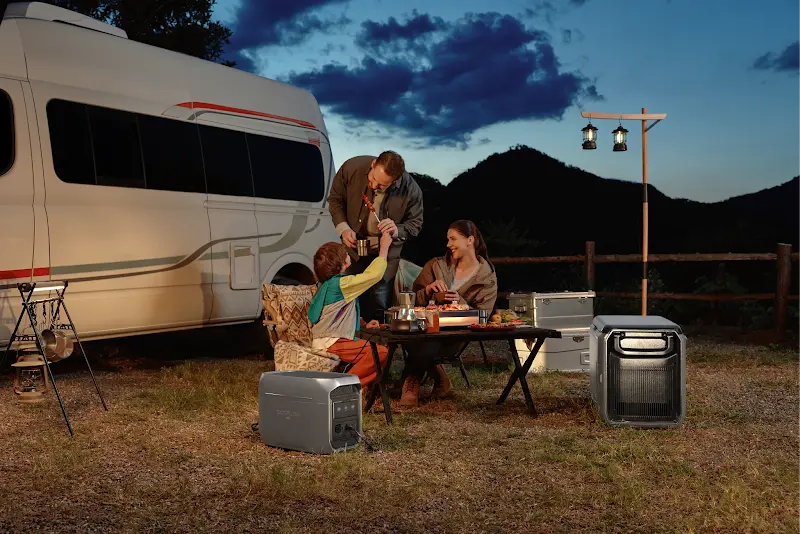
When your daytime solar generation fails to match what you consume overnight, the battery bank slowly starves. This deficit eventually leaves you without power before the early morning temperature drops. For extended off-grid stays or intense mid-summer heatwaves, a high capacity power network becomes crucial. Pairing a heavy-duty power station, such as the EcoFlow DELTA 3 Max Plus (2048Wh) + 500W Solar Kit creates a highly effective system. This configuration allows you to capture solar energy rapidly during peak daylight hours and stores enough reserve capacity to keep the compressor running seamlessly all night long.
Avoid Overloading Outdoor Power Systems
Keep a close eye on the total electrical draw running through your power station. Plugging high wattage cooking gear like an electric kettle or portable hotplate into the same circuit feeding your air conditioner will easily trip the station’s internal safety breaker, instantly cutting power to your entire setup. To avoid these sudden campsite blackouts, always run high-draw appliances on separate ports or use them only when the AC compressor is cycled off, keeping your core cooling loop stable when the heat peaks.
What Should You Check Before Choosing Your Tent Air Conditioner
Investing in off-grid climate control requires checking a few hard technical specs before pulling out your credit card. To make sure the machine actually delivers under real-world conditions, you need to look past the marketing photos and verify how the hardware interfaces with your physical camp setup.
Verify the Actual Running Voltage Requirements: Make sure the unit natively matches your power architecture. Confirm it runs cleanly on 12V/24V DC inputs or standard 120V AC outlets without needing bulky, inefficient external transformers at the campsite.
Look for Continuous Drainage Alternative Options: Muggy nights near Canadian lakes often bring heavy moisture in the air. Sourcing a unit with a continuous gravity drain line or an internal self evaporating system saves you from waking up at 3:00 AM to empty a flooded water pan.
Check Total Weight for Easy Transportation: Check the exact dry weight of the unit. Make sure you can comfortably lift and carry the machine from your trunk across rough campsite terrain without risking injury before camp is even set up.
Conclusion
Staying comfortable while camping across Canada does not mean you have to sacrifice the authentic outdoor experience. Choosing an air conditioner with a high BTU output, sealing your ventilation flaps properly, and backing the hardware with a robust power reserve like the EcoFlow DELTA 3 Max Plus makes it easy to handle summer heatwaves. Crucially: investing in a compact, durable, and highly mobile off-grid configuration keeps your wilderness travel completely refreshing and stress free. Essentially, you get to enjoy the backcountry on your own terms, regardless of humidity levels.
FAQ
Should I Continuously Drain My Portable AC?
Yes, absolutely. Hooking up the continuous drainage line is your best move when camping in muggy environments. It prevents the internal condensation pan from reaching capacity and triggering an automatic safety shutoff that stops the compressor during operation.
How Many Batteries Do I Need to Run My Tent AC All Night?
You typically need at least one high-capacity portable power station pushing between 2kWh and 4kWh of storage. This gives you the necessary electrical backbone to sustain an efficient outdoor cooling unit through a standard 8-hour night.
Why Does My Portable AC Drain So Much Water?
Portable air conditioners act like heavy-duty dehumidifiers. They pull massive volumes of moisture straight out of the sticky air as they lower the indoor temperature, which becomes incredibly obvious during humid Canadian summers near the water.
Why Does My Portable AC Stop Blowing Cold Air After a While?
This typically indicates the internal condensation reservoir is completely full. The machine’s safety switch automatically shuts off the cooling system to prevent water from spilling into your tent, leaving only the fan running until the tank is drained.
How Big of a Space Can a Portable AC Cool?
A standard outdoor rated portable cooling unit can comfortably handle an area ranging from 50 to 150 square feet. In summary, it is sized appropriately to drop the temperature inside a standard 4-person to 8-person family camping tent.