How Strong Should the Power Bank Magnet Be?
- What Is Magnetic Force in Wireless Charging?
- Why Magnetic Force Strength Matters
- How Strong Should Your Magnetic Force Be?
- How Do Phone Cases Affect Magnetic Force?
- What Makes a High-Quality Power Bank Magnet?
- Why Surface Material Matters as Much as Magnetic Force
- Can Magnets Be Too Strong?
- What Should You Look for When Buying?
- A Real Example of Strong Magnetic Force
- Why Does Magnetic Force Matter?
- Frequently Asked Questions
When you shop for a portable charger, you probably check the battery capacity and charging speed. But if you want a magnetic power bank, you need to think about something else: how strong the power bank magnet grips your phone.
A weak magnet ruins even the best battery. Your phone slides off when you use it, charging stops without warning, and heat builds up. When you understand magnetic force, you can pick a charger that actually stays attached when you need it.
What Is Magnetic Force in Wireless Charging?
Let's start with the basics: what is magnetic force when you charge your phone?
Magnetic force creates an invisible pull between the magnets in your phone and your charger. It does two important jobs:
Snaps things into place: It pulls the charging coils into the perfect spot for power transfer
Keeps them locked: It holds the devices together when you move around
Wireless charging uses electromagnetic induction. Copper wire coils in both devices must line up perfectly for electricity to flow well. The power bank magnet works like a guide, pulling everything into the exact position you need.
Strong magnetic force = Perfect alignment = Fast charging
Weak magnetic force = Coils drift apart = Wasted energy + heat
Why Magnetic Force Strength Matters
The Alignment Problem
When the charging coils shift just 2-3 millimeters apart, charging gets much less efficient. Energy doesn't transfer properly. Instead of charging your battery, that energy turns into heat.
A strong power bank magnet forces the coils to sit right on top of each other—the "sweet spot" for maximum power transfer. Your phone charges at full speed without getting hot.
Real-World Consequences of Weak Magnets
A magnetic wireless power bank with weak holding force creates several problems:
Problem 1: It Falls Off
You walk down the street, pull your phone from your pocket, or tilt it at an angle—and the charger drops off. You hold just your phone while the power bank falls or gets stuck in your pocket.
Problem 2: It Creates Too Much Heat
When coils don't line up, energy escapes as heat instead of charging your battery. Your phone gets uncomfortably hot. High temperatures trigger safety systems that slow down or stop charging to prevent damage.
Problem 3: It Charges Slowly
Even when the connection looks secure, a weak magnet lets the devices shift slightly. This disrupts power flow. What should be fast wireless charging becomes frustratingly slow.
Problem 4: It Damages Your Battery
Heat kills lithium-ion batteries faster than anything else. When poor alignment creates heat over and over, it permanently reduces how much charge your battery can hold.
How Strong Should Your Magnetic Force Be?
Companies measure magnetic force in Newtons (N). This unit tells you how much force you need to pull the two devices apart.
Strength Rating Guide
| Strength Rating | Best Use | Real-World Performance |
| 8N - 9N | Desktop chargers, stationary mounting | Works well for devices that stay still. Gravity helps keep contact. Don't use for portable charging. |
| 10N - 12N | Portable magnetic power banks | Best for daily carry. Handles walking, pockets, different angles, and active use. Experts recommend this range. |
| 13N+ | Heavy-duty use | Maximum security. May be harder to remove. Usually too much unless you use very thick cases. |
What Does 11N Actually Mean?
An 11N magnetic force can support about 2.5 pounds (1.12 kg) of weight without moving. Most smartphones weigh 0.4-0.5 pounds, so this might seem like too much.
It's not.
That extra strength protects against:
- Sudden movements and bumps
- Sideways sliding (shear force)
- Slippery phone cases
- Gravity when you hold the phone at different angles
Tensile vs Shear Force
Magnets grip strongest when you pull them straight apart (tensile force). They hold weaker when you slide them sideways (shear force).
When you hold your phone, your fingers push against the magnetic wireless power bank from different angles. Gravity pulls it down. These create shear forces. A power bank magnet rated at 11N for pulling apart will also resist sideways sliding better, stopping that annoying slip-and-slide feeling.
How Do Phone Cases Affect Magnetic Force?
Distance weakens magnetic force. Every millimeter between the magnets cuts the connection strength dramatically. A gap of just 1mm can cut the magnetic strength in half.
Case Types and Compatibility
Standard Cases (Plastic/Silicone)
Regular cases create a barrier between your phone's internal magnetic ring and the power bank magnet. When you use a non-magnetic case, the charger's strength must bridge that gap on its own.
With a standard case, an 8N magnet fails. You need at least 10N to keep a secure grip through the plastic layer.
MagSafe-Compatible Cases
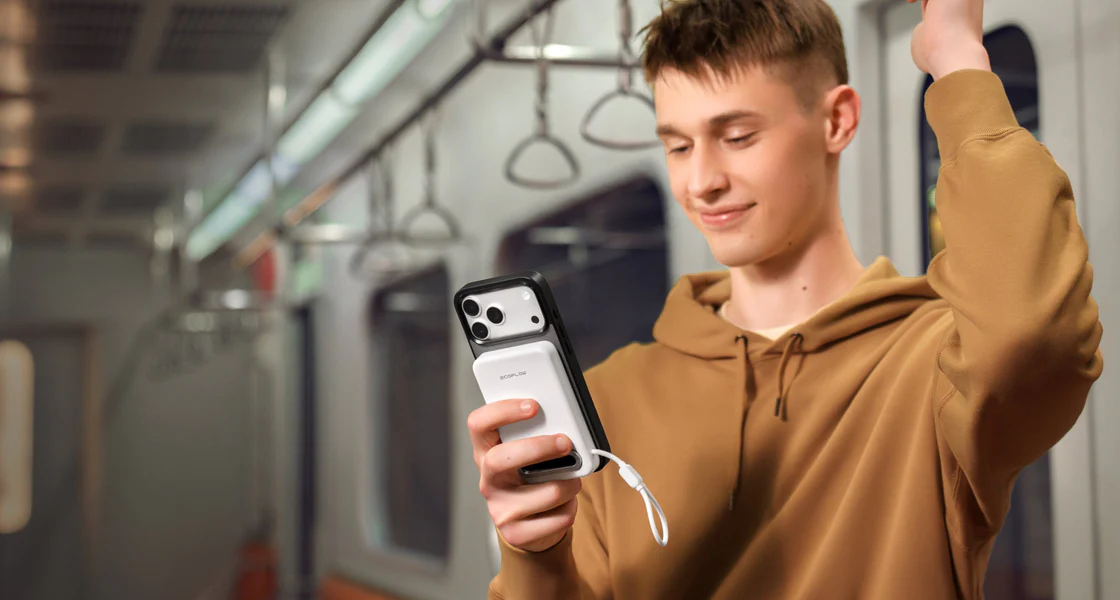
These cases have built-in magnetic rings that bring the connection point to the outer surface. They work best with any magnetic power bank because they remove the distance problem.
What We Recommend: Use a MagSafe-compatible case with your magnetic wireless power bank. This combination gives you maximum holding power and charging efficiency.
What Makes a High-Quality Power Bank Magnet?
Not all magnets that deliver 10N of force work the same way. The quality of the magnetic material matters.
Neodymium Magnet Grades
Premium magnetic power banks use neodymium magnets, graded from N35 to N54:
N35-N42 (Lower Grade)
Need more physical mass to reach the same strength
Create bulkier, heavier power banks
Focus the magnetic field less efficiently
N52-N54 (High Grade)
Dense and powerful
Allow for slimmer, lighter designs
Concentrate the magnetic field better
We recommend these for quality magnetic wireless power banks
Magnetic Array Design
How you arrange magnets matters as much as their strength. Advanced magnetic power banks use special patterns like Halbach arrays. These focus the magnetic field in one direction (toward your phone) while canceling it out on the back.
This focused design increases holding power without making the magnets bigger. It also shields the power bank's internal battery from magnetic interference.
Why Surface Material Matters as Much as Magnetic Force
Magnetic force doesn't work alone. The charging surface material also affects how well it grips.
Two smooth surfaces slide against each other even under strong magnetic pressure. If a magnetic power bank uses hard, glossy plastic for the charging face, it will spin and twist in your hand despite strong magnets.
Premium surface materials:
Soft-touch silicone
Rubberized coatings
Textured finishes
These materials grip surfaces well. When you combine strong magnetic force with a high-grip surface, you create a rock-solid connection that feels like one single device.
Can Magnets Be Too Strong?
You might worry about too much strength. Can a power bank magnet damage your phone?
No. Modern smartphones use:
Solid-state flash memory (magnets can't affect it)
Shielded or non-magnetic internal parts
Magnetically safe screens and sensors
The only thing to consider with very strong magnets (13N+) is they can be harder to remove. You want a bond that holds during use but comes off with a firm twist or pull.
The best range: 10N-13N gives you complete security when you use it while letting you detach it comfortably.
What Should You Look for When Buying?
Don't trust vague marketing claims like "Super Magnetic" or "Strong Hold" without numbers to prove them.
- Force Rating: Look for specific Newton measurements. Brands that list "10N," "11N," or "12N" tell you the truth about their build quality. When they hide these numbers, the power bank magnet probably uses standard, cheap parts.
- Magnet Grade: Check for N52 or N54 neodymium magnets. These show premium materials and engineering.
- Surface Material: Look for descriptions that mention "anti-slip," "silicone finish," or "rubberized coating."
- User Reviews: Real feedback about whether the magnetic wireless power bank "stays attached" or "slides around" tells you more than marketing copy.
A Real Example of Strong Magnetic Force
The EcoFlow RAPID Mag Power Bank shows how to implement ideal magnetic force.
Its N54 grade magnets deliver maximum strength in a slim profile, while the 11N magnetic force rating hits the sweet spot for portable use. The anti-slip surface coating works with the magnets to prevent twisting, and the precise magnetic array ensures optimal coil alignment. The built-in kickstand works confidently thanks to strong holding power.
This combination keeps your device cool, aligned, and charging at full speed while staying secure through any activity.
Why Does Magnetic Force Matter?
The power bank magnet decides whether your wireless charger helps or frustrates you. Weak magnetic force creates a chain of problems: poor alignment, excess heat, slow charging, and constant detachment.
For a magnetic wireless power bank you'll actually use every day, look for these specs:
- ✓ 10N-12N magnetic force for portable use
- ✓ N52-N54 grade neodymium magnets for quality and efficiency
- ✓ Anti-slip surface materials for maximum grip
- ✓ Clear specifications from manufacturers
Strong magnetic force protects your battery from heat damage, ensures efficient power transfer, and keeps your device secure in your hand. It separates a tool you rely on from one you leave in a drawer.
Pick a magnetic power bank that grips tight, lines up perfectly, and lets you focus on using your phone—not fighting with your charger.
Frequently Asked Questions
Q1: Does a strong magnetic power bank drain the battery faster?
No. The power bank magnet doesn't use energy—magnets are passive parts. Actually, stronger magnetic force improves efficiency by keeping perfect coil alignment, so less energy escapes as heat and more reaches your phone's battery.
Q2: Will the magnets affect my credit cards or hotel keys?
Modern chip-based credit cards stay safe. Old magnetic strip cards can lose their data if you press them directly against a power bank magnet. Don't sandwich your wallet between your phone and magnetic wireless power bank. Carrying them in the same pocket usually works fine if they're not pressing directly against each other.
Q3: Can I use a magnetic power bank on an Android phone?
Yes, but you probably need an adapter. Most Android phones support wireless charging but don't have the built-in magnetic ring that newer iPhones have. You can buy a magnetic adapter ring or a special magnetic case for your Android device. Once you add this metal ring, the magnetic force will hold the magnetic power bank just as securely.
Q4: What happens if the power bank magnet is too weak?
A weak power bank magnet creates three main problems: First, slow charging because coils don't line up right. Second, excess heat can damage your battery over time. Third, the magnetic wireless power bank keeps sliding off when you try to use your phone or carry it in your pocket.
Q5: How do I maintain the magnetic grip over time?
Clean both the magnetic power bank surface and your phone case regularly with a slightly damp microfiber cloth. Dust and oils from your hands reduce friction, making surfaces slippery even with strong magnetic force. Regular cleaning brings back the tactile grip and prevents sliding.
Q6: Is 11N of magnetic force safe for my phone's internal parts?
Yes, completely safe. Modern smartphones are built with magnetic wireless power banks in mind. All sensitive parts are either shielded or made from non-magnetic materials. The magnetic force only affects the magnetic ring designed specifically for charging—nothing else in your device.
For press requests or interview opportunities, reach out to our media team
media.na@ecoflow.com