How Long Does It Take to Charge an Electric Car?
Transitioning to electric mobility is an exciting shift, but for many Americans, the most pressing and practical question remains: How long will I actually be waiting at the plug? Whether you’re planning a cross country road trip along I-15 or simply commuting to work during a cold Chicago winter, understanding electric car charging timelines is essential for daily convenience and long-term planning.
This guide breaks down how long it takes to charge an electric car by covering charger types, real-world conditions, and environmental factors, helping you optimize your EV experience and prepare confidently for everything from everyday driving to off-grid adventures.
How Long to Charge an Electric Car
Charging an electric car isn’t like filling a gas tank in five minutes; it’s much closer to charging your smartphone. How long it takes depends mainly on two things: the size of the pipe (the charger’s power output) and the size of the bucket (your EV’s battery capacity). Understanding this relationship helps set realistic expectations for daily driving and longer trips.
Average Charging Time for Different Types of EV Chargers
Level 1 (120V): Adds roughly 3-5 miles of range per hour. This is the slowest option and can take 40-50+ hours for a full charge, but it works in a pinch using a standard household outlet.
Level 2 (240V): The most common solution for home and workplace charging. It adds 15-35 miles of range per hour and typically recharges most EVs overnight (6-10 hours).
DC Fast Charging (Level 3): Found along highways and major travel corridors. These chargers can bring most EV batteries to 80% in about 20-45 minutes, making long-distance travel practical.
EV Charging Levels at a Glance
| Charging Level | Voltag | Range Added (Per Hour) | Time to Full Charge | Best Use Case |
|---|---|---|---|---|
| Level 1 (Basic) | 120V (Standard Outlet) | 3 – 5 miles | 40 – 50+ hours | PHEVs or emergency backup |
| Level 2 (Standard) | 240V (Home/Work) | 15 – 35 miles | 6 – 10 hours (Overnight) | Daily commuting, home charging |
| DC Fast Charging | 480V+ (Level 3) | 100 – 250+ miles | 20 – 45 mins (to 80%) | Road trips, quick top-offs |
Charging Time for Popular Electric Cars
Charging times vary by vehicle. A Tesla Model 3 typically needs about 8 hours on a Level 2 charger, making overnight charging easy. A larger Ford F-150 Lightning with an extended range battery can take up to 15 hours on the same setup due to its higher capacity.
Full Charge vs. Partial Charge Time
You’ll likely notice your EV charges quickly up to about 80%, then the pace drops off sharply. That slowdown is by design. Think of it like a theater filling up: most people find seats fast, but the last few rows take time to settle. This controlled “tapering” reduces heat buildup, protects the battery’s chemistry, and helps preserve long-term battery health.
Key Factors Affecting Charging Time
Beyond the charger itself, several internal and external factors determine how long you’ll actually be plugged in.
Battery Size and Capacity
At its simplest, size matters. A 100 kWh battery will take roughly twice as long to charge as a 50 kWh battery when using the same charging speed, assuming all other conditions are equal.
Charging Speed and Power Output
Every EV has an onboard charger that controls how much AC power it can accept. Even if you plug into a high-powered Level 2 station, the vehicle will only draw power up to its internal limit, which can cap charging speed.
State of Charge (SOC)
Charging from 10% to 50% happens much faster than charging from 60% to 100%. That’s why many experienced EV owners follow the “middle out” strategy, routinely keeping their battery between 20% and 80% for faster sessions and better long term battery health.
Environmental Conditions
Weather plays a major role, especially in colder states like Michigan or Colorado. Cold batteries experience slower chemical reactions, reducing how quickly they can accept energy. To counter this, many modern EVs use Battery Preconditioning, warming the battery before you arrive at a charger to unlock faster charging speeds right away.
Charging at Home vs. Public Charging Stations
Where you charge matters just as much as how you charge, especially when it comes to convenience, time, and overall cost.
Convenience and Accessibility
Home charging is truly “set it and forget it.” You plug in overnight and start the day with a charged car. Public charging, on the other hand, requires a bit more planning. Apps like PlugShare are essential for locating reliable, available fast chargers during longer trips.
Charging Speed Comparison
Home charging is typically slower, usually Level 2, but it works while you sleep, so the time cost is minimal. Public DC fast chargers are designed for drivers on the move, though frequent fast charging over many years can slightly increase battery wear.
Charging Cost Comparison
In the U.S., residential electricity typically averages about $0.16 per kWh, making home charging the most budget-friendly option for everyday driving. Public DC fast charging is far more expensive, usually ranging from $0.40 to $0.60 per kWh, especially along highways. For routine commuting, charging at home delivers clear long-term savings.
How to Choose the Right Charging Method for Your Electric Car
If your daily commute is under 40 miles, Level 1 charging can work as a basic solution, especially if you’re parked overnight. That said, most American EV owners quickly find that a Level 2 home charger offers far more flexibility. It delivers faster recovery, reduces range anxiety, and lets you start every morning with a fully charged battery, regardless of unexpected errands or schedule changes.
How Do You Charge an Electric Car at Home
For most Americans, home is where EV charging really happens, turning the garage or driveway into a personal fueling station that works on your schedule, not the gas station’s.
Level 1 Charging: Using a Standard Wall Outlet
Every electric car comes with a mobile charging cable that plugs into a regular 120V household outlet. This option is simple and convenient, but slow. It’s best suited for plug-in hybrids (PHEVs) or drivers with very short daily commutes who can leave the car plugged in overnight without urgency.
Level 2 Home Charging: Faster Charging for Daily Use
Most EV owners eventually upgrade to Level 2 charging by installing a 240V outlet, similar to what an electric dryer uses. This setup dramatically cuts charging time, letting you recover a full day’s driving in just a few hours and making overnight charging effortless.
Cost of a Home Charging Setup
A quality Level 2 charger typically costs between $500 and $1,200. Professional installation usually adds another $500 to $1,500, depending on your home’s electrical panel and wiring distance. Many utilities and states also offer rebates that can offset part of this cost.
Addressing Range Anxiety: Backup Power for Grid Failures
Even with a well-installed home charger, many American homeowners are dealing with a new reality: an aging power grid and increasingly extreme weather. When a winter storm or heatwave knocks out electricity, your Level 2 wall charger instantly becomes useless, which can leave your EV stuck in the driveway when you need it most.
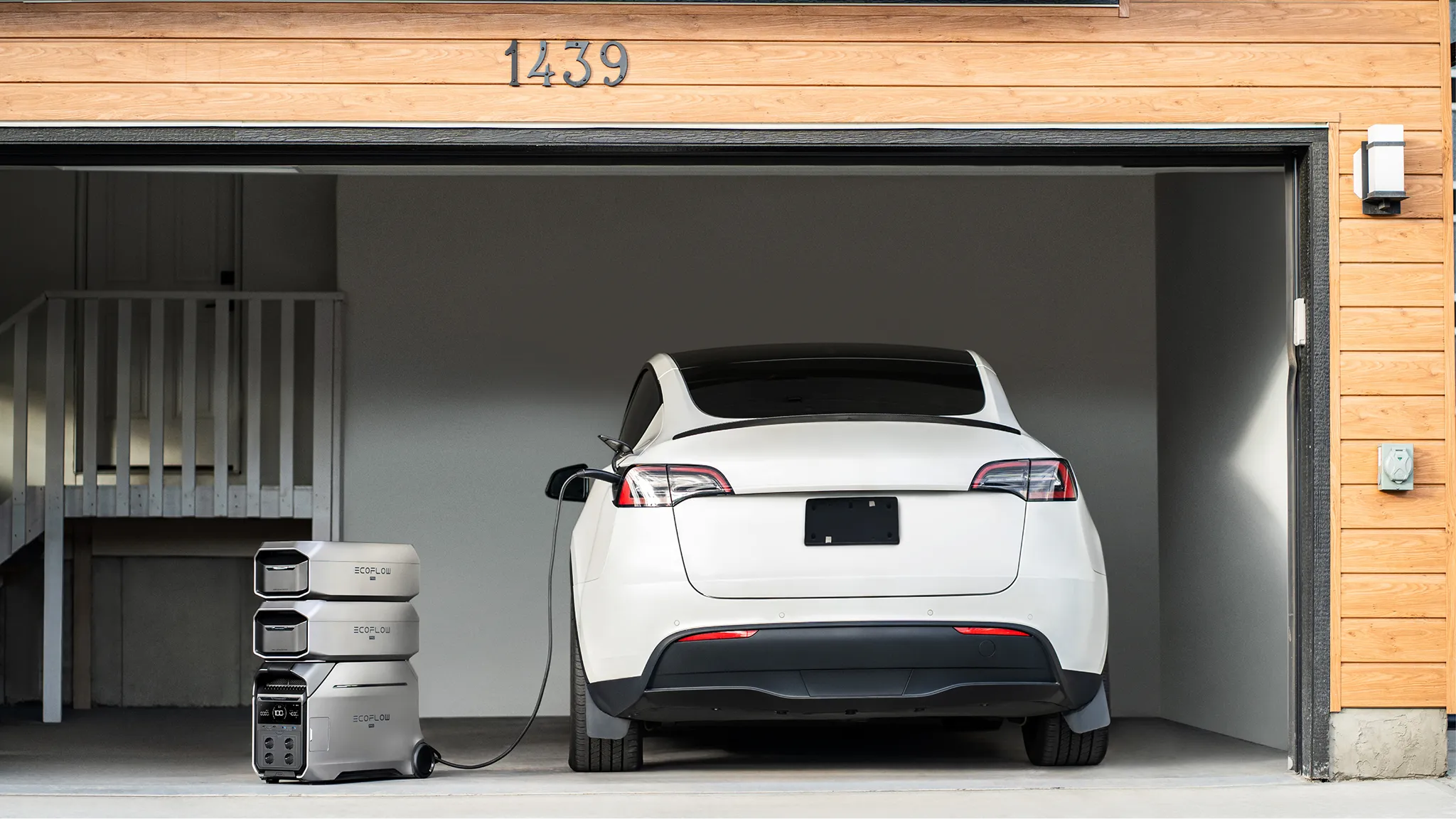
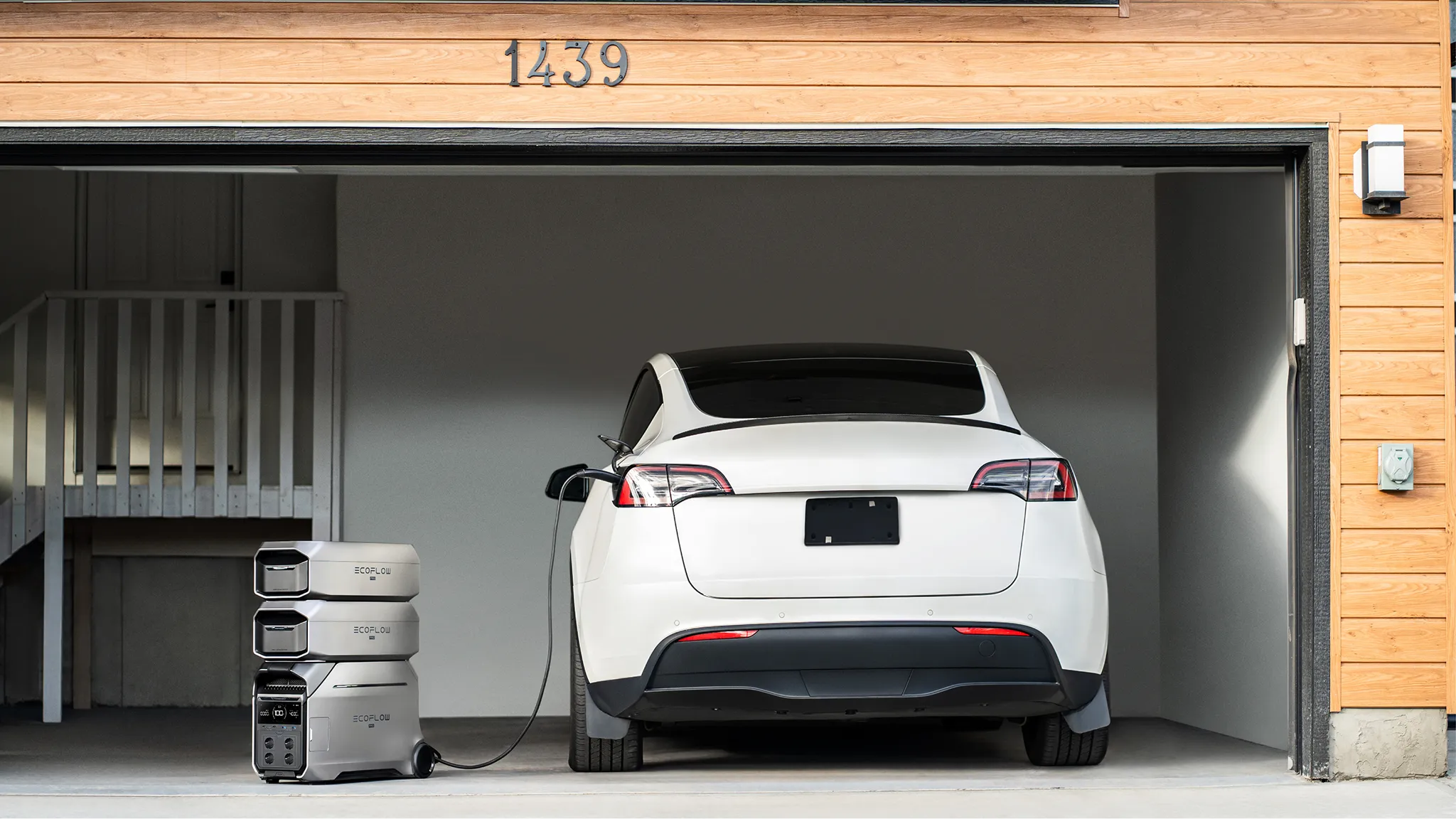
This is where a portable backup solution makes a real difference. Systems like the EcoFlow DELTA Pro 3 Portable Power Station act as a critical safety net during outages. With a powerful 4000W output and true 120V/240V dual voltage support, it can connect directly to your EV’s mobile charger and deliver an emergency range boost when the grid goes down. In practical terms, it functions as a spare gas can for an electric car, quiet, clean, and ready when traditional power sources fail.
Best Practices for Charging Your EV at Home
To protect your battery and extend its usable life, most EV experts recommend setting your daily charge limit to around 80%. Staying below a full charge reduces long-term battery stress and helps preserve capacity over the years. Save 100% charging for specific situations, such as a road trip the next morning, when you actually need the extra range. This simple habit can make a noticeable difference in both battery health and long-term performance.
Living Off-Grid with an Electric Car
For adventurous Americans living in remote cabins, rural properties, or traveling in overlanding rigs, owning an electric car adds a layer of complexity that doesn’t exist in grid-connected neighborhoods. Charging access isn’t guaranteed, and planning ahead becomes just as important as route selection or weather forecasts.
The Challenge of Off-Grid EV Maintenance
When you’re off grid, an EV is more than transportation; it’s a rolling computer that never fully sleeps. Systems like Sentry Mode, cabin climate protection, and the 12V electrical system can quietly drain power even while the vehicle is parked. Over days or weeks, that “phantom drain” can add up, especially when you’re far from the nearest public charger.
Building a Self-Sufficient Energy Hub
True off-grid EV ownership requires a reliable energy ecosystem, not just a single charger. The EcoFlow DELTA Pro Ultra Whole-Home Backup Power is built for this kind of independence. With expandable capacity ranging from 6kWh up to 90kWh, it functions as a mobile energy hub capable of supporting meaningful EV charging. When paired with solar panels, it creates a self-sustaining setup that captures sunlight, stores power, and feeds your vehicle when needed, essentially turning your campsite, cabin, or base camp into a solar-powered charging island. This setup helps keep your EV ready to drive while reducing reliance on an unpredictable grid.
How to Optimize Electric Car Charging Time
Time really is money when it comes to EV charging. Beyond owning the right charger or vehicle, your day-to-day charging habits play a major role in how long you wait and how much you spend. With a few smart adjustments, you can dramatically improve efficiency without changing your hardware.
1. Match the Station to Your Car
Not every electric car can take advantage of ultra-high speed chargers. If your vehicle maxes out at 150kW, plugging into a 350kW DC fast charger won’t shorten charging time; it only increases cost. Choosing a station that aligns with your car’s peak charging rate ensures you’re paying for usable power, not wasted capacity.
2. Capitalize on Off-Peak Hours
Electricity pricing in the U.S. often drops late at night, typically between 11 PM and 6 AM. By using your vehicle’s scheduled charging feature, you can automatically start charging during these lower-cost hours. This not only reduces your utility bill but also eases demand on your home’s electrical system during peak evening use.
3. Master the "80% Rule."
Most EVs slow charging dramatically after reaching 80% due to battery protection algorithms. That final 20% can take nearly as long as the first 80%. Unless you’re preparing for a long rural drive or limited charging access, stopping at 80% saves time and helps preserve long-term battery health.
4. Precondition in Cold Weather
Cold temperatures are one of the biggest charging slowdowns, especially in northern states. When you navigate to a charger using your car’s built-in system, the vehicle can warm the battery before arrival. This preconditioning step allows the battery to accept power faster the moment you plug in, crucial during Midwest and Northeast winters.
5. Use Smart Monitoring Tools
Not all charging stations perform as advertised. Apps like PlugShare and A Better Routeplanner (ABRP) provide real-time updates from other drivers, helping you avoid broken, congested, or underperforming chargers. Using live data means fewer surprises and faster, more reliable charging stops wherever you travel.
Conclusion
Charging an electric car is less about waiting and more about changing routines, from quick fuel stops to charging seamlessly as part of everyday life. While charging times vary based on your equipment, battery size for an electric car, and even local weather, understanding these factors helps you plan smarter and avoid surprises. A dependable home charging setup, combined with a backup option for power outages or off-grid travel, adds an extra layer of confidence. With the right habits and tools in place, owning an EV becomes simpler, more predictable, and fully aligned with how Americans live, work, and travel today.
FAQ
1. How Much Electricity is Needed to Charge an Electric Car?
On average, most EVs deliver about 3 to 4 miles of driving range per kilowatt hour (kWh). To estimate your actual electricity use, start with your battery’s usable capacity. For a common 75kWh pack, such as the one found in a Tesla Model 3 Long Range, you’ll typically draw around 75-80 kWh for a full charge. That extra margin covers normal “charging loss,” where a small portion of energy is lost as heat during the AC to DC conversion and battery conditioning process.
2. How Much Does It Actually Cost to Charge an Electric Car?
Your monthly charging cost to charge an electric car depends heavily on local electricity rates and how much you drive. The average American covers roughly 1,200 miles per month, which translates to about 350-400 kWh of electricity. At the national average rate of around $0.16 per kWh, that comes out to roughly $56-$64 per month. In higher cost states like California, monthly charging can creep closer to $100, while drivers in low cost regions such as Washington State may spend as little as $35.
3. Is It Cheaper to Charge an Electric Car or Buy Gas?
In nearly every real-world scenario, charging an EV is cheaper than buying gasoline. Even when electricity prices fluctuate, the cost per mile remains far lower. On average, charging an electric car is comparable to paying about $1.00-$1.50 per gallon of gas. Over a full year, that difference can add up quickly, saving the average U.S. driver anywhere from $800 to $1,500 in fuel expenses alone.
4. Why Shouldn’t You Fully Charge Your Electric Car Every Day?
Lithium-ion batteries last longest when they avoid the extremes of being fully charged or nearly empty. Keeping a battery at 100% state of charge day after day increases voltage stress and heat, which speeds up long term degradation. A simple way to think about it is like stretching a rubber band nonstop; it eventually wears out. Staying within the 20% to 80% range for daily driving helps preserve battery health and maintain usable range for many years.
5. Can Solar Panels Charge an Electric Car?
Yes, and for many drivers, this represents the ultimate goal of clean transportation. EVs can be charged using rooftop solar systems or portable solar generator setups. For homeowners without rooftop access, renters, or those living off-grid, systems like the EcoFlow DELTA Pro Ultra paired with high-efficiency solar panels offer a practical alternative. They allow you to collect solar energy during the day and use it to charge your EV later, effectively turning sunlight into miles on the road.
For press requests or interview opportunities, reach out to our media team
media.na@ecoflow.com