Green Certifications for Homes: LEED vs. ENERGY STAR
In the past, building a green home has often meant compromising between functionality and practicality, or environmental responsibility. Thankfully, green certifications have evolved, and those days are now officially behind us. These programs now deliver real benefits for you, the homeowner, while still protecting the environment that is so critical.
LEED and ENERGY STAR represent two different philosophies for achieving these goals, each with distinct advantages depending on what matters most to you.
Understanding Green Building Certifications
Green certifications verify that your home performs better than standard construction. These programs measure actual results through testing and inspections. Think of certification as a report card that proves your home delivers on its promises.
Most certified homes cut utility bills by 20-40% compared to typical construction. The savings start immediately and continue for decades. Certified homes lower your utility bills while creating healthier indoor environments with better air quality and more consistent temperatures. Many homeowners report fewer allergies and respiratory issues after moving into certified homes! It’s just one of the many benefits.
Property values reflect these advantages. Buyers increasingly recognize that efficient homes cost less to operate and maintain. Real estate agents report that certified homes often sell faster and for higher prices than comparable standard homes. Local utilities frequently offer rebates that cover certification costs entirely, making the process essentially free while delivering immediate savings.
ENERGY STAR Certification
ENERGY STAR’s Single Family New Homes (SFNH) program keeps things simple by focusing exclusively on energy efficiency. This program collaborates with builders nationwide to design homes that consume substantially less energy while maintaining comfort and reliability.
The process starts with envelope performance. Your home needs proper insulation, efficient windows, and air sealing to prevent energy waste. Inspectors use blower door tests to measure actual air leakage, not just what blueprints promise. Thermal imaging then reveals any hidden problems you’re unaware of that could undermine efficiency for years to come.
HVAC systems require careful attention because heating and cooling typically account for half of a home's energy use. Equipment must be appropriately sized for the specific house, with sealed ductwork and high efficiency ratings. Water heating standards ensure you're not wasting energy on hot water production and distribution.
The average certification cost is approximately $1,500, depending on your home's size and local market. You’ll likely recoup the cost within three years through monthly utility bill savings. Many utility companies even sweeten the deal with rebates to cover the entire certification fee, making participation essentially free. It’s a no-brainer for cost-conscious builders.
LEED for Homes Certification
LEED adopts a comprehensive approach to sustainability, encompassing energy efficiency, water conservation, material selection, and indoor environmental quality. The U.S. Green Building Council's point-based system offers four certification levels: Certified, Silver, Gold, and Platinum, providing flexibility in achieving your sustainability goals.
The LEED rating system includes mandatory prerequisites in each category, as well as optional credits that earn points toward higher certification levels. Energy performance requirements often overlap with ENERGY STAR standards; however, LEED adds requirements for implementing renewable energy and advanced energy monitoring systems.
Water efficiency receives significant emphasis, with credits for efficient fixtures, rainwater harvesting, and drought-resistant landscaping. Material selection criteria favor rapidly renewable resources, recycled content, and locally sourced products. Indoor environmental quality credits address ventilation design, low-emission materials, and natural lighting optimization.
Certification costs range from $3,000 to $8,000, with construction premiums typically adding 2-7% to building costs. Higher certification levels require more qualifying features but usually assume premium resale values. Market studies show LEED homes frequently sell faster and for more money than comparable standard homes.
LEED homes also report using 20-30% less energy and water, with some even saving up to 60% of their monthly bills.
Head-to-Head Comparison
The main difference between the two certification options is scope and complexity. ENERGY STAR zeroes in on energy efficiency with straightforward requirements and testing procedures. LEED encompasses broader sustainability goals but requires more complex documentation and decision-making throughout the design and construction process.
Water conservation represents a key differentiator. LEED includes specific requirements and credits for water-efficient landscaping, rainwater management, and high-efficiency fixtures. ENERGY STAR addresses water heating efficiency but doesn't mandate water conservation measures.
Material selection offers another distinction. LEED credits promote sustainable material choices, including those with recycled content, rapidly renewable resources, and low-emission products. ENERGY STAR focuses on building envelope materials primarily for their energy performance characteristics.
Certification complexity varies significantly between programs. ENERGY STAR follows a more linear path with clear pass/fail criteria. LEED requires you to strategically accumulate points across multiple categories, offering more flexibility but demanding greater planning expertise.
Powering Your Certified Green Home
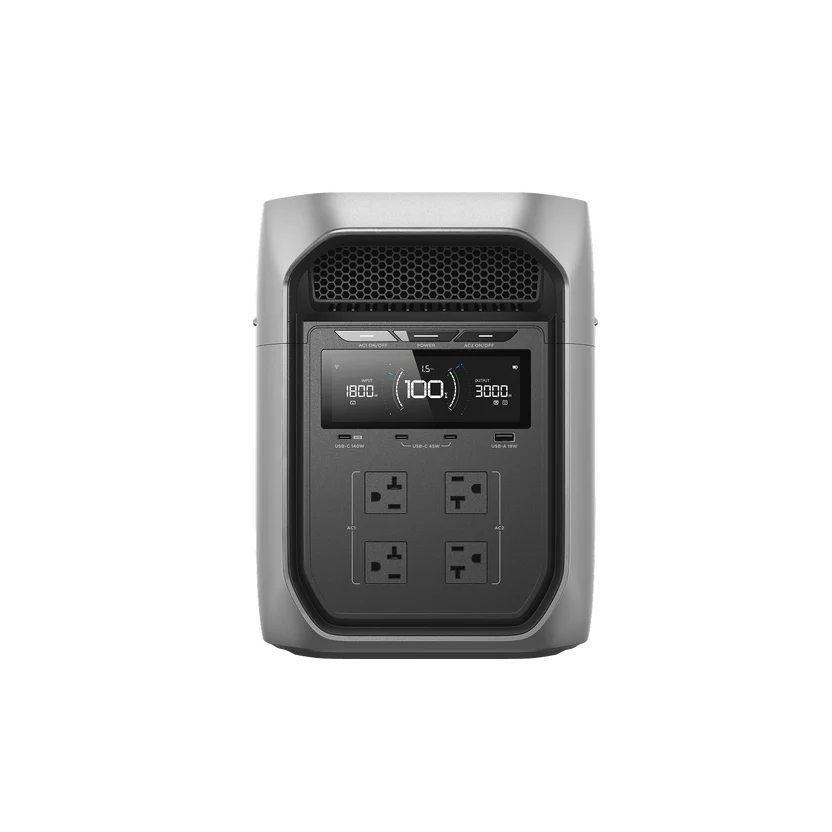
Certified green homes often benefit from backup power solutions that complement their efficiency goals. Portable solar generators and power stations like the EcoFlow DELTA Pro Ultra X provide energy security while maintaining sustainable principles.
For a slightly smaller but still scalable option, consider the EcoFlow DELTA 3 Max that can integrate seamlessly with energy-efficient home designs. These systems prove particularly valuable for maintaining critical loads during outages while supporting off-grid capabilities for outdoor living spaces that many sustainable homeowners value.
Modern portable power stations can run solar systems or provide primary power for remote, sustainable building projects. The modular nature of these systems allows homeowners to expand capacity as needs change, supporting the long-term adaptability that characterizes well-designed green homes.

Choosing the Right Certification for Your Home
Budget considerations might dictate which certification you choose. ENERGY STAR is more affordable upfront and has simpler requirements, making it more widely accessible. However, LEED provides even greater sustainability recognition at the tradeoff of a higher initial investment and more planning.
Local market conditions also matter. Some regions strongly favor LEED certification, while others prioritize energy efficiency above broader sustainability measures. See which certification program offers the most incentive programs to help offset the cost.
Certification Choice Depends on Home Goals and Budget
Both certifications deliver measurable benefits that extend well beyond the initial construction phase. Whether you choose ENERGY STAR's focused efficiency approach or LEED's comprehensive framework, you’ll be happy with your final result and the savings that come along with it. Certified homes provide superior performance, comfort, and environmental responsibility compared to standard construction homes. The EcoFlow DELTA Pro ULTRA X complements these benefits by providing reliable, high-capacity energy storage, enabling homeowners to maximize efficiency, reduce grid reliance, and support sustainable living.
For press requests or interview opportunities, reach out to our media team
media.na@ecoflow.com