How to Get a Grand Canyon Backcountry Permit in 2026: A Step-by-Step Guide
- Do You Need a Backcountry Permit? (Eligibility & Requirements)
- Types of Grand Canyon Backcountry Permits
- How to Apply: The 2026 Step-by-Step Process
- Essential Packing List for Backcountry Success
- Best Grand Canyon Backcountry Routes for First-Time Permits
- Tips, Rules, and What to Do If You Don’t Get a Permit
- Conclusion
- FAQs
The Grand Canyon is a fragile ecosystem. With millions of visitors annually, the permit system is the only thing standing between a pristine wilderness experience and a crowded mess. By limiting the number of overnight hikers, the Park Service ensures that trails stay manageable and the “quiet” of the backcountry stays, well, quiet. Plus, it ensures you actually have a designated place to sleep rather than wandering the cliffs at midnight.
In this guide, we’ll break down the 2026 application process, the different types of permits available, and how to gear up so you aren’t just surviving the canyon, but actually enjoying it.
Do You Need a Backcountry Permit? (Eligibility & Requirements)
First, before you start to apply for a permit, check whether you will actually require a permit. Generally, if you plan to stay overnight and explore below the rim, inside the canyon, you’re going to need one.
Activities that require a permit
Basically, any overnight stay below the rim requires a backcountry permit. This includes tent camping, sleeping in a hammock at established sites, or staying at the famous Bright Angel Campground. Since canyon winds and terrain can be tricky for hangers, it’s worth checking out some must-know hammock camping tips before you finalize your setup. It also applies to those camping on their own in more remote areas and non-commercial river trips.
Activities that do not require a permit
Day hikes do not require a permit. If you’re a “Rim-to-Rim-to-Rim” runner or a hiker, doing half or the whole round trip on the same day, you don’t need a permit. Caution though, doing an extended run or hike requires a lot of fluids, especially electrolytes. The canyon temperatures can be very hot. If you plan to camp along the rim at developed campgrounds like Mather or Desert View, you will need to use a separate reservation system.
Special cases
If you’ve booked a bed at Phantom Ranch, your lodging reservation acts as your permit. Similarly, guided mule trips or commercial rafting expeditions handle the permitting for you.
Reference to the National Park Service
The National Park Service requires all overnight trips below the rim in Grand Canyon National Park to obtain a valid backcountry permit.
You can find the latest rules, closures, and application updates on the official Recreation.gov website page. This is the only authorized platform for submitting lottery applications for a permit.
Types of Grand Canyon Backcountry Permits
There is more than one type of permit. The permit you choose depends on your experience level and how many people you go with. Going alone is only for very experienced campers and is not recommended. The permit types are:
Individual vs. Group Permits
For small groups (1-6 people) it’s somewhat easier to find spots. Large groups (7-11 people) are restricted to specific “Large Group” sites, which are much harder to book.
Corridor vs. At-Large Camping
The “Corridor” permits include the popular, well-maintained trails, e.g., Bright Angel and North/South Kaibab. The “At-Large” permits are for experienced and adventuresome campers going to areas where usually there are no toilets or treated water.
River Trip Permits
These are handled through a separate weighted lottery system specifically for non-commercial rafters.
How to choose the right permit for your trip
If it’s your first time, stick to the Corridor. It’s the safest way to experience the inner canyon with access to emergency phones and seasonal water stations.
How to Apply: The 2026 Step-by-Step Process
The permits are obtained online through Recreation.gov.
The Early Access Lottery
To get a permit for 2026, you must apply for the Early Access Lottery five months in advance. The application window opens on the 1st of the month and closes on the 1st of the following month, exactly 5 months before your hike. For example, for a September start date, you must submit your application between April 1st and May 1st.
| Planned Hike Month | Lottery Application Window (5 Months Early) |
|---|---|
| January 2026 | August 1 – September 1, 2025 |
| February 2026 | September 1 – October 1, 2025 |
| March 2026 | October 1 – November 1, 2025 |
| April 2026 | November 1 – December 1, 2025 |
| May 2026 | December 1, 2025 – January 1, 2026 |
| June 2026 | January 1 – February 1, 2026 |
| July 2026 | February 1 – March 1, 2026 |
| August 2026 | March 1 – April 1, 2026 |
| September 2026 | April 1 – May 1, 2026 |
| October 2026 | May 1 – June 1, 2026 |
| November 2026 | June 1 – July 1, 2026 |
| December 2026 | July 1 – August 1, 2026 |
Step 1: Create Your Account & Alert Setups
First, go to Recreation.gov and set up your profile. Don’t wait until the lottery opens. Set alerts for the “Grand Canyon Backcountry Permits” page so you don’t miss the narrow application window.
Step 2: Selecting Your Itinerary (Plan A, B, and C)
The canyon is very popular, and your first choice might be gone, so have a second or third choice. For example, if Bright Angel Campground is full, check if Indian Garden (Havasupai Gardens) has space.
Step 3: Fees & Confirmation
There is a non-refundable $10 lottery application fee per entry. If your application is accepted, you will be required to pay a participant fee of $15 per person, per night. This applies to all below-the-rim camping areas. Once the payment is processed by Recreation.gov, your digital permit will be issued.
Pro Tip: Download and keep a digital copy on your phone, and carry a printed backup in your backpack, as rangers will check for it on the trail.
Last-Minute Options
If you weren’t successful in the lottery, you can try for a “Walk-up” permit. You apply for this at the Backcountry Information Center in the park. They hold a small number of spots for hikers physically present at the park.
Essential Packing List for Backcountry Success
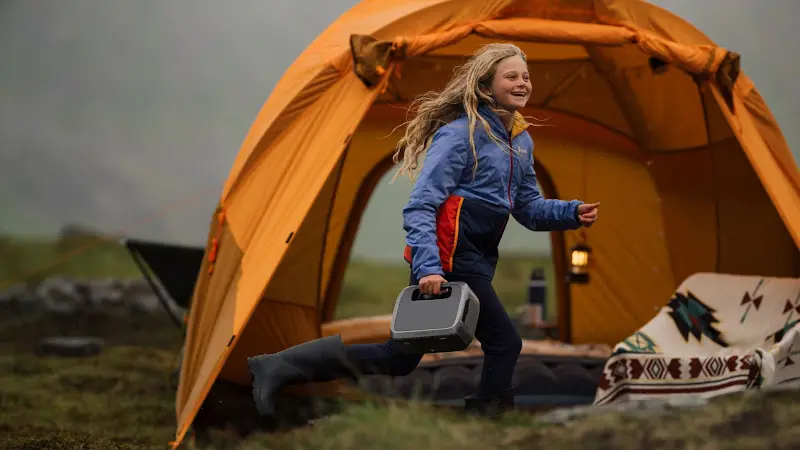
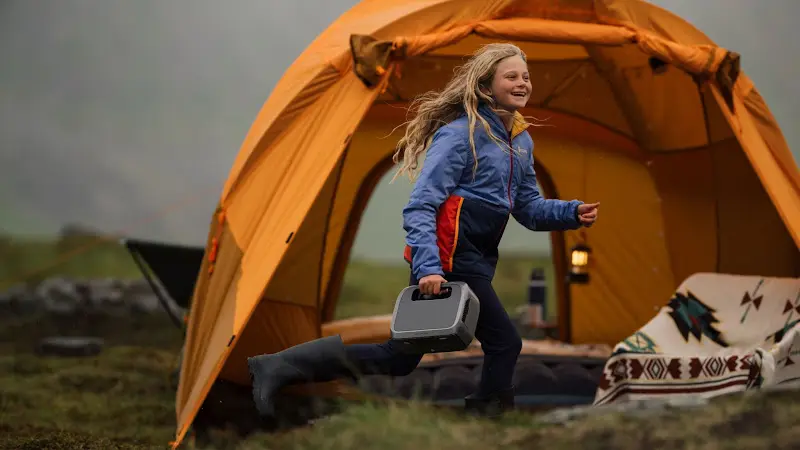
Packing for hiking in the Grand Canyon is a balancing act. Your pack needs to be light enough so you can make the 5,000-foot climb up from the bottom. At the same time, you need to be prepared for 40-degree temperature swings and potentially extreme temperatures.
The Inner Canyon Essentials (Fast & Light)
Every ounce you carry counts when you’re trekking through the Corridor. Bring moisture-wicking clothing layers, a high-quality water filter, and plenty of lightweight nutrition. Packing 3C gadgets that truly work for you can help you streamline your gear efficiently.
Basecamp & Remote Area Gear (Reliability & Comfort)
If you’re setting up a basecamp on the top of the North or South rim you can afford a bit more luxury. This is when having a reliable portable power station can really make a difference. You’ll need some power to charge your GPS unit, your phone, and possibly your camera. You will need power to capture that 5 AM sunrise, and use the GPS unit to find your way.
Best Grand Canyon Backcountry Routes for First-Time Permits
Choosing your route can be the best part of the planning process. Here are the top picks for 2026:
The "Classic" Corridor Loop: South Kaibab to Bright Angel
This is the gold standard of canyon hikes. Most hikers descend from South Kaibab where there are better views, and then ascend up the Bright Angel route. Bright Angel has more shade and water access. If it’s your first-time, you’ll find these routes well-traveled but lack electricity.
A portable power solution like the EcoFlow RIVER 3 Portable Power Station can be a lifesaver here. When you’re deep in the canyon, your phone and satellite messengers (like a Garmin InReach) work overtime searching for a signal. This uses more power and drains batteries fast. The RIVER 3 is compact and light enough for the hike. You can be assured that your navigation and emergency communications are working, even in extreme temperatures. In these remote areas, having power is essential for safety and not just a digital luxury.
Hermit Loop: For those seeking more solitude
If you want to avoid the crowds, try the Hermit Trail. It offers rugged beauty and a more primitive feel. It’s steeper and not well-maintained, so bring extra water and be ready for serious hiking.
Bright Angel to Cottonwood: A North Rim alternative
If you want to escape the South Rim heat, you can go to the North Rim. It’s slightly higher, cooler, and greener. You can stay at a basecamp on the North Rim and drive out to remote spots like Tuweep Overlook. However, there is no water or electricity, so you need a reliable power setup.
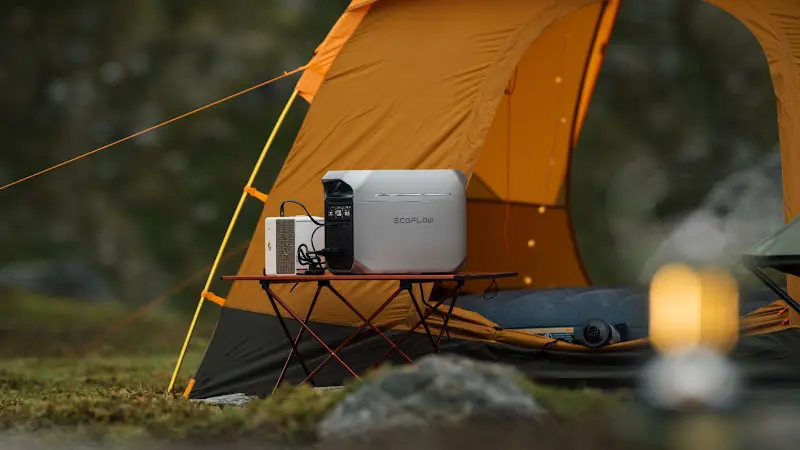
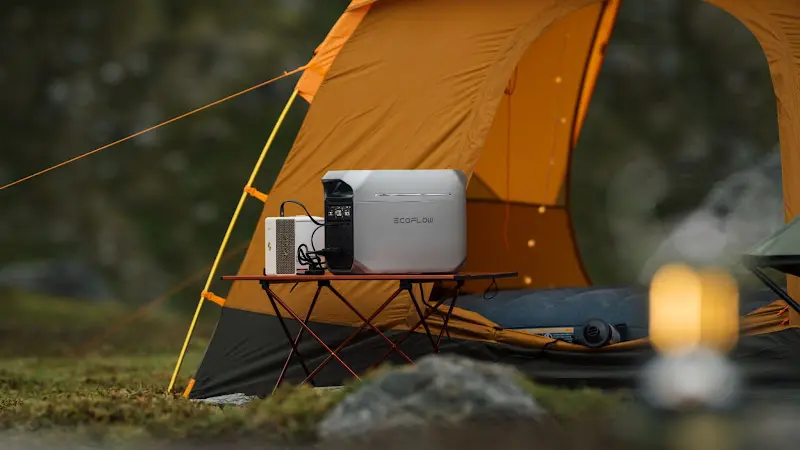
The EcoFlow DELTA 3 Plus Portable Power Station is your ultimate mobile hub for these “off-grid”, primitive camping spots. This unit will power a portable fridge for food and give your drones and cameras a full charge before you hike the canyon. This power unit upgrades your camping trip from a wilderness campout to a modern basecamp with hot coffee and cold drinks.
Tips, Rules, and What to Do If You Don’t Get a Permit
To maximize your self-sufficiency in the Arizona sun, carrying a set of lightweight solar panels is a smart way to keep your small electronics powered up without relying on the grid.
Key regulations
Leave No Trace: Pack out every single piece of trash (yes, even orange peels).
Mule Right-of-Way: Always stay on the inside of the trail and remain still when mules pass.
Water Safety: Never rely on a single water source; pipes break frequently in the canyon.
Common mistakes to avoid
Don’t underestimate the climb back up. The hike out of the canyon takes twice as long as the hike going down. Also, avoid hiking during the hottest times of the day in the summer, called the “Devil’s Hours” (10 AM to 4 PM).
Backup options
If you don’t get a permit for the Grand Canyon, consider going to Zion or Bryce Canyons. They are beautiful canyons, but also popular, and have different lottery cycles. Alternatively, look for off-season dates in November or February when demand drops significantly.
Conclusion
Getting a Grand Canyon backcountry permit is your opportunity to have an experience very few people ever do. It takes some patience with the Recreation.gov lottery system, and the right camping gear. When you do it and stand at the bottom of the canyon, you’ll be looking up at two billion years of history. It is definitely worth every bit of your effort.
FAQs
1. How much is a Grand Canyon permit?
A Grand Canyon backcountry permit costs a non-refundable $10 application fee per lottery entry. If it’s approved, you pay a $15 per person, per night fee. Certain areas charge $12 per group per night. These fees go to the National Park Service so they can maintain the trails and provide emergency services within the canyon.
2. How do you apply for a Grand Canyon backcountry permit online?
You must apply through the official Recreation.gov website. Once there, search for “Grand Canyon National Park Backcountry Permits” page, where you find the monthly “Early Access Lottery” link. If you miss the lottery window, any remaining permits become available on a first-come, first-served basis on the same site starting the first of the following month.
3. Is it difficult to get a Grand Canyon backcountry permit?
Yes, it is highly competitive. The “Corridor” campgrounds (Bright Angel, Havasupai Gardens, and Cottonwood) are especially busy during the peak spring and fall hiking seasons. To be successful, you need to be flexible with your dates and group size. It’s best to have multiple backup plans ready when you apply.
4. When is the best time to apply for a permit?
The best time to apply is during the Early Access Lottery window, which starts on the 1st of the month, exactly five months before your intended start date. For example, if you want to hike in October, you need to have your application submitted by May 1st to be included in the initial drawing.
5. Can you hike the Grand Canyon without a permit?
You can be a day hiker without a permit. This means you enter and exit the canyon on the same day. If you plan to camp overnight below the rim, this requires a valid backcountry permit issued by the NPS.
6. When to apply for Grand Canyon permits?
You should apply five months in advance of your trip month. The lottery calendar follows a strict 5-month cycle. This means you must apply in January for June, February for July, March for August, and so on.
For press requests or interview opportunities, reach out to our media team
media.na@ecoflow.com