Best Places to Stargaze 2026: Top Dark Sky Spots & Camera Gear Guide
- Why 2026 Is the Ultimate Year for Stargazing
- 8 Best Places to Stargaze in the U.S. (2026 Edition)
- How to Choose Your 2026 Stargazing Destination (Planning Tips)
- When to Go: Best Months & Dates in 2026
- Stargazing Equipment: Essential Camera & Power Gear
- Star Photography 101: Settings & Composition Tips
- Conclusion
- FAQ
Getting away from the orange haze of city lights takes a lot of planning, but 2026 is giving us the ultimate excuse to finally pack the car and head out. As we are hitting the peak of the Solar Maximum right now, which means massive solar flares are pushing the Northern Lights way further south than anyone expects. Drop those auroras into a calendar packed with clean, new-moon meteor showers, and you have a rare window for both casual tracking and clean astrophotography. This guide covers some of the best places to stargaze in the U.S., including eight dark sky destinations, practical astrophotography tips, and essential gear recommendations for planning your next night-sky adventure.
Why 2026 Is the Ultimate Year for Stargazing
If you have been holding off on buying a faster lens or taking a long road trip into the wilderness, this is the year to pull the trigger. The solar data alone makes it an unmatched period for night-sky mapping. Since many of the best stargazing locations are far from reliable power sources, a portable power station can help keep essential photography gear ready for long nights outdoors.
What Makes 2026 Special for Stargazers
The big news is the Sun’s 11-year cycle peaking. This hyper active Solar Maximum means solar wind storms are slamming into our atmosphere regularly, giving people in mid-latitude states a real chance at seeing the aurora borealis. When you pair those auroral storms with the Perseids in August and the Geminids in December, and mix in a few completely dark moon phases, you get the perfect setup for clean night-sky framing.
Understanding Dark Sky Levels: Why Location Matters
You cannot shoot or appreciate a major meteor shower through city smog or local strip-mall neon. Astronomers use the Bortle Scale to measure light pollution, grading skies from Class 9 (blinded by urban glare) down to Class 1 (pure, ink-black wilderness). To actually see the detailed dust lanes of the Milky Way with your own eyes, you need to target certified International Dark Sky territory rated at Class 2 or lower. Mastering the art of off-grid stargazing is essential for those looking to move beyond local parks and into the most pristine, light-free environments.
8 Best Places to Stargaze in the U.S. (2026 Edition)
America’s remote public lands hold some of the most strictly protected dark spaces on earth. For anyone building a field itinerary this season, these eight distinct high altitude and coastal preserves offer completely clear views into deep space.
Cherry Springs State Park, Pennsylvania
Tucked away in the high country of the Pennsylvania Wilds, Cherry Springs is one of the best-known dark sky destinations on the East Coast. Perched on an isolated 2,300-foot mountain dome wrapped in dense forest, it maintains a rare Bortle Class 2 rating despite sitting right next to the massive urban sprawl of the Mid-Atlantic. The park manages a dedicated Overnight Astronomy Observation Field with zero-tolerance rules for white lights, giving photographers a completely dark workspace to shoot the galactic core.
Bryce Canyon National Park, Utah
Utah’s high elevation desert provides incredible atmospheric clarity, but Bryce Canyon takes the experience to a completely different level. Standing at an elevation of nearly 9,000 feet means you are physically positioned above the thickest, most humid layers of the Earth’s lower atmosphere, resulting in pin-sharp stellar views. Watching the silver ribbon of the Milky Way stretch across the jagged, deep red silhouettes of the park’s famous rock hoodoos creates an intense sense of scale that you simply cannot replicate anywhere else. For those planning an extended stay, camping at Bryce Canyon National Park offers a more immersive way to experience these dark skies while avoiding the daytime crowds.
Big Bend National Park, Texas
For anyone hunting down complete, uninterrupted darkness, the rugged desert terrain along the Texas-Mexico border is the ultimate destination. Big Bend holds the title for the lowest amount of light pollution of any national park in the contiguous United States, offering a flawless Bortle Class 1 landscape. The sky out here is so densely packed with stars that people visiting for the first time often get confused trying to map out basic constellations because the familiar stars are surrounded by thousands of smaller, brilliant companion points.
Death Valley National Park, California
Don’t let the harsh name fool you; Death Valley is an absolute paradise for night sky exploration. Covering over 3.4 million acres of hyper-arid desert wilderness, the park’s massive mountain ridges act as a natural shield that blocks out the intense, distant light footprints of Las Vegas and Los Angeles. The low lying salt flats of Badwater Basin sit at 282 feet below sea level and offer an incredibly wide, flat horizon, making it the perfect location for capturing massive, unbroken panoramic shots of the horizon.
Great Basin National Park, Nevada
Located right off Nevada’s Highway 50, popularly known as “The Loneliest Road in America”, Great Basin rewards patient travelers with absolute silence and jaw dropping sky clarity. The combination of extreme geographic isolation, dry desert air, and high altitude trails makes the air here remarkably transparent. On a clear autumn night, the sky above Wheeler Peak is so blindingly bright that the light from the Milky Way can actually cast faint shadows on the ground.
Acadia National Park, Maine
Offering a dramatic alternative to the dry western deserts, Acadia pairs the rugged rock formations of the New England coast with an expansive view of the dark Atlantic horizon. While most of the Northeast suffers from heavy light pollution, Acadia offers darker eastern horizons compared with many populated areas in the Northeast. Capturing the core of the galaxy rising directly out of the crashing Atlantic surf from the high granite ledges of Cadillac Mountain is a stunning visual experience.
Grand Canyon National Park, Arizona
The Grand Canyon takes on a completely different, mystical personality long after the daytime crowds head back to their hotels. The park has systematically swapped out thousands of its outdoor light fixtures to achieve strict dark-sky compliance, preserving an unpolluted view over one of the largest gorges on the planet. Standing at Mather Point or Desert View at 2 AM, watching a dense canopy of stars faintly illuminate the silent, ancient rock layers dropping into the earth below, feels deeply grounding.
Mauna Kea Visitor Information Station, Hawaii
If you are willing to make the trip across the Pacific, the Mauna Kea Visitor Information Station on the Big Island of Hawaii offers what atmospheric scientists consider the ultimate window into the cosmos. Sitting at 9,200 feet above sea level, this tropical peak juts safely out above the atmospheric inversion layer, meaning the cloud deck stays beneath your feet. Its latitude allows visitors to see many northern constellations as well as some southern celestial objects.
Quick Comparison Table
| Destination | Location | Bortle Scale Class | Best Feature |
|---|---|---|---|
| Cherry Springs State Park | Pennsylvania | Class 2 | Best accessible dark sky on the East Coast; strict light rules. |
| Bryce Canyon National Park | Utah | Class 2 (Rim) | High altitude (9k ft); striking contrast with red rock hoodoos. |
| Big Bend National Park | Texas | Class 1 | Darkest measured skies in the lower 48; pristine desert isolation. |
| Death Valley National Park | California | Class 1-2 | Massive, unbroken horizons over surreal low-elevation salt flats. |
| Great Basin National Park | Nevada | Class 1 | Ultimate isolation; zero light pollution; incredible air clarity. |
| Acadia National Park | Maine | Class 3-4 | Stunning marine landscapes; Milky Way rising over the Atlantic. |
| Grand Canyon National Park | Arizona | Class 2 | Iconic, deep canyon silhouettes framed by a sea of stars. |
| Mauna Kea VIS | Hawaii | Class 1 | Above the cloud line; world-class atmospheric stability. |
How to Choose Your 2026 Stargazing Destination (Planning Tips)
Choosing the best places for stargazing is about more than finding a remote location. To make sure you don’t drive across three state lines just to sit under a heavy blanket of low lying gray fog, you need to manage a few critical environmental variables.
Light Pollution & Dark Sky Certifications
When you are checking out potential base camps, drop the guesswork entirely. Use interactive digital tools like lightpollutionmap.info or review the official International Dark-Sky Association (IDA) registry to verify a park’s conservation status. Securing a spot inside a designated “Dark Sky Sanctuary” ensures that local rangers actively manage and shield all outdoor lighting to protect the area from artificial glare.
Elevation & Weather Forecasts
Heading up into the mountains gets you closer to the stars and gets your camera gear above the thick, humid air and heat haze found at sea level. However, high altitude peaks also generate unpredictable weather patterns. Always cross reference your standard smartphone weather apps with dedicated astronomical forecasting platforms like Astrospheric or Clear Outside, which give you real time tracking for exact cloud layer percentages and atmospheric stability. As you prepare for these remote locations, a reliable solar generator can provide a quiet, sustainable power source to keep essential gear running throughout the night.
Remote Location Power Considerations
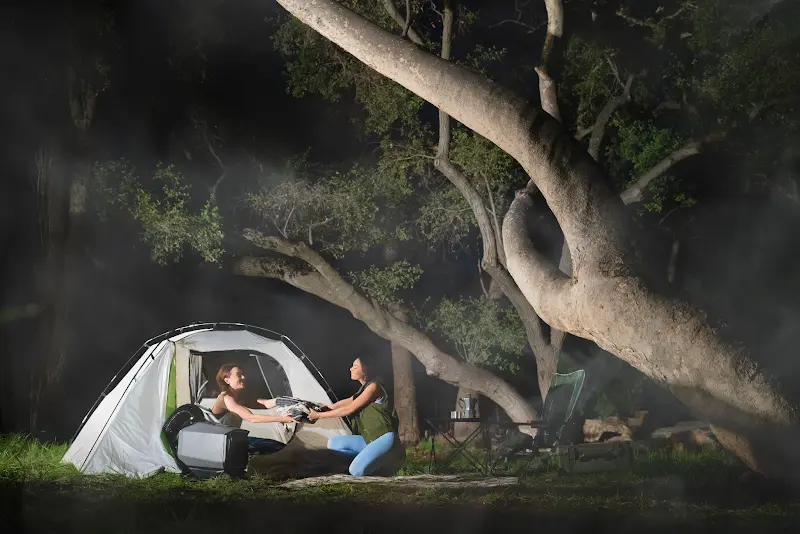
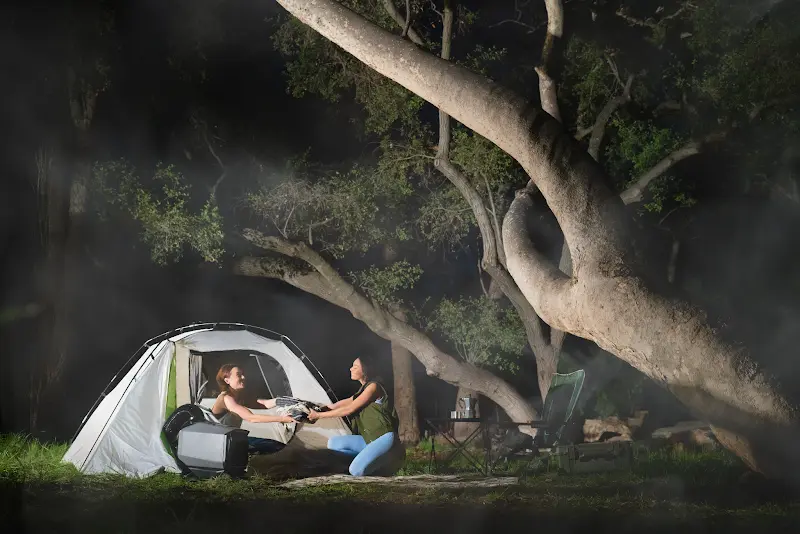
Staying comfortable matters during overnight stargazing trips, but astrophotographers face another challenge: keeping their equipment powered in remote locations. Cold temperatures can quickly reduce camera battery performance, while long exposure sessions require reliable electricity for cameras, star trackers, lens heaters, and editing devices.
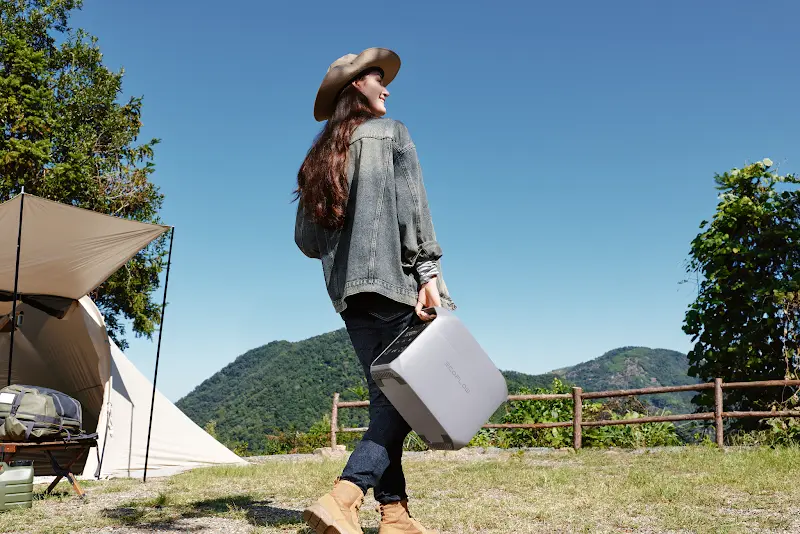
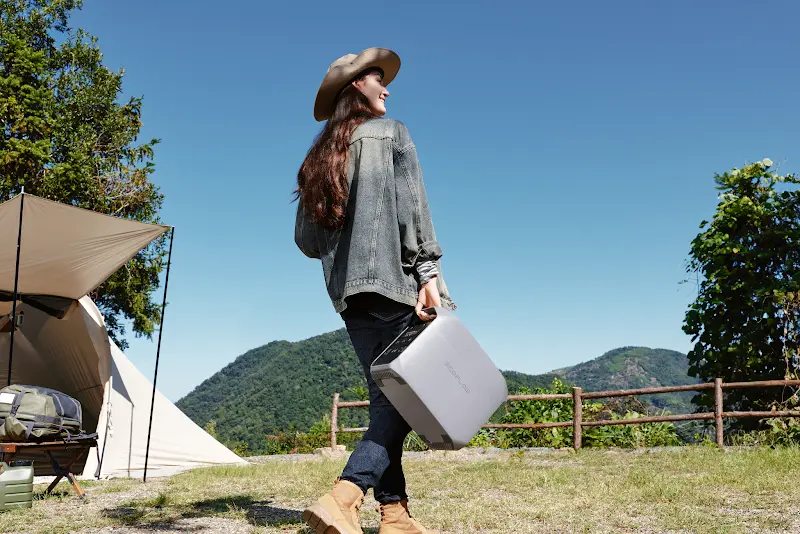
For serious night-sky photographers, a portable power station like the EcoFlow DELTA 3 Classic provides a silent, off-grid energy solution that keeps essential gear running throughout the night. Instead of relying on noisy fuel generators that can disturb wildlife and other observers, photographers can power their entire setup quietly while preserving the peaceful atmosphere of dark sky locations.
For RV travelers who combine stargazing with overnight camping, portable climate solutions such as the EcoFlow WAVE 3 Portable Air Conditioner can serve as an additional comfort upgrade, helping maintain a comfortable sleeping environment inside a vehicle or camper.
When to Go: Best Months & Dates in 2026
The darkest valley on earth won’t save your images if you accidentally schedule your trip during a brilliant full moon. Syncing your travel dates down to the exact calendar window is what separates successful astrophotographers from disappointed travelers.
2026 Major Meteor Showers & New Moon Calendar
To capture the stars at peak brilliance, align your trip directly with a New Moon or target the brief 3-4 day windows on either side of it when the sky remains naturally dark. Pairing those black nights with active meteor showers maximizes your chances of catching bright, colorful streaks across space.
| Event | Best Time in 2026 | Why It's Worth Seeing |
|---|---|---|
| New Moon | Monthly (check local lunar calendar) | The darkest skies for stargazing and Milky Way photography. |
| Perseid Meteor Shower | Mid-August | One of the year's brightest meteor showers, with favorable moon conditions in 2026. |
| Geminid Meteor Shower | Mid-December | Known for bright, colorful meteors and excellent winter viewing under dark skies. |
Planning Tip: For the best possible conditions, look for a date where a New Moon, a stable clear weather window, and a certified Bortle Class 1-3 park intersect perfectly.
Peak Hours for Milky Way Photography
The ideal timeframe for capturing our galaxy changes significantly depending on the month. In the Northern Hemisphere, your active window runs from March through October, with the high density Galactic Core shifting positions across the horizon as the seasons advance.
| Season | Best Viewing Time | What to Expect |
|---|---|---|
| Spring (Mar–May) | 2 AM–5 AM | The Galactic Core rises before dawn, making early mornings ideal for photography. |
| Summer (Jun–Aug) | 10 PM–2 AM | Peak Milky Way season, with the core visible for most of the night. |
| Fall (Sep–Oct) | Shortly after sunset | The core appears in the southwest before setting earlier each evening. |
Pro Tip: Always cross reference the moon phase with localized cloud-cover radar right before you pack your gear to guarantee clear, unpolluted sightlines.
Stargazing Equipment: Essential Camera & Power Gear
Astrophotography pushes consumer electronics to their absolute physical limits. To pull clean, usable data out of a pitch-black sky without a technical dropout freezing your session at 2 AM, your field setup needs to be highly resilient and specifically curated for long, cold exposures.
Camera Bodies & Wide-Angle Lenses
Sparing your camera sensor from fighting noise means skipping cropped formats and reaching for a full frame mirrorless or DSLR body that handles elevated ISO settings cleanly. You need to pair that body with a fast, ultra wide prime lens, targeting a focal length between 14mm and 24mm with a wide-open maximum aperture of f/1.8 or f/2.8. Lenses with these massive glass elements are critical because they pull in the maximum amount of light during your limited exposure window. This is exactly how you keep stars looking like sharp, bright pinpricks instead of faint, muddy smudges.
Tripods, Star Trackers & Accessories
A high quality, heavy-duty tripod is a non-negotiable anchor for your system. When you are running a 25-second exposure, a subtle midnight breeze catching a flimsy aluminum stand introduces enough micro-vibration to instantly blur your raw files. If you want to move past basic static frames, dropping a motorized Star Tracker onto your tripod head is the logical next step. These compact tracking mounts rotate your entire camera assembly at the exact speed of the planet’s rotation. It completely counteracts the Earth’s movement, allowing you to run clean exposures lasting several minutes without creating any unwanted star trails.
Outdoor Photography Power Guide: Running Your Gear All Night
Astrophotography sessions often continue for several hours, making power planning an important part of preparing your gear. Different accessories have different energy requirements, and devices such as star trackers, lens heaters, and laptops can add to overall power consumption during overnight shoots.
Estimating your equipment’s power needs before a trip can help you choose the right battery capacity and avoid interruptions during long exposure sessions.
| Equipment | Typical Power Usage | Approximate Runtime with a Portable Power Station |
|---|---|---|
| Camera battery charger | 5–15W | 20+ hours |
| Star tracker | 2–5W | 50+ hours |
| Lens heater / dew heater | 5–10W | 30+ hours |
| Laptop for photo backup and editing | 45–65W | 10–15 hours |
| Multiple accessories running together | 20–50W | Overnight support |
Star Photography 101: Settings & Composition Tips
Once your tripod is secure and you are standing under an unpolluted sky, take your camera completely off automatic control. Mastering a few manual adjustments will help you capture clean, luminous images on your first run out.
Recommended Night Sky Camera Settings
Flip your camera to manual mode, drop your lens into manual focus, and use your screen’s live-view magnification to focus precisely on a bright star at the infinity mark (∞). Open your aperture all the way up (like f/2.8), set your ISO between 3200 and 6400, and estimate your maximum shutter speed using the 500 Rule, take 500 and divide it by your exact focal length. For instance, if you are shooting on a 20mm lens, you can run a maximum shutter speed of roughly 25 seconds before the movement of the Earth starts trailing your stars.
Pro Composition Tips for Beginners
A sky full of stars can look surprisingly flat without a clear sense of scale. Try framing compelling foreground elements, like a gnarled pine tree, an interesting rock formation, or your tent, in the lower third of your shot to create depth, letting the massive arch of the Milky Way dominate the top of the frame.
Conclusion
Stargazing in 2026 is all about choosing the right place, timing your visit, and preparing the gear you need for a comfortable night outdoors. From dark sky parks to remote wilderness locations, the right setup can help you enjoy clearer views and better photography experiences.
Plan your trip, pack your camera gear, and head out to explore the night sky. With a little preparation, your next stargazing adventure can be both memorable and rewarding.
FAQ
Where Is the Darkest Place to Stargaze in the U.S.?
If you are looking for some of the darkest skies in the U.S., Big Bend National Park in Texas and Great Basin National Park in Nevada are among the top destinations to consider. Both of these remote locations hold coveted Bortle Class 1 ratings, which means you are working with an environment with extremely low levels of artificial light pollution. Standing out there on a clear night, the lack of artificial light pollution is so absolute that deep-space nebulas and massive star clusters are easily visible to the naked eye.
What Month Is Best for Seeing the Milky Way?
The summer stretch of June, July, and August gives you the absolute best window to view the high contrast galactic core. During this peak summer phase, the most spectacular, high density center of our galaxy climbs well above the southern horizon and stays visible for the maximum number of hours each night, giving you plenty of time to capture clean exposures.
Can Beginners Photograph the Milky Way?
You can absolutely get incredible night sky shots on your first attempt without owning high end professional studio gear. An entry level DSLR or mirrorless body paired with a rock solid tripod is plenty to get you started. Once you switch your lens over to manual focus and apply the basic “500 Rule” to prevent your shutter speed from tracking the planet’s rotation, walking away with sharp, vibrant images of the galaxy is incredibly straightforward.
Do I Need a Telescope for Stargazing?
Dropping thousands of dollars on a complex telescope setup is completely unnecessary when you are visiting a certified dark-sky sanctuary. Because the natural environment is heavily protected from light pollution, your naked eyes are more than enough to track passing satellites, brilliant meteors, and the massive, cloudy dust lanes of the Milky Way.
What Camera Settings Work Best for Night Sky Photography?
Your baseline configuration should always start with your camera locked into Manual Mode. Open your lens aperture wide to f/2.8, dial your sensitivity up between ISO 3200 and 6400, and calculate an exposure time between 15 and 25 seconds depending on your focal length. Always double check that your lens is set precisely onto manual focus at the infinity mark (∞) so your star points stay perfectly crisp throughout the night.
For press requests or interview opportunities, reach out to our media team
media.na@ecoflow.com