What Is the Coldest Setting on a Fridge (1–7)? UK Temperature Guide
- What is the coldest setting on a fridge (1–7 scale)?
- What number is the coldest setting on a fridge across brands?
- Why your fridge may not feel cold even on the coldest setting
- What is the ideal fridge temperature setting in the UK?
- Does using the coldest setting increase electricity costs?
- The smarter and efficient way to reduce fridge electricity costs
- 2. EcoFlow STREAM Ultra/Pro Home Solar Battery
- 5 tips to optimize fridge settings and save energy
- Conclusion
- FAQs
Knowing what the different temperatures inside the refrigerator mean is helpful to prevent food spoilage, avoid wasting electricity, and prevent cooling issues. Many people may be asking, what is the coldest setting on a fridge 1 to 7?, because the numbering system may differ amongst fridges and it can get confusing.
The higher the number, the lower the temperature in most UK refrigerators. This may vary slightly by brand and by the type of thermostat used, however. Understanding the settings can enhance food safety and appliance efficiency. You can also reduce costs by applying energy storage solutions to provide continuous energy.
What is the coldest setting on a fridge (1–7 scale)?
The majority of manual-temperature refrigerators have a numbered dial ranging from 1 to 7. Setting 1 is the warmest setting and 7 is the coldest setting. The thermostat is used to regulate the duration of compressor operation to achieve the desired cooling within the appliance.
Running the coldest setting at all times is not required. Medium settings will typically be sufficient for most household UK use to maintain fresh food without wasting electricity.
On a fridge what setting is coldest 1–7 explained
If you are wondering on a fridge what setting is coldest 1-7, the answer is usually 7. The higher settings make the fridge compressor run more and keep the fridge cooler inside. This can be useful during hot weather or when the fridge is heavily stocked with food.
However, some foods may freeze accidentally if the dial is always set to the maximum, particularly those located near cooling vents. For daily use, most refrigerators will operate effectively in the range of 3 to 5.
Is 1 or 5 the coldest setting on a fridge?
One often asked question is whether 1 or 5 the coldest setting on the fridge. For most refrigerators, 5 will be colder than 1, as the higher the number, the colder the inside of the refrigerator will be. Setting 1 typically offers the lowest cooling setting.
The confusion is usually caused by differences in appliance design and users' assumptions. If your refrigerator is too hot or too cold, make the temperature changes slowly in order to maintain the temperature range.
What number is the coldest setting on a fridge across brands?
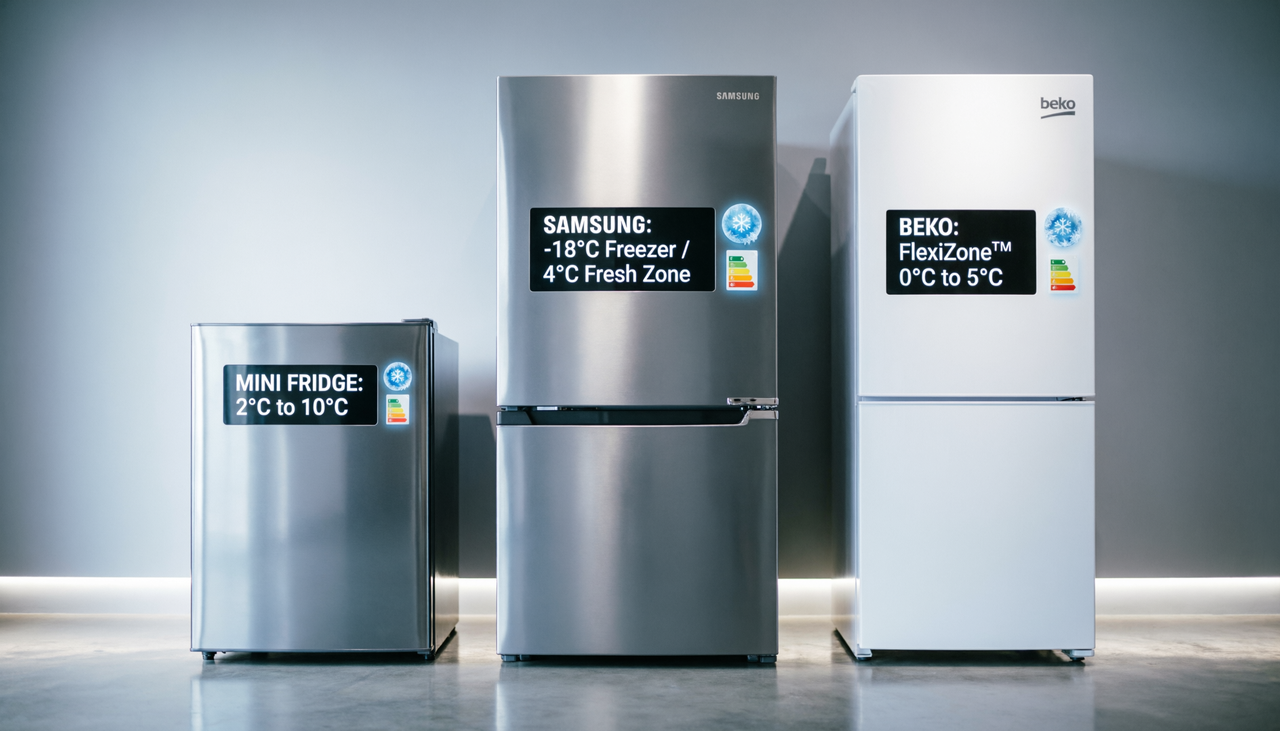
While this is the case for most refrigerators, different manufacturers use slightly different temperature systems. Most of the refrigerators have a number of settings ranging from coldest to hottest when you ask what is the coldest setting on a fridge, the highest is the coldest.
The cooling performance may also be influenced by room temperature, refrigerator capacity, internal circulation, loading rate, etc. Familiarity with the fridge's model can ensure uniform cooling and energy efficiency.
Fridge Brand | Common Temperature Scale | Coldest Setting | Notes |
Beko | 1–5 or 1–7 dial | Highest number | In most Beko models, the highest number provides the coldest cooling level. Medium settings are usually recommended for daily use. |
Samsung | Digital temperature control | Lowest °C value | Samsung fridges often use direct temperature settings instead of numbered dials. Lower temperatures mean colder cooling. |
Hisense | 1–5 or digital controls | Highest number / Lowest °C | Hisense refrigerators typically follow the standard rule where higher numbers provide colder temperatures. |
Mini Fridges | 1–5 dial | Highest number | Mini fridges cool smaller spaces quickly, so maximum settings may sometimes overfreeze food items. |
Standard UK Fridges | 1–7 scale | 7 | For most UK refrigerators, setting 7 is usually the coldest option on the thermostat dial. |
Why your fridge may not feel cold even on the coldest setting
There are several reasons why your fridge might not be cold even when you set it to its lowest temperature.
Sometimes a refrigerator may still feel warm even when set to the maximum cooling level. Frigo on coldest setting but not cold, many users assume that the thermostat is faulty, but this is not always the case, it may be due to air flow, maintenance or external conditions.
An air flow is the most effective when the temperature of the cooling system is not too high, and there is sufficient air movement. When a refrigerator suddenly stops cooling, there may be several common household problems at play.
Common reasons
A fridge may struggle to maintain its cool temperature despite being set to the coldest possible setting for a variety of reasons. In many instances, these problems can be solved without replacing the appliance.
Damaged product or damaged packaging that hinders internal air flow.
Dirty condenser coils which impact cooling efficiency
Damaged thermostat cables or wiring that can cause overheating or improper temperature regulation
If the refrigerator is not working properly, it could be due to high room temperature, which affects its operation.
When these problems are ruled out, but your fridge or freezer is still not cooling correctly at the coldest setting on the thermostat, servicing may be required to check the thermostat system or the compressor.
What is the ideal fridge temperature setting in the UK?
While many people think about what is the coldest setting on a fridge, that setting isn't necessarily the best for daily use. The UK Food Safety Council advises that refrigerators be maintained at 3-5°C to ensure food safety and energy efficiency.
Most homes use medium dial settings instead of maximum cooling to achieve this temperature range. This helps:
Maintain the freshness of food in a non-freezer style
Eliminate waste electricity use
Reduce power consumption during operation
Slightly altering fridge settings during hot summers can help keep the fridge at a more consistent temperature.
Does using the coldest setting increase electricity costs?
Yes, having a fridge running on the coldest setting all time will consume the most electricity because the compressor is operating more often to keep the fridge so cold. This can significantly impact household energy costs over time, particularly for older or less efficient appliances.
Moderate temperatures can produce a more balance cooling and electricity efficiency. In general, modern fridges perform better when they do not need to be at their lowest temperature all the time.
How much electricity does a fridge use daily?
The power consumed per day by a refrigerator varies with the size of the appliance, its energy rating, temperature setting, room temperature, and usage. A conventional refrigerator in the UK uses an average of 0.3–1.5 kWh per day.
Increased electricity consumption tends to be associated with:
Older appliances
Poor insulation
Cooling is always at maximum level.
Frequent door opening
When considering the coldest setting on a fridge, users can expect to avoid unnecessary overcooling and ensure long-term efficiency of the appliance at a minimal electricity cost.
The smarter and efficient way to reduce fridge electricity costs
One of the most regular electric appliances in the house is the refrigerator which operates all day long. With users aware of what is the coldest setting on a fridge, the cost of electricity can steadily rise over time due to ongoing cooling cycles and rising energy prices in the UK.
Increasing a fridge's efficiency is not just about setting its temperature. There are various strategies to lower daily cooling costs while keeping cooling and power systems running, such as smarter electricity use, improved appliance management, and renewable energy solutions.
How solar energy helps power essential appliances like fridges
Solar energy is increasingly gaining importance as a source of power for household equipment like refrigerators. As a fridge is used every day, continuously, from dawn to dusk, it is an excellent appliance for homes wishing to use some of their electricity through renewables.
One solution to help is to use solar energy and battery storage:
Energy conservation through cheaper alternatives such as biomass fuels, solar power, and wind energy.
Assist with the use of appliances during times of peak demand
Reduce the cost of energy consumption for homes over time
Enhance home energy efficiency and stability
If you adjust your home's cooling system to use only the coldest setting in a fridge when you need it, rather than always setting it to the lowest temperature, you can save even more money in the long term with solar storage.
EcoFlow STREAM solutions for running household appliances efficiently
With modern home battery systems, homes can store electricity produced during the day for use later, when conventional energy sources like electricity are needed for refrigeration, lighting, and kitchen electronics. This helps minimise reliance on electricity prices and ensures stable electricity consumption.
1. EcoFlow STREAM Ultra X home solar battery
EcoFlow STREAM Ultra X home solar battery is good for households that want to make everyday energy use more efficient and smartly power their important appliances. It can store an extra amount of solar energy and ensure a reliable supply of electricity all day, helping to reduce reliance on grid power for essential appliances such as fridges.
The system is especially beneficial for households that want to reduce their electricity bills while maintaining the performance of their household appliances. This system helps homeowners manage electricity consumption and provide stable energy use.
2. EcoFlow STREAM Ultra/Pro Home Solar Battery
The EcoFlow STREAM Ultra/Pro Home Solar Battery system is suitable for households with higher daily electricity consumption and multiple continuously running appliances. The system can store excess electricity generated, thereby allowing homeowners to use electricity more efficiently and save them money in the long run.
This solution is particularly suitable for houses that use refrigerators, freezers, kitchen appliances, entertainment systems and all other necessary household electronics on a daily basis. It offers users greater flexibility and energy independence for longer-term electricity security.
5 tips to optimize fridge settings and save energy
Avoid using the coldest setting all the time
When people ask what is the coldest setting on a fridge, they think that the colder the better, however, for normal daily use in food storage, the maximum cold is not required. Medium settings typically keep things at a safe temperature and conserve electricity.
Keep the fridge door closed as much as possible
If the fridge door is opened regularly, warm air will enter, and the compressor has to work harder to keep the refrigerator cold. Minimising door openings is important for stable cooling and appliance efficiency.
Do not overfill the fridge
Even when the refrigerator is set to the coldest setting, blocking air circulation can still affect cooling performance. Placing adequate spacing between food products allows cold air to flow properly around the appliance.
Clean condenser coils regularly
The condenser coils can collect dust and dirt which decreases the cooling efficiency and can cause the use of more electricity. Periodic cleanings will help the fridge maintain proper temperatures while using less energy.
Keep the fridge away from heat sources
The fridge should not be placed near ovens, direct sunlight, or radiators, as this will cause the fridge to work harder to remain cool. A cooler environment helps to keep internal temperatures stable and also is advantageous for energy efficiency.
Conclusion
Knowing what is the coldest settings on a fridge, 1-7, and setting it can save money on household electricity usage and ensure that food is kept safely. Generally, the higher the number, the colder it will be, and for most refrigerators, the top will be colder. In most refrigerators, a higher number indicates colder temperatures, but it is not always necessary to keep the refrigerator on maximum cooling for everyday use. Balanced temperatures can help to maximise cooling efficiency and the longevity of appliances.
In addition to the correct fridge settings, energy-smart use of household appliances can save more electricity. These practical appliance strategies, paired with solar power and home battery storage options like the EcoFlow STREAM series, enable households to reduce their reliance on grid power and enhance long-term energy savings and stability.
FAQs
What number is the coldest setting in a fridge?
For most refrigerators, the coldest setting is the highest number on the dial. Numbers are typically a range from 1 to 5 or 1 to 7, with higher numbers indicating colder temperatures in many UK appliances.
The lower the number, the lower the temperature.
The more the number, the more intense the cooling.
Most fridges are best refrigerated at medium setting
Avoid the lowest cooling setting at all times, as it can waste electricity, but during hot seasons, it can be beneficial to use the highest setting.
Is 7 always the coldest setting in a fridge?
Most people think that in most refrigerators, what is the coldest setting on a fridge, 1-7, typically means setting 7 is the coldest. However, it depends on the brands, which may use different temperature systems by model.
You need to check if the manufacturer's manual is always recommended because:
Some fridges can show differences as these use reverse numbering systems
Every brand has its own digital temperature controls that vary between
Cooling performance may differ by appliance type
Understanding your specific fridge model helps maintain better cooling performance and energy efficiency.
Why is my fridge not cold on max setting?
If your fridge is on the coldest setting but not cold, it still struggles to cool properly. The issue can be severe and involve airflow problems, dirty condenser coils, faulty door seals, or internal mechanical faults rather than the temperature dial itself.
In many cases, blocked vents prevent cold air from circulating properly. If proper cleaning and airflow adjustments do not solve your issue, you may need to hire a professional service to inspect the cooling system.
Does turning the fridge colder increase the electricity bill?
Yes, using the coldest setting on fridge mostly increases electricity consumption because the compressor operates more frequently to maintain lower temperatures. Over time, this can raise household electricity bills, especially for older appliances.
Most refrigerators maintain safe food storage temperatures without requiring maximum cooling settings. Using moderate temperature levels often provides a better balance between appliance performance and energy efficiency.