How To Create A Rain Garden: Sustainable Layout And Energy Solutions
Whether you have a small yard or a large property, a rain garden can transform your outdoor space into a sustainable and beautiful haven. This eco-friendly design helps manage stormwater, improve energy efficiency, and support local wildlife, and can even be complemented by tools like portable power stations for outdoor lighting or water features. In this guide, you'll learn practical steps, smart layout ideas, and sustainable solutions for rain garden installation that benefit both your home and the environment. Keep reading to discover how simple landscaping can have a big ecological impact.
What is a rain garden?
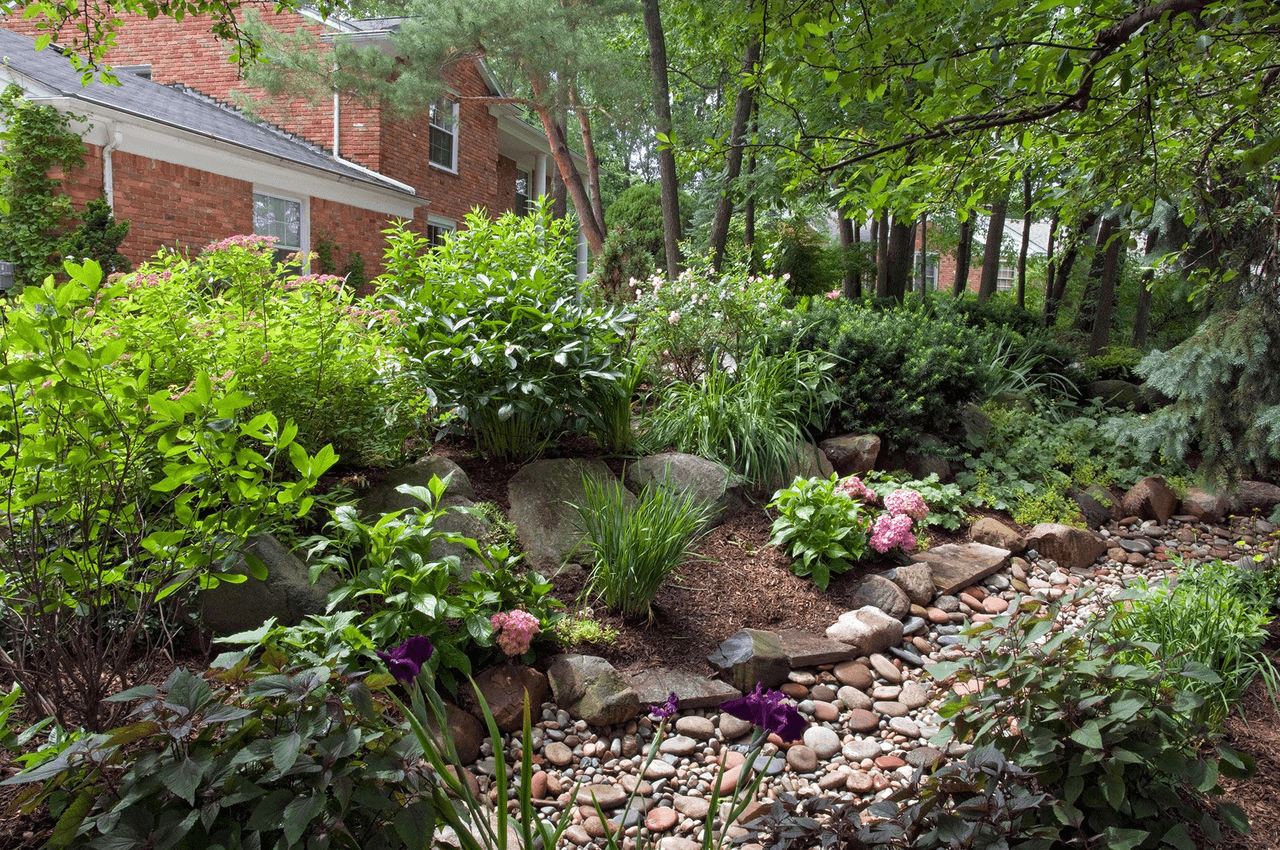
A rain garden is a shallow, planted area that collects and soaks up rainwater. It cuts down on runoff from roofs, driveways, and lawns. Native plants and grass help filter out pollutants and improve water quality. It also attracts birds and pollinators. Moreover, it offers a simple, attractive way to make your landscape more eco-friendly.
How to design and upgrade a rain garden?
A good rain garden design starts with thoughtful planning and smart decisions. Each step, from picking the location to choosing plants, affects how well your garden works. By balancing practical needs with looks, you can create a beautiful and sustainable outdoor area.
Site selection
Begin by choosing a location where water tends to pool, as long as it is not too close to your home's foundation or any of the underground utilities. Steer clear of areas with heavy clay or soil that doesn't drain well, since both can produce puddles and damage plant roots.
Consider the amount of sun the area gets and how easy it is to access. Most native plants thrive in full or partial sunlight, so select your site to suit their requirements. Choosing the right spot enables your garden to absorb water more effectively, promotes plant health, and reduces future upkeep.
Consideration | Details | Recommendations |
|---|---|---|
Water flow & drainage | Choose areas where water naturally collects, but stay away from house foundations or underground utilities | Avoid locations near buildings or heavy clay soil; ensure proper drainage |
Sunlight | Most native plants thrive in full or partial sun | Select a spot with adequate sunlight for your chosen plants |
Accessibility | Ease of maintenance and watering | Pick an area that is easy to access for regular care and observation |
Soil type | Well-draining soil is preferred | Amend heavy or compacted soil to ensure proper water absorption |
Determining size and depth
Calculating the correct size and depth is crucial when planting a rain garden. The garden should be large enough to capture runoff from your roof, driveway, or patio effectively. Typically, a depth of 4–8 inches works well for most residential applications while preventing waterlogging during heavy rainfall events.
Soil type and rainfall patterns also affect water absorption rates in your rain garden design. In larger gardens, water will likely need to be contoured around the space properly, and in smaller ones, simple depressions can be used to funnel runoff effectively without causing problems with erosion.
Consideration | Details | Recommendations |
|---|---|---|
Garden area | Large enough to capture runoff from the roof, driveway, or patio | Assess rainwater flow to calculate the total area |
Depth | Typically, 4–8 inches works for most residential rain gardens | Deeper for heavy rainfall areas, but avoid waterlogging |
Soil type | Different soils absorb water at different rates | Shallow & wide for clay; slightly deeper for sandy soil |
Rainfall pattern | Local precipitation affects design | Adjust size and drainage based on average annual rainfall |
Water control | Prevent erosion or standing water | Use shallow depressions for small gardens, contouring for larger spaces |
Structural features
In rain gardens, structural features improve function and longevity. Embankments or shallow dikes are used to guide the water into the garden and prevent flooding in storms or when the snow melts. Layers of four inches of mulch hold moisture, prevent erosion, keep the garden clean, and build up soil over time.
Consider edging materials like stones, logs, or pavers to maintain the shape and support plant growth during heavy rains. Proper structural planning ensures that it can handle water efficiently, resist damage, and last for years without frequent repairs or redesign.
Feature | Purpose | Recommendations |
|---|---|---|
Berms/shallow dikes | Guide water into the garden, and prevent overflow | Place around low spots or along garden edges |
Mulch/cover layer | Retains moisture, prevents erosion, and improves soil | Apply 4-inch thick bark, wood chips, or gravel |
Garden edging | Maintain shape, protect plants | Use stones, logs, bricks, or pavers |
Layered structure | Enhance function and longevity | Layer soil, gravel, and mulch to improve drainage and water retention |
Plant selection and variety
Choosing the best plants for your rain garden is critical. Native grasses, flowers, and shrubs are best because they can cope with both wet and dry spells and benefit native wildlife. Combine plants of various heights, colors, and bloom times to keep your garden colorful year-round.
A variety of plants also supports local pollinators, improves soil health, and prevents erosion, which adds up to a better engineered garden. By introducing perennials and drought-tolerant species, maintenance is reduced while your garden blooms season after season with very little money and effort.
Plant Type | Purpose | Recommendations |
|---|---|---|
Native grasses | Adapt to wet/dry cycles, prevent erosion | Choose species suited for wet soils |
Flowers | Add color and seasonal interest | Select varieties with staggered bloom times for year-round color |
Shrubs | Provide structure, shade, and wildlife habitat | Mix heights for layers, privacy, and visual interest |
Diversity | Improve soil health, attract pollinators | Combine perennials and drought-tolerant species to reduce maintenance |
Functional plants | Ecological benefits & low upkeep | Use water-absorbing, drought-resistant, and resilient plants for efficiency |
Upgrading to a functional outdoor space
Turning your rain garden into a usable outdoor space adds beauty and comfort. Add lighting, water features, or seating to make it a place you can enjoy while it manages water. These touches also make it a great spot for family time and relaxing in a green setting.
By combining aesthetics with function, your rain gardens can become a recreational spot, not just a water management solution. Thoughtful upgrades ensure that designing a rain garden brings both environmental benefits and lifestyle improvements, making your outdoor space practical and appealing.
Flexible power solutions for rain gardens
Flexible power options make it easier to set up and use a rain garden in the UK. Portable power stations like EcoFlow let you run lights, pumps, fountains, and small devices without needing fixed outlets. These solutions make caring for and enjoying your garden simpler and greener.
Recommended portable power stations
Here are the top 2 portable power stations you can use:
EcoFlow DELTA 3 Max Plus: Large capacity for multiple devices
The EcoFlow DELTA 3 Max Plus provides reliable electricity for rain gardens and backyard landscapes. With a 2048Wh capacity and 3000W AC output (up to 6000W surge), it can run garden lights, small water pumps, and irrigation systems smoothly.
Equipped with Full-Tab LFP Cells and a smart BMS with 24/7 protection, it ensures long-lasting performance and safety for outdoor equipment. Its 22.1 kg portable design allows you to place it anywhere in your yard.
Charging is flexible via AC, solar panels, an alternator charger, a smart generator, or multi-charging, so it can stay powered off-grid. Capacity can be expanded up to 10 kWh, making it perfect for larger gardens or extended landscape projects.
EcoFlow DELTA 2 Max: Compact and portable for smaller setups
The EcoFlow DELTA 2 Max is perfect for smaller rain gardens or backyard setups, providing 2048Wh capacity and 2400W AC output. With X-Boost mode up to 3100W, it can power garden lights, small water pumps, and other essential outdoor devices simultaneously.
Its LFP battery chemistry supports up to 3000 cycles—roughly 10 years of daily use—ensuring long-term reliability for your garden systems. The built-in smart battery management system protects against overcharging, overheating, and other electrical risks.
Lightweight and portable, the DELTA 2 Max is easy to carry and position wherever needed in your yard. It supports fast charging via AC, solar panels, or car ports, and the dual solar input system maximizes energy capture for off-grid operation. This combination of portability, durability, and rapid charging makes it an ideal solution for keeping your rain garden illuminated and your pumps running efficiently.
Practical examples and ideas
Creative touches can make your backyard rain garden ideas both functional and beautiful. Lighting, water features, and seating turn water management into a relaxing retreat. Here are some ideas to work with:
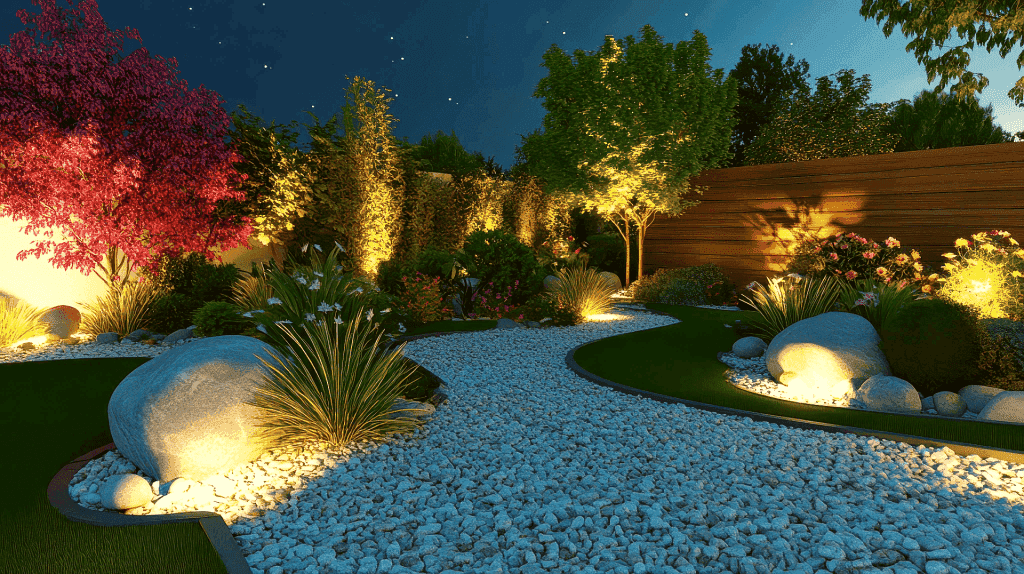
Nighttime landscape lighting
Creating a rain garden with lights lets you enjoy it after dark. Soft LED lights along paths or around plants highlight the garden's shape and make it safer. Lighting also draws attention to water features and special plants, forming a cozy nighttime feel. This not only looks good but also makes the garden a nice place to relax or gather in the evening.
Water features and circulation
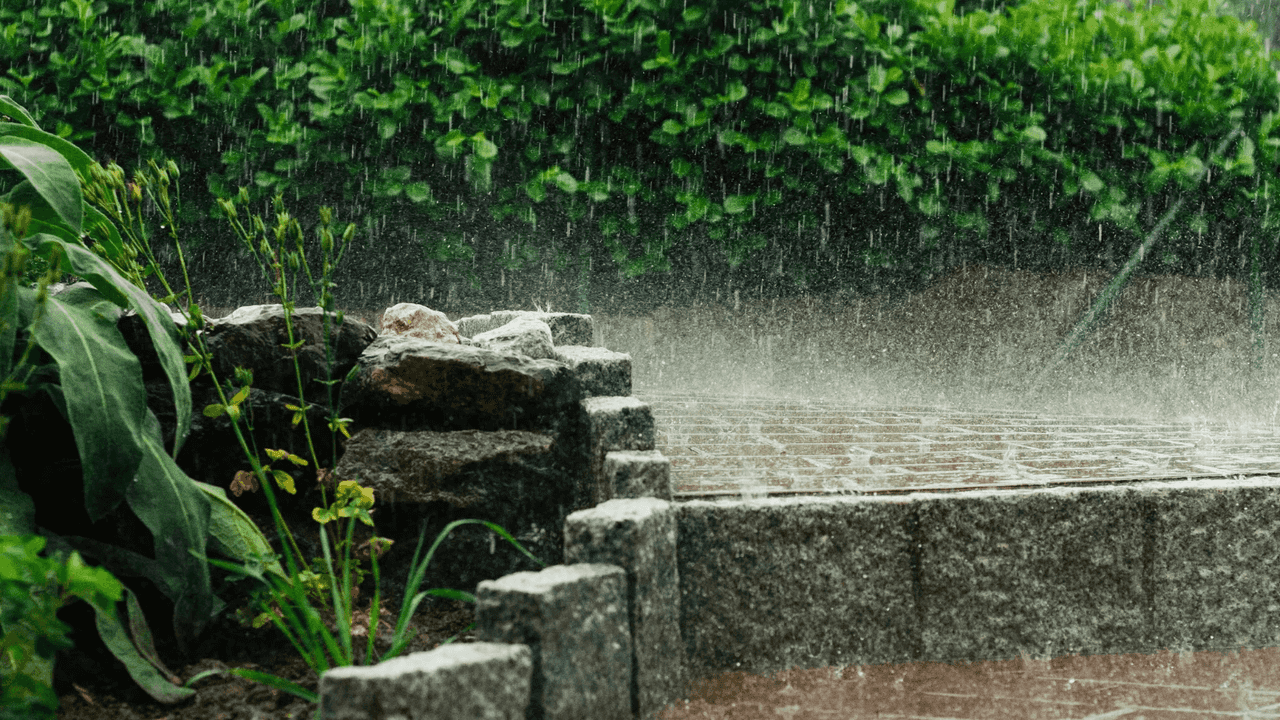
Adding little ponds, fountains, or streams to your rain garden improves both their aesthetic appeal and practicality. In addition to preventing stagnation, flowing water draws pollinators and birds, resulting in a vibrant ecology. Rainwater may be effectively recycled in circulation systems, promoting sustainability. Well-considered features enhance your outdoor area's aesthetic appeal.
Outdoor seating and leisure areas
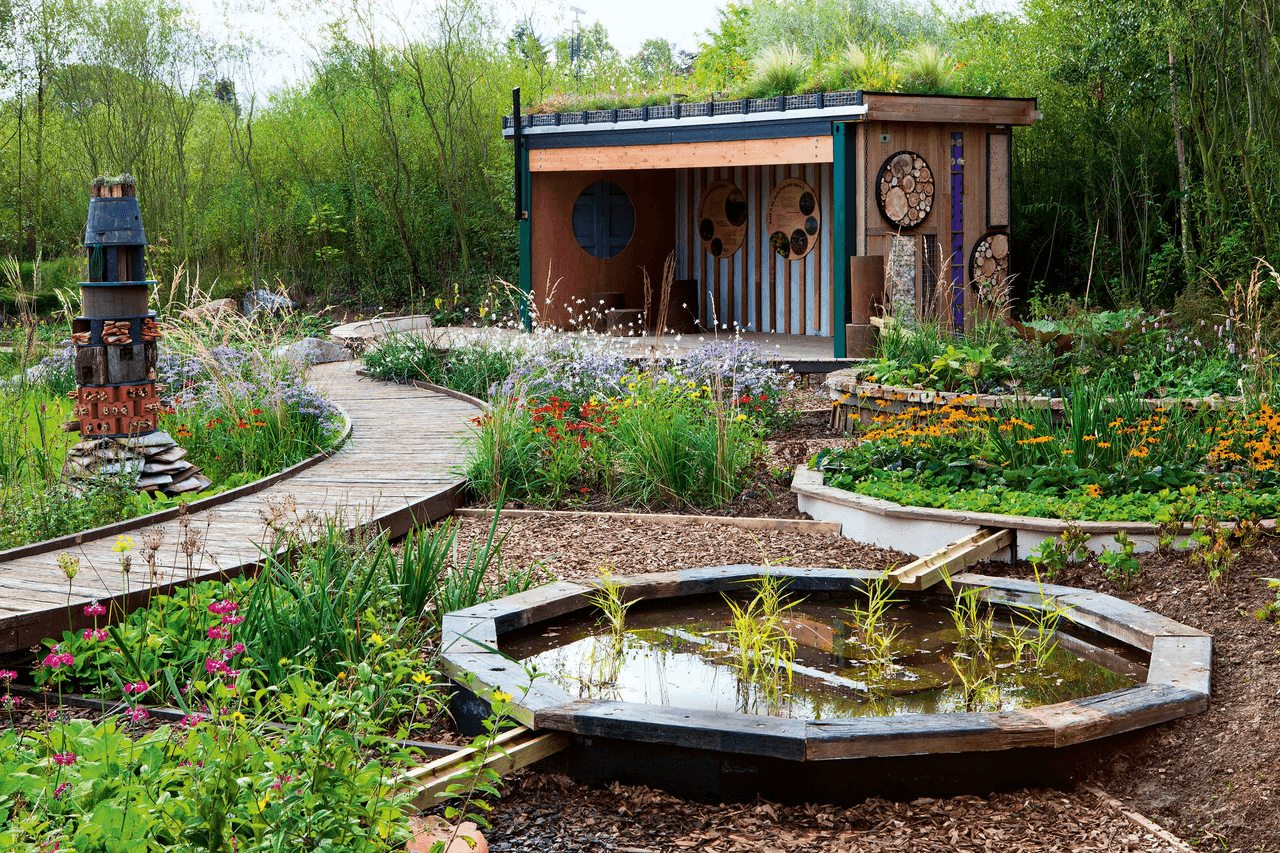
Your rain garden may be transformed into a place to unwind and spend time outside by adding benches, swings, or a patio. You may see wildlife and the garden's water management while seated. It's a terrific place to hang out with family and friends since it combines comfort and functionality. For year-round comfort, choose weather-resistant furniture and offer shade.
Maintenance and eco-friendly tips
Taking care of your rain garden keeps it healthy, good-looking, and working well. Simple routines and eco-friendly habits help plants grow and keep water moving. Staying sustainable also saves money and helps the local environment. Here's how to make a rain garden eco-friendly:
Routine care
Maintaining your garden's finest appearance requires frequent maintenance. To avoid obstructions and preserve appropriate water flow, remove weeds, dead plants, and debris. Maintaining plant health and soil moisture levels guarantees that your garden will flourish all year round.
Energy-efficient solutions
Energy-saving tools and systems help your garden use less power. Try solar pumps, LED lights, and rainwater collectors to cut energy use and keep your garden running smoothly. These options also save money and make upkeep easier over time.
Sustainable gardening practices
Using sustainable practices such as mulching, composting, and planting native species enriches the soil and preserves water. And avoiding chemical fertilizers and pesticides helps keep local wildlife and water sources safe. It helps your garden produce and adapt to shifting weather.
Safety tips for outdoor electricity
When creating a rain garden, you may want to add features like pumps, outdoor lighting, or water fountains. Using electricity safely in these wet, outdoor spaces is essential to protect your family, plants, and equipment. Follow these precautions to enjoy your garden without risks.
Use weatherproof outlets, covers, and cables designed specifically for outdoor use.
Keep all electrical connections away from water features and wet soil to reduce the risk of electric shock.
Avoid overloading circuits and ensure devices match the rated power capacity.
Regularly inspect cables and equipment for wear or damage.
Replace any damaged or exposed wiring immediately to prevent accidents.
Position power sources on dry, stable surfaces to improve safety and reliability.
Conclusion
Building a rain garden is more than landscaping. It's a way to mix beauty, sustainability, and usefulness in your yard. With good planning, the right plants, and smart upgrades, your garden can thrive and help the environment. Careful choices mean you'll have a space that supports wildlife, manages water well, and looks great. Even small changes in layout and care can bring lasting benefits.
Portable power options like the EcoFlow DELTA 3 Max Plus and DELTA 2 Max make it easier to manage your rain garden. They give you steady power for lights, pumps, and other devices without needing permanent wiring. These stations help your garden features work well and stay eco-friendly. Adding them to your setup lets you enjoy a practical and attractive rain garden all year round.
FAQs
What is the purpose of a rain garden?
A rain garden collects and soaks up rainwater, which helps cut down on runoff and flooding. It filters out pollutants, improves water quality, and supports local wildlife. Plus, it adds beauty, sustainability, and practical value to your yard.
What are the disadvantages of a rain garden?
Rain gardens need regular care, such as weeding, clearing debris, and looking after the soil. If you pick the wrong spot, you might get standing water, erosion, or stressed plants. They also don't work as well in very clay-heavy or poorly draining soils.
How do I choose plants for wet vs dry areas of the garden?
To efficiently manage excessive rain in low-lying, wetter places, use water-tolerant plants. For taller, drier areas of your garden, choose native or drought-tolerant plants. Combining different types guarantees long-term garden resilience, environmental support, and aesthetic appeal.