Transform Your Workspace: Garden Office Guide UK
A garden office in the UK provides a quiet, dedicated workspace in your backyard. With proper planning, it can be customised for comfort and style. Portable power stations offer flexible energy solutions, keeping your office fully functional even where mains power is limited. This guide covers costs, placement tips, and power options for an efficient garden office.
What is a garden office in the UK?
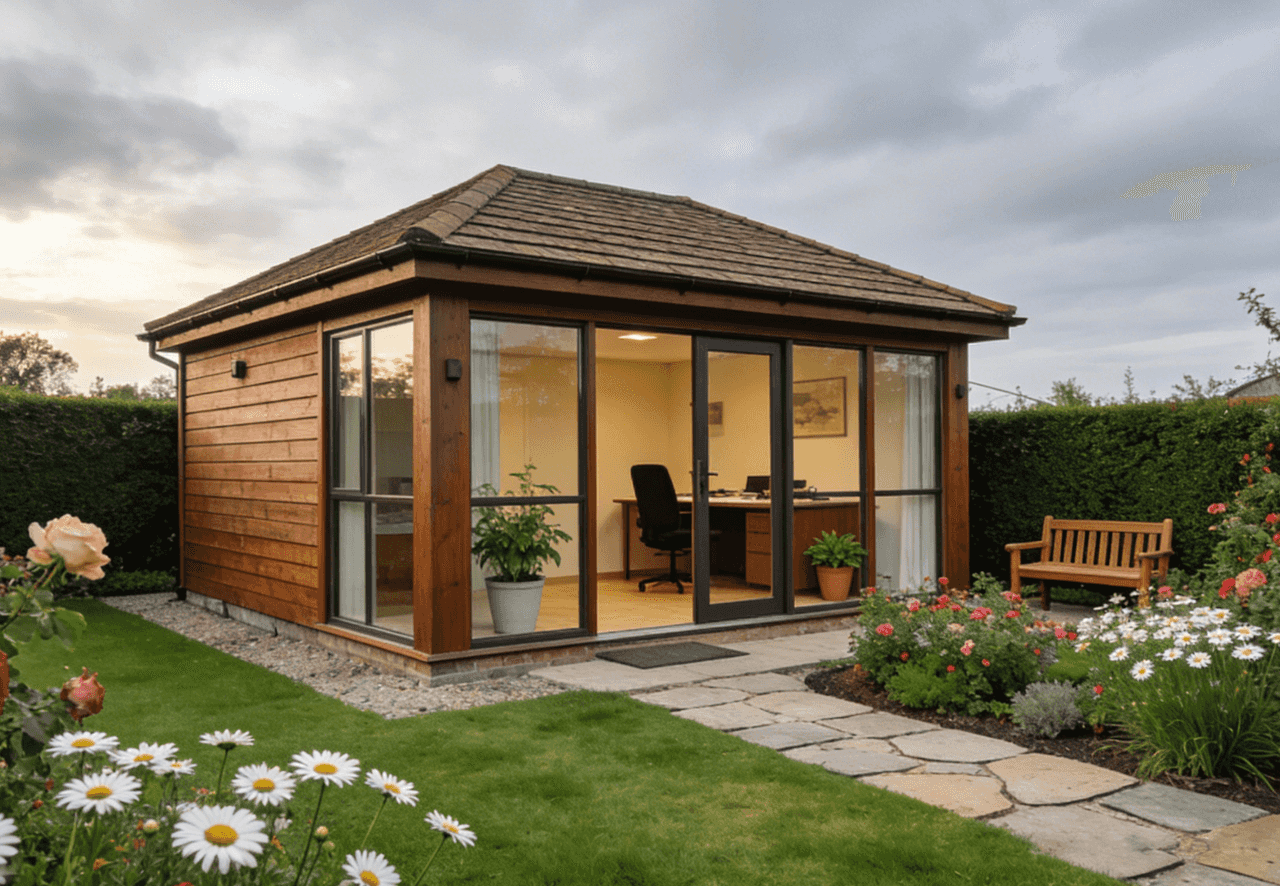
A garden office in the UK is a modern, fully equipped workspace built in your garden, separate from the main house. It's designed for everyday use, with proper insulation, electricity, heating, and internet, so you can work comfortably in any season. Unlike basic outdoor buildings, it is built to feel like a real office, which helps you stay focused and productive. Many UK garden offices don't need planning permission if they follow certain size rules, making them a convenient option. They are popular because they create a clear work-life boundary while adding practical value to your home.
Types of garden offices in the UK
Choosing the right type of UK garden office depends on how you work, the space you have, and the level of comfort you expect throughout the year. Here are some of the best garden office UK options you should consider:
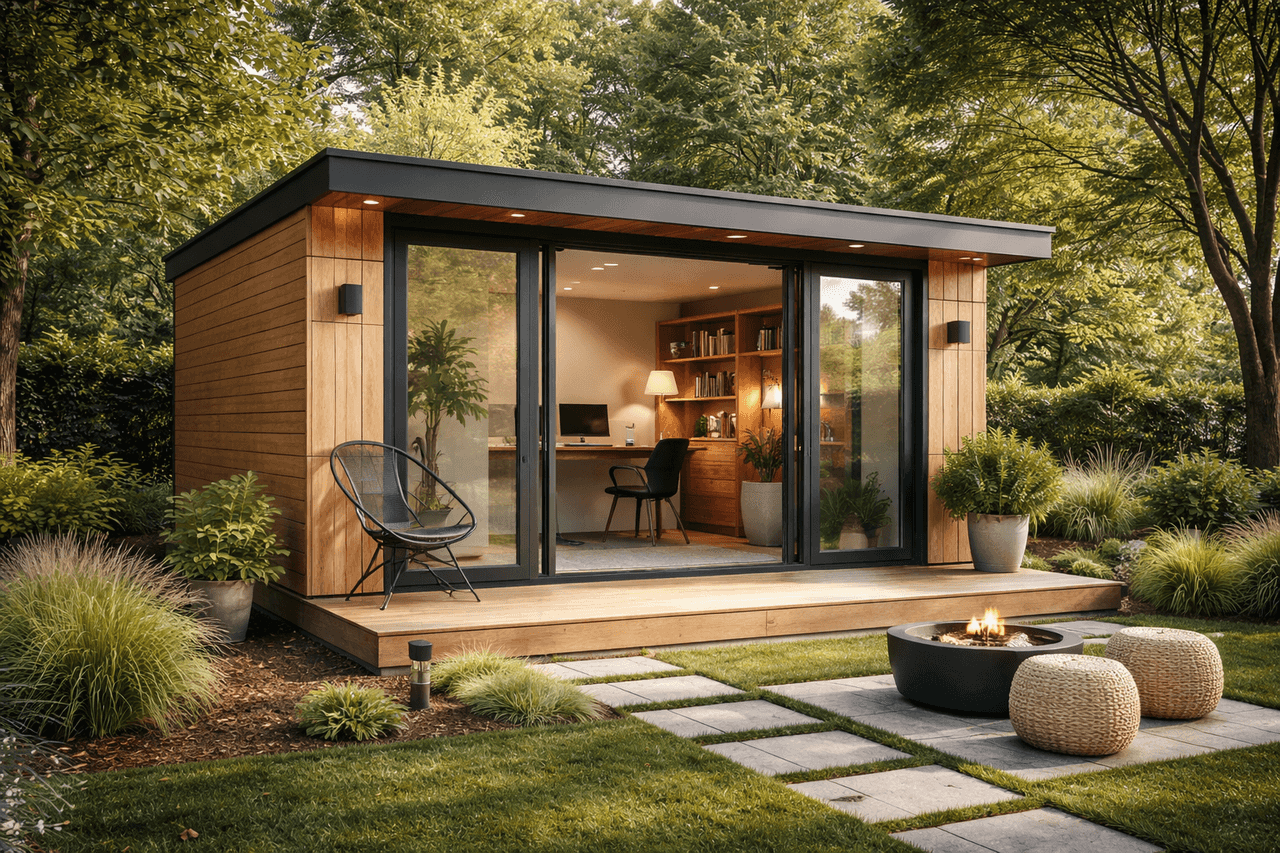
Modular garden offices
Engineered off-site using precision manufacturing, these are delivered in sections and assembled efficiently. They typically include advanced insulation panels, weatherproof finishes, and pre-installed electrics. This type is ideal for homeowners seeking a high-performance garden office in the UK with minimal on-site construction time.
Bespoke garden offices
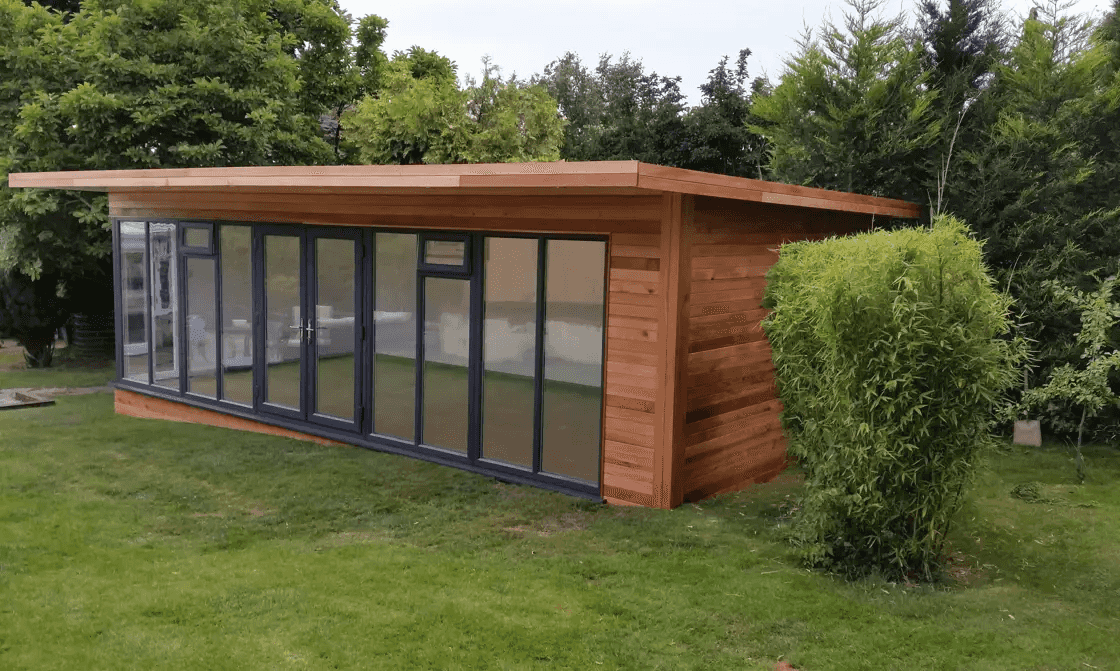
Bespoke garden office rooms in the UK are fully customised structures designed around your specific needs, space, and work habits. You can choose everything from layout and materials to advanced features like soundproofing, large glazing panels, or built-in storage. This level of flexibility allows you to create a workspace that supports both productivity and comfort. They are best suited for professionals who need a tailored environment or have unique design preferences.
Insulated garden rooms
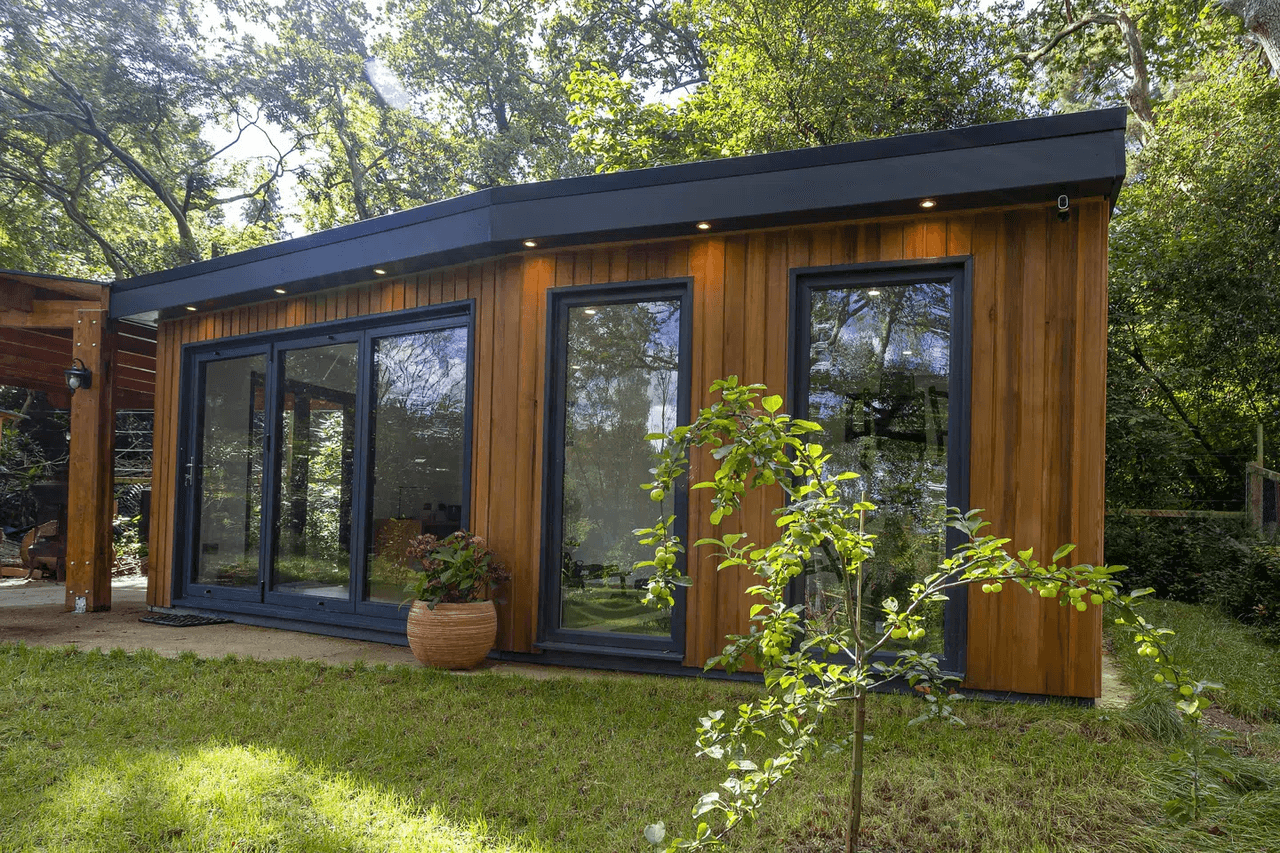
Insulated garden rooms use advanced materials and construction techniques to provide a stable indoor environment. They protect against external noise and temperature changes, which allows comfortable year-round use. Many also include ventilation and moisture control for a healthier workspace.
Budget garden offices
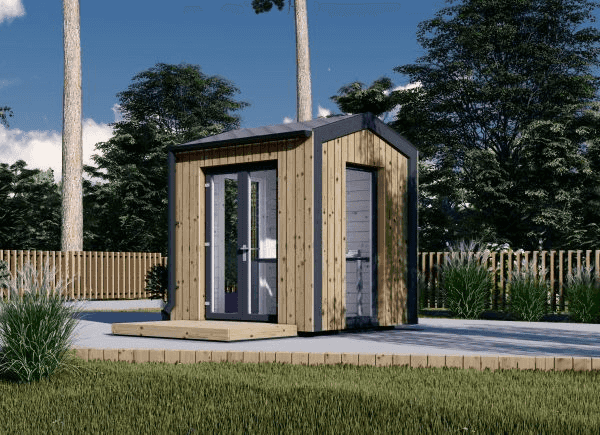
Budget garden offices offer a simple and affordable way to create a work area at home. They focus on the basics, giving you enough space and function for everyday tasks. While the design may be more straightforward, it still serves its purpose well. Best for anyone looking for a cost-friendly solution.
How much does a garden office cost in the UK?
Before setting up a garden office in the UK, it's helpful to understand how pricing works in the UK. Prices can fluctuate based on different factors, so knowing the basics makes it easier to plan your budget.
Typical price ranges
The cost of a garden office in the UK can vary widely depending on quality, size, and features. On average, you can expect:
Basic or small garden office: around £8,000 – £15,000
Mid-range insulated office (most popular): £15,000 – £30,000+
High-spec or bespoke garden office: £30,000 – £50,000+
Luxury designs or large spaces: £50,000 – £100,000+
In simple terms, most homeowners spend £20,000 to £50,000 for a fully finished, year-round garden office with insulation, electrics, and modern finishes.
Factors that affect cost
Several key factors influence how much your garden office will cost:
Size and layout: Bigger spaces need more materials and labour, which increases the price.
Insulation and build quality: High-quality insulation (for year-round use) adds upfront cost but improves comfort and energy efficiency.
Materials and finishes: Premium cladding (like cedar), double glazing, and stylish interiors raise the overall cost.
Electrics and heating: Adding lighting, sockets, Wi-Fi, or underfloor heating can significantly increase costs.
Foundations and groundwork: Base preparation (concrete slab or ground screws) can add £1,500–£5,000 or more.
Custom features: Extras like bi-fold doors, plumbing, or a bathroom will push the budget higher.
Overall, the more customised and fully equipped your office is, the higher the final price will be.
Ongoing costs
Beyond the initial build, there are a few ongoing costs to consider:
Electricity and heating: Typically around £20–£40 per month in colder months, depending on usage.
Maintenance: Wood treatments or minor upkeep can cost £40–£80 every few years.
Internet connection: You may need a Wi-Fi extender or a dedicated connection if working regularly.
Repairs and upgrades: Over time, you may need to update interiors, heating systems, or insulation,
These costs are usually manageable but should be factored into your long-term budget.
Where to place a garden office
If you are thinking of building a garden office in the UK, it's important to choose the right spot to avoid common issues like noise, poor lighting, and lack of privacy, while making sure the space remains practical, well-lit, and free from everyday disturbances.
Backyard and garden positioning
The place for a smart garden office in the UK is usually a quiet corner of the backyard where noise and distractions are minimal. It should be positioned in a way that allows natural light to enter the space, but not so much direct sunlight that the office becomes too hot during the day. Easy access from the house is also important, especially during rainy or cold weather, so a clear path can make daily use much more convenient. Privacy is another key factor, so garden office buildings in the UK should be away from neighbours or using plants, fencing, or screens can help create a more comfortable workspace. In addition, leaving enough area around the structure makes maintenance easier and allows proper airflow.
Planning permission and regulations
In many cases across the UK, a garden office does not require planning permission because it falls under permitted development rules. However, there are still certain guidelines that need to be followed, such as limits on the building's height, its distance from boundaries, and the amount of garden space it occupies. If your home is located in a conservation area or is a listed property, additional approval may be required before construction begins. The purpose of the garden office also matters, as using it for living accommodation or running a business that brings regular visitors could require permission. Because regulations can vary depending on the location, it is always a good idea to check with your local council to make sure your garden office UK meets all the necessary rules.
Garden office power solutions
Powering a garden office in the UK requires careful planning to ensure safety, convenience, and efficiency. Most small garden offices in the UK are connected to the main household electricity via a dedicated circuit, which allows you to run computers, lighting, heating, and other equipment without overloading your home system.
For eco-friendly or off-grid options, solar panels combined with a battery can provide a reliable energy supply, while smart plugs and energy-efficient devices help reduce running costs. It's also important to consider surge protection and professional installation to meet UK electrical safety standards, which ensures your office is both functional and safe.
Reliable power for your garden office: EcoFlow DELTA 2
The EcoFlow DELTA 2 is a professional-grade portable power station designed for high-demand setups like garden offices. It offers a 1024 Wh LiFePO4 battery with an ultra-long lifespan of up to 3000 cycles at 80%+ capacity, ensuring consistent, long-term performance. It supports expansion with one DELTA 2 or DELTA Max extra battery, which enables extended operation for multiple devices.
For AC power, it has 4 outlets delivering 1800W continuous, 2700W surge, with X-Boost mode supporting up to 2400W for high-draw appliances. USB outputs include 2 standard USB-A ports (5V, 2.4A, 12W max), 2 fast-charge USB-A ports (up to 18W), and 2 USB-C ports capable of 100W, suitable for laptops and monitors. Additional outputs include a 12.6V car port (126W max) and 2 DC5521 ports (12.6V, 3A, 38W max).
Charging is highly versatile: AC input 1200W, solar 11–60V up to 500W, car 12/24V at 8A, and DC 1100W, empowering grid, off-grid, and hybrid setups. Integrated Wi-Fi and Bluetooth connectivity allow real-time monitoring, load management, and system control via the EcoFlow app.
Best for: Users requiring a high-capacity, multi-output, expandable, and durable power solution for uninterrupted garden office operation, including computers, lighting, heating, and other electronic equipment.
High-capacity backup for garden offices: EcoFlow DELTA 2 Max
The EcoFlow DELTA 2 Max is a high-capacity portable power station designed for garden offices. It features a 2048Wh LiFePO₄ battery with 3000+ cycles, ensuring long-term, stable performance. The 2400W continuous pure sine wave inverter with 4800W surge delivers clean, grid-like power for sensitive electronics and high-startup devices.
Charging is fast and flexible with X-Stream AC charging (0–80% in ~1 hour) and up to 1000W solar input via MPPT, supporting simultaneous AC + solar input for maximum efficiency. The advanced BMS monitors voltage, current, temperature, and balances cells for safety and reliability.
It includes AC outlets, USB-C (100W), USB-A ports (standard 12W and fast-charge 18W), and DC outputs for small devices to power multiple devices at once. The system is expandable up to 6kWh, operates silently, and produces zero emissions, which makes it ideal for indoor office use.
Best for: Garden offices in the UK that require high-output, fast-charging, and scalable clean power with full device compatibility.
Design and layout ideas
It is essential to plan a garden office idea in the UK before constructing or buying one, as it helps you assess whether the chosen structure suits your garden space and layout. Below are some key design and layout ideas to improve both productivity and the overall working experience.
Maximising natural light
Natural light enhances concentration and reduces dependence on artificial lighting. Installing large windows or glazed doors allows consistent daylight flow, while correct orientation (facing south or east) helps maintain balanced lighting throughout the day.
Ergonomic workspace setup
An ergonomic workspace supports better posture and reduces physical strain during long work sessions. A chair with proper lower back support helps maintain spinal alignment, while a well-adjusted desk keeps your arms in a natural position. Positioning the monitor at eye level prevents neck tension, and maintaining a suitable viewing distance helps reduce eye fatigue. Keeping essential items close by also improves workflow and minimises unnecessary movement.
Interior finishes
Interior finishes play a key role in comfort and usability. High-quality insulation helps retain heat in winter and keeps the space cool in summer, while also reducing outside noise. Choosing durable materials for walls and flooring ensures long-term performance with minimal maintenance. Simple, neutral finishes also enhance light reflection and create a more focused work environment.
Outdoor extension areas
Outdoor extensions increase the functional area of your garden office. A well-designed deck or patio can be used as an additional workspace or relaxation zone during breaks. It also supports better ventilation and natural airflow, especially in warmer weather. This extra space makes the office more flexible and boosts productivity.
Benefits of having a garden office in the UK
A garden office provides several practical advantages, which make it a smart addition for modern work and lifestyle needs.
Improved work‑life balance
A garden office helps you separate your job from your personal space by giving you a dedicated place to work. This physical boundary makes it easier to start and end your workday on time. Over time, it supports better routines and reduces daily stress.
Enhanced productivity
A dedicated workspace allows for better focus and fewer interruptions compared to working inside the house. It supports a more organised setup, which helps manage tasks efficiently. This environment can lead to improved consistency in your work outcomes.
Added property value
The garden office UK increases the usability of your outdoor space by turning it into a functional area. It adds a modern feature that appeals to buyers looking for flexible living solutions. This can make your property stand out in a competitive market.
Flexibility for hobbies and business
A garden office can easily support different activities beyond daily work. You can use it for creative projects, client meetings, or even running a small business from home. Its separate location helps keep these activities organised without affecting your living space. Over time, it can adapt to suit new interests or professional needs.
Conclusion
In conclusion, a garden office in the UK is a practical way to create a personalised and efficient workspace at home. By planning the layout carefully, following local regulations, and focusing on essentials like insulation, lighting, and overall design, you can build a space that works comfortably all year round. Reliable power also plays a key role, and solutions like the EcoFlow DELTA 2 and EcoFlow DELTA 2 Max portable power stations provide flexible and dependable energy for daily use. Overall, a well-designed garden office enhances productivity, improves ease, and adds lasting value to your outdoor space.
FAQs
What are the rules for garden offices in the UK?
Most garden offices in the UK fall under permitted development, so planning permission is not usually required. However, the building must be used as a workspace (not for living), should not cover more than 50% of your garden, and must follow height limits, especially near boundaries (around 2.5m). Extra rules apply for listed homes or conservation areas, so checking with your local council is recommended.
Is a garden office a good idea?
A small garden office in the UK is a highly practical choice for remote work. It gives you a separate, distraction-free space that helps improve focus and maintain a healthier work-life balance. Unlike working inside the house, it creates a clear boundary between personal and professional time. With the right setup, such as insulation, lighting, and stable power, it can be comfortable throughout the year and also add long-term value to your property.
Is it cheaper to build or buy a garden office?
Building a garden office yourself can lower upfront costs, but it requires time, tools, and some construction knowledge. Mistakes or upgrades can also increase the final cost. Buying a ready-made or professionally installed office is more expensive at first, but it saves time, ensures better build quality, and often includes warranties. Many people choose a kit option, which provides a balance between affordability and ease of installation.