Energy Bill Calculator UK: 2026 Energy Bill Estimates Made Easy
Managing your energy bills doesn't have to be stressful in 2026. The UK Energy Bill Calculator makes it easy to see exactly what you might spend on electricity and gas each month. With just a few simple details, you can uncover potential savings, compare tariffs, and plan your household budget smarter. This tool puts you in control, helping you make informed choices and reduce unnecessary costs.
In this article, you'll discover how to use a calculator to take charge of your energy expenses with confidence. Additionally, with solar batteries, you can take your energy management a step further. Harness clean energy and store it for later use, reducing reliance on the grid and further cutting down your electricity bills.
January 2026 energy price cap: how much will you actually pay?
From 1 January 2026, Ofgem has updated the energy price cap, slightly increasing the maximum amount suppliers can charge. For a typical household paid by Direct Debit, the annual cap is around £1,758, a 0.2% increase from the previous period. This adjustment sets the baseline for electricity and gas costs and reflects changes in wholesale energy prices and standing charges.
Impact on UK households' monthly and annual electricity bills
The new price cap means the average energy bill UK households face will be roughly £146–£147 per month for combined gas and electricity, based on typical usage. Over a year, this totals around £1,758 for Direct Debit users. Households with higher consumption or energy-intensive appliances may see slightly higher bills, while lower-usage homes will spend less.
Differences in rates by payment method
Payment methods affect what households actually pay:
Direct Debit: Usually the most cost-effective, with the full price cap applying directly.
Prepayment meters: A slightly lower annual cap of around £1,711, but daily top-ups and usage limits can increase total costs.
Standard credit/pay-as-you-go billing: Often more expensive due to additional administration fees included in the cap.
Note: Actual energy costs may vary depending on your supplier, payment method, and usage. Always refer to official Ofgem announcements for the most accurate and up-to-date information.
How to use an energy bill calculator UK?
Before you start using the best energy bill calculator UK, it's important to gather the right information so your estimates are accurate. With a few key details from your bills and property, you can quickly see how much energy you use, spot opportunities to save, and plan for changes like installing solar panels. Once you have everything ready, the calculator becomes a powerful tool for managing costs and understanding your household energy consumption.
What information do you need to use the energy bill calculator?
Input Required | Where to Find It | Why It Matters |
Postcode | On your energy bill or property details | Identifies your regional unit rate. |
Meter readings | From your smart meter or manual dial | Calculates total kWh used. |
Tariff type | On your bill or supplier portal | Determines whether your plan is fixed, variable, or prepayment. |
Standing charge | Shown as "p/day" on your bill | Daily cost is applied regardless of usage. |
Unit rate | Listed as pence per kWh on your bill | Core cost of your electricity or gas usage. |
Payment method | Direct debit, prepayment, or receipt | Affects tariff rates and potential savings. |
Step-by-step operation guide
Step 1: Gather your energy information
Collect your electricity and gas bills for the past three months. Note your meter readings, tariff type, unit rates, standing charges, and payment method. Having accurate data ensures the calculator reflects your real usage and seasonal variations.
Step 2: Enter your details into the calculator
Input your postcode, meter readings, tariff type, standing charge, unit rate, and payment method carefully. For homes with solar panels, include their specifications to see how much self-generated energy offsets your grid usage. Knowing the types of solar panels you have helps get precise results.
Step 3: Analyze your results
Review the output to see the estimated monthly and annual costs. Spot which appliances or habits drive up consumption and identify opportunities to save energy and reduce bills. Use these insights to plan your household's energy use more intelligently.
Common mistakes to avoid when calculating
To get the most accurate results from your energy bill estimate calculator UK, it's important to avoid common pitfalls that can skew your estimates. Here are the key mistakes to watch out for and how to prevent them:
Using outdated tariff data
Many users rely on old rates, which can lead to significant miscalculations. Ensure your inputs reflect the 2026 energy price cap adjustments and current supplier tariffs to get an accurate view of your expected costs.
Not splitting peak/off-peak hours for Economy 7 users
Economy 7 plans charge different rates for day and night electricity. Ignoring this split can give misleading results and under- or overestimate your monthly energy bills. Track both periods separately for precision.
Forgetting to include hidden costs
Energy bills often include additional charges such as environmental levies, meter fees, and standing charges. Excluding these hidden costs will make your calculations incomplete and your expected savings unrealistic.
Overestimating export revenue for solar homes
If you have solar panels but no battery storage, much of your generated electricity may be used immediately rather than exported. Assuming full export revenue can overstate your savings and give a false impression of returns.
Underestimating panel-storage compatibility for new solar users
New solar system owners often assume all panels will work seamlessly with storage batteries. In reality, incompatibility can reduce the amount of energy you can store and use efficiently, lowering potential savings.
The best solution to amplify calculator savings
After avoiding common calculation errors and gaining a clearer picture of your energy costs, the next step is to maximize those savings over the long term. Pairing solar power with the right energy storage, based on your experience level, is the most effective way to boost savings and protect UK households against future price cap fluctuations.
Ecoflow Stream series: Fit for UK households' energy-saving needs
The EcoFlow STREAM series is designed to turn everyday sunlight into usable household electricity. Solar panels capture solar energy, which is then intelligently managed by STREAM Ultra or Ultra X (EcoFlow's home energy storage units), storing power and feeding it directly into your home's electrical system. Instead of relying fully on the grid, your home uses stored solar energy first, helping lower electricity costs while keeping power supply seamless and stable.
For solar beginners: 450W Rigid Solar Panel + STREAM Ultra X
The 450W Rigid Solar Panel + STREAM Ultra X combination is an ideal starting point for households new to solar energy. The solar panel captures daylight energy, while STREAM Ultra X stores and converts it into usable electricity with a stable 1200W output, making it easy to power everyday essentials without complex setup or system expansion.
This setup comfortably supports small household appliances, including LED lighting, TVs, Wi-Fi routers, laptops, phone chargers, fans, and coffee machines. Under typical UK sunlight conditions, it can offset approximately 1.5–2 kWh of grid electricity per day, helping reduce reliance on the grid and deliver steady, noticeable savings on monthly electricity bills.
For Higher power and saving more: 450W Rigid Solar Panel + STREAM AC Pro + STREAM Ultra
The 450W rigid solar panel + STREAM AC Pro + STREAM Ultra setup is designed for households with higher energy demands and a stronger focus on maximizing savings. STREAM Ultra manages solar input and grid interaction, while STREAM AC Pro expands storage capacity, enabling the system to deliver up to 2300W of combined output for more power-intensive use.
This configuration is suitable for large home appliances such as refrigerators, washing machines, dishwashers, microwaves, ovens, and air conditioners during peak solar hours. With higher output and greater storage flexibility, households can replace a significant portion of daytime grid electricity with solar power, resulting in larger monthly savings and better protection against future energy price increases.
Estimate your energy bill savings after switching to EcoFlow
Once you understand your current energy costs, the next step is seeing how much you could save with solar and storage. Using an energy-saving calculator helps translate EcoFlow STREAM performance into real monthly and annual savings, based on your usage, tariff, and setup. Here's how to estimate your savings accurately and confidently.
How to use the energy-saving calculator with EcoFlow STREAM
Follow these detailed, easy-to-follow steps to use the EcoFlow Stream Energy Saving Calculator and get your personalised energy-saving plan tailored to your UK home.
Enter your location & energy use: Select your UK location (e.g., London, SW1A 1AA) and input your annual electricity usage (e.g., 3,500 kWh/year).
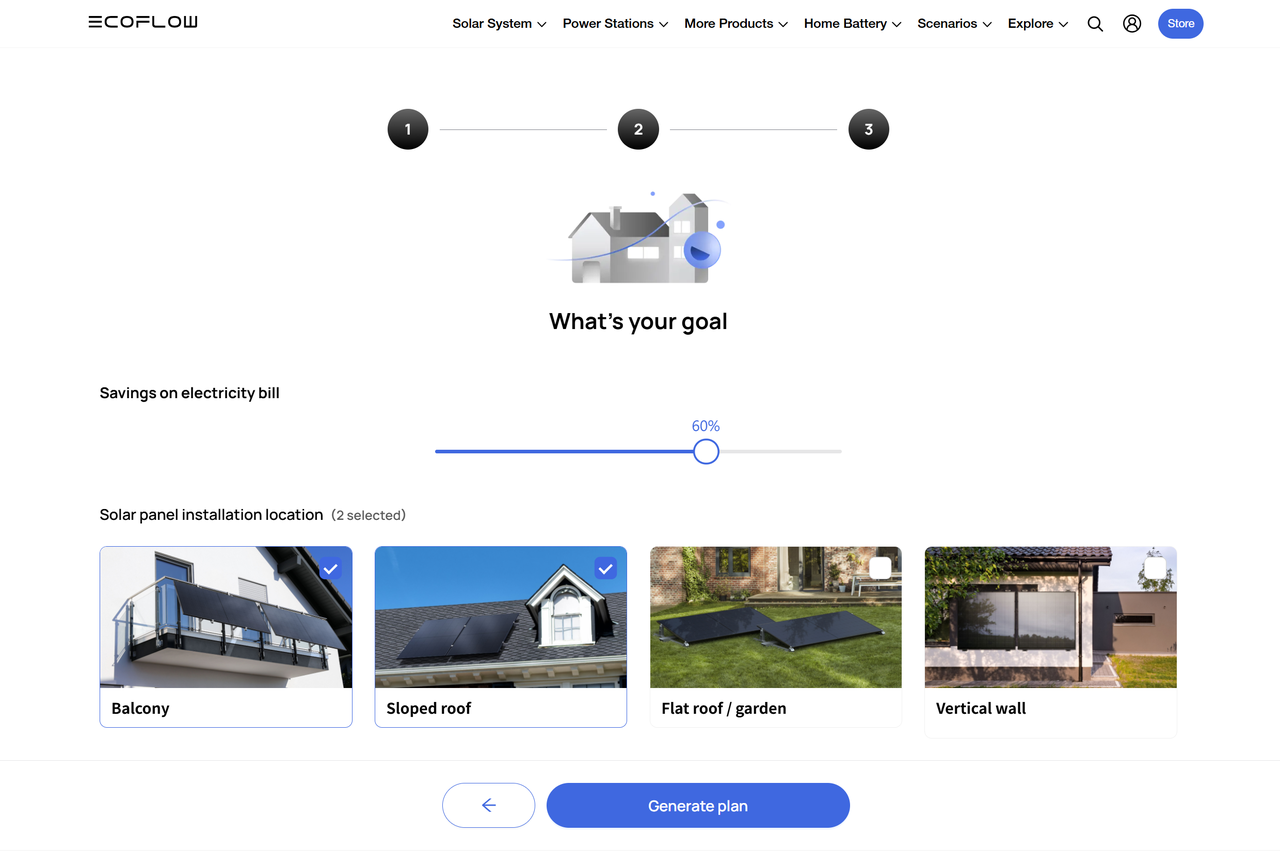
Set household & savings goals: Choose your household size, daytime/nighttime usage ratio, your savings goal (e.g., 60% on electricity bills), and solar panel installation spots.
Generate & view your custom plan: Click "Generate plan" to see your recommended bundle, annual savings, monthly bill reduction, and product details.
Once you've generated your plan, you'll see just how much the EcoFlow STREAM series can save you on energy bills every year. This all-in-one solar power solution is designed for easy home installation, reliable performance, and real long-term savings. Start your journey to cheaper, greener electricity today with a personalised solution built for your home.
Beyond the calculator: 5 proven ways to cut UK energy bills
Choose direct debit to save more than £100 annually
Paying by Direct Debit is usually cheaper than standard credit or prepayment, as suppliers offer lower rates and reduced admin costs. For many UK households, this can mean savings of £100 or more per year compared to other payment methods.
Improve home energy efficiency
Simple upgrades such as better insulation, LED lighting, and energy-efficient appliances can noticeably reduce energy consumption. When paired with the EcoFlow Stream series, these improvements help solar and stored energy cover a larger share of daily usage.
Use high-power appliances outside peak hours (17:00–22:00)
Electricity demand and grid strain are highest during the evening peak window. Running appliances like washing machines or dishwashers earlier in the day allows homes using EcoFlow Stream to rely more on stored solar energy instead of expensive peak grid power.
Maintain solar panels and storage systems regularly
Dust, shading, or outdated firmware can reduce solar output and battery efficiency over time. Keeping panels clean and ensuring your EcoFlow Stream system is updated helps maintain optimal performance and consistent savings.
Verify actual bills with the calculator to avoid billing errors
Comparing your supplier bills against calculator estimates helps spot discrepancies in unit rates, standing charges, or meter readings. Regular checks ensure you're billed correctly and getting the full benefit from your EcoFlow Stream setup.
Conclusion
To summarize, understanding your energy bill calculator, avoiding calculation mistakes, and using a reliable calculator gives you a clear picture of where your money goes each month. Pairing these insights with solar and storage solutions helps turn estimates into real, long-term savings. The EcoFlow Stream series makes this transition easier by enabling households to store and use more of their own solar energy, reducing reliance on the grid. From beginner-friendly setups to higher-power systems, EcoFlow offers flexible options tailored to different household needs. With smarter energy use and the right EcoFlow solution in place, cutting UK energy bills becomes both achievable and sustainable.
FAQs
Is there a free energy bill calculator available to UK residents?
Yes, several free energy bill calculators are available for UK residents online. These tools allow you to enter your electricity or gas usage, tariff details, and payment methods to estimate costs. They are useful for budgeting, comparing tariffs, and understanding how usage changes affect your bills.
How do I calculate my electricity bill from a meter reading in the UK?
To calculate your bill, subtract your previous meter reading from the current one to find the total kWh used. Multiply this by your unit rate, then add the standing charge for the billing period. This method gives a close and reliable estimate of your actual electricity costs.
How much is my electric bill? Can I calculate it online?
You can calculate your electric bill online using an energy bill calculator designed for UK households. By entering meter readings, unit rates, standing charges, and payment type, you'll receive an estimated monthly and annual cost. This helps you monitor spending and plan energy savings more effectively.