Economy 10 Tariff UK: Prices, Rates And Effective Ways To Save
- What is an economy 10 tariff, and how does it work?
- Economy 10 tariff prices and supplier comparison
- Is economy 10 tariff the best option for your home?
- How does Economy 10 compare with standard variable tariffs
- The smarter alternative to economy 10 tariffs: control your own energy
- 5 practical ways to maximise savings with or without economy 10
- Conclusion
- FAQs
The difference that you can see in your electricity bill when you understand how an economy 10 tariff works can make a tangible difference in your electricity bill, particularly when you consider that your household may consume energy at different times of day. This arrangement allows you to enjoy lower-priced electricity during particular off-peak times, allowing you to more effectively manage usage.
An economy 10 tariff UK typically provides 10 hours of reduced electricity rates spread across the day and night. This is especially applicable to homes that have electric heating, storage heaters, or a high amount of energy usage outside peak times. With a simple change in when you use your electric power, you can cut down on your total electric bill without making any sacrifice in comfort. To reduce reliance on timed tariffs, many homeowners are switching to solar storage solutions available on the official store:
What is an economy 10 tariff, and how does it work?
An economy 10 tariff is an electricity plan that is based on a time of use tariff, which is cheaper during off-peak times, and more expensive during peak times. These off-peak periods are typically divided into three time blocks, namely, overnight, afternoon, and evening, which gives them more flexibility than Economy 7 tariffs.
With an economy 10 tariff UK, your electricity meter will record the amount of electricity used during peak and off-peak periods. This is because you pay varying amounts based on the time you consume electricity. The greatest beneficiaries of this tariff structure would be households able to reduce electricity consumption on energy-intensive activities such as heating water or running appliances during off-peak times.
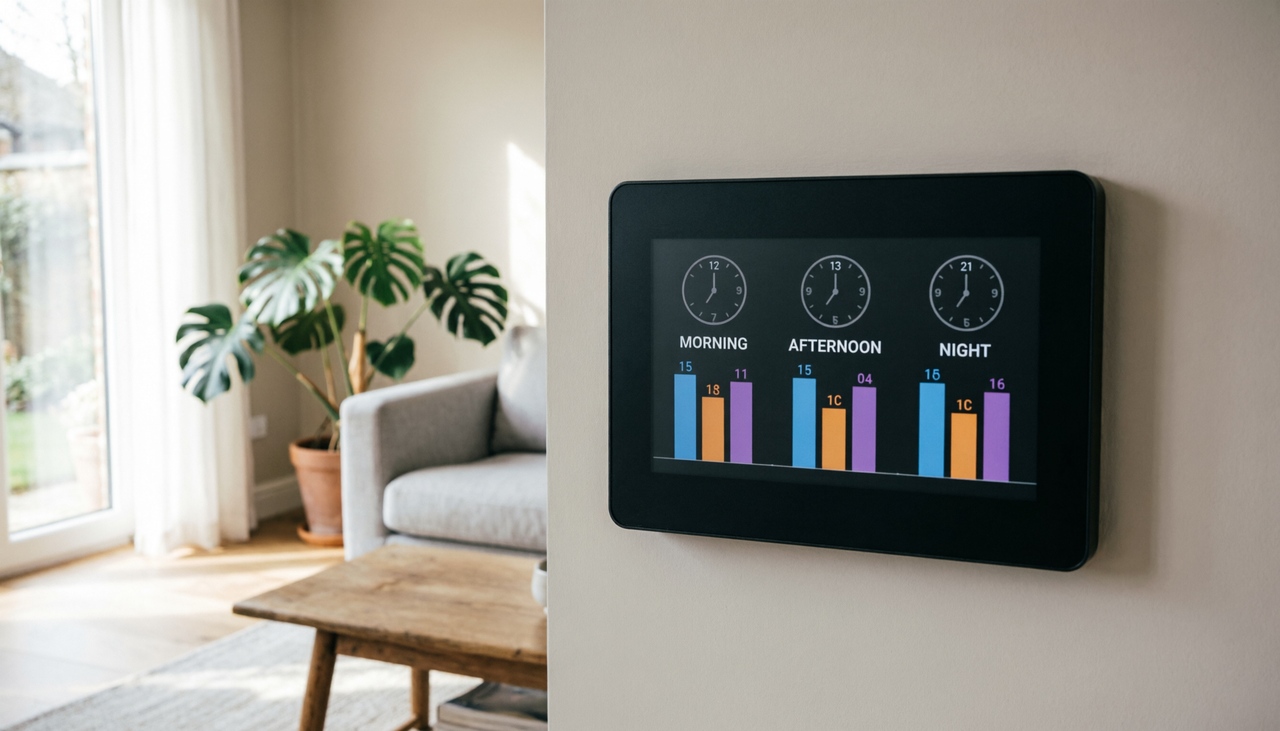
How the economy 10 tariff rates are structured
The economy 10 tariff rates are created to promote the use of energy during times of low demand. The tariff does not have a single flat rate but divides your electricity pricing into two categories: peak and off-peak.
Typically:
Non-peak periods (10 hours in total): Reduced rates, distributed between night and day.
Peak hours: Higher rates during active times in the electricity demand.
Such a building enables households to plan their energy consumption in a more strategic way. To illustrate, running the heating systems or large appliances during off-peak periods can save a lot of money as compared to their use during peak hours.
Who offers an economy 10 tariff in the UK
Should you be asking yourself, who provides economy 10 tariff rates in the UK, there is restricted availability as compared to normal tariffs. Not all energy suppliers provide Economy 10 plans, and they are often dependent on your location and meter type.
Other large suppliers such as British Gas, EDF and Scottish Power might offer a variation of Economy 10, but this may not be available everywhere in the country. Sometimes, smaller or regional suppliers can offer more customized solutions. Due to these restrictions, it is prudent to ensure that your Economy 10 tariff UK is available to serve your property and that it fits the energy consumption habits of the property.
Economy 10 tariff prices and supplier comparison
In analyzing an economy 10 tariff, it is important to understand the price difference between the suppliers. Although all Economy 10 plans are structured on a peak and off-peak basis, the actual rates may differ depending on your area, provider and payment method. That is why by comparing an economy 10 tariff UK across providers, you can find out which of them is the most cost-effective for your household.
Cheapest economy 10 tariff UK options
The cheapest economy 10 tariff UK depends mostly on the degree at which your energy consumption is in line with the off-peak hours. Suppliers can provide a very slightly different unit rates and standing charges even within the same type of tariff.
In general, the lowest costs are those that:
Provide discount off-peak rates during long periods of time.
offer discounts on Direct Debit payments.
Have competitive standing charges
You have to shop around to be able to find the best offers and you will also have to look at how you use them to be able to find the best deal. When you can move a good portion of your electricity used to off-peak hours, an economy 10 tariff can be effective at delivering the desired savings.
OVO economy 10 tariff prices
Considering the prices of the OVO economy 10 tariff, it is worth noting that OVO and other suppliers may not necessarily advertise Economy 10 as a standard product. Rather, it tends to vary depending on your meter type and location.
Where applicable, the prices of OVO usually encompass:
Two sets of unit rates are based on peak and off-peak usage.
Competitive off-peak rates of overnight and daytime stay.
A daily standing charge of a fixed amount.
Making a comparison of the prices of economy 10 tariff prices offered by OVO with the prices offered by other suppliers can assist you in determining whether they have better value in consideration of your energy consumption patterns.
Is economy 10 tariff the best option for your home?
When selecting an Economy 10 tariff UK, it is not always the correct tariff to fit every family. As much as it can bring about savings, its success greatly depends on how and when you use electricity. Electrically heated houses or those with non-standard usage patterns are the best beneficiaries, and others might find the standard tariffs more acceptable.
Pros and cons of economy 10 tariff
Knowing the pros and cons of an economy 10 tariff would allow you to decide whether it is the correct decision.
Pros:
Reduce electricity bills when there is low electricity demand.
More versatile than Economy 7 because of split off-peak times.
Perfect to be used in homes with storage heaters or those with heavy daytime usage.
Cons:
Peak rates that are higher may lead to higher costs unless usage is controlled.
Low supplier and geographical availability.
Must be planned carefully to be able to save a lot of money.
Briefly, an economy 10 tariff UK is an effective but not universal strategy since it requires households to actively switch their electricity consumption to less expensive periods of the day.
How does Economy 10 compare with standard variable tariffs
The question of whether to pursue an economy 10 tariff or a regular plan usually boils down to the flexibility of your energy consumption. Whereas Economy 10 rewards you for using electricity at certain times, a standard variable tariff gives you only one rate structure (within the price cap) without the need to shift to use.
Economy 10 can offer savings to households that can plan for off-peak hours. Nevertheless, when the volume of energy that you consume is evenly distributed throughout the day, a standard tariff might be less complicated and more foreseeable.
British gas standard variable electricity tariff vs Economy 10
When we compare a British gas standard variable electricity tariff to an economy 10 tariff, the most notable difference is on the pricing structure.
Economy 10: Peak and off-peak hours have different rates.
Standard variable tariff: A single variable rate that is determined by the price cap.
Economy 10 can save money by being able to shift usage to cheaper times. Otherwise, a standard tariff could be simpler to administer without always monitoring the time of use.
British gas standard variable tariff cheaper at night
Another popular question is whether any British Gas standard variable tariff is cheaper at night or not. No, in most instances.
Normal variable tariffs typically levy the same unit rate at all times of the day. They do not provide inherently cheaper night rates as does an economy 10 tariff, which restricts time-based saving.
British gas standard variable tariff price per kWh
When you are looking for the charges of the British Gas standard variable tariff, the price per kWh is subject to the energy price cap, which implies that it could change every now and then.
On the one hand, this ensures that the prices remain within a manageable range, but on the other hand, it does not offer the same cost-saving opportunities as off-peak tariffs. Comparatively, with an economy 10 tariff, you can actively lower your average cost per kWh by taking advantage of the cheaper periods of the day.
The smarter alternative to economy 10 tariffs: control your own energy
Although an economy 10 tariff UK has the potential to save money when it is applied in the right way, it is still highly dependent on supplier costs and how it should be used at the right time. Better in the long run would be to create and control your own energy so that you do not rely on tariff structures at all.
And this is the point where solar energy and battery storage systems can give a more predictable and flexible means of controlling the electricity costs.
How solar energy reduces dependence on tariff timings
When you are banking on an economy 10 tariff, your savings will be highly dependent on the utilization of electricity during select off-peak periods. It involves changing your routine to accommodate hours of the day, not always very realistic in a family context today.
This is transformed by solar energy. You can produce your own electricity during the day and use it when necessary rather than wait until the rates are lower. This helps you rely less on the economy 10 tariff rates and have greater flexibility and control over your energy usage.
Solar panels, combined with a storage system, allow you to use stored energy during peak times without the high costs normally associated with standard tariffs.
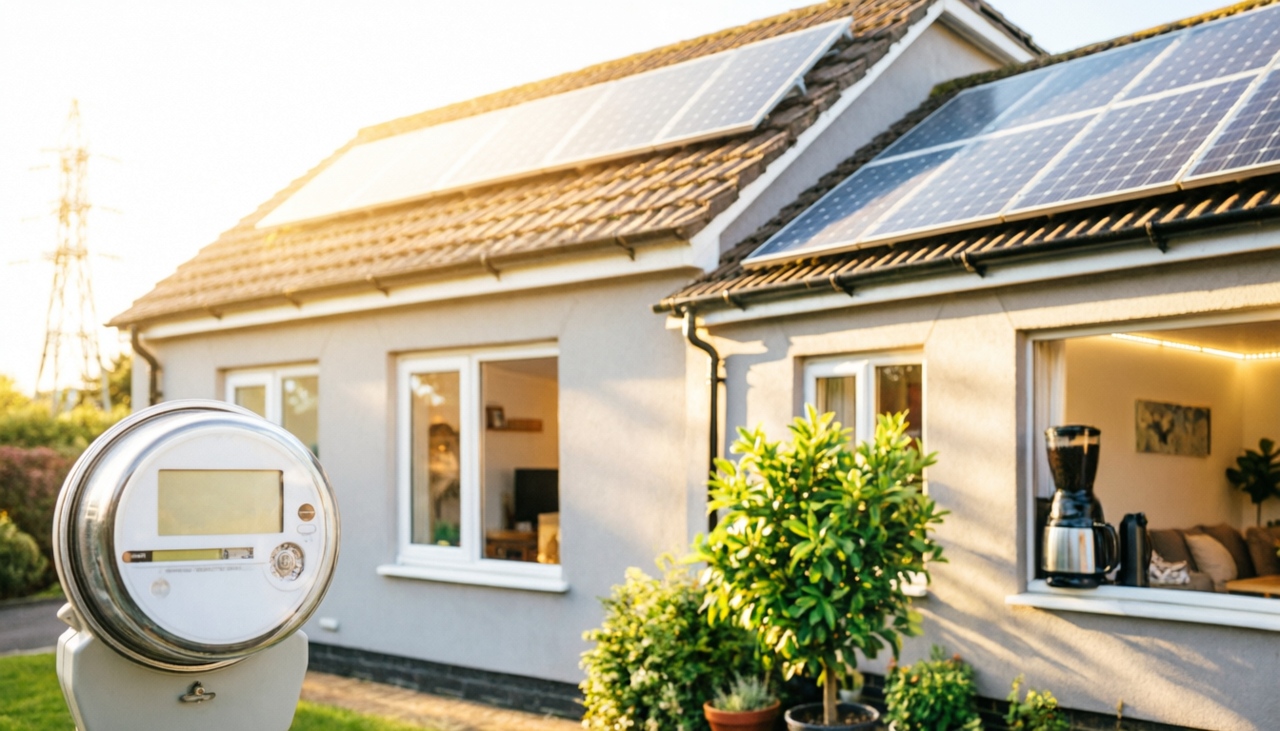
EcoFlow STREAM Ultra and Ultra X for daily energy savings
To households that seek to leave time-based tariffs, smart solar storage systems provide a more flexible and efficient solution. The new EcoFlow STREAM series is set to assist you in storing and using your own energy throughout the day, without having to rely on both peak and off-peak pricing.
These systems can enable you to store solar energy when it is available and to use it later, especially during the expensive times, hence they are a strong alternative to the best economy 10 tariff options available today.
EcoFlow STREAM Ultra/Pro Home Solar Battery
EcoFlow STREAM Ultra X Home Solar Battery
Recommended STREAM setups for different household needs
Determining the appropriate arrangement would be based on your energy consumption rate and the extent to which you wish to stop relying on electricity generated by tariffs. Whether you are already using an Economy 10 tariff UK plan or are considering another option, the correct system can easily help you to save a lot.
Small families / low usage.
One STREAM Ultra X can energize necessities such as lighting, routers, and the small appliances used daily and help to reduce daily reliance on the grid.
Middle incomes / moderate consumption.
STREAM Ultra or Pro systems offer increased storage capacity and can support kitchen appliances and nighttime use more efficiently.
Big families / high demand.
The combination of STREAM Ultra X with more storage will enable you to operate high-power appliances and minimise the use of both peak and off-peak tariff periods.
With smart energy storage, by replacing fixed tariff schedules, you would even have complete control over how you use your electricity, making your home less reliant on fixed tariff schedules and more energy-efficient generally.
5 practical ways to maximise savings with or without economy 10
Shift usage using an economy 10 tariff schedule
To get the most from an economy 10 tariff, plan your energy use around off-peak hours. By operating devices such as washing machines or heaters during these times, you will reduce the average cost. This strategy is particularly effective with houses where daily schedules are flexible. In the long term, optimization of usage and low-cost can offer a substantial reduction in bills.
Track costs with an energy bill estimate calculator UK
An energy bill estimate calculator UK can assist you in keeping track of the amount you are spending. It would enable you to compare peak and off-peak usage, and identify waste. This simplifies changing habits and maximises savings. With regular monitoring, long-term energy management is improved.
Combine smart habits with off-peak usage
Although this is not a rigid schedule, by improving efficiency, coupled with an economy 10 tariff UK, savings can be enhanced. Use energy-efficient appliances and also do not consume unnecessarily during peak hours. Even minor changes, such as switching off standby appliances, are beneficial. Such practices lessen the need to use costly electricity.
Compare suppliers for the best economy 10 tariff
To make sure that you are not overpaying, it is a good idea to review the best economy 10 tariff options on a regular basis. Suppliers can provide various rates and standing charges or benefits. The annual cost can be reduced by switching providers whenever better offers are available. Being proactive will assist you in maintaining energy costs within bounds.
Reduce grid reliance with solar energy solutions
The idea of moving past tariff dependency is one of the smartest investments in savings. Whatever type of tariff, solar systems will save you the amount of electricity you would need off the grid. This can be used together with or rather than an economy 10 tariff, providing a greater level of flexibility. In the long-term, this strategy will yield uniform and foreseeable energy cost savings.
Conclusion
It is pretty advantageous to have an understanding of how an economy 10 tariff works, so that when you come to managing the cost of electricity in the UK, you have a better understanding of how an economy 10 tariff works. Not only by comparing supplier rates to shifting usage during off-peak hours, but in many other ways as well, can you reduce your bills and make smarter energy decisions. Nevertheless, tariffs continue to rely on external prices and time-based constraints, which can constrain the overall savings potential.
To have a much more reliable and long-term solution, there are systems such as the EcoFlow STREAM which can provide a smarter alternative. You can store and use your own energy, decrease reliance on the grid, and have added control over your household electricity expenses with options like EcoFlow STREAM Ultra/Pro Home Solar Battery and EcoFlow STREAM Ultra X Home Solar Battery.
FAQs
What is an economy 10 tariff and how is it different from economy 7?
An Economy 10 tariff gives 10 hours of off-peak electricity at any time of the day or night, whereas an Economy 7 tariff gives 7 consecutive hours of off-peak electricity at any time of the day or night.
Economy 10 can be much more flexible with daytime use outside of the peak.
Economy 7 is less complex but not as flexible for use during the day.
They both need to change usage to the cheaper periods in order to save.
For this reason, an economy 10 tariff UK would be better suited to homes with differing daily energy requirements.
Who offers economy 10 tariff in the UK?
If you are wondering who has economy 10 tariff plans, availability is less than that of normal tariffs. Some of the larger suppliers, such as British Gas, EDF and Scottish Power, might offer Economy 10 depending on where you live and the type of meter.
As not every part of the country has this tariff, it is better to ask suppliers about it directly or use a price analysis tool to make sure it is available in your area.
Is the Economy 10 tariff cheaper than the standard variable tariff?
A rate 10 tariff may be less expensive than a normal variable tariff when most of your power consumption is during off-peak periods.
Reducing off-peak prices decreases the average electricity prices.
Increased peak rates may add to bills unless use is controlled.
The amount of your daily energy savings is dependent on your daily energy habits.
An economy 10 tariff UK can provide some evidently observable benefits in the form of a drop in cost.
What is the cheapest economy 10 tariff UK right now?
The cheapest economy 10 tariff UK can vary depending on your region, electricity supplier, off-peak usage habits, and current market rates. Since tariffs frequently change, the best option today may not remain the cheapest in the future.
For households that rely heavily on off-peak electricity, comparing unit rates and standing charges is still important. However, many UK homeowners are now looking beyond tariff switching alone and focusing on generating and storing their own electricity through solar energy systems. By combining solar panels with home battery storage solutions such as the EcoFlow STREAM series, households can reduce dependence on changing Economy 10 tariff rates and achieve more predictable long-term electricity savings.