The Complete Guide to Using Camping Electric Hook-Up
Using a camping electric hook-up correctly can make your outdoor experience far more comfortable and efficient. However, it's important to understand how the system works before plugging in your caravan or campervan. From choosing the proper connection cable to checking the campsite's power rating, each step ensures a safe and stable supply of electricity. A well-managed setup protects your appliances and prevents overload issues.
In this guide, you'll learn everything you need to know about choosing and using the best camping electric hook-up, as well as why a portable power station can be a smart alternative for camping, covering essential equipment, safe setup, and efficient power management.
What is a camping electric hook-up?
A camping electric hook-up is a dedicated electrical connection available at many modern campsites. It lets campers connect their tent, caravan, or motorhome directly to the site's power supply using a weatherproof cable and plug. This steady electric source allows you to run essential items such as lights, mini fridges, phone chargers, and small kitchen appliances. Electric camping hookups are designed with safety in mind and usually provide a regulated voltage suitable for camping equipment. They are popular with campers who want extra convenience without giving up the outdoor experience.
How does an electric hook-up work at campsites?
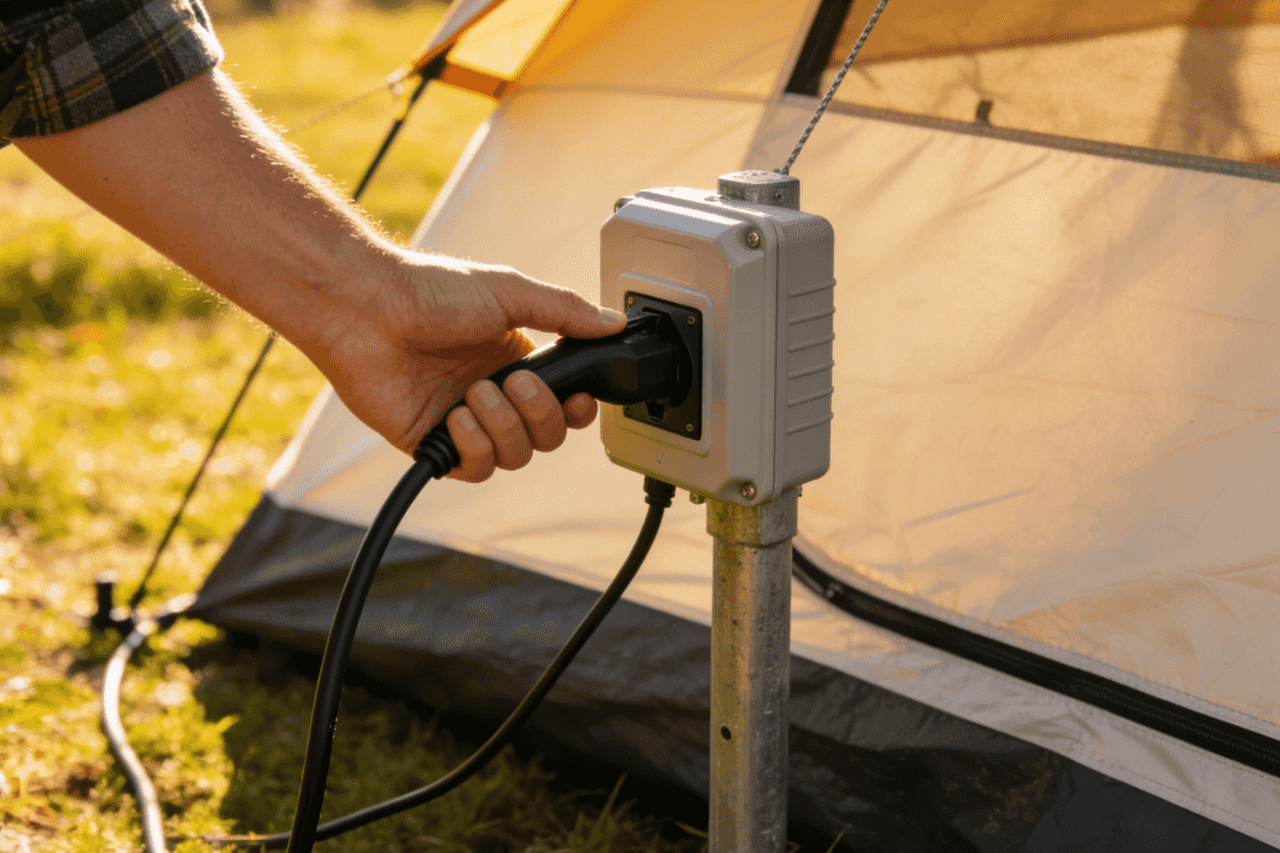
An electric hook-up at a camping site supplies regulated mains power directly to your encampment unit. After positioning your dormobile or powered tent on the pitch, connect a certified electric camping cable to the power pedestal. When the supply is switched on, electricity is distributed through your internal fuse box to run approved appliances. Most pitches provide limited amperage, so it's important to manage what you use at the same time.
How to use an electric hook-up at campsites
Using a camping electric hook-up at your campsite provides a reliable source of power for lights, appliances, and electronic devices, making your stay more comfortable and convenient. However, safe and effective use requires understanding the correct setup, monitoring your power load, and following best practices to prevent accidents or equipment damage. The following step-by-step guide will walk you through the process, ensuring a smooth and secure camping electric experience.
Check your pitch: Confirm the available amperage (usually 6A–16A) and plan your power usage.
Use a certified camping lead: Ensure it's 230V with RCD protection and inspect for damage.
Connect to your vehicle: Plug the lead firmly into your electric inlet before the site socket.
Plug into the site outlet: Connect securely and turn on site power if required.
Manage your load: Avoid running high-power devices simultaneously to prevent tripping the breaker.
Regular inspections: Periodically check for heat, moisture, or loose connections during your stay.
Safe disconnection: Turn off the site outlet first, then unplug from your vehicle and store the cable properly.
Pros and cons of electric hook-up for camping
Before determining whether it suits your travel needs, it is important to evaluate both the benefits and the limitations. Here is a clear breakdown of the pros and cons of using an electric hook-up while camping.
Pros
Convenience: An electrical hook-up for camping provides instant power for your devices and appliances, so you don't need to carry extra batteries or set up generators, which saves time and effort. This allows campers to focus more on enjoying their trip rather than managing electricity.
Comfort: Access to electricity lets you operate heaters, fans, mini-fridges, and other appliances. It makes camping in extreme weather more comfortable and pleasant. Even long stays become easier when you can keep food fresh and stay warm or cool.
Versatility: With electricity hook-up camping, you can use a variety of devices for cooking, entertainment, or work. It supports modern conveniences like laptops, coffee makers, or lights for nighttime activities. This flexibility makes camping suitable for families, solo travellers, or those combining work and leisure.
Durable build & Smart features: The units are made of solid, high-quality materials for long-lasting use. Smart features like app control and safety monitoring ensure efficient and secure power management. You can track usage, adjust settings, and protect your devices from overloading or damage.
Solar compatibility: EcoFlow stations can be paired with solar panels to recharge anywhere the sun is available. This feature is great for off-grid camping with electric hook-up, outdoor adventures, or emergencies.
Cons
Power capacity: Campsite hook‑ups often provide limited current, so using high‑wattage appliances can overload the system and trip breakers. This means you may need to plan what your power is and when to avoid disruptions.
Availability: Not all pitches provide electrical hook‑ups, and powered spots can sell out instantly in peak season. This forces early booking and can limit where you stay on site.
Access and crowds: Powered pitches are usually grouped and can be busier or less scenic than non‑powered areas. You might find less privacy or more noise around these zones.
Voltage fluctuations: Some campsites have power that isn't always steady, especially at older sites or during peak times. Lights may flicker or small surges can happen, which isn't great for sensitive electronics like phones or laptops.
Dependence on site power: If the campsite supply goes down because of weather, maintenance, or faults, your electricity stops too. You have to wait until the problem is fixed, leaving you without power for a while.
Alternatives to camping electric hook-up: EcoFlow Portable Power Stations
Camping electric hook-ups are convenient, but they restrict you to powered campsites and often come with extra fees. The Portable Power Station from EcoFlow provides a more flexible solution by storing electricity in high-capacity lithium batteries that can run lights, charge devices, power mini fridges, and even support small appliances. Many models feature fast-charging technology and multiple output options, including AC, USB, and DC ports. They can be recharged through a wall socket, car outlet, or portable solar panels, which makes them suitable for longer off-grid stays. Unlike traditional generators, they operate silently and produce no fumes, which provides a cleaner and safer camping experience. This makes EcoFlow portable power stations a practical and sustainable alternative to camp electric hook-ups.
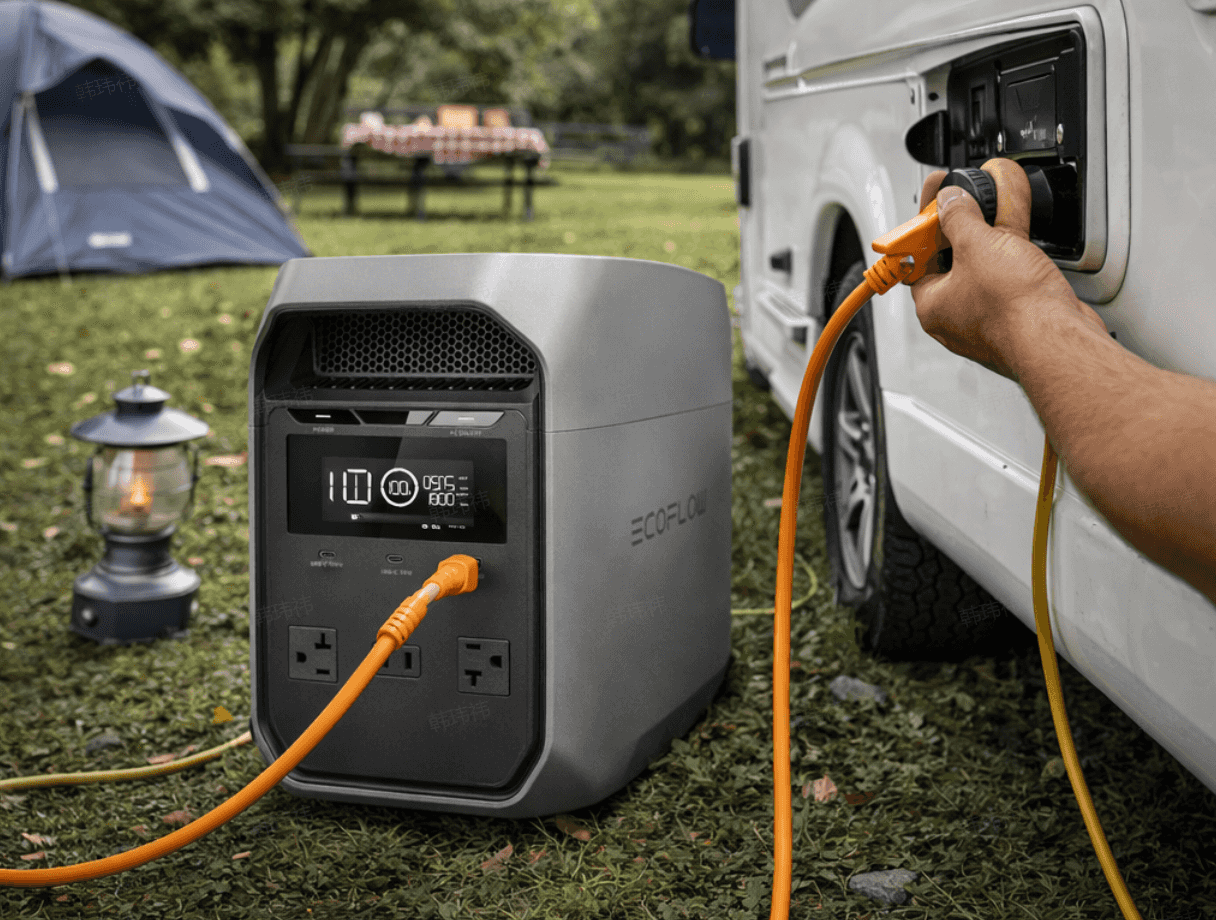
Ideal for small power needs: EcoFlow DELTA 3 Plus (1 kWh)
The EcoFlow DELTA 3 Plus is a compact portable power station designed for camping, travel, and small backup power needs. It features a 1024Wh battery capacity with 1800W AC output and a 2700W surge, while X-Boost technology allows it to run devices up to 2400W. With four AC outlets, two 100W USB-C ports, USB-A ports, and additional car and DC outputs, it can power everyday devices such as laptops, phones, cameras, and small appliances at the same time.
For convenient recharging, it supports 1200W fast AC charging, solar input up to 500W, and car charging during travel. The power station uses a LiFePO4 (LFP) battery that offers around 3000 cycles to 80% capacity, helping ensure reliable long-term use. It also allows extra battery expansion for longer runtime when needed. With Wi-Fi and Bluetooth connectivity, users can easily monitor and manage power through the mobile app, while its portable size and 12 kg weight make it practical for outdoor trips or light home backup
Best for: Campers, travellers, and homeowners who need compact, reliable portable power for small appliances, device charging, and light backup during short outages
Best for high-power demands: EcoFlow DELTA 3 Max Plus (2 kWh)
The EcoFlow DELTA 3 Max Plus is a powerful portable power station with a 2048Wh battery and 3000W AC output, extendable up to 3900W with X-Boost. It can run heavy-duty appliances and multiple devices simultaneously, featuring four AC outlets, USB-A, and high-power USB-C ports.
It supports fast AC charging, solar input up to 1000W, generator, and alternator charging, offering versatile off-grid power options. Built with LiFePO4 technology, it ensures safe, stable, and long-lasting performance. Compact (494 × 242 × 305 mm) and portable (22.1 kg), it includes Wi-Fi/Bluetooth monitoring and a 10 ms UPS function, backed by a 5-year warranty.
Best for: Outdoor enthusiasts, campers, and off-grid adventurers who need dependable, high-capacity power to run multiple devices and heavy-duty appliances simultaneously.
Essential safety tips for using electric hook-ups while camping
Ensure equipment meets standards
Always choose electric hook-up cables and plugs that are designed for camping use. Approved equipment is tested for safety and can handle outdoor conditions. Using the right products lowers the risk of electric shock, overheating, and fire. Safe equipment gives you peace of mind during your trip.
Avoid overloading circuits
Every camping site with an electric hook-up has a limited power capacity. Using too many high-energy appliances at the same time can exceed this limit and may cause a power shutdown. Overloading can also damage your devices. To avoid issues, use one heavy appliance at a time and manage your electricity consumption carefully
Use waterproof equipment
Outdoor camping areas often become damp due to rain, humidity, or early morning dew. Using waterproof plugs, connectors, and cable covers helps protect your electrical system from moisture. Water entering electrical parts can cause short circuits or electric shocks. Keeping all connections dry and protected is an important step for risk-free camping.
Inspect cables and outlets regularly
Before connecting to the electric hook-up camping, carefully examine all wires, plugs, and sockets. Make sure there are no exposed wires, bent pins, or signs of wear. Damaged parts can interrupt the current supply and create safety risks. Replacing faulty items early helps maintain a reliable electrical setup.
Avoid using long extension cords
Long extension cords can overheat if they carry too much energy over a distance. They may also reduce efficiency and become tripping hazards. Use a wire that fits your needs without extra length. Keeping cords short and organized improves protection in your tent plot.
Conclusion
In conclusion, camping with an electric hook-up can significantly enhance the camping experience by providing steady access to power for everyday essentials. When campers understand the campsite's power capacity and set up their equipment correctly, they can safely run lighting, charge devices, and operate small appliances throughout their stay. Thoughtful preparation and responsible energy use help prevent overloads and ensure a hassle-free setup.
For added flexibility, portable power stations such as the EcoFlow DELTA 3 Plus and EcoFlow DELTA 3 Max Plus offer an efficient way to extend power availability beyond the hook-up point. Their portable design, strong output, and fast recharging capabilities make them useful for both campsite support and off-grid situations.
FAQs
What electric hookup do I need for camping?
For most campsites, campers need a standard 230V camping electric hook-up connection. This usually requires a weatherproof hook-up cable with blue CEE connectors, which are specifically designed for caravans, motorhomes, and campervans. The cable connects your vehicle to the campsite's electrical post, which allows you to safely access mains power. Campsites normally provide different amp limits, such as 10A or 16A, which determine how much electricity you can use at one time. Choosing a good-quality hook-up cable and checking the site's power capacity helps ensure a safe and reliable connection during your camping stay.
Does an electric hookup charge a leisure battery?
Yes, a campsite with electric hook-ups usually allows the leisure battery to recharge while your caravan or campervan is parked. The onboard charging system converts the mains electricity and sends it to the battery. This keeps the battery topped up so it can continue running essential systems such as interior lights, water pumps, and control panels. As a result, campers can use these features without worrying about rapidly draining the battery.
Do campervans need an electric hook-up?
Campervans do not strictly require an electrical camping hook-up, but it can make camping much more convenient. Many campervans rely on leisure batteries, solar panels, or portable power stations to operate basic systems. However, an electric hook-up provides a steady source of electricity for charging batteries and running additional appliances, which is especially helpful during longer stays at campsites. For travelers who prefer comfort and consistent power, having access to an electric hook-up is a useful advantage.