- Whole House Surge Protector: How It Works & Why You Need It
- What Is a Whole House Surge Protector?
- How a Whole House Surge Protector Works
- Why Canadian Homeowners Need Whole-Home Surge Protection
- What Key Specifications Should You Look for When Buying?
- Best Practices for Maximum Surge Protection
- Conclusion
- FAQ
Whole House Surge Protector: How It Works & Why You Need It
You’ve probably seen it before, a loud crack of thunder rolling over the Rockies, or a heavy Ontario snowstorm pushing the power grid to its limit, followed by that brief flicker of the lights. Most of the time, we shrug it off. But that split second is often a power surge, and over time, those surges can quietly damage some of the most expensive systems in your home. This guide breaks down how a whole house surge protector actually works, why it makes sense for Canadian homes and weather conditions, and how a layered approach to protection helps keep your house comfortable, functional, and stress free year round.
What Is a Whole House Surge Protector?
Think of a whole house surge protector as a security guard stationed at your electrical panel. Unlike the power bars tucked behind a couch or under a desk, this device is installed at your home’s main service entrance, where electricity first comes in from the grid. From there, it keeps an eye on everything flowing through your system and steps in the moment voltage jumps beyond what your home can safely handle. By stopping those spikes at the source, it helps protect things like your fridge, heating and cooling system, and home office equipment before the surge ever reaches them.
How a Whole House Surge Protector Works
Electricity doesn’t always flow as smoothly as we’d like to think. Most days it’s stable, but during storms, grid switching, or sudden demand changes, it can surge unexpectedly. A whole house surge protector is designed to handle those moments before they turn into costly problems. As part of a broader home power protection approach, it’s often used alongside systems like a whole home battery backup, with each addressing different types of electrical risks. Here’s how it does that, step by step.
Monitoring Incoming Electrical Voltage
Once installed at your main panel, the device is always on watch. In Canadian homes, standard power runs at 120V/240V, and anything significantly higher than that can be harmful. The surge protector constantly checks incoming voltage, and the instant it detects a spike beyond safe levels, it reacts usually in less than a millisecond.
Diverting Excess Energy Safely to Ground
Rather than trying to “block” a surge outright, which isn’t realistic, the system redirects it. Think of it like a relief valve. When extra voltage shows up, the protector sends that excess energy safely into your home’s grounding system, keeping it away from appliances and electronics that aren’t built to handle sudden shocks.
Key Components Like MOVs and Gas Discharge Tubes
At the heart of most whole house surge protectors are components designed to react fast and take the hit so your electronics don’t have to. The most common one is called a Metal Oxide Varistor, or MOV. Under normal conditions, it mostly stays out of the way. But when voltage suddenly jumps beyond a safe level, the MOV quickly changes behaviour, opening a path that sends that extra energy straight to ground. How much punishment it can take is usually rated in joules, which gives a rough idea of how much surge energy the device can absorb over its lifetime.
In more heavy duty models, you’ll also find gas discharge tubes. These work a bit differently, acting like a controlled spark gap that switches on when voltage gets dangerously high. They’re especially good at handling very large or repeated surges without wearing out as quickly. While they don’t react quite as fast as MOVs, they’re better suited to bigger, longer lasting spikes.
Used together, these components balance each other out. MOVs handle the quick, everyday surges that happen around the house, while gas discharge tubes step in for the heavier hits. The result is a more durable and reliable layer of protection for your home’s electrical system.
Types of Surges It Can and Cannot Stop
Whole house surge protectors are built to handle common external surges, such as utility grid switching, power restoration after outages, and nearby lightning activity. These are the most frequent causes of damaging voltage spikes in Canadian homes, especially during storms or extreme weather events.
What they cannot stop is a direct lightning strike to the house itself. A single lightning bolt can carry tens to hundreds of kiloamperes and millions of volts, which is far beyond the capacity of even high end MOV based surge protectors, typically rated at up to 100 kA per phase.
They also do not correct long duration power issues like sustained over voltage or brownouts. Those conditions require dedicated voltage regulation or UPS systems that can actively manage power over time. For this reason, whole house surge protection is most effective when used as part of a layered setup, particularly for sensitive or high value electronics.


Why Canadian Homeowners Need Whole-Home Surge Protection
Canada’s power grid is regularly tested by extreme weather. Ice storms in Quebec, strong winter winds in the Maritimes, and sudden temperature swings across the Prairies all put added strain on electrical infrastructure. These conditions often cause power quality issues that don’t always lead to outages but still create damaging voltage spikes and micro surges. A quality whole house surge protector helps stop those fluctuations at the panel before they reach your appliances. When combined with local protection like surge bars or UPS units, it provides a stable, layered defence for sensitive electronics.
Protecting Expensive Electronics and Appliances
Electricity costs in Canada vary by province, typically ranging from about $0.13 to $0.22 per kWh. With most households using between 3,500 and 5,000 kWh annually, that power supports everything from smart appliances to furnaces and heat pumps. Protecting these systems from voltage spikes helps prevent damage to equipment that is expensive to repair and even more costly to replace.
Preventing Premature Equipment Failure
Not all surges are dramatic. Many are small, everyday micro-surges caused by appliances cycling on and off, such as refrigerators or air conditioners. Over time, these repeated stresses slowly degrade electronic components, shortening their lifespan. Whole home surge protection reduces this constant wear, helping equipment last closer to its intended service life.
Reducing Repair and Replacement Costs
In older Toronto neighbourhoods and rural parts of Alberta, winter storms can make the power grid especially unpredictable. Brief voltage swings during these periods are hard on equipment like furnace control boards, heat pumps, and AC compressors, which are all expensive to repair and not always easy to replace quickly.
A whole house surge protector is an important first step, but homes with higher electrical loads often benefit from an added layer of protection. In these cases, a system like the EcoFlow DELTA Pro Ultra Whole-Home Backup Power can be integrated at the main panel to act as a high capacity power buffer. This kind of buffering helps reduce wear on critical components and lowers the risk of costly repairs caused by repeated voltage fluctuations.
Improving Peace of Mind and Home Value
A professionally installed surge protection system is a long-term upgrade that works quietly in the background. It adds practical value to your home and provides peace of mind when storms roll through and the grid becomes less predictable.
What Key Specifications Should You Look for When Buying?
When you’re browsing at a Canadian hardware store or comparing options online, it pays to look past the price tag. Not all whole house surge protectors are built the same, and a few key specs make a real difference in how well they perform.
Surge Current Capacity (kA): This rating shows how much surge energy the device can handle in a single event. For whole home protection, look for a unit rated at least 50 kA, with 100 kA offering a stronger safety margin.
Voltage Protection Level (VPR): VPR indicates the voltage level at which the protector starts diverting excess energy. Lower is better. For standard 120V circuits, a rating of 600V or less is a good target.
Response Time: Surges happen fast, so your protector needs to react just as quickly. Quality units respond in nanoseconds, limiting how much excess voltage reaches your equipment.
Safety Certifications: In Canada, make sure the device is certified by CSA or UL for use on Canadian electrical systems. This ensures it meets local safety and performance standards.
Maximum Continuous Operating Voltage (Uc): This rating tells you how well the device tolerates minor, ongoing overvoltage conditions without degrading. A proper Uc helps prevent premature failure and extends the life of the surge protector itself.
Best Practices for Maximum Surge Protection
To properly protect a home, surge protection should be layered. A device at the main electrical panel is an important foundation, but on its own, it’s usually not enough for sensitive or high-value electronics that are used every day.
Ensuring Proper Grounding
A surge protector is only as effective as the grounding system it’s connected to. If the grounding rod is loose, corroded, or missing, which still happens in older Canadian homes and cottages, excess energy has nowhere to go. This is why it’s always worth having a licensed electrician inspect the grounding before relying on any surge protection device.
Layering Protection With High-Quality Power Strips
Even with a panel mounted surge protector in place, smaller surges can still occur inside the home. For critical equipment like a home office setup, gaming PC, or home theatre, adding a quality surge strip provides a second line of defence at the outlet level.
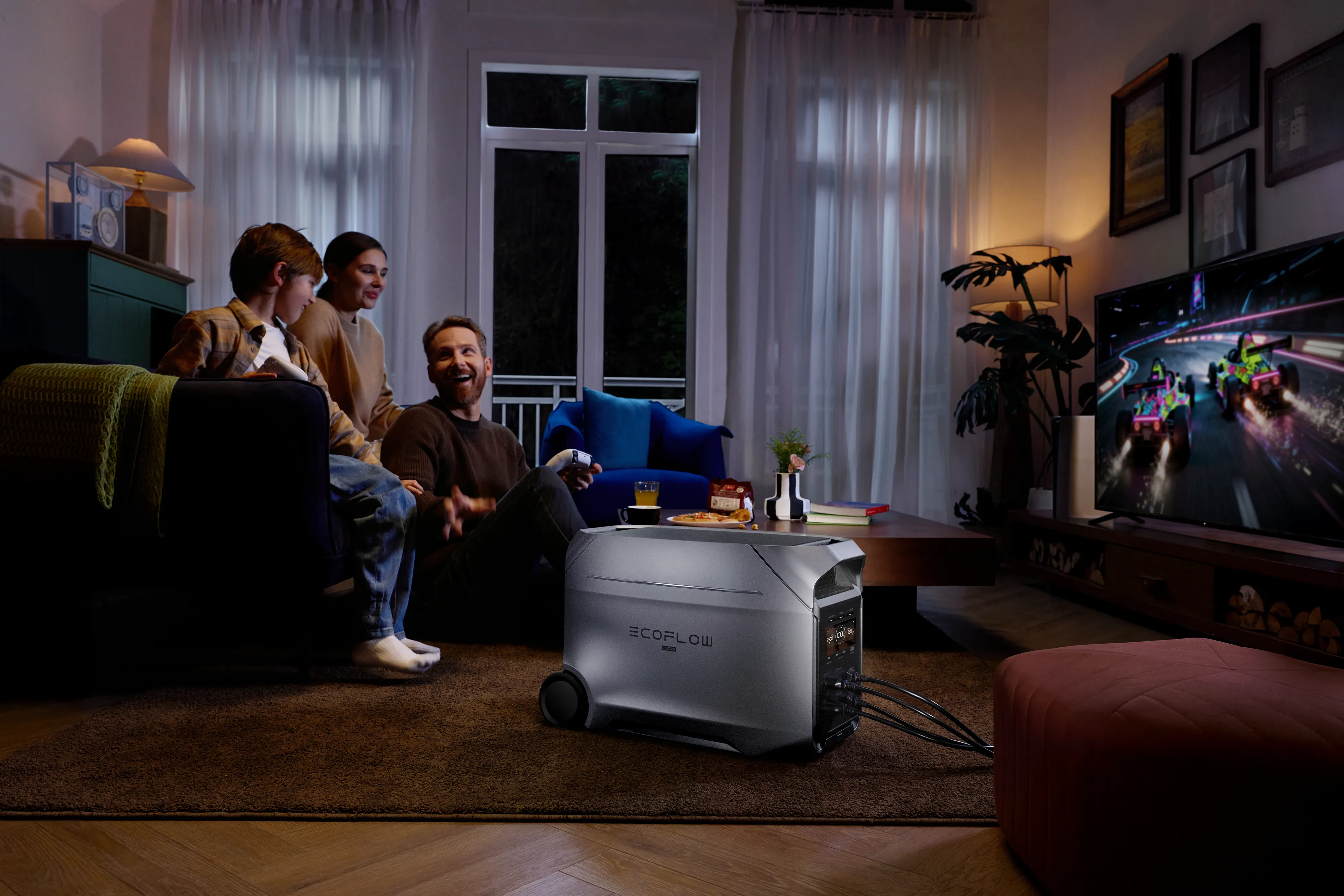
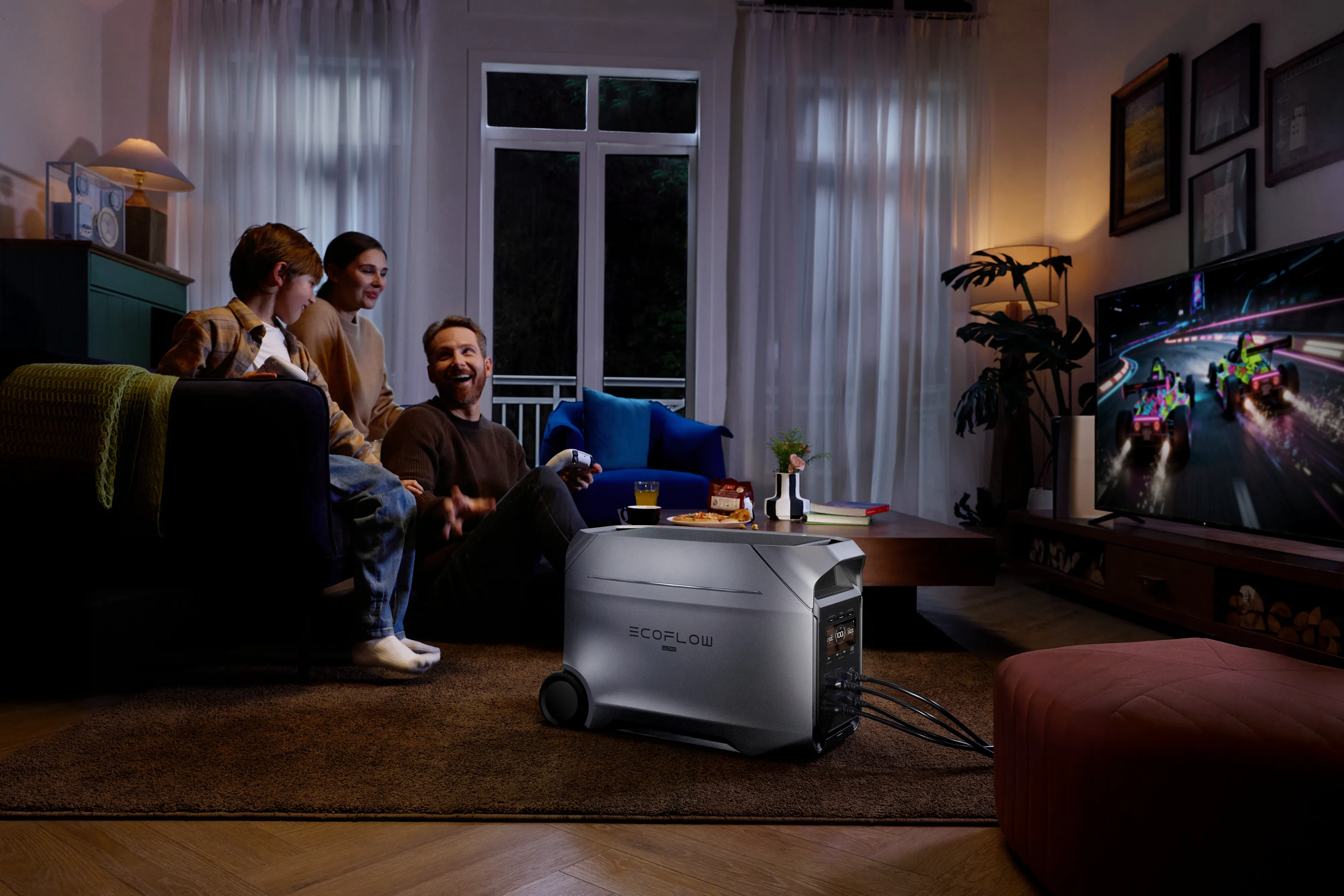
Still, power strips have limits. They can’t prevent brief power flickers that reset a computer or interrupt sensitive electronics. For home offices or entertainment areas, the EcoFlow DELTA 3 Ultra Plus Portable Power Station (3072Wh) adds a stronger buffer. With a 10 ms UPS switchover, it filters grid instability and delivers 3,072 Wh of pure sine wave power the moment the grid drops. It can also support higher power devices that would overwhelm a standard surge strip, keeping equipment and data protected.
Maintenance, Inspection, and Replacement Cycles
Surge protectors wear out over time. After a major surge, their protective components may no longer function properly, even if everything looks fine from the outside. Most units include an LED indicator; if that light goes out or changes colour, it’s time to replace the device. Even without a major event, many electricians recommend replacing surge protectors every three to five years.
Conclusion
A whole house surge protector plays an important role in dealing with the ups and downs of Canada’s electrical grid. On its own, it helps stop sudden voltage spikes before they spread through your home. When it’s paired with panel level protection and reliable backup options like the EcoFlow DELTA series, you create a setup that supports stable power, protects major appliances, and keeps electronics running smoothly. It’s a practical way to stay prepared, whether the weather brings a summer storm, a winter deep freeze, or anything in between.
FAQ
1. What is the lifespan of a whole-house surge protector?
Most whole house surge protectors last between three and five years, depending on how often they’ve had to deal with power surges. Many models include an LED status light that shows whether the internal components are still working. If that light goes out or changes colour, it’s usually time for a replacement.
2. Should a refrigerator be plugged into a surge protector?
Yes. Modern refrigerators rely on electronic control boards that are sensitive to power spikes and expensive to repair. Using a dedicated surge protector, or a high capacity power station, helps protect the fridge from damage and reduces the risk of food loss caused by electrical issues.
3. How much surge protection is needed for a refrigerator?
For a refrigerator, look for a surge protector rated at least 1,000 to 2,000 joules. It should also be able to handle the higher wattage draw that happens when the compressor starts up, which is when damage is most likely to occur.
4. Should the TV be plugged into a surge protector?
Absolutely. Today’s LED and OLED TVs are essentially large computers, and they’re very sensitive to voltage fluctuations. A good quality surge strip or a UPS is strongly recommended to protect the internal electronics and avoid costly repairs.
5. How much does it cost to install a whole-house surge protection?
In Canada, professional installation typically costs between $300 and $700, including the device and labour from a licensed electrician. While it’s an upfront expense, it’s often far less than the cost of replacing even one major appliance damaged by a power surge.