Three-Phase AC Power Calculation: Complete Guide for Canadian Homes
- How to Use the Three-Phase AC Power Formula for Your Home?
- Real Canadian Example: Power Load Calculation for Workshops
- Why Accurate Load Calculations Matter for Big Appliances?
- Which Systems Can Manage High Capacity Power Demands?
- How to Connect Your Backup Safely After Calculation?
- Final Tips for Optimizing Your Home Power
- Conclusion
- FAQ
Across neighborhoods from Toronto suburbs to BC’s rural residential areas, Canadian households are drawing more electricity than ever. More homeowners are adding heat pumps, EV home chargers, and heavy-duty workshop gear to their properties. Most Canadian homes still rely on standard 120/240V split-phase power, but larger lots, custom garages, and rural builds often make three-phase systems worth understanding thoroughly, although true three-phase service is still rare in residential settings.
This practical guide walks you through how to calculate three-phase AC power, how it compares to regular residential electrical setups, and how to safely plan for those growing high-power loads common in Canadian households.
How to Use the Three-Phase AC Power Formula for Your Home?
If you’re dealing with a three‑phase system, the math works a little differently from the single‑phase setup. While split‑phase service is still the norm in most Canadian urban residential areas, larger properties or homes with well‑equipped workshops may have three‑phase power. In such cases, some homeowners also consider a portable power station as a supplemental backup solution for essential loads during outages or temporary grid instability.
Mastering the Three-Phase AC Power Formula
To accurately determine the load, you must use the standard formula. For a balanced three-phase system, the real power (P) in watts is calculated as follows:
P = √3 × V × I × PF
Crucial Note on Voltage (V)
Here, V means line‑to‑line voltage. In some Canadian condos or mixed‑use buildings, you might see a 120/208 V Wye system, where the line‑to‑line voltage is 208 V. Using the 120 V line‑to‑neutral figure instead will significantly underestimate your actual power requirements.
Understanding Power Factor (PF)
This shows how effectively your equipment uses electricity. Purely resistive loads, like electric heaters, usually have a PF of 1.0. Motor‑driven tools, such as a table saw or compressor, often fall between 0.8 and 0.95. When in doubt, check the nameplate.
Real Canadian Example: Power Load Calculation for Workshops
A typical detached workshop operates several high-demand tools simultaneously:
Table saw: 3,000W
Dust collector: 1,800W
Air compressor: 2,200W
Total estimated load:
7,000W
Using a 208V three-phase system with a power factor of 0.92, the required current can be estimated as:
I = 7000 / (√3 × 208 × 0.92)
The required current is approximately 21 amps.
Motor‑driven tools tend to draw extra current for a moment when they start up, so electricians will usually choose a breaker rating a little higher than the calculated running load.
In many cases, a properly sized 30A three‑phase breaker should give enough breathing room for safe, steady operation. It’s a handy calculation for Canadian homeowners planning a detached garage, a woodworking shop, or adding an EV charger or high‑capacity HVAC system.
Vital Distinction: Three-Phase vs. Residential Split-Phase
Before doing any calculations, you should know what kind of service you have. Understanding the difference between single vs. three-phase systems is essential for determining which mathematical model applies to your home’s wiring. Most stand‑alone Canadian homes with 200A or 400A panels use split‑phase power rather than three‑phase power.
For Split-Phase (Standard Homes): Use P = V × I × PF (Here, V is typically 240V).
For Three-Phase (Large Estates/Workshops): Use the formula above with the √3 (≈ 1.732) multiplier, with V typically at 208V.
This ensures accurate load estimation based on system capacity.
Manual Math vs. AC Power Calculator 3 Phase
While the formula above is the gold standard, using an AC power calculator 3 phase can significantly reduce the margin for human error. Manual math is excellent for understanding the relationship between variables. However, a digital three‑phase AC power calculator can take pressure off, reducing the chance of small errors that might affect wiring choices later.
Understanding Residential Voltage in Canada
Most homes operate on 120/240 V split‑phase. Some mixed‑use or larger rural properties also have 120/208 V three‑phase.
Starting with the correct voltage makes all the difference; if the baseline is off, equipment sizing can drift, and performance may not match expectations.


Why Accurate Load Calculations Matter for Big Appliances?
Electrical demand in Canadian homes seems to creep up every year, placing more strain on the local grid. Sweltering summers in Ontario and deep prairie winters can put extra strain on household electrical systems.
Sizing Electrical Panels for Modern Heat Pumps
Many modern heat pumps draw a noticeable surge of current when they first kick in—especially on frigid days. If the system is not properly sized using three-phase load calculations, this can result in voltage drops, flickering lights, or nuisance breaker trips during compressor startup.
Preventing Circuit Overloads in Home Workshops
From a woodworker’s shop in the Fraser Valley to a garage in Nova Scotia, table saws and dust collectors can draw serious amperage. Performing a precise calculation for wattage for each machine ensures that your workshop circuits can handle the simultaneous operation of these heavy-duty tools. Getting the numbers right helps tools run smoothly and keeps your wiring from overheating.
Managing Heavy Loads for Level 2 EV Charging
With more Canadians plugging in their cars at home, Level 2 chargers are showing up in garages from Victoria to St. John’s. They need a steady, high-current supply. While Level 2 chargers are typically single-phase in most Canadian homes, an unbalanced electrical load across the panel can still contribute to voltage fluctuations or nuisance breaker trips, especially when other high-demand appliances are running simultaneously.
Identifying Phase Imbalance Risks
When one leg of your three‑phase system carries much more load than the others, it can throw things off. This leads to inefficiency and vibrating motors in appliances like your refrigerator or dishwasher, eventually shortening their lifespan.
Which Systems Can Manage High Capacity Power Demands?
Once you’ve done the math, the reality of Canadian weather often highlights a gap: what happens when the grid goes down? In these scenarios, many homeowners integrate a solar generator as a primary component of their portable backup strategy to keep essential loads running.
Deploying Professional Integrated Battery Backups
After completing your three-phase calculations, many Canadian families realize that keeping a central air conditioner or a full-home heating system running during an outage requires immense power and capacity. This is where the EcoFlow DELTA Pro Ultra Whole-Home Backup Power excels. With its high output capability, it can support select high-demand appliances such as certain central air conditioning systems or critical heating components, depending on their rated starting surge and continuous load. It provides stable output within inverter specifications and helps mitigate voltage fluctuation during grid instability.
Scaling Power with Portable Solar Generator Kits
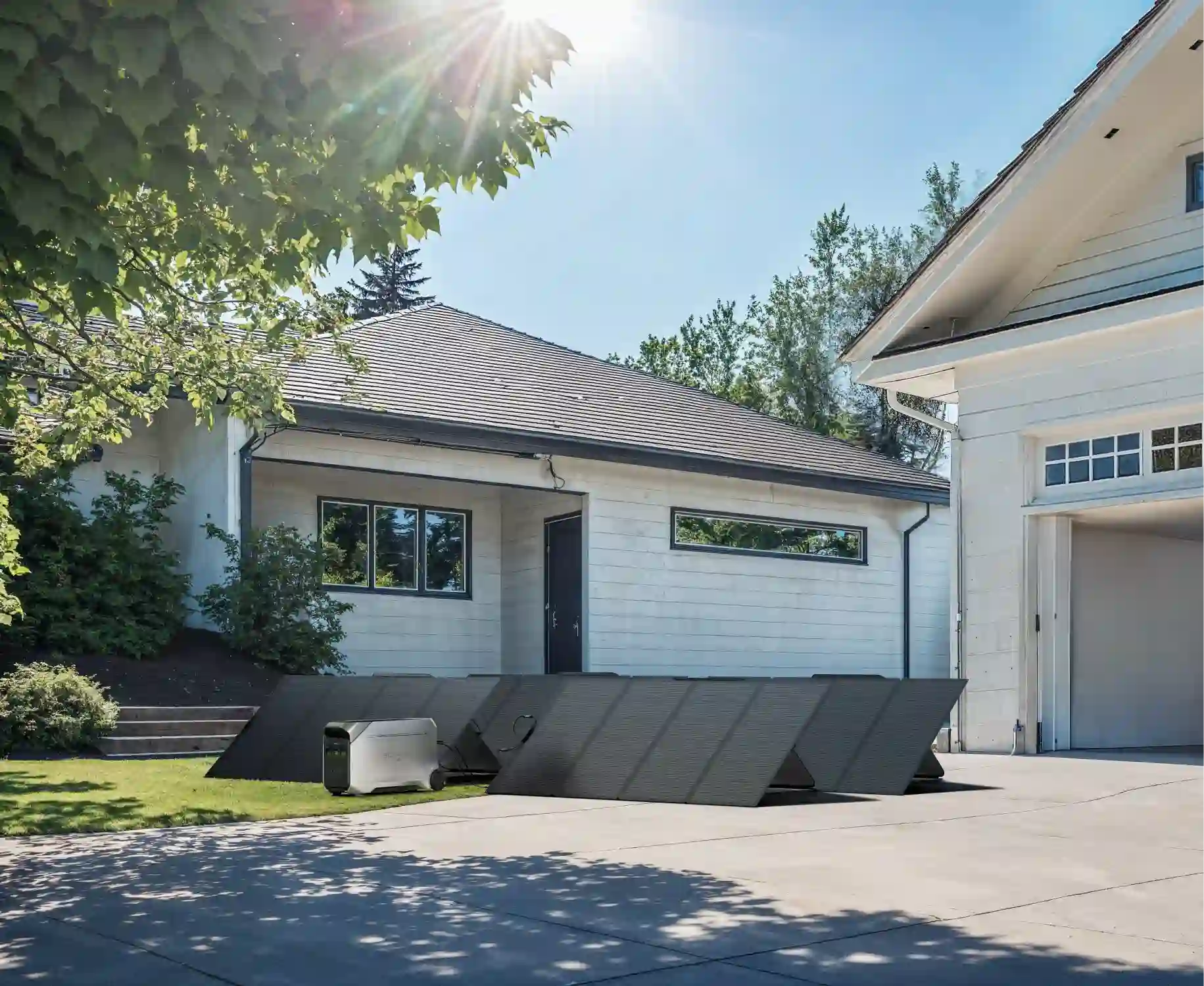
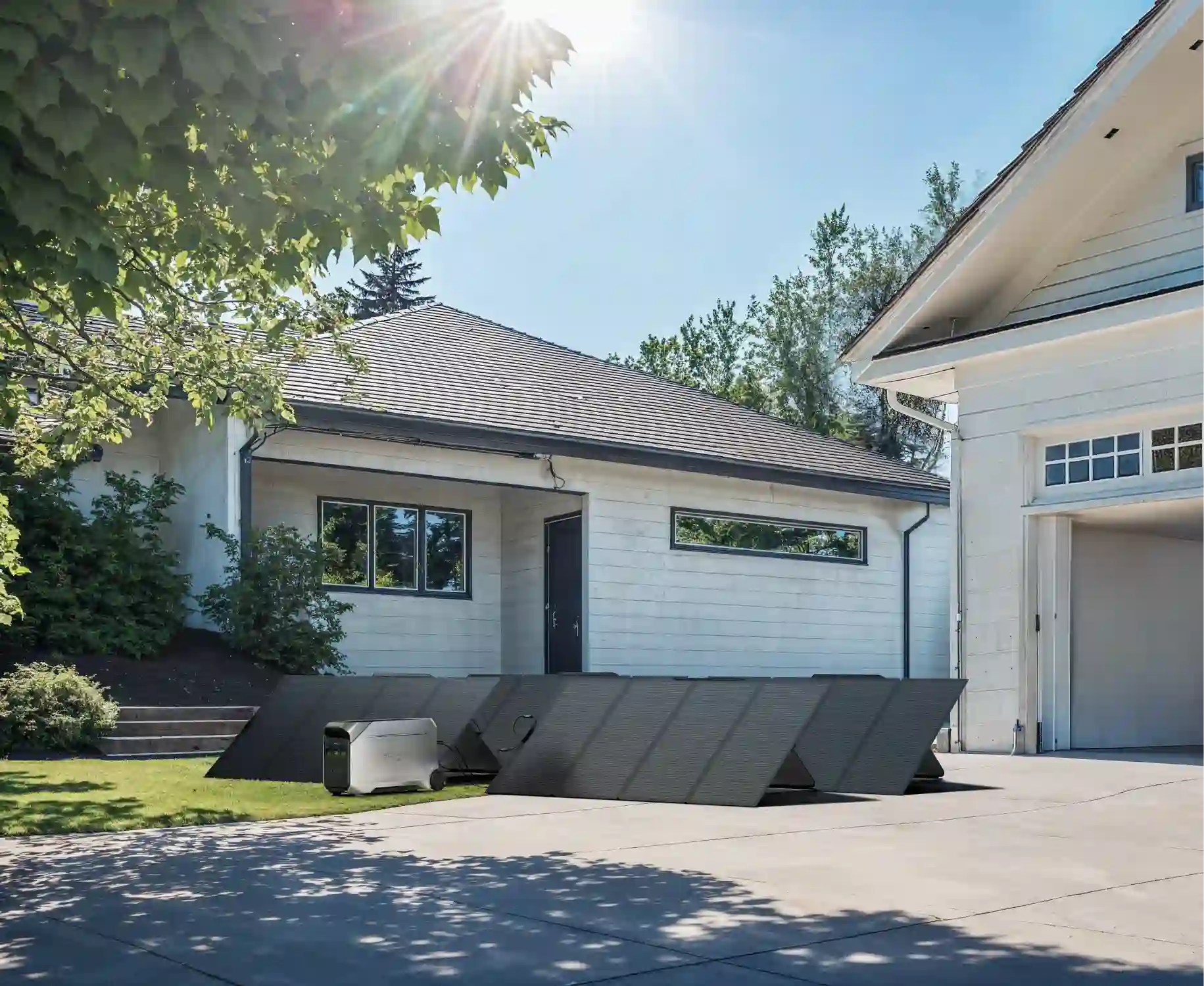
For those who frequently tackle outdoor maintenance or need high-power tools in a detached garage or backyard shed without outlets, a mobile energy solution is often more practical. The EcoFlow DELTA Pro 3 + 400W Solar Panel Bundle is designed for these scenarios. Its single-unit output is capable of supporting a range of heavy-duty power tools within its rated power output limits across different areas of your property.
Using the daily consumption figures from your earlier calculations, you can leverage the 400W solar panel to provide meaningful daytime replenishment depending on solar conditions and system capacity. Plus, its pure sine wave output means you can safely charge your laptop or camera gear simultaneously without worrying about electrical noise or surges.
Installing Permanent Natural-Gas Standby Generators
For those in areas with reliable gas lines, a permanent standby generator offers a seamless, automated backup solution, though it requires professional gas fitting and electrical permits.
Utilizing Basic Wall-Mounted Battery Storage Units
Simple wall-mounted units are great for basic backup (lights and routers), but they often lack the peak output capacity required to handle the significant starting surges of heavy-duty three-phase appliances.
How to Connect Your Backup Safely After Calculation?
Math on paper is only half the battle; the physical connection to your home’s panel must be handled with precision.
Selecting Proper Panel Transfer Switches
A transfer switch is non-negotiable. It prevents "backfeeding" into the utility grid, which is a major safety hazard for Canadian hydro workers repairing downed lines after an ice storm.
Wiring for Balanced Phase Distribution
When connecting a high-capacity backup, ensure your electrician wires it to balance the loads across your phases. This maximizes efficiency and prevents any single circuit from being overwhelmed.
Testing Stability Under Heavy Loads
Once installed, perform a stress test. Turn on your most demanding appliances—as identified by your three-phase AC power formula results. This ensures the system holds steady without voltage drops.
Final Tips for Optimizing Your Home Power
To truly maximize the efficiency of your Canadian home and ensure your backup systems perform when they are needed most, consider these practical maintenance strategies.
Monitoring Real-Time Energy Use via Apps
Modern backup systems, including EcoFlow’s lineup, offer smartphone apps. These allow you to see exactly how much "juice" your heat pump or EV charger is pulling in real time, helping you refine your original calculations.
Updating Calculations for New Appliances
Every time you add a major appliance, redo your math. A new hot tub or a basement sauna can drastically shift your home’s power profile.
Consulting Electricians for Complex Installs
While we love a good DIY project, three-phase power is high-stakes. Always have a certified Canadian electrician review your work to ensure compliance with the Canadian Electrical Code (CEC).
Conclusion
Getting a clear grasp of three‑phase AC power makes it much easier to assess how your home’s electrical system handles everyday residential and workshop loads. Right across Canada—from suburban GTA homes to rural Alberta properties—more homeowners are installing EV chargers, heat pumps, and other high‑power appliances. That’s why careful load calculations matter so much: they help you size your electrical setup correctly and keep everything running safely and reliably.
Solid load calculations also take the guesswork out of planning electrical upgrades. They let you check if your current service has enough capacity before you add any new heavy‑duty equipment. For more complex layouts or whole-home backup power plans, it’s always wise to have a local licensed electrician review your load figures and system layout, to make sure everything lines up with the Canadian Electrical Code standards.
FAQ
Is Three-Phase Power Common in Homes?
In most Canadian suburbs, three‑phase isn’t something you’ll usually find—the typical detached house runs on 120/240 V split‑phase instead. Larger properties, rural workshops, and some multi‑unit buildings may already have it in place.
How to Calculate Active Power for a Three-Phase System?
To calculate active power, use the formula P = V × I × PF × 1.732. Here, V is voltage, I is current, and the 1.732 factor reflects the phase spacing in a three‑phase system.
Does Three-Phase Use More Electricity?
Not really—it won’t make your meter spin faster on its own. In fact, for big motor‑driven loads, it can deliver power more steadily and let you use smaller wiring for the same output compared to a single‑phase system.
What Size Wiring Is Needed for a 100A Three‑phase Service?
For most 100A three-phase setups, #3 AWG copper wire or #1 AWG aluminum wire will do, depending on the temperature rating of the insulation. Longer runs or hotter environments might change that, so it’s wise to check the Canadian Electrical Code for derating rules.
Do You Need Three-Phase Power to Charge an Electric Car at Home?
Nope. A regular 240V Level 2 charger works perfectly for almost all home EVs. Three‑phase tends to show up more with high‑speed DC fast chargers you see in commercial settings, like those along Highway 401 or at shopping centers.