How to Stock a Pantry for Winter Storm Weeks
- Why Winter Is Hard Here
- Water Is Your Most Important Need
- How to Build a Natural Food Pantry
- You Can Grow Fresh Food
- Fermented Foods Last a Long Time
- Comfort Foods Help You Cope
- How to Cook Without Power
- Using the Cold to Save Food
- Keeping Clean When Water Stops
- Backup Power Helps You
- Preparation Depends on Where You Live
- Build Your Supply in Steps
- Eat the Oldest Food First
- Weather the Storm with Confidence
- Bonus 1:Here Is a List of Good Foods for You
- Bonus 2: Don't Forget Special Needs
- Bonus 3: Do These Things Before the Storm
Deep snow quiets the world outside while ice coats power lines in a heavy glaze. Canadians know such silence often signals danger. Preparing a home for isolation requires more than buying milk. A well-planned pantry offers security when the grid fails. Families must prepare for winter storm weeks with calm foresight. A robust natural food pantry keeps everyone warm and safe. Survival depends on readiness before the first flake falls.
Why Winter Is Hard Here
Winter in Canada presents a survival challenge unique among nations. The season does not merely bring cold weather; the climate actively tests the structural and logistical limits of human settlement. When a storm in winter strikes, the impact goes beyond a simple inconvenience. Roads disappear under meters of drift. Power lines snap under the weight of accumulated ice. Heating systems fail. In these moments, a household becomes an autonomous unit responsible for its own survival.
What Happened in the Past
The 1998 Ice Storm stands as a stark reminder of fragility. It was not a single event but a succession of five smaller storms that paralyzed Eastern Ontario and Southern Quebec. Millions of people found themselves without electricity for weeks. Darkness persisted. Cold crept into homes. The infrastructure crumbled under the weight of ice, leading to the deployment of over 15,000 military personnel. Such events demonstrate that reliance on just-in-time grocery delivery is a gamble.
More recently, the Canada severe winter storm extreme cold events have intensified. Climate change paradoxically increases the frequency of these severe events. Warmer air holds more moisture, which translates into heavier snowfalls when temperatures drop. British Columbia has seen atmospheric rivers followed by deep freezes. The Atlantic provinces face "weather bombs" or explosive cyclogenesis events that bury communities like St. John's in record-breaking snow.
How Your Mind Reacts to Being Alone
Surviving a long-duration outage requires mental resilience. A food pantry serves a dual purpose: physiological fuel and psychological comfort. The stress of a howling blizzard, combined with the eerie silence of a dead house, wears on the mind. Knowing that the cupboards hold enough food to feed the family for two weeks alleviates a significant portion of that anxiety.
The preparation mindset must shift from "getting through the night" to "living independently for weeks." Most modern pantries are shallow, containing only ingredients for planned meals. A survival pantry functions differently. It operates on the principle of density and durability. Every item must earn its place on the shelf through caloric value, ease of preparation, and emotional satisfaction.
Water Is Your Most Important Need
Humans can survive weeks without food but only days without water. In a winter emergency, dehydration is a silent threat. Cold air is dry air. The body loses moisture simply by breathing. The physical exertion of shoveling snow increases fluid loss. Thirst mechanisms often lag in the cold, leading people to drink less than necessary.
How to Keep Water From Freezing
The standard recommendation of four litres per person per day is a minimum baseline. That volume covers drinking and basic hygiene. Realistically, a family needs more to rehydrate dried foods and manage sanitation.
Storing water in a Canadian winter poses a specific problem: freezing. If the power fails, the temperature inside the home will drop. Water expands when it freezes. A rigid container filled to the brim will burst, destroying the precious resource and causing water damage.
Storage Tactics:
Headspace: Leave air gaps in all bottles.
Insulation: Store water containers inside coolers or wrap the vessels in blankets.
Location: Keep water in the center of the house, away from exterior walls.
If the indoor temperature drops below freezing, maintain a "liquid core." Keep a small amount of water inside your coat or sleeping bag. Body heat prevents it from freezing, guaranteeing a drink is always available.
How to Make Water Safe
Many assume snow provides an endless water supply. While true in theory, converting snow to water is energy-intensive. Snow is mostly air. Melting a pot of snow yields a small fraction of water. Melting snow requires fuel, which is likely in short supply during a blackout.
If stored water runs out, melting ice is more efficient than melting snow. Ice has a higher density. Once melted, the water must be purified. Bacteria and viruses can survive freezing temperatures.
Bleach Purification Ratios:
Standard household bleach (unscented) is a reliable purifier. The cold temperature of the water slows down the chemical reaction, so longer wait times are necessary.
| Water Condition | Volume | 6% Bleach Dosage | 8.25% Bleach Dosage | Standing Time |
| Clear / Room Temp | 1 Quart (1L) | 2 Drops | 2 Drops | 30 Minutes |
| Clear / Room Temp | 1 Gallon (4L) | 8 Drops | 6 Drops | 30 Minutes |
| Cold / Cloudy | 1 Gallon (4L) | 16 Drops | 12 Drops | 60 Minutes |
| Cold / Cloudy | 5 Gallons (19L) | 1 Teaspoon | 3/4 Teaspoon | 60 Minutes |
Bleach loses potency over time. A bottle open for six months may not be effective. Rotate the bleach supply annually.
How to Use Filters and Tablets
Mechanical filters (ceramic or hollow fiber) are excellent for removing bacteria and protozoa like Giardia. However, winter poses a catastrophic risk to these devices. If water remains inside the filter matrix and freezes, the expansion cracks the microscopic structures. The filter becomes useless, yet looks normal. Never leave a water filter in a cold car or unheated room. Keep the filter unit close to the body.
Chlorine dioxide tablets are another option. They are lightweight and effective against viruses. In near-freezing water, the chemical reaction time extends significantly. A tablet that works in 30 minutes at 20°C might require four hours to fully disinfect water at 4°C. Patience is critical.
How to Build a Natural Food Pantry
A natural food pantry relies on whole ingredients. These foods offer higher nutrient density than processed survival rations. They digest more slowly, providing sustained warmth and energy.
Carbs Keep You Warm
Carbohydrates generate heat during digestion. In a cold house, the body acts as a furnace.
Oats: A superior winter staple. Rolled oats can be eaten raw if necessary, soaked in water, or milk powder. They provide fiber and complex carbs.
Couscous: The ultimate low-fuel grain. It does not require boiling on the stove. Simply bring water to a boil, pour over the couscous, cover, and wait five minutes. It rehydrates perfectly.
Crackers: Dense, whole wheat crackers replace bread. Bread goes stale or moldy; crackers last for years if sealed.
Pasta: Choose thin shapes like angel hair. Thick shapes require long boiling times, wasting fuel. Angel hair cooks in three minutes.
Protein Builds Your Strength
Protein induces thermogenesis. Digestion of protein raises body temperature more than other macronutrients.
Canned Fish: Salmon, tuna, sardines, and mackerel. These are ready to eat. The oil in the can provides high-value fat calories.
Canned Legumes: Kidney beans, chickpeas, and lentils. Dried beans are ill-suited for power outages due to long cooking times. Canned beans need only rinsing.
Nut Butters: Peanut butter is a calorie-dense superfood. One jar holds thousands of calories. It requires no heating or preparation.
Jerky: Dried meats offer morale and protein without weight. They are salty, which helps retain water.
Fruits and Vegetables Keep You Healthy
Scurvy is rare, but vitamin deficiencies impact the immune system. A winter storm is the worst time to get sick.
Dried Fruit: Raisins, cranberries, and apricots. They provide concentrated sugar for immediate energy.
Canned Vegetables: Corn, peas, and green beans. The liquid in the can contains dissolved water-soluble vitamins. In a water crisis, drink the vegetable liquid.
Root Cellar Items: Potatoes, carrots, and onions. If stored in a cool, dark place (like a basement), these vegetables last for months. They add texture to canned soups.

You Can Grow Fresh Food
A food pantry need not be devoid of fresh life. Sprouting seeds offer a way to grow vegetables on a countertop, even in the dead of winter.
How to Start Your Garden
Seeds are dormant plants. When water is added, they wake up.
Seeds to Stock: Mung beans, alfalfa, lentils, radish, and broccoli seeds.
Method: Soak seeds in a jar for eight hours. Drain the water. Rinse the seeds morning and night. Keep the jar inverted at an angle to allow drainage.
Result: In three to five days, the jar will be full of fresh sprouts.
Nutrition: Sprouts increase the vitamin content of the seed exponentially. Mung bean sprouts provide Vitamin C and crunch.
Safety: Mumm's Sprouting Seeds and other certified organic providers ensure the seeds are pathogen-free.
Sprouting is a psychological boost. Watching green life grow while a blizzard rages outside provides a connection to nature and hope.
Fermented Foods Last a Long Time
Fermented foods belong in a deep pantry. They are pre-digested by beneficial bacteria, making nutrients more bioavailable.
Gut Health: Stress affects digestion. Probiotic-rich foods like sauerkraut and kimchi support the gut microbiome.
Shelf Life: Fermented vegetables keep for months in a cool cellar. They do not require electricity.
Flavor: The acidity of pickles or kimchi cuts through the monotony of bland rice or pasta dishes.
Comfort Foods Help You Cope
Survival is not merely biological; morale matters. In Atlantic Canada, the "Storm Chip" is a cultural institution.
Where the Storm Chip Idea Started
The term began in Halifax. Stephanie Domet, a host on CBC Radio, joked about buying chips before a storm. The hashtag #stormchips ignited a movement. Now, when a hurricane or winter storm approaches, chip aisles in the Maritimes empty instantly. Covered Bridge, a New Brunswick chip company, even released a "Storm Chips" flavor mixing dill, ketchup, BBQ, and salt and vinegar in one bag.
Why Treats Are Important
A winter storm is stressful. A bag of chips, a bar of chocolate, or a special tin of cookies provides normalcy.
Chocolate: Dark chocolate is high in calories and contains compounds that improve mood.
Hot Beverages: Tea and coffee are essential. Caffeine withdrawal during a crisis adds a headache to an already difficult situation.
Herbal Teas: Peppermint and chamomile warm the body without dehydrating it. Brands like David's Tea offer winter blends that evoke comfort.
How to Cook Without Power
When the stove goes cold, safe cooking becomes the priority. Carbon monoxide (CO) is the greatest danger. It kills silently. Never use a gas generator, BBQ, or propane camping stove indoors without extreme ventilation and CO detectors.
Safe Ways to Heat Food Inside
Alcohol Stoves: These burn denatured alcohol. They burn relatively clean. Marine stoves (Origo) are designed for enclosed spaces on boats.
Butane Catering Burners: These sit flat on a counter. They are stable. However, butane canisters struggle in the cold. Keep canisters warm inside a jacket before use.
Chafing Fuel: Cans of gel fuel (Sterno) are safe for indoor use. They produce low heat, suitable for warming soup but not boiling water rapidly.
Cooking With Leftover Heat
Conserve precious fuel using insulation.
Bring a pot of food (rice, stew, beans) to a boil on the stove.
Boil for only a few minutes to ensure the center is hot.
Remove the pot and immediately place it into a "haybox."
A haybox can be a cooler lined with towels, a box filled with pillows, or a sleeping bag.
Close the insulation around the pot.
The retained heat continues to cook the food for hours. Rice cooks perfectly in 45 minutes. Beans cook in 4 hours. No fuel is used during that time.
Using the Cold to Save Food
The loss of a refrigerator is a common fear. In winter, the outdoors is a freezer.
Using a Cooler on the Porch
Putting food directly in the snow is risky. Animals can reach it, and freezing can ruin items like milk, lettuce, or eggs. The texture of frozen cheese or yogurt degrades.
Technique: Place food in a high-quality cooler. Place the cooler on the porch or in the garage.
Temperature Control: The insulation that keeps heat out in summer also keeps extreme cold out in winter.
The Moderator: Place a hot water bottle inside the cooler. That bottle prevents the interior temperature from dropping below freezing. It maintains a "refrigerator" temperature zone.
Keeping Clean When Water Stops
If the electric pump fails, water stops flowing. Hygiene prevents the spread of illness in close quarters.
The Bucket Toilet: If the toilet cannot flush, do not use it. Line the bowl (or a bucket) with a heavy-duty garbage bag. Use kitty litter, sawdust, or peat moss to cover waste after each use. The layer controls odor and absorbs moisture.
Hand Hygiene: Baby wipes and hand sanitizer preserve water.
Body Wipes: A "sponge bath" with wet wipes maintains dignity and skin health.
Backup Power Helps You
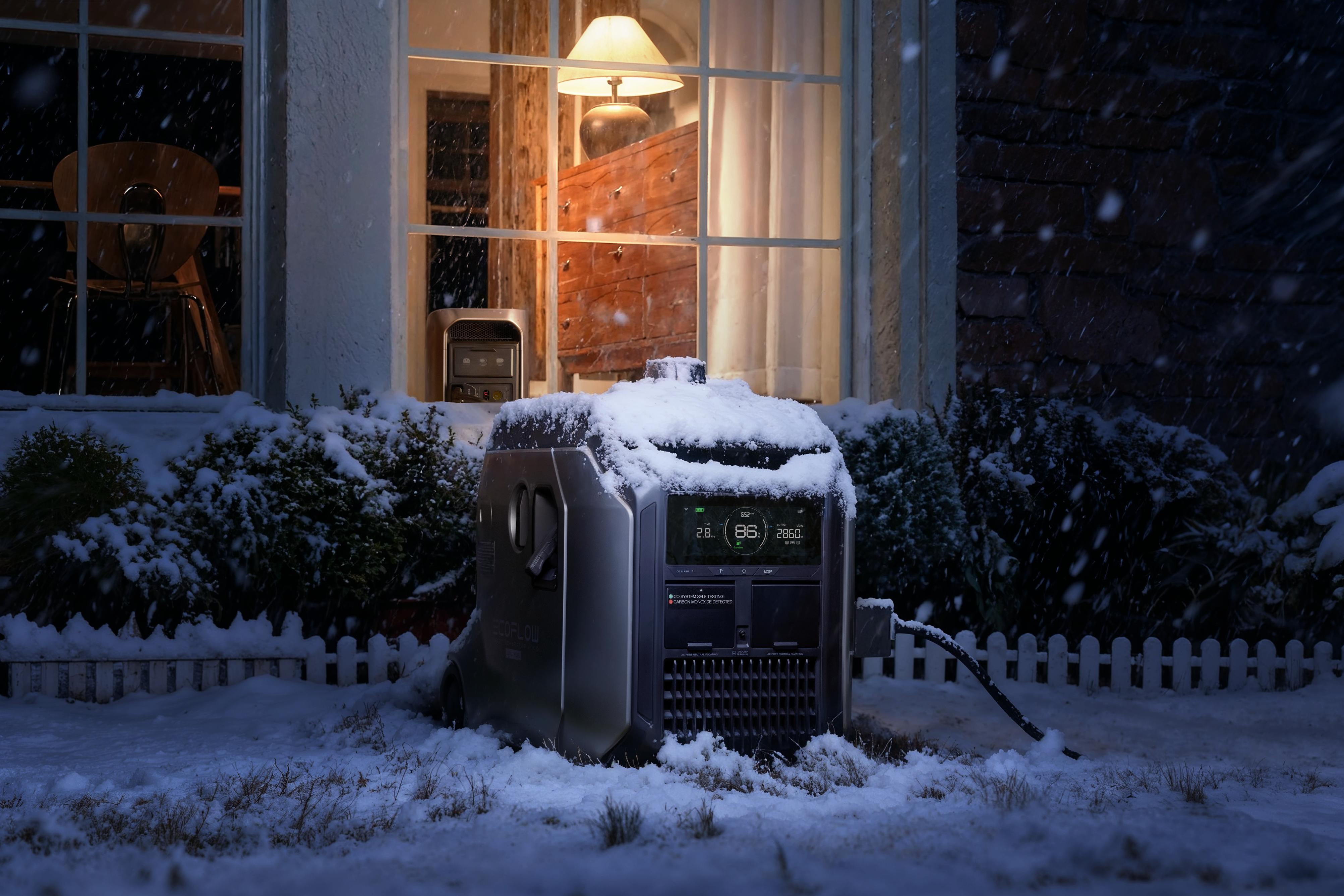
A small amount of electricity changes the experience of an outage. For reliable energy, the EcoFlow Delta Portable Power Station series can fit your emergency needs not only for safety but also for comfort during stormy weeks.
Take the EcoFlow Delta Pro, which is a powerful and versatile portable power station that ensures reliable energy during outages. With expandable capacity ranging from 4kWh to 48kWh, it can provide up to a week of power for your home, keeping essential appliances like lights, phones, and even a 3-ton central AC running. Its advanced X-Boost technology allows it to deliver up to 6000W of power when needed, exceeding its rated 4000W output. The unit operates silently and safely indoors, offering stable power even during pass-through charging. Featuring EV-grade LFP battery technology, it retains 80% capacity after 4000 cycles, ensuring long-term reliability. The Delta Pro is designed for seamless portability, with wide wheels, an ergonomic handle, and a compact build, making it ideal for homes, RVs, and off-grid energy needs. It charges quickly, reaching 80% in just 50 minutes via solar, car, or outlet, eliminating the need for refueling or downtime.
Preparation Depends on Where You Live
Canada is a massive landmass. Preparation looks different in each zone.
What to Do on the West Coast
The threat here is often "wet cold." Atmospheric rivers bring heavy rain and freezing levels that fluctuate.
Pantry Focus: Waterproof packaging. Moisture ruins dry grains. Use mylar bags or rigid buckets.
Water: Drought conditions in summer can lead to lower reservoirs, but in winter, the issue is turbidity in water sources during floods. High-quality filtration is key.
What to Do in the Prairies
The threat is extreme temperature. Minus forty is deadly.
Pantry Focus: High-fat foods. The body needs massive calories to stay warm. Prioritize nut butters, oils, and dense meats.
Water: Pipes freeze deep underground. The outage may last only hours, but the water infrastructure repair may take days. Store extra water.
What to Do in Central Canada
Freezing rain is the enemy. Ice storms coat everything.
Pantry Focus: Ready-to-eat foods. If trees take down lines, the outage will be long. You might be trapped in the house for a week.
Mobility: Ice skates or crampons are actually useful for checking on neighbors.
What to Do in the Atlantic
Heavy snow and wind.
Pantry Focus: Volume. Roads may be impassable for days. The "Storm Chips" tradition is real here for a reason. Comfort food helps weather the gale.
Build Your Supply in Steps
Building a pantry all at once is expensive. Use a modular approach.
Box 1 Contains Foods You Do Not Cook
These items require zero fuel and zero water.
Canned tuna/chicken/ham (pop top cans).
Peanut butter.
Crackers.
Canned fruit cups.
Granola bars.
Candy/Chocolate.
Tetra pack milk.
Box 2 Contains Foods That Need Hot Water
These require boiling water but no sustained cooking.
Instant oatmeal.
Couscous.
Instant mashed potatoes (flakes).
Freeze-dried camping meals (Mountain House, etc.).
Instant noodles (Ramen).
Tea and Instant Coffee.
Box 3 Contains Foods You Must Cook
These require a stove and fuel.
Dried pasta.
Rice.
Canned soups (need warming).
Pancake mix (needs a skillet).
Eat the Oldest Food First
A survival pantry is not a museum. Food expires.
FIFO: When you buy a new jar of peanut butter, put it in the back of the row. Eat the old one first.
The Audit: Check dates when the clocks change (spring and fall).
Pests: Mice seek warmth in winter. Store grains in metal tins or heavy plastic buckets. Cardboard is not a barrier to a hungry rodent.
Weather the Storm with Confidence
The wind will howl. The snow will pile against the door. The lights may flicker and die. But in a house that has taken the time to prepare for winter storm weeks, panic is absent. The water is stored. The pantry is full. The food pantry offers hot soup and sweet chocolate. Safety is not a matter of luck; it is a matter of preparation. When the winter storms come, the prepared family simply waits, warm and fed, until the sun returns.

Bonus 1:Here Is a List of Good Foods for You
To truly prepare for winter storm isolation, the pantry needs depth. Below is a categorized breakdown of specific items, chosen for their shelf life, nutritional profile, and psychological value.
Grains Fill Your Stomach
Grains provide the bulk of calories. They are the canvas upon which meals are painted.
Parboiled Rice: Unlike standard white rice, parboiled rice has been partially cooked in the husk. It retains more nutrients but cooks faster than brown rice. It is harder to overcook and resists turning into mush.
Barley: A hardy grain perfect for soups. It adds a chewy texture and thickens broth.
Quinoa: A complete protein. It cooks in 15 minutes, saving fuel. It has a nutty flavor that pairs well with canned vegetables.
Instant Polenta: Cornmeal that cooks in minutes. It can be eaten as a soft porridge or allowed to set and then fried. It is comforting and filling.
Flour Tortillas: They last longer than bread. They serve as a vehicle for peanut butter, tuna salad, or beans.
Canned Meat Stops Hunger
Protein provides satiety. It stops the hunger pangs.
Canned Roast Beef: Often overlooked, but excellent in stews. It is tender and comes in a rich gravy.
Spam or Luncheon Meat: High in sodium and fat, which is exactly what you need in a cold-weather survival situation.
Corned Beef Hash: A complete meal in a can. It contains potatoes and meat. It is heavy, greasy, and incredibly satisfying in the cold.
Canned Oysters/Mussels: Nutrient-dense. High in zinc and iron. A luxury item that boosts morale.
Fats Give You Heat
Fat is the most calorie-dense nutrient (9 calories per gram).
Ghee: Clarified butter. It does not require refrigeration. It has a high smoke point and a rich, nutty flavor.
Coconut Oil: Solid at room temperature. It has a very long shelf life. It can be used for cooking or added to oatmeal for energy.
Powdered Butter: Available from emergency supply stores. It rehydrates to a spreadable consistency.
Cheese Wax: Hard cheeses encased in wax (like Gouda) can last for weeks without refrigeration if kept cool.
Spices Fix Bland Food
Bland food kills appetite. In a stressful situation, people (especially children) may refuse to eat unappealing food.
Bouillon Paste: Better than cubes. Better Than Bouillon jars last a long time in the fridge (or cool box). They add immense flavor.
Soy Sauce: Adds umami to plain rice.
Hot Sauce: Capstone of the survival pantry. It clears sinuses and warms the mouth.
Everything Bagel Seasoning: Great on crackers, tuna, or even plain rice.
Sugar and Cinnamon: Turns plain oatmeal or toast into a treat.
Bonus 2: Don't Forget Special Needs
Your Pets Need Food
Animals suffer in the cold. Their caloric needs increase.
Extra Kibble: Store at least two weeks' worth.
Wet Food: The high water content helps keep them hydrated if they are refusing to drink cold water.
Treats: Distraction is valuable. A long chewing treat keeps a dog occupied while the family deals with a crisis.
Babies Need Special Care
Ready to Feed Formula: Do not rely on powdered formula if water is scarce or cannot be boiled easily. Ready-to-feed cans are expensive but safe.
Diapers and Wipes: A massive supply. You cannot wash cloth diapers without a washing machine and hot water.
Comfort Objects: A pacifier spare. A favorite blanket.
Older People Need Help
Ensure/Boost: Liquid meal replacements are vital if an elderly family member loses their appetite or cannot chew cold food.
Medication: A two-week buffer of all prescriptions. A pharmacy may be closed or unreachable.
Incontinence Supplies: Stress can exacerbate medical conditions.
Bonus 3: Do These Things Before the Storm
When the warning is issued, do the "Last Mile" prep.
Fill the Tub: Scrub it clean and fill it. That volume is flush water.
Charge Everything: Phones, power banks, laptops, Ecoflow units.
Lower the Fridge Temp: Turn the fridge and freezer to their coldest settings hours before the storm. Deep chilling super-cools the food, buying extra time.
Laundry: Do all the laundry. You want clean, warm clothes and blankets.
Cook: Cook a big meal. Eat the perishable food. Make a pot of hard-boiled eggs. Bake a batch of muffins. Use the oven's residual heat to warm the kitchen.
The silence of the snow need not be feared. With a plan, a natural food pantry, and a spirit of resilience, the Canadian winter becomes just another season to weather with grace.