Best Portable Electric Cooking Stove: Which One is Right for You?
- What Types of Portable Electric Cooking Stoves and Hot Plates Are Available?
- Choosing a Portable Electric Cooking Stove: What to Consider?
- Which Portable Electric Cooking Stove Is Right for You?
- How Much Power Does a Portable Electric Cooking Stove Use?
- How Long Can a Portable Power Station Run an Electric Stove?
- Conclusion
- FAQ
Whether you’re a student settling into a cozy Toronto studio, an adventurer getting your RV ready for a Rockies road trip, or a homeowner planning for a winter power outage, picking the right portable electric stove or hot plate can be a real game changer. These compact units give you flexible cooking options without needing a gas hookup.
In this guide, we’ll walk through the main types of stoves you’ll find in Canada, the key specs to pay attention to, and how to make sure you’ve got enough power to run them wherever you are.
What Types of Portable Electric Cooking Stoves and Hot Plates Are Available?
Not all electric burners work the same way. The right choice depends on your cookware, how fast you want heat, and where you’ll be using it. In Canada, most people end up choosing from three main types.
Ceramic Electric Stoves: Top Choice for Canadian Renters
Ceramic stoves have heating elements under a smooth glass top. They’re common in rentals because they work with almost any pot or pan, stainless steel, glass, even older cookware you’ve had for years. They’re easy to wipe clean after dinner, and the flat surface looks tidy in smaller kitchens or condo spaces.
Induction Cooktops and Induction Hot Plates: Energy-Efficient and Fast
Induction cooktops heat the pan directly using magnetic energy, so they warm up quickly and don’t waste much power. The surface cools down fast once you remove the pot, which makes them a safer option in small apartments or dorms. The only catch is you need magnetic cookware, like cast iron or induction-ready stainless steel.
Infrared Hot Plates: A Popular Camping Electric Stove Option
If you’re cooking at a campsite or setting up near the lake, infrared hot plates are a practical choice. They heat up quickly and aren’t as sensitive to wind as gas burners. For outdoor meals without hauling propane, they’re a reliable option.
Choosing a Portable Electric Cooking Stove: What to Consider?
Before you click “buy,” make sure your new stove won’t trip a breaker or take forever to boil water. A few practical checks can save you a lot of frustration.
Ensuring 110/120V Voltage Compatibility in Canada
In Canada, regular household outlets run on 120V (often called 110-120V). Most portable electric stoves are built for this, but it’s still worth confirming. You want something truly plug-and-play, not a unit that requires a 240V outlet meant for a full sized range.
Selecting Proper Wattage for Circuit Capacity
Wattage controls how much heat you get. Most portable burners fall between 1,000W and 1,800W. On a standard 15A circuit, follow the 80% rule, don’t exceed about 1,440W for continuous use. For permanent setups or higher loads, follow the Canadian Electrical Code (CEC) and speak with a licensed electrician.
Evaluating Safety Features for Rental and Home Use
In small apartments or dorm rooms, safety matters. Look for overheat protection, auto shut off, and child locks. Induction units are often seen as the safest option since the surface cools quickly once the pan is removed.
Checking Size and Storage Convenience
Space is tight in many Canadian condos. A slim design that fits in a cupboard or drawer makes everyday life easier. If you plan to travel with it, lighter models are much simpler to pack in the car for a weekend trip.
Which Portable Electric Cooking Stove Is Right for You?
The “best” option really depends on where and how you plan to cook.
For Small Spaces and Dorm Rooms
If you’re working with a tiny counter or a single desk, a single-burner induction cooktop is usually the easiest fit. It heats quickly, cools down fast, and doesn’t throw off extra heat, which helps during those humid Southern Ontario summers.
For RV and Travel Cooking
Van life across Canada looks amazing on Instagram, but staying powered off grid is the real challenge. To run a portable induction cooktop without firing up a loud generator, you’ll need serious battery capacity.
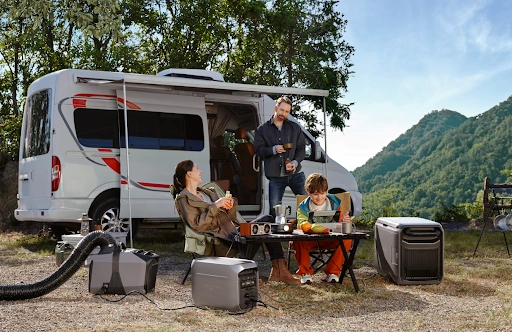
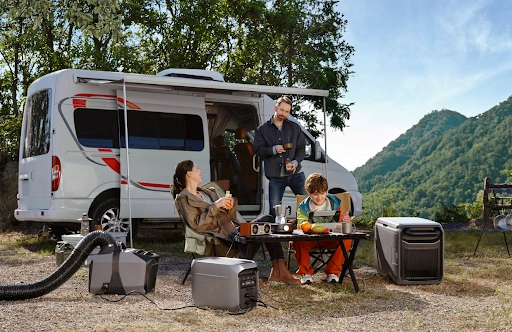
The EcoFlow DELTA 3 Max Plus Portable Power Station (2048Wh) is built for that kind of setup. With a 2048Wh capacity and 3000W continuous output (surging up to 6000W, or 3800W with X-Boost), it can power most portable hot plates for 1-2 hours of high heat cooking, enough for boiling pasta or cooking a full stir fry. Pair it with solar panels, and you’ve got a quiet RV kitchen that recharges while you’re out hiking.
For Emergency Preparedness
Across Canada, winter storms can knock out power for days. A portable electric stove paired with a reliable battery means you can still make hot meals and coffee when the grid goes down. For many households, that peace of mind alone makes it worthwhile.
For Family-Sized Cooking Capacity
If you’re cooking for four people, a double-burner unit makes life easier. Just keep in mind that many portable models split the wattage between both burners, so running two large pots at once may take a bit longer than using separate single burner units.
How Much Power Does a Portable Electric Cooking Stove Use?
Knowing the power draw helps you plan your energy use, whether that’s managing your hydro bill or running off a portable power station.
Single Electric Burner: 800–1,800W Typical Draw
Most single burners fall between 800W and 1,800W. At the higher end, 1,800W is similar to a strong hair dryer or a large microwave. That’s plenty for boiling water or searing food quickly.
Double-Burner Units: 1,800–3,000W+ at High Settings
Double burners can draw serious power. If both sides are running at full heat, you’re close to the limit of a standard wall outlet. That’s why many portable models cap total output around 1,800W to 2,000W. On a typical 15A, 120V circuit, you should stay under about 1,440W for continuous use under the 80% rule.
Average Cooking Range: 1,000–2,000W for Most Tasks
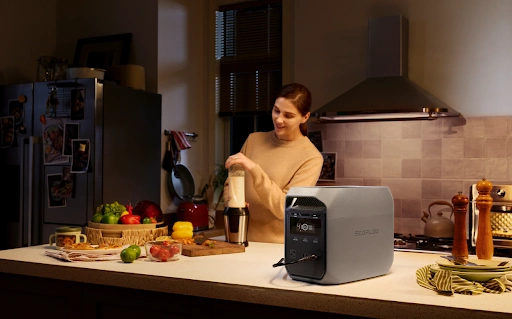
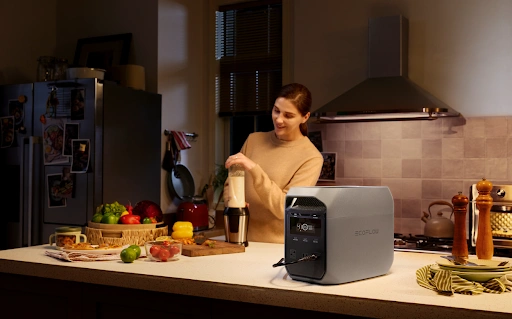
For everyday cooking, simmering sauces or frying eggs, you’ll likely sit around 1,200W. For that level of use, something like the EcoFlow DELTA 3 Classic Portable Power Station (1024Wh) works well. With 1,800W output (up to 2,600W using X-Boost) and 1,024Wh capacity, it can comfortably run a single burner or light double-burner cooking, giving you enough power for several meals on one charge.
How Long Can a Portable Power Station Run an Electric Stove?
If you’re heading to a remote cabin in BC or getting ready for a winter blackout, it helps to know how much actual cooking time you’ll get. The first thing is to understand the difference between kW and kWh. kW refers to the power an appliance draws, while kWh describes the total amount of energy used over a period. Also, the capacity of the power station matters, but efficiency also plays a role.
The Pro-Level Calculation: 1800W Stove on a 1024Wh Battery
Let’s use a realistic Canadian camping example. You’ve got an 1800W stove, but you’re running it at a steady simmer around 1200W, powered by a 1024Wh battery.
Efficiency Loss
Most portable power stations operate at roughly 85% efficiency because of heat loss and DC-to-AC conversion.
Usable Capacity:
1024Wh × 0.85 ≈ 870Wh of real world usable energy
Estimated Run Time:
870Wh ÷ 1200W ≈ 0.7 hours
That’s about 45-50 minutes of steady cooking.
In practical terms, that’s plenty of time to boil pasta, cook a full pan of food, and still have some power left for charging your phone or running a couple of LED lights at night.
Conclusion
Choosing the right portable electric stove really comes down to matching how you cook with how much power you have available. Whether you prefer the fast efficiency of induction or the easy compatibility of a ceramic burner, there’s an option that fits most Canadian lifestyles.
Just make sure your stove is paired with a dependable power station, like the EcoFlow DELTA series, so you’re covered whether you’re at the cottage, on the road, or riding out a winter outage.
FAQ
1. Does an electric stove use a lot of electricity?
Electric stoves are on the higher end when it comes to wattage, usually pulling between 1,000 and 2,000 watts per burner. That sounds like a lot, but since they heat up quickly, the total energy used for cooking a single meal is generally reasonable.
2. Is there any stove without gas?
Yes. Induction, ceramic, and traditional coil stoves all run entirely on electricity. They don’t need propane or a gas hookup, which makes them practical for condos, dorms, and indoor spaces where ventilation is limited.
3. Can a hot plate stove boil water efficiently?
Induction hot plates are especially quick at boiling water and can even beat gas in many cases. Coil or infrared models may take a bit longer. For faster results, always cook with a lid on to keep the heat in.
4. Is a single electric burner enough for daily cooking?
For one or two people, a single burner is often enough, especially for simple meals or one-pot cooking. If you’re regularly preparing multiple dishes at once, a double-burner setup will feel more practical.
5. What is the disadvantage of an electric stove?
Electric stoves rely fully on a steady power source and can take longer to cool down compared to gas (except induction). During a power outage, you won’t be able to cook unless you have a backup solution like a portable power station.