Why Are Ontario Gas Prices So High in 2026? A Commuter’s Guide to Saving Fuel Costs
- Why Are Gas Prices in Ontario Still So High in 2026?
- Winter vs. Summer Fuel Blends in Ontario
- How High Gas Prices Affect Daily Commuters in Ontario
- Are Hybrid and Electric Vehicles Worth It in 2026?
- How to Reduce Gas Costs in Ontario (2026 Proven Savings Strategies)
- Future Outlook: Will Ontario Gas Prices Get Better or Worse?
- Conclusion
- FAQ
Navigating the roads in Ontario feels a bit heavy these days. While the drive up to Muskoka or through the Greenbelt is still as beautiful as ever, the numbers blinking on the fuel pumps are enough to make any commuter do a double-take. It’s not just a minor fluctuation anymore; we’re seeing prices that are forcing people from Barrie to Oshawa to completely rethink how they get around.
In this guide, we’re going to get into the weeds of why these costs are sticking around, look at everything from global supply chains to local refinery hiccups, and talk about how you can actually protect your bank account without giving up your car.
Why Are Gas Prices in Ontario Still So High in 2026?
To understand the hit your wallet is taking, you have to look past the local station on the corner. It’s a messy mix of international drama and domestic policy that’s created a bit of a “perfect storm” for our fuel costs here in the province.
Global Oil Market Fluctuations
Crude oil is a global game, and Ontario is stuck playing it. Even though we’re a resource-rich country, we’re still tied to international volatility. Ongoing tensions in oil-producing regions and shifts in how the world uses energy have kept the base price of oil high. That trickles down directly to the wholesale cost of the gas being delivered to the GTA.
Policy Shifts vs. Market Volatility: Why Prices Remain High
It’s been about a year since the federal government moved to eliminate the consumer-facing carbon price by setting the federal fuel charge to zero in April 2025. At the time, many Canadians expected meaningful “relief at the pump.”
But in Ontario, that relief hasn’t fully materialized. Global market volatility and supply chain disruptions have largely offset those expected savings.
As of early April 2026, fuel prices remain highly volatile, with provincial averages spiking as high as 2.01 CAD/L (201 ¢/L). In the GTA, daily prices continue to fluctuate within the 150–180 ¢/L range, depending on supply conditions and refinery output.
Here’s the key: policy changes alone rarely protect your budget from energy price swings. For many households, combining smarter driving habits with alternative energy solutions—such as home energy storage or solar generators—is becoming a practical way to reduce long-term exposure.
Refining and Distribution Costs in Ontario
Getting gas from the ground to the nozzle at your local EnRoute involves a messy mix of refining and logistics. We’re working with some pretty old refinery infrastructure in Ontario, and let’s be real, it’s starting to show. When a facility in Sarnia or Nanticoke goes down for “routine maintenance,” the supply tightens up instantly. Plus, moving fuel across a province this massive isn’t exactly cheap. Any little hiccup in the pipelines or a bottleneck on the roads translates directly into a higher number on the sign at the gas station. It’s a delicate chain, and we’re the ones paying for the links.
Winter vs. Summer Fuel Blends in Ontario
If you’ve lived here long enough, you’re used to that random price hike every spring. It’s a predictable annoyance, but there’s actually a chemistry reason behind it. Every year, refineries switch to a summer-grade blend that’s less likely to evaporate when the July humidity hits. This summer stuff is way more expensive to produce than the winter blend, which is packed with cheaper butane to help your car start when it’s -20°C. These transition periods, usually right before the May long weekend, trigger supply spikes that always seem to catch commuters off guard, even though it happens like clockwork every single year.
How High Gas Prices Affect Daily Commuters in Ontario
If you’re trekking in from places like Milton, Oshawa, or Barrie every morning, you don’t need a spreadsheet to tell you things have changed. What used to be a minor annoyance in your monthly budget has turned into a massive financial hurdle.
Rising Daily Commute Costs in Major Cities
Our highways are busier than ever, but sitting in that soul-crushing traffic on the 401 or the QEW is costing way more than it used to. Back in 2020, a 40 km daily round trip in the GTA might have cost you ten bucks. Fast forward to 2026, and you’re looking at $18 to $22 a day just to get to the office and back. It’s forcing a lot of people to decide between an expensive GO train ticket or just watching their disposable income disappear into their gas tank, which is also why some drivers are starting to keep a portable power station in their vehicle for reducing idle-related fuel waste during long commutes.
Monthly Fuel Expense Breakdown
If you’re an average Ontarian clocking 20,000 km a year, that fuel bill has morphed into something that resembles a second mortgage. Getting stuck filling up at those highway service centers, where you’re basically paying a “convenience tax”, makes the monthly total even more staggering. It’s frustrating to watch money that used to be earmarked for a family vacation or a savings account just evaporate into your commute instead.
Hidden Costs Beyond Fuel
Here’s the key: the pain doesn’t stop at the pump. When gas prices soar, the cost of moving everything else goes up with it. You see it at the grocery store when you’re at Loblaws or Sobeys, the price of milk and bread has that transport cost baked right in. Plus, those delivery fees for your Friday night takeout or that new sofa? Those aren’t going down anytime soon. It’s basically a hidden tax on every single part of Ontario life. This broader pressure reflects the ongoing winter hydro rate increases in Ontario.
Are Hybrid and Electric Vehicles Worth It in 2026?
With gas prices hitting these ridiculous highs, the talk around EVs and hybrids has shifted. It’s no longer just about being “green” or environmental idealism; for most of us in Ontario, it’s now about pure financial survival.
Fuel Savings Comparison (Gas vs. Hybrid vs. EV)
The math is getting harder to ignore. While the sticker price on an EV still stings, the cost per kilometer is just a fraction of what you’d pay to feed an internal combustion engine. In Canada, the Canadian Automobile Association (CAA) estimates that EV drivers typically spend only a few hundred dollars per year on electricity, while gasoline vehicles average around $3,000 per year in fuel costs. This translates into significantly lower monthly operating costs for EVs—often a fraction of what gasoline vehicles require under similar driving conditions.
But let’s be real, switching to electricity doesn’t mean your energy worries just vanish into thin air. A lot of Ontario homeowners are now stressing over hydro price hikes and whether the grid can actually hold up during a nasty ice storm or a mid-summer heatwave. This is why home energy storage is no longer just for “off grid” enthusiasts; it’s becoming a mainstream conversation for anyone tired of being at the mercy of a utility bill.
The Home Energy "Combo": Managing the Grid
Making the jump to an EV often swaps one set of worries for another. Between our brutal Ontario winters and the headache of tiered electricity pricing, the provincial grid can feel a bit unpredictable. Because of that, savvy homeowners are starting to play what I call the “combination game.”
They’re setting up systems like the EcoFlow DELTA Pro Ultra Whole-Home Backup Power. The real win here goes beyond keeping the lights on during a blackout; you get the ability to store cheap, off peak electricity (or solar power) and then use it to “replenish” the house or even the car when hydro rates spike during the day. When you stop being held hostage by gas prices and start managing the swings in your hydro bill, that sense of financial and psychological security becomes a total game-changer. It’s about taking the power back, literally.
Charging Infrastructure in Ontario
Beyond just managing your home power, the fear of getting stranded on a highway has mostly become a thing of the past. The Ivy and FLO networks have expanded all over Ontario’s major routes, so driving up to the Muskokas or making a run to Ottawa is no longer the stressful mission it used to be. That “range anxiety” that used to keep people away from EVs has largely evaporated because the infrastructure finally caught up to the hype.
Total Ownership Cost Analysis
This better access makes the math on owning one much easier to swallow. When you stack up the federal and provincial incentives against the fact that you’re done with oil changes and expensive engine repairs, the “break-even” point has shrunk significantly. For a high mileage commuter, you’re looking at roughly 3 to 4 years before the car has essentially paid for its own premium through fuel savings alone.
When Upgrading Makes Financial Sense
It’s a tipping point year for a lot of people. If your current ride is a bit of a gas-guzzler and you’re trekking more than 50 km a day, 2026 is likely the year where the ROI on a hybrid or EV finally makes undeniable sense. You stop looking at a new car as a luxury and start seeing it as a defensive move for your bank account.
The Impact of the Canadian Dollar Value
The reality is, we need that defense because our local prices are at the mercy of things we can’t touch, like the value of the Loonie. Since oil is traded in US dollars, every time the Canadian dollar takes a dip, the price at our local stations gets even uglier, and the same macro pressures are also reflected in household costs like the average electricity bill in Ontario. Keeping an eye on the exchange rate is a decent way to predict if another hike is coming, but owning your own energy source is the only way to stop caring about what the markets are doing.


How to Reduce Gas Costs in Ontario (2026 Proven Savings Strategies)
Even if you aren’t ready to trade in your keys for an EV just yet, you don’t have to just sit there and take the hits from the 2026 energy market. There are a few immediate ways to build a buffer between the gas pump and your bank account.
Driving Habits That Immediately Lower Fuel Consumption
Keeping a steady speed and avoiding aggressive braking can boost your fuel economy by up to 25%. Still, there’s a sneakier “gas trap” for Ontario drivers during these humid months: idling with the AC on. We’ve all been there, stuck in a gridlock on the QEW or waiting at a sun-baked parking lot for soccer camp to end. It’s easy to just keep the engine running to stop the cabin from becoming an oven.
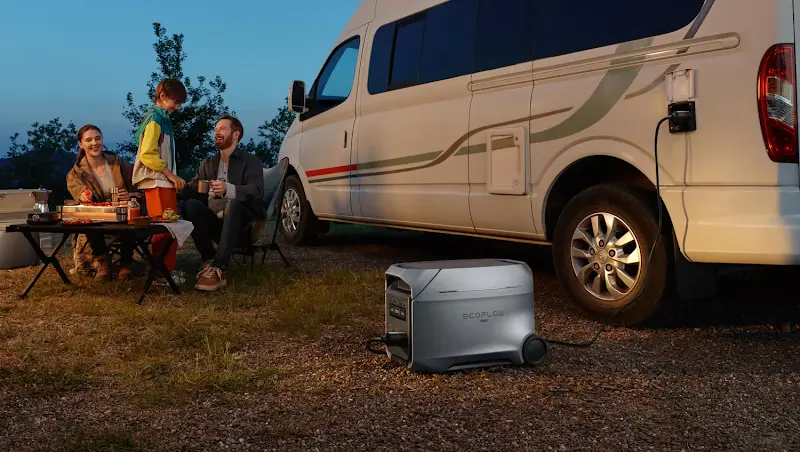
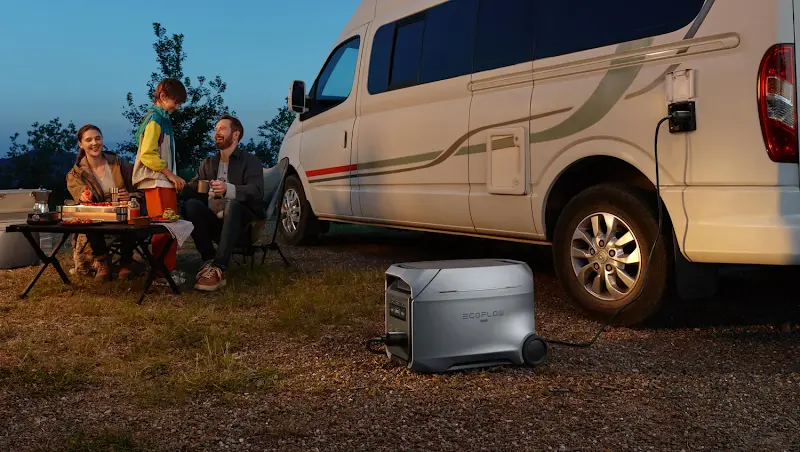
Here’s the key: idling in the heat wastes cash and strains your engine. For those hitting the Bruce Peninsula or Algonquin Park this summer, a high capacity unit like the EcoFlow DELTA 3 Ultra Portable Power Station (3072Wh) serves as a massive energy reservoir. Another thing to consider is using it as an insurance policy for your comfort. Instead of burning gas to run the car’s AC while parked, you can power high velocity fans or a 12V portable fridge directly from the unit. This keeps your drinks ice-cold and turns your car into a self sustained cooling station. Bottom line: you cut the fuel costs of constant idling while surviving a brutal Ontario heatwave. I’ve sat on the 401 watching my fuel gauge drop in a standstill, and it’s a total budget killer. Investing in a power station might seem like a lot at first, but with gas prices what they are, the savings add up fast.
Smarter Route and Commute Planning to Cut Fuel Waste
Beyond the car itself, being smart about where you’re driving is half the battle. We all know the nightmare of the DVP or the QEW during rush hour, but sitting in that constant stop-and-go is the absolute enemy of fuel efficiency. Using real time traffic apps to dodge the worst gridlock is essential. Sometimes, taking a slightly longer route with fewer stoplights actually saves you more money than the “shortest” path that has you crawling at 5 km/h for forty minutes. Ideally keeping the car moving, every time you hit the brakes and then the gas, you’re just throwing loonies out the window.
Fuel Discounts, Rewards, and Financial Optimization
In 2026, being loyal to a gas brand is actually starting to pay off. If you aren’t stacking your credit card rewards, think CIBC or RBC with programs like Journie or PC Optimum, you’re basically leaving money on the pavement. Combining these can shave 5 to 10 cents off every single litre. It takes a little bit of strategy to remember which card to pull out at which station, but the annual savings are substantial enough to cover a few extra grocery hauls. Truth be told, it’s one of the few ways left to claw back some control over a bill that usually feels like it’s just out to get you.
Future Outlook: Will Ontario Gas Prices Get Better or Worse?
The million dollar question for anyone with a driver’s license is whether we’ve finally hit the ceiling or if the numbers at the Esso are just going to keep climbing.
2026 Energy Market Predictions
Most analysts seem to agree that while those wild, overnight 10-cent spikes might level off, the era of “cheap” gas is pretty much in the rearview mirror. Global supply is still tight, and as the world tries to figure out the messy transition from oil to renewables, we’re the ones caught in the middle of the price tug-of-war.
Government Policy Direction in Canada
Even with the back-and-forth over taxes we saw last year, the federal push toward net-zero is not going away. Carbon pricing is likely a permanent part of the Canadian landscape now. What that means for your wallet is simple: the “tax” slice of your fuel bill is staying right where it is, keeping the floor price high.
Long-Term Commuter Cost Trends
On the bright side, the trend is moving toward taking the power back, literally. As more Ontarians switch to home storage and EVs, the desperate demand for gas might eventually soften. But for the next few years? Efficiency and smart tech are your only real armor.
Conclusion
Gas prices in Ontario in 2026 are basically a giant, frustrating puzzle. While we can’t do much about overseas oil markets or whatever the latest federal tax policy happens to be, we can definitely control how we handle it. By cleaning up our driving habits, using portable power to kill the “idling tax,” or finally looking into the long-term wins of home energy storage and EVs, we can navigate these spikes without letting fuel costs stall our lives. Here’s the key: it is about being a bit more strategic so a trip to the pump doesn’t end up ruining your entire week.
FAQ
1. Why are gas prices higher in Canada than the U.S.?
It mostly comes down to the tax man. We pay significantly higher federal and provincial taxes, including carbon pricing, compared to what you’ll find in most U.S. states.
2. Which province has the highest gas prices?
B.C. usually takes the crown there. Even with some tax tweaks in early 2025, things like the TransLink levy in Vancouver and refinery constraints in the Lower Mainland keep their prices at the top of the list.
3. Is carpooling a good way of saving fuel?
Absolutely. Splitting the bill with a few coworkers is one of the fastest ways to cut your costs in half. Plus, hitting the HOV lanes means you spend less time burning fuel while sitting still in traffic.
4. What is the best highway speed for fuel efficiency?
Most cars find their “sweet spot” around 80-90 km/h. If you’re pushing 120 km/h instead of keeping it at 100, you’re likely burning about 20% more fuel just to save a few minutes.
5. What season are gas prices the highest?
Spring and summer are usually the roughest. You’ve got more people hitting the road for vacations, combined with the fact that summer-grade fuel actually costs more to refine.
6. Do rewards programs save money?
They do. If you’re smart about it, those per-litre discounts and points can effectively save you anywhere from $2 to $5 per tank. It’s not a fortune, but it covers the coffee for the drive.