Ontario Energy Rebate 2026: How to Qualify, Apply, and Maximize Your Savings
Trying to figure out energy rebates in Ontario usually feels like a second job you didn’t apply for. Between the confusing acronyms and programs that seem to change every time the wind blows, it’s a lot to handle. But 2026 has brought some massive shifts. We’re moving past the days of just getting a few bucks back for a smart thermostat. This year, the focus is on making your home actually resilient while the provincial grid tries to keep up with everything from February ice storms to those nasty July heatwaves.
This guide will show you how to build a buffer between your bank account and the next Hydro bill hike, and the clear path to follow. You don’t need to do every single upgrade at once. Success comes from knowing exactly which incentives play nice together so you aren’t leaving thousands of dollars on the table while your neighbors scoop them up.
Types of Ontario Energy Rebates You Can Claim
Most of the money you can claw back this year fits into three distinct categories. Understanding how these layers stack is how you actually move the needle on your monthly bills.
Ontario Electricity Rebate (OER)
The Ontario Electricity Rebate (OER) is the heavy lifter here. As of late 2025/early 2026, it’s sitting at a 23.5% credit that just shows up on your bill automatically. It’s the government’s way of cushioning the blow of rising distribution costs.
Home Renovation Savings Program (HRSP)
This is the “new big umbrella” for 2026, replacing the older HER+ programs. Delivered through Save on Energy and Enbridge Gas, it offers up to $10,000+ in rebates. The big change this year? The Home Renovation Savings Program offers two paths: a “Single Upgrade” path for quick fixes like smart thermostats or specific heat pumps, and a “Bundled Path” for deeper retrofits like insulation and windows.
Who Qualifies for Ontario Energy Rebates?
While most Ontarians can tap into some form of relief, the “how much” really depends on whether you own your home, what your tax return looks like, and the type of building you’re living in.
Eligibility for Homeowners vs. Renters
If you own a detached, semi, or row house, you’re in the driver’s seat for the big structural rebates like heat pumps or windows. However, renters aren’t totally left out in 2026. While you probably won’t be replacing a furnace in a place you don’t own, you can still apply for OESP (Ontario Electricity Support Program) for monthly bill credits. Plus, for the first time, we’re seeing more rebates for portable smart appliances, like window AC units or smart plugs, that renters can take with them when they move.
Income-Based Eligibility Requirements
Ontario is leaning hard into affordability this year. If your household income is below certain thresholds (e.g., under $48,220 for a single person or roughly $96,439 for a family of four), you might qualify for the Energy Affordability Program (EAP). This is a “we pay for it all” program. They’ll often cover 100% of the cost for attic insulation, draft proofing, and even new energy efficient appliances. For everyone else, the rebates usually cover a percentage of the total project cost. Some qualified applicants also use these savings to improve backup reliability at home, such as adding a power station to keep essential medical or cooling devices running during grid instability.
Eligible Property Types
Eligible properties aren’t just limited to the suburbs anymore. While detached and semi-detached homes are the standard, 2026 programs have officially expanded deeper into MURBs (Multi-Unit Residential Buildings). If you live in a low rise apartment or a stacked townhouse (three stories or less), your building might now qualify for structure-wide upgrades. Just keep in mind, for MURBs, the application usually has to be driven by the building owner or the condo board.
Do You Need an Energy Assessment?
This is the most important update for 2026: Not everyone needs an audit, but skipping it might cost you thousands. You need to choose the right “lane” for your goals:
The Bundled Path (Maximum Savings)
If you’re planning a major overhaul (e.g., Attic Insulation + Windows, or a Heat Pump).
Requirement: You must have a pre- and post-retrofit EnerGuide audit.
The Rule: You must complete at least two eligible upgrades.
2026 Bonus: Completing three or more upgrades now often triggers an additional $500 bonus under the HRSP.
The Instant/Fast-Track Path
If you only want to install a Smart Thermostat or specific energy-efficient appliances.
The Trade-off: The rebate amount per unit is fixed and generally lower, and you won’t get an audit reimbursement.
Pro Tip: If you’re going for the Bundled Path, never start work before the auditor visits. If you’ve already started, your application will be disqualified!
How to Apply for Ontario Energy Rebates (Step-by-Step Guide)
If you want the government to cut you a check, you have to play by their rules, and they are notoriously picky about the order of operations. One wrong move, like buying a furnace on a Saturday and trying to apply on Monday, will get your application tossed immediately. Here’s the exact 2026 sequence you need to follow to make sure you actually get paid.
Step 1: Find Eligible Programs
In 2026, Ontario’s Home Renovation Savings Program (HRSP) has two paths: a “Single Upgrade” path (for just a heat pump or smart thermostat) and a “Bundled” path (for deeper stuff like windows and insulation). You need to register for the program before you do anything else. This locks in your spot in the funding queue.
Step 2: Schedule an Energy Audit
You must book a pre-retrofit EnerGuide evaluation. A registered advisor needs to come to your house and document how “leaky” it is. This is your baseline. If you install new equipment before this guy walks through your door, you are officially disqualified from the bundled rebates.
Step 3: Complete Approved Upgrades
Once you have your custom report from the auditor, you’ve got a “menu” of upgrades to choose from. To get the best rebates, you usually need to complete at least two. Including a high-efficiency solar panel system at this stage can add to the total incentives you qualify for as part of a bundled upgrade.
One note to bear in mind: Your contractor needs to be licensed, and the equipment, whether it’s an air-source heat pump or triple-pane windows, must be on the official 2026 ENERGY STAR® certified list for Ontario. If the model number is one digit off, the rebate might not be clear.
Step 4: Submit Your Application
After the work is done, you have to bring that same energy advisor back for a post-retrofit evaluation. They’ll verify that the insulation was actually installed and the windows aren’t just for show. You then upload your final report, itemized receipts (make sure they show the specific model numbers!), and certificates of completion to the portal.
Common Application Mistakes to Avoid
The paperwork is a headache. Just stay organized, keep a digital folder for every receipt, and don’t let a contractor rush you into an installation before your audit is done. If you follow the sequence, the money will come, usually as a direct deposit or a cheque in the mail about 8 to 12 weeks after the final audit is submitted.
How to Maximize Your Energy Rebates in Ontario
If you want to move beyond just shaving a few dollars off your bill and actually reach a point of energy independence, you need a strategy. In Ontario, that means moving away from a “one-off” upgrade mindset and looking at how different pieces of tech can work together.
Combine Federal interest-free financing
Most savvy homeowners in 2026 are looking for “stackable” opportunities. While the direct federal grant (Greener Homes Grant) has largely transitioned into provincial delivery models, the Canada Greener Homes Loan remains a powerful tool. You can still apply for up to $40,000 in interest-free financing with a 10-year repayment term to cover major retrofits.
The strategy for 2026 is to use the federal loan to front the capital for high-cost items—like cold-climate heat pumps, while simultaneously claiming provincial HRSP rebates of up to $10,000.
Prioritize High-Impact Upgrades
In the past, we all focused on attic insulation or triple-pane windows. Those are still great, but with the increasing frequency of winter ice storms and sudden summer downpours, Energy Resilience is the new high impact category. Real efficiency means a slower meter while also ensuring your sump pump keeps running and your food doesn’t spoil during a 48-hour outage.
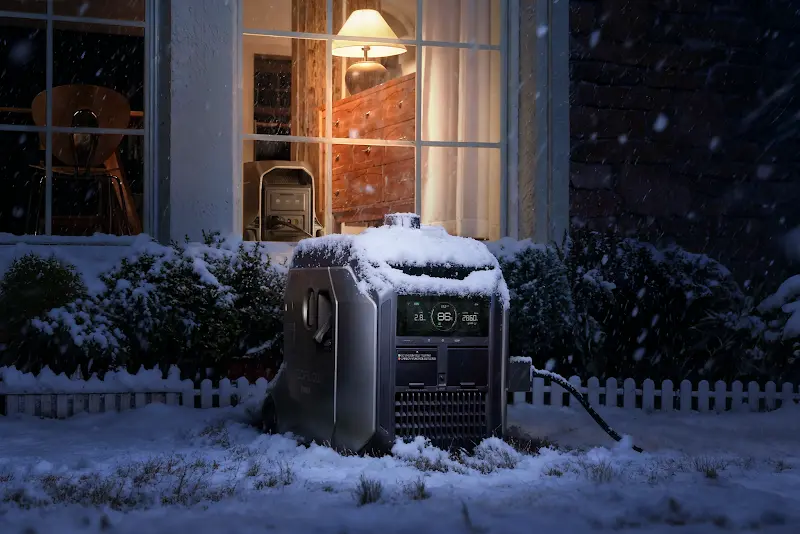
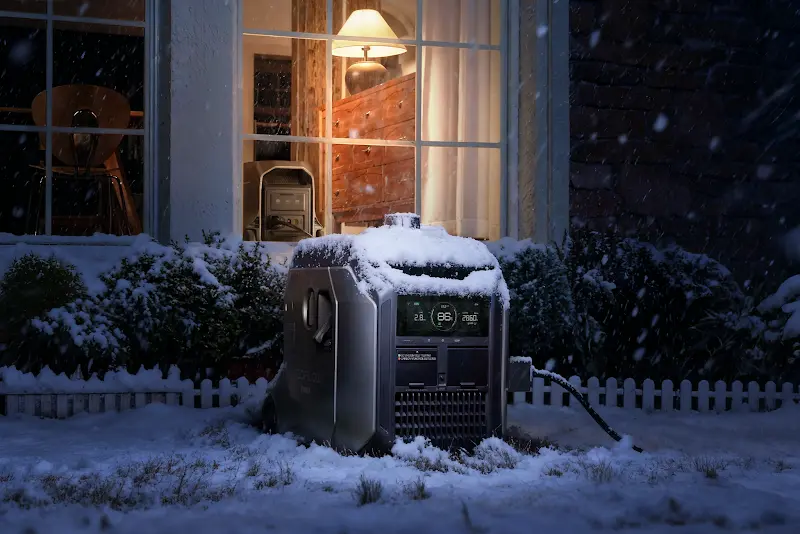
Another thing to consider is why whole home backup systems like the EcoFlow DELTA Pro Ultra Whole-Home Backup Power have gone mainstream. It’s a smart hub that plays perfectly with Ontario’s Ultra Low Overnight (ULO) rate plan. Here’s the key: under the ULO plan, electricity is dirt cheap, 3.9¢/kWh between 11 PM and 7 AM. However, the price skyrockets to 39.1¢/kWh during the “On-Peak” rush from 4 PM to 9 PM. By integrating a system like the DELTA Pro Ultra into your panel, you can automatically charge it while you sleep at that low rate, then run your whole house off the battery during the expensive evening window. This simple “time-shifting” strategy can save a typical household an extra $1,000 to $1,500 a year on top of your other rebates.
Critical Step: Manually Switch Your Price Plan
If you want to unlock the 3.9¢/kWh rate to charge your EcoFlow DELTA Pro Ultra, remember: this rate is NOT automatic. Most Ontario homeowners are defaulted to Time-of-Use (TOU) or Tiered pricing. To benefit from “peak shaving,” you must:
Contact your local utility provider (e.g., Hydro One, Alectra, Toronto Hydro).
Request a switch to the “Ultra-Low Overnight (ULO)” price plan.
Timing: Most utilities allow you to switch once per billing cycle.
Without this manual switch, you’ll still be paying peak prices even at night, and you’ll miss out on the potential $1,500/year savings that come from charging your batteries when the grid is cheapest.
Choose ENERGY STAR® Certified Products
Using certified products is often a non-negotiable requirement for rebates. These products are specifically tested to withstand the harsh Ontario climate while maintaining peak efficiency.
Finally, double-check your specs. Using ENERGY STAR® certified products is a non-negotiable requirement for the rebate in almost every case. Also, keep in mind that the province keeps a very specific list of eligible model numbers. Here’s the key: if your contractor installs a unit that looks right but is not on that specific list, you’re stuck with the bill. Ideally, always verify the exact model against the current 2026 rebate portal before any tools touch your house.
How Much Can You Really Save with Ontario Energy Rebates in 2026?
At the end of the day, you want to know if the paperwork is worth the payout. In 2026, the return on these upgrades hits your wallet in two ways: immediate monthly relief and long-term “home insurance” against the unpredictable Ontario climate.
Average Annual Electricity Savings
For a typical household, think a three bedroom in Milton or a semi in Ottawa consuming around 750 kWh a month, stacking insulation upgrades with smart energy management can realistically shave $500 to $1,500 off your annual costs. When you factor in the 23.5% Ontario Electricity Rebate (OER) that’s automatically applied, your starting point is already lower, but the real dent comes from the upgrades that stop energy from bleeding out of your attic.
Return on Investment (ROI) Timeline
We used to look at ROI strictly through the lens of bill reduction, calculating that new windows might take 10 years to pay back or a heat pump might take 8. But in 2026, the calculation has changed because of Energy Resilience.
Take a system like the EcoFlow DELTA Pro Ultra Whole-Home Backup Power or the newer DELTA 3 Ultra Plus Portable Power Station (3072Wh). The value is found in the daily bill optimization, which is huge on the ULO plan, and in its role as “home power insurance.” Bottom line, in Ontario, a 48-hour winter blackout can lead to significant costs, from several hundred dollars in spoiled groceries to several thousand dollars in potential damage if a sump pump fails and basement flooding occurs in severe cases. Including this type of energy storage in your 2026 plan addresses two key needs: daily peak shaving to reduce time-of-use electricity costs, and emergency backup protection during extreme weather events. In high-usage households, shifting consumption to off-peak hours may potentially result in savings ranging from hundreds to over $1,000 per year, depending on electricity rates and usage patterns.
Example: How Savings Add Up in a Typical Ontario Home
Let’s look at a household using 750 kWh/month:
Insulation & Heat Pump: Switching from an old electric or oil furnace can cut the heating portion of your bill by up to 50%.
Smart Storage + ULO Plan: Charging your battery at the 3.9¢/kWh overnight rate and using it during the 39.1¢ peak hours can save an additional $80-$120 a month.
Total Impact: Many families are seeing a combined annual drop in utility spending of $1,500 to $2,500 depending on their specific setup and climate conditions.
Conclusion
The 2026 Ontario Energy Rebates are a massive opportunity to claw back some control over your cost of living. Pairing traditional retrofits with modern energy storage creates a home that stands up to a week-long ice storm or a record heatwave.
Here’s the key: these programs don’t stay open forever. We’re in a “sweet spot” where stacking provincial cash with specialized storage incentives is still possible, but the funding is finite. The best move right now is getting your registration in and your energy audit booked while the 2026 windows are wide open. Once you’re in the system, you’ve secured a spot in line for thousands in savings that make your home cheaper to run and much more independent.
FAQs
1. How long does a rebate take to arrive?
Expect your money in about 8 to 12 weeks after you’ve submitted and verified your final post-retrofit audit. It’s not an overnight process, but the province is generally consistent with that timeline.
2. Can renters apply for energy rebates in Ontario?
Yes, renters have options. While you won’t be doing a full attic insulation job, you can still apply for the Ontario Electricity Support Program (OESP) to get an ongoing monthly credit on your bill. In 2026, some programs also offer rebates on portable units, like energy efficient window ACs or smart plugs, which are perfect for apartments.
3. Are rebates considered other income?
No, you don’t need to worry about the CRA here. Residential energy rebates in Ontario are viewed as non-taxable grants. You don’t have to report them as income on your tax return.
4. What is a rebate combination?
Most people call this “stacking.” It’s the strategy of using provincial utility rebates (like the HRSP) alongside other incentives, like the Clean Technology Investment Tax Credit if you’re doing solar, to cover the same project. Using multiple funding sources is the best way to lower your out-of-pocket costs and hit your break-even point years earlier.