Off-Grid Solar Systems in Canada: Costs, Components, and What You Need in 2026
- Off-Grid Solar Costs in Canada: Typical Budgets and the Biggest Price Drivers
- The Key Parts of an Off-Grid Solar System and What Each One Does
- What “Off-Grid” Means in Canada and Who It’s For in 2026
- How to Size an Off-Grid Solar System for Canadian Winters
- Choosing a Modular Setup You Can Expand Over Time
- Frequently Asked Questions
- Build Reliable Off-Grid Power Without Overbuying
Building an off-grid solar system is more possible now than ever before. Battery banks have become more affordable, panel efficiency continues to improve, and modular setups make it possible to start small and expand.
Canada’s long winters, dramatic shifts in sunlight, and logistical challenges in remote areas pose some concerns, but can be overcome with careful planning. Learn about the costs, components, sizing, and scalability of an off-grid setup.
Off-Grid Solar Costs in Canada: Typical Budgets and the Biggest Price Drivers
Solar panels cost around $0.80-$1.20 per watt, including installation. Charge controllers range from $50 to $1,500, depending on the type and size. Inverters range from $500 to $2,000. Wiring can cost $2,000 to $6,000, accounting for 8-15% of the total system cost.
The battery bank is the most expensive component of an off-grid system. Most off-grid homes need anywhere from 20 to 30 kWh, which can cost $10,000 to $20,000. Other big price drivers are winter performance requirements, which can heavily increase array sizing, installation logistics for remote sites, and load choices, which increase system size requirements significantly.
All in all, the total cost of a complete off-grid solar system in Canada costs between $15,000-$25,000 for a small cabin, $30,000-$55,000 for a family home, and $60,000-$100,000+ for a large property.
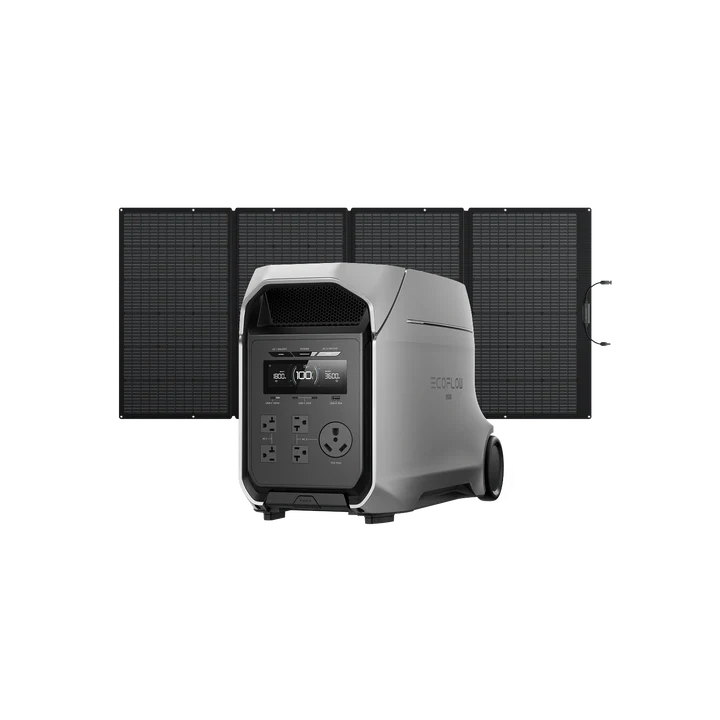
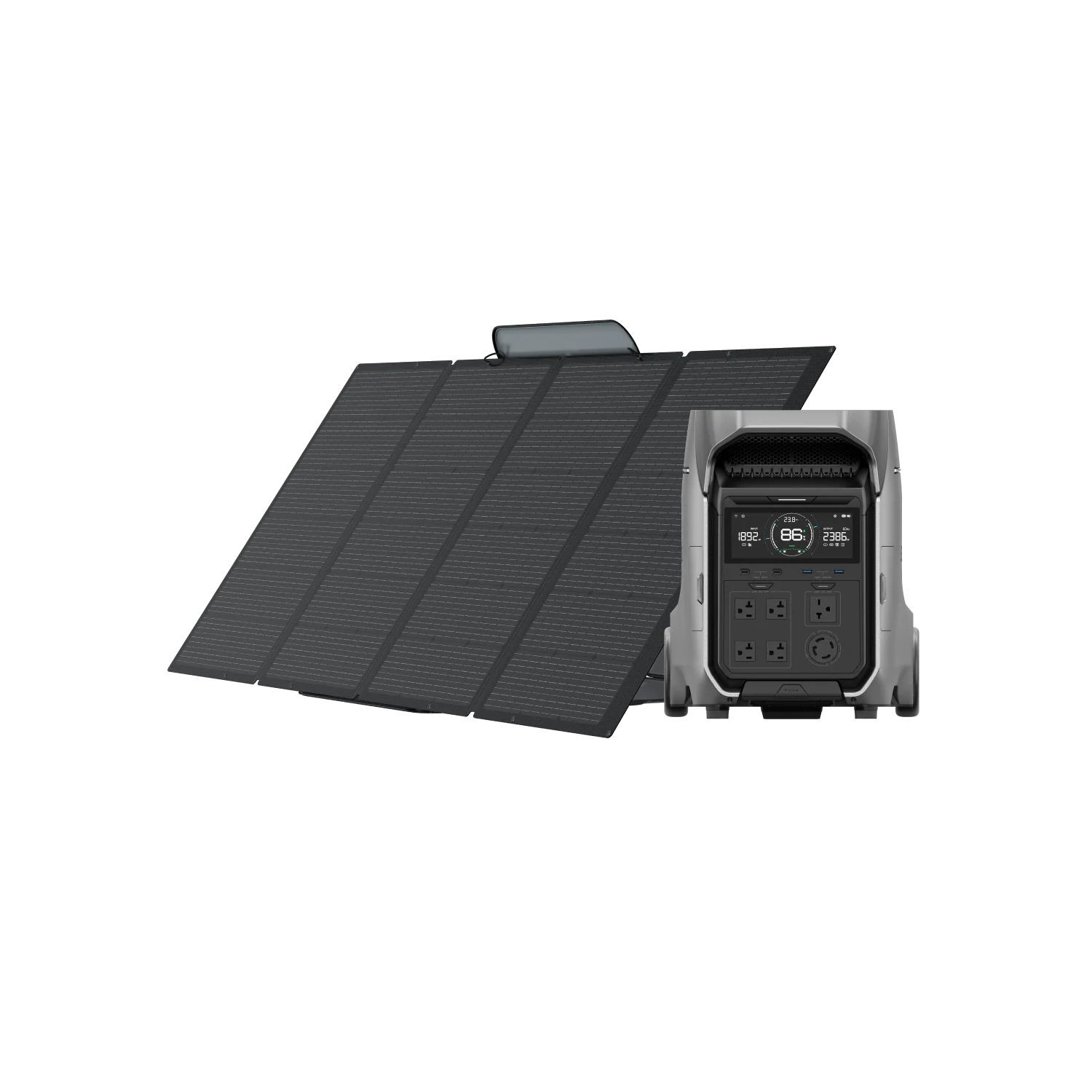
The EcoFlow DELTA 3 Ultra Plus + 400W Solar Panel offers an entry-level setup with a base capacity of 3,072 Wh and the ability to scale up to 11 kWh. The EcoFlow DELTA Pro 3 Solar Generator (PV400W) is expandable to 48 kWh for a more permanent setup.
The Key Parts of an Off-Grid Solar System and What Each One Does
There are four key components of an off-grid solar system:
Solar panels capture sunlight and convert it to direct current (DC) electricity. Monocrystalline panels are the most popular option due to their high efficiency in limited spaces.
Charge controllers regulate the voltage and current flowing from the panels to the battery to prevent overcharging. Maximum Power Point Tracking (MPPT) controllers are roughly 25% more efficient than Pulse Width Modulation (PWM) models.
Inverters convert DC electricity stored in your batteries to alternating current (AC) power for household use.
Battery banks store the excess energy generated during the day to power devices at night or on cloudy days. Lithium iron phosphate (LiFePO4) batteries have become the standard for off-grid battery storage due to their longer lifespan, deeper discharge capabilities, and better cold-weather performance compared to lead-acid alternatives.
Generator backup is an optional, yet practical component for off-grid setups. For periods of low sun, generators add to a home’s energy resilience.
What “Off-Grid” Means in Canada and Who It’s For in 2026
Off-grid means generating, storing, and managing your own energy without connection to a utility grid. Energy independence makes the most sense for remote cabins and cottages, rural homes, and mobile setups.
Off-grid approaches are most practical when you’re too far from grid infrastructure to make a utility connection economical, or you’re on the move and can only rely on portable power.
How to Size an Off-Grid Solar System for Canadian Winters
The most common mistake homeowners make is sizing their off-grid solar system based on annual average solar production rather than the least efficient month. A system that barely covers your power demands in the winter will generate more than enough in the summer.
Sizing starts with your daily energy load. Calculate your daily energy consumption in kilowatt-hours by listing every device you plan to run, its wattage, and daily hours of use. Include the small amount of power that inverters consume while operating. Account for surge loads and ensure your inverter can handle the peak.
Size panels by dividing the total energy load by the average daily sunlight. Multiply your load by 1.5 to account for winter storms and system losses. Size your battery bank by multiplying daily energy by your target days of autonomy. Most off-grid setups aim for two or three days without recharge.
Choosing a Modular Setup You Can Expand Over Time
Most off-grid projects start small. As homeowners learn about their consumption patterns, they understand their energy demands and setup requirements. Starting with a smaller system allows flexibility to expand where needed, and means you won’t break the bank right off the bat.
Frequently Asked Questions
How much does an off-grid solar system cost in Canada in 2026?
An entry-level off-grid solar system can cost up to $15,000, which is practical for a small cabin. The setup for a family home costs anywhere from $30,000 to $60,000.
How do I size an off-grid solar system for winter in Canada?
Calculate your daily load and multiply it by your desired days of autonomy, which is often 2-3 days, to size your battery bank. Divide the total energy load by the worst winter month’s peak sun hours—not the annual average—to size the panels.
Are LiFePO4 batteries worth the higher upfront cost for off-grid?
LiFePO4 batteries are typically worth the upfront cost because they offer more charge cycles, a greater depth of discharge, and perform better in cold temperatures compared to lead-acid alternatives.
Can I run a whole house off-grid in Canada?
Technically, yes, but you’ll have to plan carefully on how to heat the home. Electrical heating consumes too much power for an off-grid system to support, so homes typically rely on wood stoves or propane furnaces for heat.
Build Reliable Off-Grid Power Without Overbuying
Building an off-grid solar system requires extensive planning. You must size for your worst winter month, incorporate enough battery autonomy to survive low-sun periods, and choose the right battery chemistry for cold-weather performance. With enough patience and planning, you can have a reliable setup that maximizes energy independence.
The EcoFlow DELTA Pro 3 offers a practical, noncommittal way to begin an off-grid setup, while leaving the door wide open for expansion in the future.