Top Motorhome Generators in Canada (2026): Quiet & Reliable Power for RV Travel
- What Makes a Good Motorhome Generator for Canadian RV Trips?
- Which Generators Best Handle Heavy Off-Grid Demands?
- How to Ensure Steady Electrical Output on Long Wilderness Roads?
- How Can You Reduce Generator Noise And Summer Overheating?
- What Should You Check Before Buying RV Power Equipment?
- Conclusion
- FAQ
Planning an RV trip across Canada takes solid preparation, especially when you want to keep your electronics running and your space comfortable. This guide covers the best motorhome generators in Canada for 2026. These units balance quiet operation with reliable performance for any road trip. Whether you are driving the rugged Trans Canada routes or boondocking deep on crown land, picking the right power gear keeps your modern comforts working no matter where you park.
What Makes a Good Motorhome Generator for Canadian RV Trips?
Travelling across Canada by RV means dealing with everything from coastal humidity to mountain cold snaps. To stay comfortable off-grid and avoid relying on crowded RV parks, you need a power setup that is reliable, efficient, and built for changing conditions. Choosing the right RV generator makes remote RV travel far more comfortable and flexible.
Handle Quiet Overnight Campground Use
Many Canadian campgrounds enforce strict noise regulations to preserve a peaceful outdoor environment. Excessively loud generators may disturb nearby campers and violate campground rules. An ideal power system should operate quietly, allowing you to run essentials overnight without breaking campground noise rules or disturbing wildlife.
Run RV Air Conditioners Consistently
Canadian summers can get surprisingly hot, especially when you are driving through the Okanagan Valley or the wide prairies of Manitoba. To keep your RV’s rooftop AC running steady, you need a power source with serious starting and running wattage. A reliable setup stops your air conditioner from shutting off in the middle of a hot afternoon, right when you need it most.
Provide Stable Power During Long Stops
Boondocking on crown land or taking long breaks along the Trans Canada Highway means you need a steady, reliable flow of power. Whether you are running a microwave, charging laptops for remote work, or powering medical gear like a CPAP machine, the electrical output needs to remain stable for extended periods, since voltage fluctuations can damage sensitive electronics.
Which Generators Best Handle Heavy Off-Grid Demands?
When you head deep into remote territory, your power gear decides how far off the beaten path you can really go. Depending on your travel style, different generator technologies offer their own advantages for handling high off-grid power demands.
Quick Guide: Choosing Your RV Power Source
| Generator Type | Noise Level | Fuel / Power Source | Key Advantage | Main Disadvantage |
|---|---|---|---|---|
| Inverter (Gas) | Moderate (~52-58 dBA) | Gas (Everywhere) | Stable & reliable power | Restricted by quiet hours |
| Dual-Fuel (Gas/Propane) | Moderate (~55-60 dBA) | Gas or RV Propane | Flexible fuel options | Units are heavier |
| Power Station (Solar/Battery) | Silent (~0 dBA) | Solar / Vehicle Alternator | No quiet hour restrictions | Higher upfront cost |
Inverter Generators for Quiet Campgrounds
Traditional open-frame generators are often too noisy for shared campgrounds, which is why inverter generators have become a popular choice for camping. Because they only increase engine speed when additional power is needed, inverter generators operate more quietly and use fuel more efficiently. They also deliver pure sine wave output, which helps protect sensitive electronics such as smartphones, laptops, and tablets.
Dual Fuel Generators for Long RV Routes
On cross-country trips through areas where certain fuels may be difficult to find, dual-fuel capability provides greater flexibility and reliability. Being able to switch between gasoline and propane provides greater flexibility at gas stations. It also helps reduce the risk of running out of fuel between remote service areas.
Portable Solar Generators for Remote Stops
If you want very quiet operation and zero emissions while parked by a quiet lake in northern Ontario, portable solar generators are a good option. They generate clean energy during the day, with no fuel fumes at all. This creates a more self-sufficient and environmentally friendly off-grid setup.
High Wattage Generators for RV Air Conditioners
When the summer heat hits hard and you need your 13,500 or 15,000 BTU AC units running alongside other appliances, you’ll need a heavy-hitting system that can handle that massive surge power. These high-capacity systems provide the surge power needed to start compressor motors without tripping breakers or damaging the unit.
Battery Generator Systems for Overnight Use
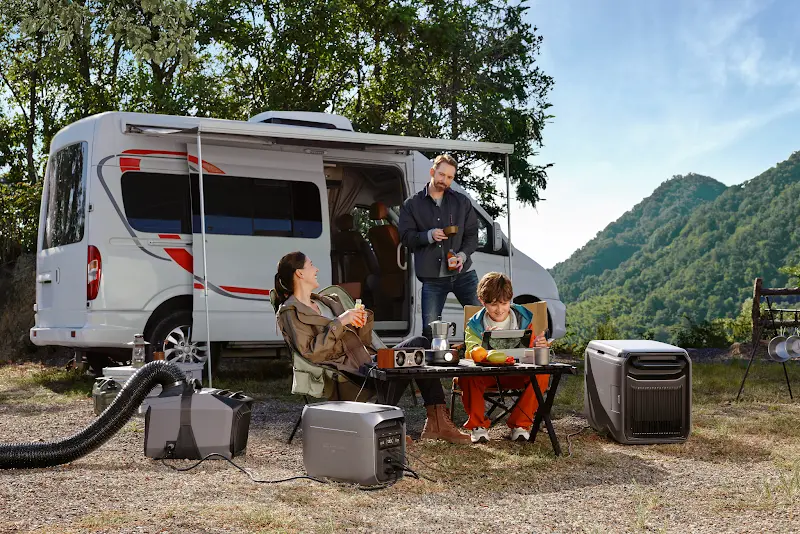
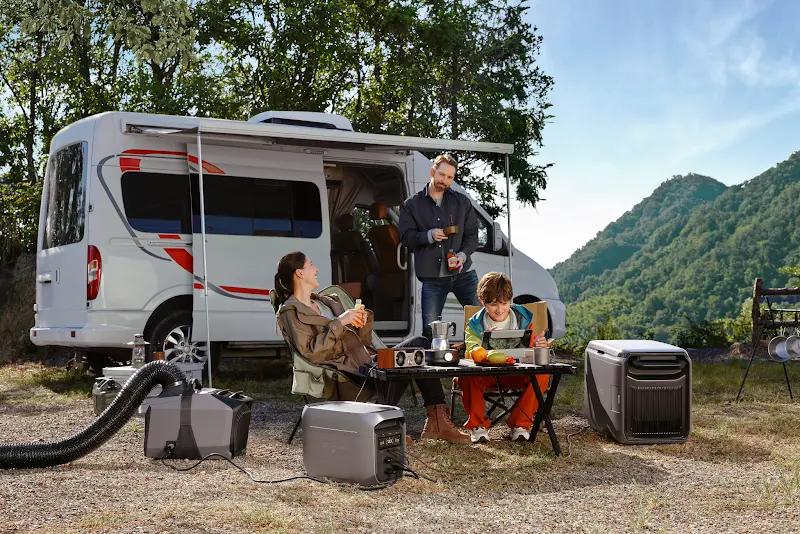
For the best mix of heavy power and quiet operation, modern battery generator setups have taken the lead in 2026. Many RV owners are now turning to a high-performance portable power station to avoid campground combustion engine restrictions and reduce overnight noise. These systems function as a stable energy storage source, allowing users to run essential appliances overnight without fuel consumption or engine noise.
How to Ensure Steady Electrical Output on Long Wilderness Roads?
When you’re driving through Canada’s big wilderness, you need a smart power plan. A good off-grid setup makes long driving days much more efficient, since you can recharge your batteries while travelling between campsites. By charging while you drive, you can arrive at camp with your batteries already topped up and ready to go.
Recharge RV Batteries While Driving Between Stops
During long-haul RV trips, the main challenge for most travelers is not just running out of power overnight, but gradually depleting their battery capacity over several days of dry camping without shore power access. This is particularly true on Canadian routes where distances between serviced campgrounds are immense. If you aren’t actively topping up your battery bank while driving during the day, you will be forced to cycle a traditional generator constantly once you park to keep up with your AC, lighting, and kitchen appliances. That is why modern RVers who frequently move between campsites are increasingly adopting on-the-go charging solutions.
The EcoFlow DELTA 3 Ultra Plus + 800W Alternator Charger is especially useful for long-distance RV travel. This setup connects directly to your vehicle’s alternator to deliver up to 800W of charging power while driving. By utilizing driving time, it significantly replenishes battery capacity before arrival, reducing reliance on traditional fuel-powered generators when setting up camp.
Reduce Overnight Generator Use at Campsites
Many Canadian campgrounds, especially those within spectacular National Parks or pristine lakeside areas, enforce strict night-time generator restrictions. Running a traditional combustion engine through the night will quickly disturb the peace and breach park regulations. For overnight campers, storing power during daylight hours is often a more practical solution than relying on a high-output gas generator. During extended summer boondocking stays, experienced RVers prefer capturing clean energy while the vehicle is stationary, storing enough power to silently run cabin fans, 12V refrigerators, lights, and small electronics overnight.
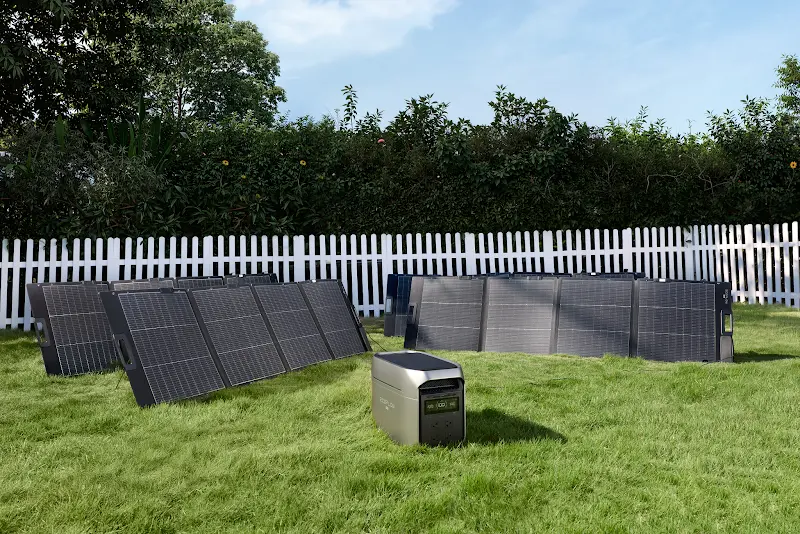
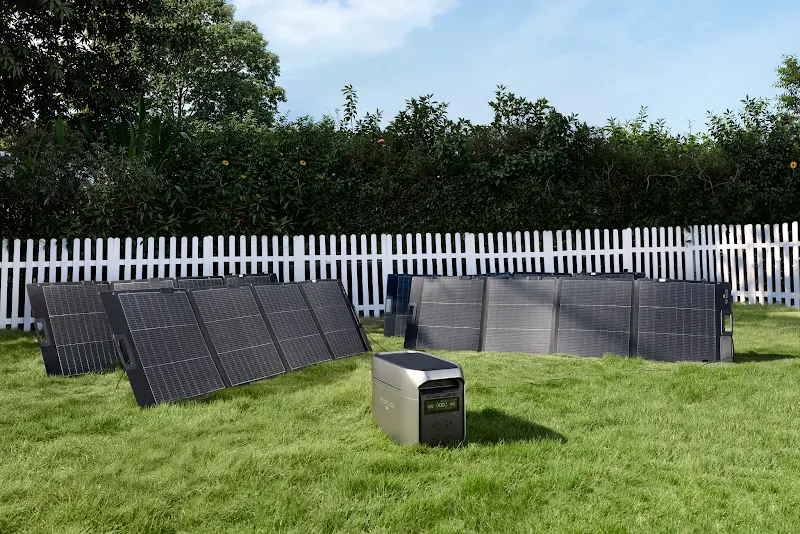
For extended off-grid stays, the EcoFlow DELTA 3 Max Plus (2048Wh) + 500W Solar Kit is a practical option for campsite power needs with low noise operation. The 500W high-efficiency solar panel captures sufficient sunlight during the day, keeping the DELTA 3 Max Plus charged so you can run lights, fans, and small appliances quietly without relying on a gas generator.
Maintain Stable Power for RV Air Conditioners
Keeping an RV air conditioner running smoothly off-grid requires a system capable of handling constant, heavy electrical loads. Modern battery systems help stabilize voltage fluctuations that occur when an AC compressor starts, helping to protect the motorhome’s cooling system from excessive strain.
Prevent Voltage Drops During Long Drives
Long wiring runs in large motorhomes can often lead to annoying voltage drops, which can cause sensitive onboard electronics to malfunction or fail to charge properly. Implementing dedicated, high-quality DC-to-DC charging networks ensures that your secondary battery systems receive a regulated and perfectly steady charge throughout the entire trip.
How Can You Reduce Generator Noise And Summer Overheating?
Generators are heavily used during peak summer travel. So you need good thermal and sound management. That helps keep your equipment running efficiently and reduces noise at the campsite.
Improve Airflow Around Generator Placement
Whether your generator is built into an onboard compartment or sitting outside on a portable stand, good airflow is absolutely essential. Combustion engines and inverter cooling fins need a steady supply of fresh air to get rid of the heat. Never run a generator inside a sealed storage bay or a tight enclosed space.
Avoid Direct Sun During Peak Hours
Leaving power equipment in direct sunlight on a 30°C afternoon can quickly cause overheating, which speeds up wear and tear from heat. Set up your portable equipment in the shade of a tree or under an open sided canopy. Keep it out of the harsh midday sun. That way it stays within a safe temperature range.
Use Stable Ground for Outdoor Setup
Place your gear on uneven dirt, loose gravel, or soft grass, and airflow underneath the unit may become restricted, increasing vibration and reducing stability. Always use a solid, level surface. A dense rubber mat or a flat stone works well to improve stability, reduce noise, and keep the unit operating safely.
Prevent Heat Buildup During Long Runtime
Running your power gear for hours on end builds up a lot of heat. If you are pushing it near max capacity, give it regular breaks. Also make sure the cooling fans and exhaust ports stay clear of dust, pine needles, and all that campground debris.
What Should You Check Before Buying RV Power Equipment?
Choosing an RV power setup is an important decision. Asking the right practical questions before purchasing helps ensure you get a system that fits your travel needs.
Compare Fuel Costs With Battery Systems
While gas or propane generators typically have a lower upfront cost, fuel, oil, and ongoing maintenance expenses can accumulate over time. In contrast, battery generator systems require a higher initial investment but eliminate fuel use and significantly reduce maintenance requirements, while providing energy from vehicle charging or solar input.
Measure Available RV Storage Space
Storage space inside a motorhome is often limited and highly valuable. Before buying, carefully measure your exterior storage lockers, tongue space, or rear bumper cargo trays to ensure your new power setup can be safely stowed away during transit without compromising your vehicle’s weight distribution.
Review Provincial Campground Noise Rules
Campground regulations vary quite a bit across Canada. What passes in a private RV resort might be entirely banned in a national park. For instance, Parks Canada and BC Parks maintain rigid, non-negotiable hours for when combustion engines can be operated, making clean battery and solar alternatives highly advantageous for public park enthusiasts.
Confirm Solar And Alternator Compatibility
If you plan to add more to your system later, make sure your main power hub already supports external solar panels and high output alternator chargers. Choosing a system with flexible expansion options can help reduce the need for costly upgrades or additional wiring in the future.
Conclusion
Picking the right power setup for your motorhome depends on how and where you like to camp. If you love heading deep into Canada’s national parks and remote backcountry, focus on quiet, sustainable, and efficient systems. This can significantly improve the overall travel experience. Pairing portable power stations such as the EcoFlow DELTA 3 series with solar panels and alternator chargers can help reduce reliance on traditional generators, while offering a more adaptable off-grid setup.
FAQ
How Big of a Generator Do I Need for a 30-Amp RV?
You generally need a generator rated between 3,000 and 4,500 watts to power a 30-amp RV. This wattage range provides enough headroom to start a standard 13,500 BTU air conditioner while also running essential appliances such as lights, a water pump, and small kitchen devices without overloading the system.
Why Is My Generator Shutting off After Running for About 10 Minutes?
Your generator may be shutting off due to a low oil level safety shutdown or engine overheating. If the unit runs briefly before stopping, it often indicates that the oil level is close to the minimum threshold, or that restricted airflow is causing thermal protection systems to activate in order to prevent engine damage.
How Long Can You Run a Generator on a Motorhome?
A portable gas generator can typically run for 8 to 12 hours on a single tank, while a battery-powered system can provide continuous silent power when supported by solar or alternator charging. For combustion models, runtime is limited by fuel capacity and maintenance requirements, whereas solar-integrated battery systems can be recharged throughout the day using available energy sources.
What Time Can You Run Generators in BC Parks?
Many BC Parks campgrounds restrict generator use to designated daytime hours, commonly around morning and early evening windows. Always check the specific campground regulations before your trip. These rigid, four-hour daily windows are strictly enforced to minimize noise pollution and preserve the natural peace of the park for all visitors, making silent battery alternatives incredibly attractive.
What is the Noise Level for a Generator for Camping?
A camping generator is generally considered acceptable if it operates at or below 60 decibels (dBA) measured at approximately 7 metres (23 feet). Most modern inverter generators and portable power stations operate below this threshold, helping maintain low noise levels that comply with provincial park regulations.