How to Use a Portable Power Station to Get the Most Out of Solar Power in Your RV
Roof panels can't always give off enough electricity. Your energy source is broken by things like shade, winter angles, and a small roof. Those gaps can be filled with a portable power station and panels that can be put down on the ground. This guide shows you how to match panels to your power station, safely connect everything, and get the most power out of your setup.
Match Panels to Power Stations
Wattage doesn't always tell you what you need to know. Voltage and current limits at your power station tell you which panels will actually work.
First, Look at Three Numbers
These are the specs that every power station lists:
Maximum voltage input: Never go over this.
Maximum input amperage: Keep it below for best performance.
Highest power input: Voltage × Amperage.
For instance, with a 60V limit, you should avoid stringing too many panels in series. This ensures you capture max energy without triggering a high-voltage protection shutoff.
Wiring in Series vs. Parallel
Wiring in series adds voltage. Parallel connections increase amperage.
There are two important things about your solar panels:
Open circuit voltage (Voc): The highest voltage that the panel can make.
Short circuit amperage (Isc): The most current that the panel can make.
Take two 200W panels that are each rated at 36.5V and 6.86A:
Putting three panels in a series gives you 109.5V (36.5 × 3) and 6.86A. This makes roughly 600W rated power.
Two series strings in parallel gives you 109.5V and 13.72A (6.86 × 2). This makes 1,200W rated power.
This setup stays below the limits of a 140V/15A source while still putting out a lot of power.
Figure Out How Your Panel Is Set Up
Divide the highest voltage at your station by the voltage at your panel:
60V ÷ 24V (standard panel Voc) = 2.5 → Connect no more than two panels in a series per port.
Since the DELTA 3 Max Plus has dual inputs, you can run two of these strings simultaneously. This lets you use four 200W panels (two strings of two) to hit 800W–1000W of input easily, balancing the voltage and current perfectly.
Should You Over-Panel?
When you over-panel, you connect more potential power than your station can handle. On cloudy days, this helps you get the most power out of your charger. But going over the amperage limit for a long time can sometimes waste energy or stress the system.
- Voltage limits are set in stone. Going over them quickly damages the equipment.
- Limits on amperage are flexible. It's usual to go 10-15% over for performance on cloudy days, but manufacturers don't suggest that you do it all the time. Do not go over the power limits by more than 15%.
In Real Life: Different Station Limits
Low voltage station (60V, 20A): You need panels that are low voltage and high amps. Putting together seven strings of two 50W panels (22.3V, 2.94A) gets you 44.6V and 20.58A. This slightly exceeds the station's amperage limit but maximizes input.
High voltage station (165V, 17A): You have room for panels with a higher voltage. Putting eight 200W panels (36.5V, 6.86A) in two strings of four gets you 146V and 13.72A, which equals 1,600W. This uses up most of the station's capacity.
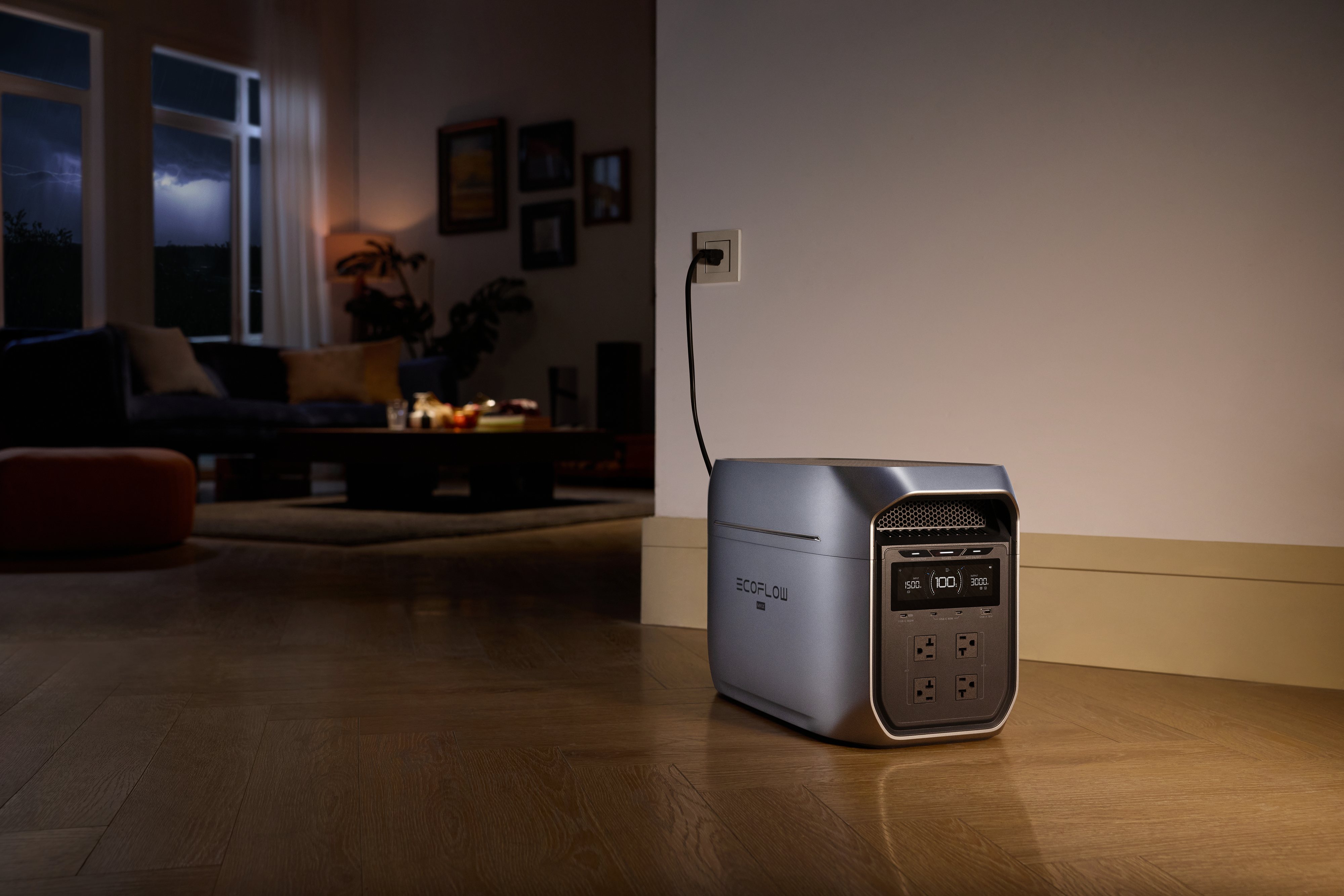
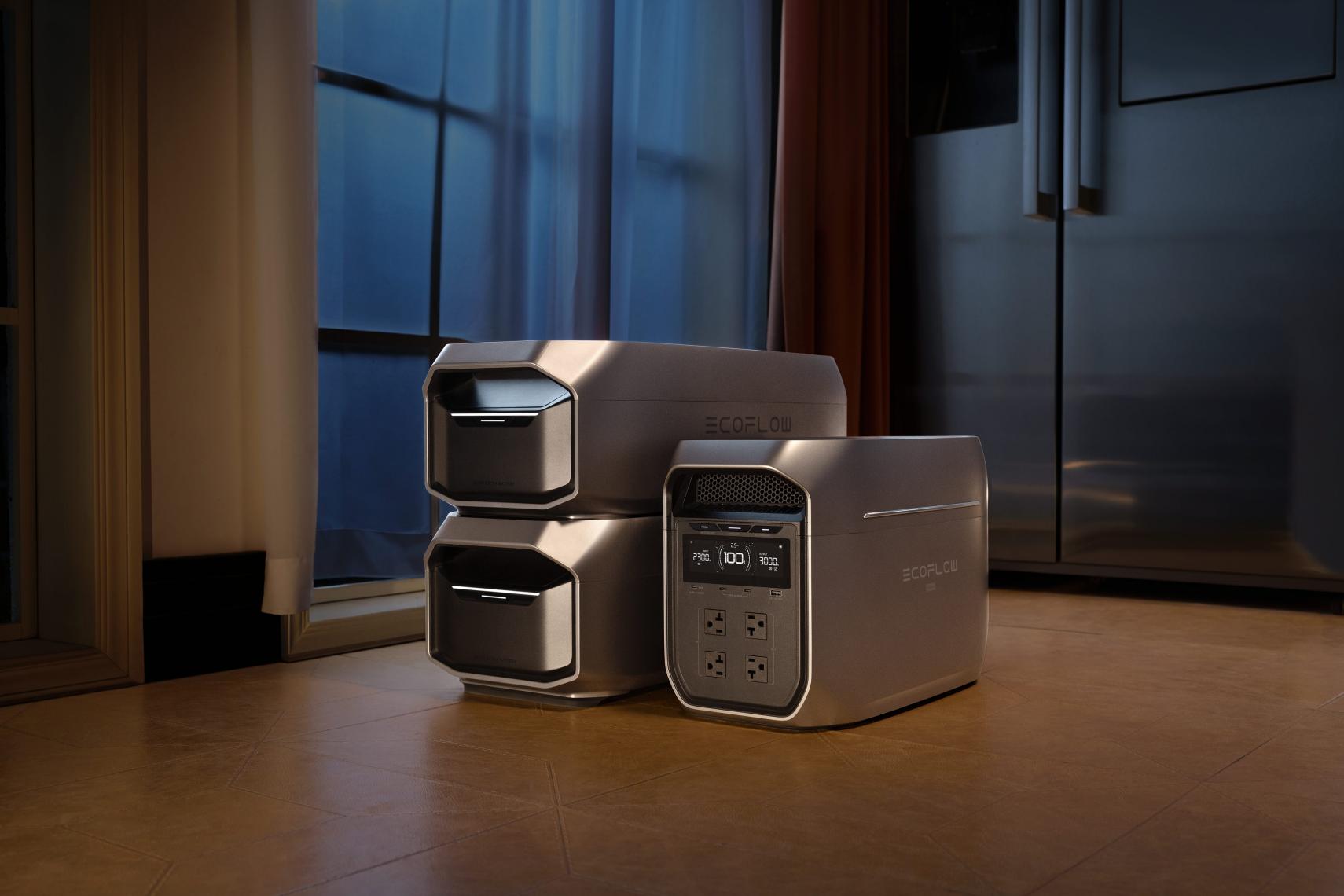
The EcoFlow DELTA 3 Max Plus can take in up to 1000W of solar power. With dual inputs, you can set up multiple panels in different ways to get the fastest charge.
Hook Up Your RV to the Power Station
The electricity in most RVs is either 30 or 50 amps. Standard 15-amp or 20-amp home outlets are available at portable power stations.
Pick the Right Adapter
For RVs with 30 amps: Buy a dogbone adapter that goes from a 30A female plug to a 15A male plug. Connect the shore power line from your RV to this adapter, then plug it into the AC outlet at the station. This powers all the plugs inside your RV.
For RVs with 50-amp plugs: While some portable units struggle with heavy loads, the EcoFlow DELTA 3 Max Plus features a 3000W output. This is powerful enough to run high-draw appliances like air conditioners, microwaves, or coffee makers. However, keep an eye on your total wattage if running multiple heavy loads at once to avoid tripping the station's internal breaker.
Stay Away From the Converter Conflict
The built-in battery charger (converter) in your RV turns on when you plug it into a power outlet. This device wastes your portable station's power by trying to charge the house batteries in your RV.
When they are using portable power, some RVers turn off the breaker for their converter. This saves the station's power for items that you want to use. Check the breaker panel in your RV. The converter will usually have its own breaker that is clearly marked. Talk to an RV expert if you're not sure about this change.
Concerns About Safety
- Wiring: When wiring is done wrong, it can cause switches to trip, damage equipment, or even start a fire. If you're not good with wiring, have a trained RV technician set up your camper for you the first time.
- Connections: Make sure that every connection is tight. Power is wasted and dangerous heat is made by connections that are too loose. Every few camping trips, check the connections.
Place and Take Care of Your Panels
Where you put your panels affects how much power you actually get. In the wrong place, even panels with a lot of wattage don't make much power.
Improve the Panel Angle
Flat panels lose their power all year long. How you adjust your portable panel depends on the time of year and where you live.
- Summer: Lower the panels. The sun is very high up. 15 to 30 degrees works well across most of Canada.
- Winter: Tilt the panels more to catch the low sun. 60 to 70 degrees is recommended for most Canadian locations, with higher angles needed in northern provinces.
Rule of thumb: Make the angle the same as your latitude, then add 20-25 degrees in winter and subtract 15 degrees in summer. This is especially important in Canada's higher latitudes. Most portable panels come with kickstands that can be set to different angles.
As the sun moves through the day, move the panels around once or twice. Compared to fixed panels, this tracking by hand boosts harvest by 30 to 40 percent.
Look in the Right Direction
In Canada, always point your panels south during the day. Even a rough south-facing placement beats flat roof panels.
Manage Temperature Effects
Temperature affects panel efficiency. While panels lose about 0.5% performance for every degree above 25°C, cold weather is more common in Canada. Cold temperatures temporarily reduce battery capacity but don't cause permanent damage. Allow air to flow by leaving a few inches of space under the panels for optimal performance.
Keep the Panels Clean
Dust and dirt can reduce output greatly. In dirty places, clean the panels every two to four weeks. In clean places, clean them once a month.
- Clean it with plain water and a soft cloth. For tough grime, add light soap. Do not use harsh chemicals or high-pressure cleaners on the panel surfaces or electrical parts.
- When the panels are cool, clean them in the morning or evening. Dry all of the connectors out completely before you disconnect the wires. Corrosion is caused by moisture.
Improve How Much Power You Use Every Day
You can stay off the grid for longer if you know how to control your power well.
Energy Check
Figure out how much you consume each day:
| Appliance | Watts | Hours/Day | Watt-Hours |
| LED Lights (4) | 20 | 5 | 100 |
| Laptop | 60 | 4 | 240 |
| Water pump | 100 | 0.5 | 50 |
| Coffee Machine | 1000 | 0.2 | 200 |
| TV | 80 | 3 | 240 |
| Total | 830 |
This tells us what your basic wants are. These things can run for two to three days on a 2,000Wh station.
Get Rid of Hidden Loads
Every day, 20 to 30 amp-hours can be used up by propane alarms, microwave clocks, stereo memories, and inverter standby mode. Unplug things that you're not using. As often as you can, turn off inverters.
Set Heavy Appliances to Work During Peak Sun
Use hair dryers, coffee makers, and refrigerators between 10 a.m. and 2 p.m., when your panels are making the most power. This gets its power straight from the sun instead of draining your battery. Save the evenings for low-power tasks like reading, charging your phone, and using LED lights.
Pick Out the Right Tools
How Batteries Work
Lead-acid batteries only last 500 cycles, but LiFePO4 cells can be charged and discharged over 3,000 cycles. They're safer inside, keep their power even when they're discharged, and can handle higher and lower temperatures. The higher price up front pays for itself over many years of use.
Solar Power Capacity
Find out how many watts of solar power your station can handle. More input means charging goes faster.
The DELTA 3 Max Plus can take in 1000W of solar power. If you connect several high-wattage panels, you can charge the battery in two to three hours of good sun instead of having to wait all day with a 200W limit.
Charging Technology Based on MPPT
Newer MPPT (Maximum Power Point Tracking) controls get 20–30% more power than PWM (Pulse Width Modulation) technology. When it's cloudy or light in the early morning or late afternoon, the difference stands out the most. MPPT charging is built into good portable power units. Check this feature out before you purchase.
How Heavy and Portable
These days, a 2,000Wh station weighs between 45 and 55 pounds (20 to 25 kg). Always make sure you can lift this weight into and out of storage. Look for handles that are strong and have a shape that is easy to hold.
Monitoring Built In
You can keep track of performance with LCD screens that show input and output in real time. You will be able to tell when the panels need to be adjusted, when to run big loads, and when to save power.
What Not to Do: Common Mistakes
Don't put different kinds of panels in the same string. Total power goes down when different voltages or amperages are used. Each series string should have the same panels. If you need to, connect different lines at the same time.
Do not use thin wires. For solar connections, use wires that are at least 12 AWG. If you want to run more than 15 feet, 10 AWG is a better choice. Cables that are too thin lose power and heat.
Don't break the temperature rules. Keep your power station somewhere between 0°C and 40°C. In Canadian winters, bring the station inside your heated RV to maintain optimal battery performance. Cold temperatures temporarily reduce capacity, while extreme heat can cause permanent damage.
Don't leave connections that are wet. Before taking the solar panels apart or packing them up, make sure that all of the connectors are fully dry. Over time, rust from moisture breaks down connections.
Ready for Anywhere Camping
Integrating a portable power station with your RV's solar setup offers the flexibility to camp anywhere without sacrificing comfort. By matching the right panels, optimizing placement, and managing your energy use, you can bridge the gap left by fixed roof systems. Remember to prioritize safety by checking voltage limits and securing connections. With the right tools like the EcoFlow DELTA 3 Max Plus, you’ll enjoy reliable off-grid power, no matter where the road takes you.