How to Choose the Best Generator for Home in Canada
Ice storms in Ontario and summer thunderstorms in Alberta can cause unexpected power outages. In Canada, a reliable backup power source helps keep your home safe, warm, and functional during extreme weather. Choosing the right generator means understanding your household’s energy needs, the climate challenges in your region, and the different backup technologies available today. This guide explains how to compare fuel-powered generators with modern portable power stations, calculate the right system size, and navigate Canadian noise and installation regulations so you can prepare your home for outages with confidence.
What Kind of Backup Power Generator for Home Do You Need?
Every Canadian household has a unique layout and different energy priorities during an outage. Many homeowners also consider whether a portable power station or a traditional fuel generator better fits their backup setup. Finding the right fit starts with matching the duration of your typical local blackouts with the appropriate equipment class.
Pick Portable Units for Short Blackouts
If your area typically sees short outages, a portable unit makes the most sense. These compact systems are stored easily in a garage or shed, and you can deploy them quickly to keep essential loads running until hydro crews restore service.
For short blackouts, you don’t need a whole-home standby system. You just need to cover the basics: the fridge, the router, maybe a small heater or a few lights. A compact portable generator or battery power station can handle those essentials without requiring permanent installation.
Select Whole Home Systems for Storms
In areas where winter blizzards or summer storms can knock out power for days, a whole-home system is your best bet. These units install once, stay put, and activate automatically the second the grid goes down, helping maintain normal household operation during extended outages.
Match Your Generator Capacity to Your Needs
To avoid overloading your system, match the generator’s output to the appliances you intend to run. Researching the best home generators for backup power options can help you identify models with sufficient surge capacity for emergency workloads. This means distinguishing between what you truly need to survive a freeze and what you simply want for convenience. Get that balance right, and your backup power will perform when conditions demand it.
How Do Generators for Home Compare with Portable Power Stations?
Energy tech keeps moving. Traditional fuel-powered generators now have real competition from battery-powered units. Which one fits your home comes down to upfront cost, long term maintenance, and where the system can be safely installed or operated.
Here’s how conventional generators stack up against modern portable power stations across four key areas.
| Comparison Factor | Conventional Fuel Generators (Gas/Propane) | Modern Portable Power Stations |
|---|---|---|
| Upfront Cost | Lower initial purchase price; highly accessible for high-wattage outputs but excludes mandatory transfer switch installation fees. | Higher initial investment; however, it qualifies as a long-term asset with zero ongoing operational fuel expenses. |
| Fuel & Maintenance | High maintenance; requires continuous fuel storage (gas/propane), regular oil changes, engine testing, and stabilizing fuel for winter. | No mechanical maintenance or fuel to store. Requires only a simple top-up charge every 3–6 months during long storage periods to maintain battery health. |
| Noise Levels | Loud and disruptive (60–80+ dB); continuous engine rumble can violate local municipal night-time bylaws and disturb neighbours. | Near-silent operation (<30–45 dB); runs quietly indoors or outdoors, easily complying with strict Canadian residential noise restrictions. |
| Operational Limits | Outdoor use only; produces deadly carbon monoxide, requiring placement at least 20 feet away from windows. Susceptible to freezing in extreme cold. | Safe for indoor use; 100% emission-free. Can be kept in a warm basement or living room to protect battery efficiency during winter ice storms. |
Compare Fuel Generators with Battery Systems
Traditional generators burn gas, propane, or diesel and need a constant fuel supply. Battery systems typically recharge from wall outlets or solar panels, run emission free, and work safely indoors like your basement or living room.
Review Electric Generator for Home Fuel Costs
While gas units might have a lower upfront price tag, their ongoing operating costs can add up quickly, especially with Canadian fuel prices fluctuating wildly. Battery systems eliminate those freezing-cold trips to the gas station, saving you money over years of regular testing and emergency use.
Evaluate Noise Impacts on Your Neighborhood
If you live in a tight suburb or a townhouse complex, generator noise matters during an outage. Conventional gas generators produce a loud, steady rumble that can easily break nighttime noise bylaws and annoy your neighbours. Battery powered stations operate much more quietly. You can keep your lights and furnace fan going all night without waking anyone up. As a bonus, that quiet operation makes a portable unit more useful beyond emergencies. Take it on a weekend cottage trip or an off-grid camping trip in a provincial park without worrying about noise rules.
Which Backup Power Systems Keep Your Home Running Best?
Making your home more resilient means picking a backup system that can handle everything from a quick power flicker to a full-blown climate event. The right setup strikes a balance between raw output and how safely it ties into your existing home wiring.
Scale Residential Backup Power for Essential Loads
During short-term outages or localized grid instability—which are becoming increasingly common during peak summer heatwaves and winter freezes—most Canadian homeowners focus on keeping the basics running without rewriting their home’s electrical blueprint. You want a fast, plug-and-play solution that keeps your food fresh, your lights on, and your Wi-Fi active without complex renovations.
For short-term outages, many Canadian homeowners now compare portable power stations with traditional gas generators before making a decision.
Portable systems like EcoFlow DELTA Pro 3 Portable Power Station are often chosen when users prioritize indoor safety, quiet operation, and low maintenance. They are especially practical for condo residents or households that want backup power for essentials such as fridges, routers, and lighting.
However, traditional gas generators still remain a strong option for users who need high continuous output for longer outages or don’t mind outdoor-only operation and fuel storage.
Expand Whole-Home Backup Capacity for High-Demand Usage
When your household power demands scale up—such as during extended blackouts where you need to run central air conditioning, well pumps, water heaters, and multiple major appliances simultaneously—a baseline power source won’t cut it. To maintain a normal quality of life through a prolonged grid failure, your strategy needs to shift from basic device maintenance to a comprehensive, heavy-duty energy ecosystem.
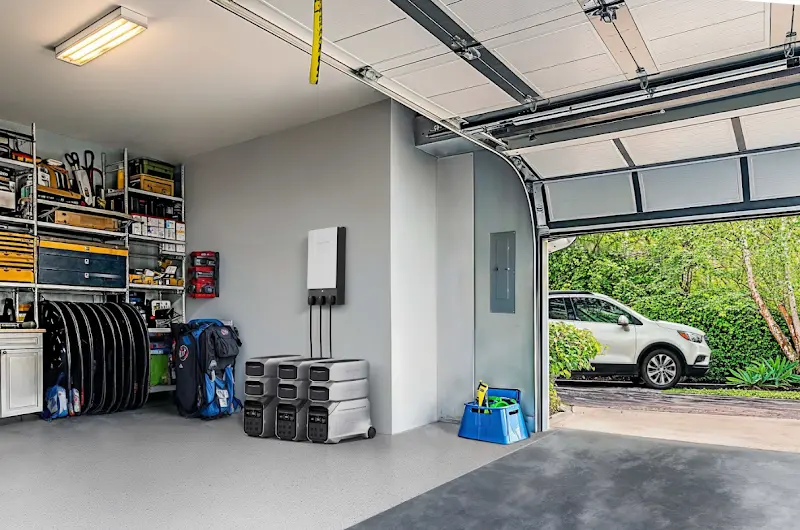
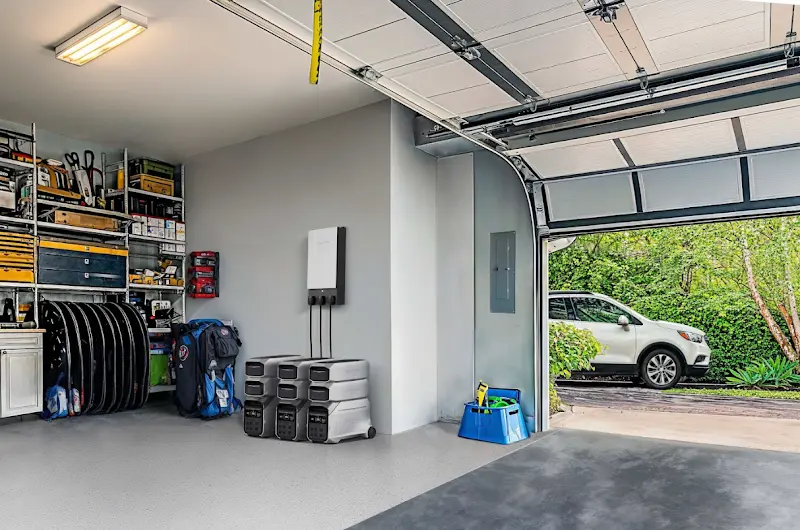
This is where the EcoFlow DELTA Pro Ultra Whole-Home Backup Power excels as a premier whole-home, high-capacity energy system. Engineered to handle massive heavy-duty loads, it effortlessly supports central A/C units, electric vehicle charging, and a house full of demanding appliances simultaneously, helping maintain stable power during extended outages.
Connect Transfer Switches for Safer Wiring
No matter which system size you choose, safety should always come first when tying into your home’s electrical grid. Installing a manual or automatic transfer switch is the safest way to route backup power into your electrical panel, preventing dangerous backfeeding that could harm utility workers working on the lines outside. Ensure your portable power station supports 240V split-phase output (like the DELTA Pro 3 or Ultra) if you need to power 240V Canadian household appliances like well pumps or electric water heaters.
Prioritize Cooling Systems During Heat Waves
With Canadian summers seeing record-breaking humidity and heat indexes, prioritizing your home’s cooling infrastructure during a summer outage is vital. Ensuring your backup system has enough sustained power to keep fans or air conditioning units running can protect vulnerable family members and pets from extreme heat stress.
How Do You Calculate the Right Generator Size?
Sizing your backup power takes a bit of math. Get it wrong, and your equipment could stall just when you need it most. Calculating your actual power profile helps ensure the system handles heavy startup loads without a hitch.
List Critical Winter and Water Protection Appliances
Begin your calculations by identifying the appliances that are most critical during Canadian winter outages. Furnace blowers, sump pumps, well pumps, electric baseboard heaters, and refrigerators are often the highest-priority systems homeowners need to keep running during freezing temperatures. These essential loads will form the foundation of your backup power budget.
Account for Motor and Pump Startup Watts
It is crucial to remember that equipment with motors or compressors—such as furnace blowers, sump pumps, refrigerators, and well pumps—requires a temporary surge of electricity during startup. In many Canadian homes, these startup spikes can briefly double or triple normal running wattage, so your backup system must be sized to handle these sudden loads reliably during winter storms.
How to Calculate Generator Size (Step-by-Step Method)
A precise way to estimate your backup power needs is to calculate your total running load, add the largest startup surge, and then apply a safety buffer of 20–30%.
Recommended formula:
System size = (Total running watts + largest appliance surge) × 1.2 to 1.3
Example: Typical Canadian Winter Outage
Refrigerator: 700W running (1,200W startup surge)
Furnace blower: 800W running (1,000W startup surge)
Router + lights: 100W running (no surge)
Step 1: Total Running Load
700W + 800W + 100W = 1600W
Step 2: Add the largest Surge Load
The refrigerator has the highest startup demand, so we add 1,200W:
1600W + 1200W = 2800W peak load
Step 3: Apply Safety Buffer (20–30%)
2800W × 1.3 ≈ 3640W
Final Recommendation:
A 3500W to 4000W system is typically sufficient for this type of household backup scenario.
Add Buffer for Future Appliance Additions
Never buy a system that exactly matches your current maximum calculation. Always add a 20% to 30% safety buffer to your final number to account for unexpected spikes, future appliance upgrades, or the addition of new smart home devices down the road.


What Should You Check Before Buying?
Before you swipe your card or sign a contract, check a few things first. Canada’s climate brings its own set of regional, environmental, and financial factors. Don’t rush past them.
Check Local Canadian Noise Bylaw Limits
Lots of Canadian cities, from Vancouver to Toronto, have noise bylaws that cap decibel levels in residential areas, especially overnight. Make sure your gear runs quiet enough to stay within the rules. Violating local noise bylaws may also create issues with nearby residents.
Inspect Outdoor Units for Rain Protection
If you go with an outdoor combustion model, you need to protect it from Canadian rain, sleet, and heavy snow. Get a good weatherproof enclosure. That keeps moisture out and makes sure the unit will fire up when a storm hits.
Verify Warranty for High Temperature Operation
While we often focus on the cold, Canadian summers can get intensely hot. Check the manufacturer’s warranty details to ensure the internal batteries or mechanical components are rated to operate safely and remain fully covered during extreme summer temperature spikes.
Calculate Total Ownership and Maintenance Costs
Look beyond the initial sticker price to calculate the true cost of ownership over time. Factor in delivery, professional electrician installation fees for transfer switches, routine maintenance kits, and the projected cost of fuel or electricity over a five-to-ten-year lifespan.
Conclusion
Choosing the right backup power system for a Canadian home comes down to balancing your household’s specific energy demands against the realities of your local climate. Opt for a portable unit like the EcoFlow DELTA Pro 3 if you only need to protect essential loads during short outages. Invest in a whole-home system like the EcoFlow DELTA Pro Ultra if you need to weather extended storms without cutting back.
Assess your loads, including startup wattages. Check local bylaws. Then select a solution that keeps your home safe and comfortable, regardless of what happens to the hydro grid.
FAQ
Can a Portable Power Station Run a Refrigerator?
Yes, a portable power station can absolutely run a refrigerator, provided its continuous and surge wattage capacities match or exceed the fridge’s operational requirements. Most modern full-sized refrigerators require around 300 to 800 watts of running power but need a brief surge of up to 1,200 to 2,000 watts to start the compressor, which high-quality power stations handle with ease.
What Size Portable Power Station Do I Need to Run a Mini Fridge?
You generally need a portable power station with a capacity of at least 200 to 500 watt-hours (Wh) and a continuous output rating of at least 200 watts to reliably run a mini fridge for several hours. Because mini fridge power consumption typically ranges between 50 to 100 watts while running but features a temporary startup surge, a mid-sized power station will ensure it stays cold throughout a standard power outage.
Do I Need an Electrician to Connect a Generator to My House?
Yes, you must hire a licensed electrician if you plan to connect a generator or large power station directly to your home’s main electrical panel. An electrician is required to safely install a certified transfer switch, which prevents dangerous electrical backfeeding into the utility grid and ensures your setup complies with the Canadian Electrical Code.
Can I Run a Generator Without a Transfer Switch?
Yes, you can run a portable generator or power station without a transfer switch by plugging your appliances directly into the outlets located on the unit itself using heavy-duty, outdoor-rated extension cords. However, you should never attempt to backfeed your home by plugging a generator directly into a standard wall outlet without a transfer switch, as this creates an extreme fire hazard and a deadly risk to utility workers.
How Many Watts Does It Take to Start an Air Conditioner?
It typically takes between 2,500 and 5,000 watts of surge power to start a standard central residential air conditioner, though smaller window units may only require 1,200 to 2,000 watts. Always check the specific “LRA” (Locked Rotor Amps) rating on your air conditioner’s data plate to calculate the exact starting wattage required by your specific cooling system.