Wire Gauge Chart: AWG Wire Size and Ampacity Guide for Canadian Homeowners
- What Is AWG Wire Gauge?
- How Does Wire Gauge Affect Ampacity?
- What Is the Standard AWG Wire Chart for Canadian Homes?
- How Do You Choose the Right Wire Size?
- What Happens if Wire Gauge Is Too Small?
- How Do Voltage, Distance, and Material Affect Wire Performance?
- Frequently Asked Questions
- Choosing the Correct Wire Gauge Improves Electrical Safety and Performance
Understanding wire gauge is essential for safe electrical work. AWG sizing determines how much current or ampacity a particular conductor can carry, how much voltage drops over distance, and ensures compliance with the Canadian Electrical Code (CEC). Whether upgrading household circuits, wiring backup power, or planning solar installations, choosing the correct wire size improves safety, efficiency, and long-term system performance.
What Is AWG Wire Gauge?
The American Wire Gauge (AWG) is a standardized North American system that specifies the diameter and cross-sectional area of round, solid, and stranded electrical conductors.
In Canadian electrical work, whether doing upgrades or DIY solar installation, proper AWG sizing is a fundamental requirement for complying with the Canadian Electrical Code (CEC).
AWG uses an inverse logarithmic scale, which at first can seem confusing because as the gauge number decreases, the physical thickness of the wires increases. This means that 6 AWG wires are much thicker and used for heavier-duty applications than 14 AWG wires, which are often used in lighter-duty applications like 15A branch circuits for household lighting.
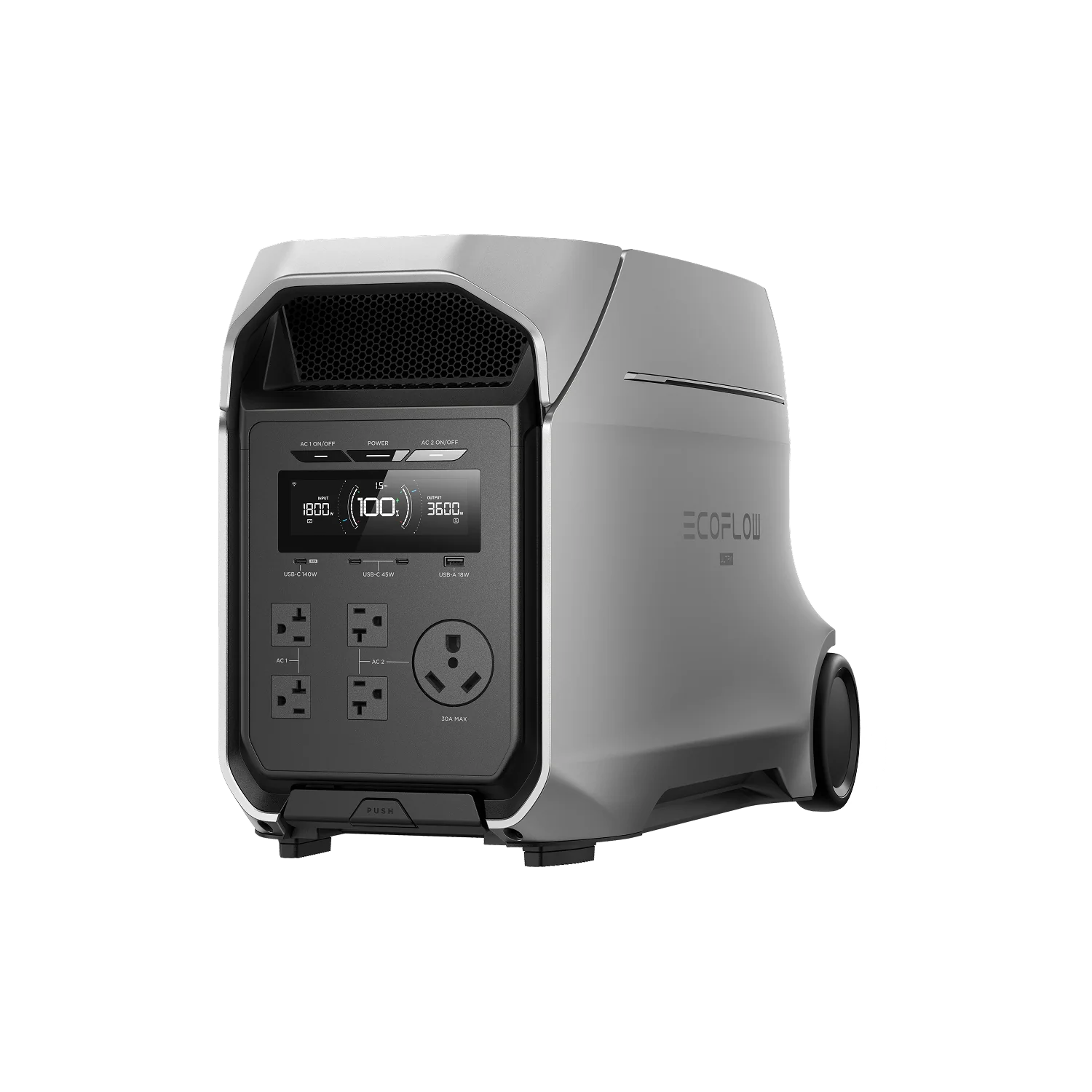
Before starting electrical upgrades, having a portable power station, like the EcoFlow DELTA 3 Ultra Plus Portable Power Station (3072Wh), is recommended to keep refrigerators, freezers, medical equipment, and other essentials running while your main power is off.
How Does Wire Gauge Affect Ampacity?
Since gauge determines the physical cross-sectional area of wires, it also controls the amount of electric current, or ampacity, a conductor can safely carry without overheating.
This means that lower gauge numbers (thicker wires) have less electrical resistance and can safely transmit higher ampacity.
However, ampacity is not determined by gauge alone. The CEC also accounts for the conductor material (copper vs. aluminum) and the temperature rating of its insulation. Understanding this is critical for DIY electrical work and is why many people hire professionals when doing upgrades or tying in products like a whole-home generator into their electrical panel.
What Is the Standard AWG Wire Chart for Canadian Homes?
To make practical use of the system, tradespeople use the standard AWG wire chart when wiring Canadian homes.
At its simplest, it converts different AWG sizes to metric and imperial measurements. Other charts may include conductor material, maximum temperature ratings, insulation types, and resistance.
This example chart shows sizes, metric and imperial conversions, and includes the typical resistance and ampacity for copper conductors at 75°C. Note that these numbers change with different conductors, temperatures, and insulators.
AWG Size | Diameter (in) | Diameter (mm) | Area (mm²) | Resistance (Ω/1000 ft) | Resistance (Ω/km) | Ampacity (A) |
1/0 (0) | 0.3249 | 8.252 | 83.5 | 0.0983 | 0.3224 | 150 |
2 | 0.2576 | 6.544 | 33.6 | 0.1563 | 0.5127 | 115 |
4 | 0.2043 | 5.189 | 21.2 | 0.2485 | 0.8152 | 85 |
6 | 0.1620 | 4.115 | 13.3 | 0.3951 | 1.296 | 65 |
8 | 0.1285 | 3.264 | 8.37 | 0.6282 | 2.061 | 50 |
10 | 0.1019 | 2.588 | 5.26 | 0.9989 | 3.277 | 30 |
12 | 0.0808 | 2.053 | 3.31 | 1.588 | 5.211 | 20 |
14 | 0.0641 | 1.628 | 2.08 | 2.525 | 8.286 | 15 |
16 | 0.0508 | 1.291 | 1.31 | 4.016 | 13.17 | 10 |
18 | 0.0403 | 1.024 | 0.823 | 6.385 | 20.95 | 7 |
20 | 0.0320 | 0.812 | 0.518 | 10.15 | 33.31 | 5 |
How Do You Choose the Right Wire Size?
Choosing the right size requires knowing exactly how much current will flow through the wires. You need the total circuit load in amps, taking into account how you’ll wire the circuit (for example, wiring in parallel vs. series), and select the correctly sized breaker.
Next, you need to account for run length because the CEC mandates the circuit's voltage drop.
Then, consult the AWG wire chart and CEC ampacity tables (Table 2 for copper or Table 4 for aluminium) to find the thickness of the conductor material that handles your current, factoring in the temperature rating of the wire’s insulation.
What Happens if Wire Gauge Is Too Small?
If you choose a gauge that’s too small (the AWG number is too high), safety hazards will arise, and you won’t be in compliance with the CEC.
Since thinner wires have more resistance, forcing too much current through them generates excessive heat. This can melt the insulation, exposing live wires, creating short circuits, tripping breakers, and increasing the risk of an electrical fire.
Undersized conductors may also cause voltage drops due to electrical resistance. This restricts the flow of power, creating fire risks, and can damage sensitive appliances.
This is why choosing the right gauge for electrical upgrades or connecting solar to household electricity is essential.
How Do Voltage, Distance, and Material Affect Wire Performance?
In addition to thickness, voltage and run distance heavily influence performance. In an undersized wire, when current travels over long distances, the resistance leads to excessive voltage drop. This creates fire risks and reduces the lifespan of your appliances.
The CEC mandates a maximum 3% voltage drop for a branch circuit or 5% total feeder and branch circuit combined to prevent this. This means you may need thicker wire (lower AWG) to ensure safe and efficient power on long runs.
The conductor material also plays a tremendous role. Copper is a better conductor with lower resistance. Aluminum is cheaper but has a higher electrical resistance, so you need a thicker gauge than you would for copper to safely carry the exact same current.
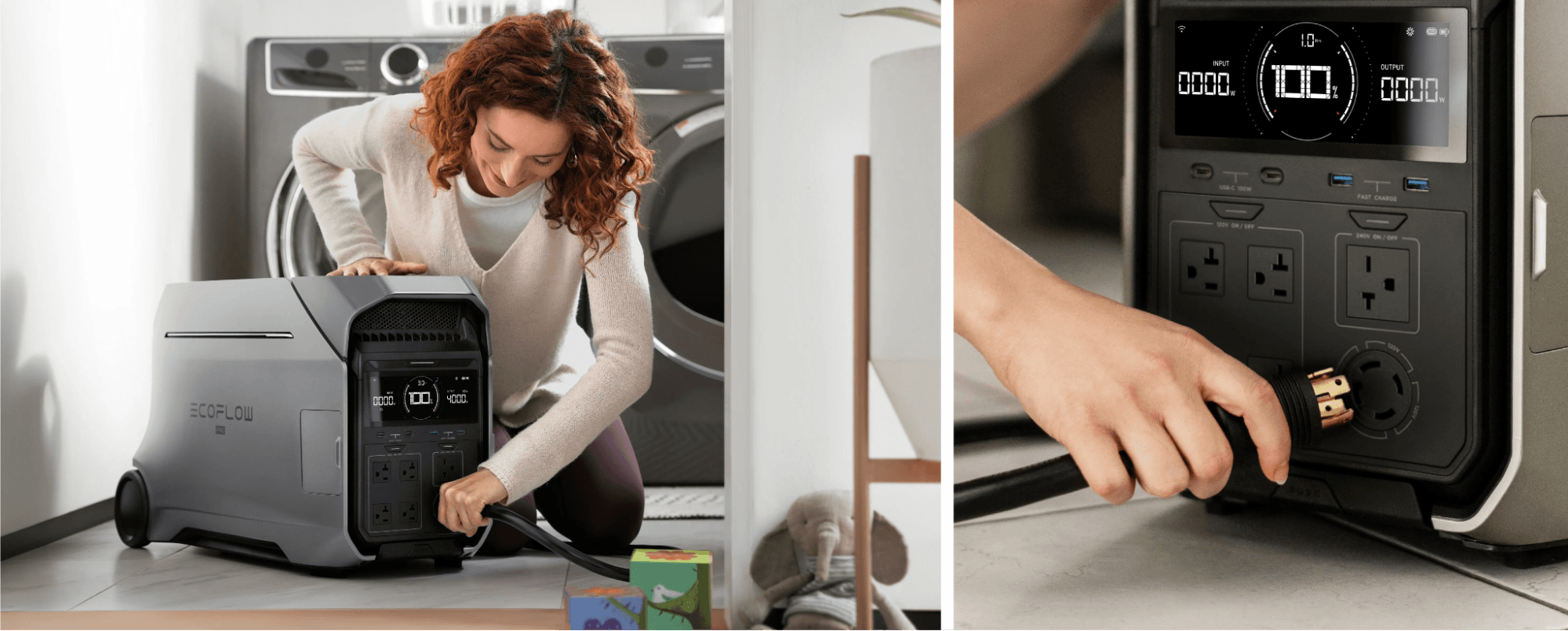
Before getting started, consider setting up the EcoFlow DELTA Pro 3 Portable Power Station. It offers 4000W of output and runs 120V/240V appliances, so you can keep all your essential systems online while doing electrical upgrades.
Frequently Asked Questions
What Does AWG Mean?
AWG stands for American Wire Gauge. It’s the standardized North American system used for measuring the thickness (diameter and cross-sectional area) of round, solid, and stranded electrically conducting wire.
Which Is Thicker, 12 or 10 AWG?
Somewhat counterintuitively, the lower the AWG number, the thicker the wire. This is because the system uses an inverse logarithmic scale, meaning that 10 AWG is thicker than 12 AWG.
Can You Use the Same Wire Gauge for Aluminum and Copper?
You usually cannot use the same wire gauge for aluminum and copper because aluminum is a less efficient conductor with more resistance. In most applications, aluminum conductors require a thicker wire to safely carry the same amount of current as copper does.
Choosing the Correct Wire Gauge Improves Electrical Safety and Performance
Choosing the correct wire gauge is one of the most important parts of ensuring electrical safety and long-term system performance because wire size dramatically affects ampacity, voltage drop, resistance, and heat generation.
But when you’re in compliance with the CEC and correctly account for conductor material, run length, insulation rating, and electrical current, you can avoid equipment damage and fire risks while ensuring reliable power delivery.
Before starting your next electrical upgrade, have a reliable portable power station ready to keep your essential appliances running while the main breaker is off.